A single destination for timely, editor-curated robotics news from around the world.
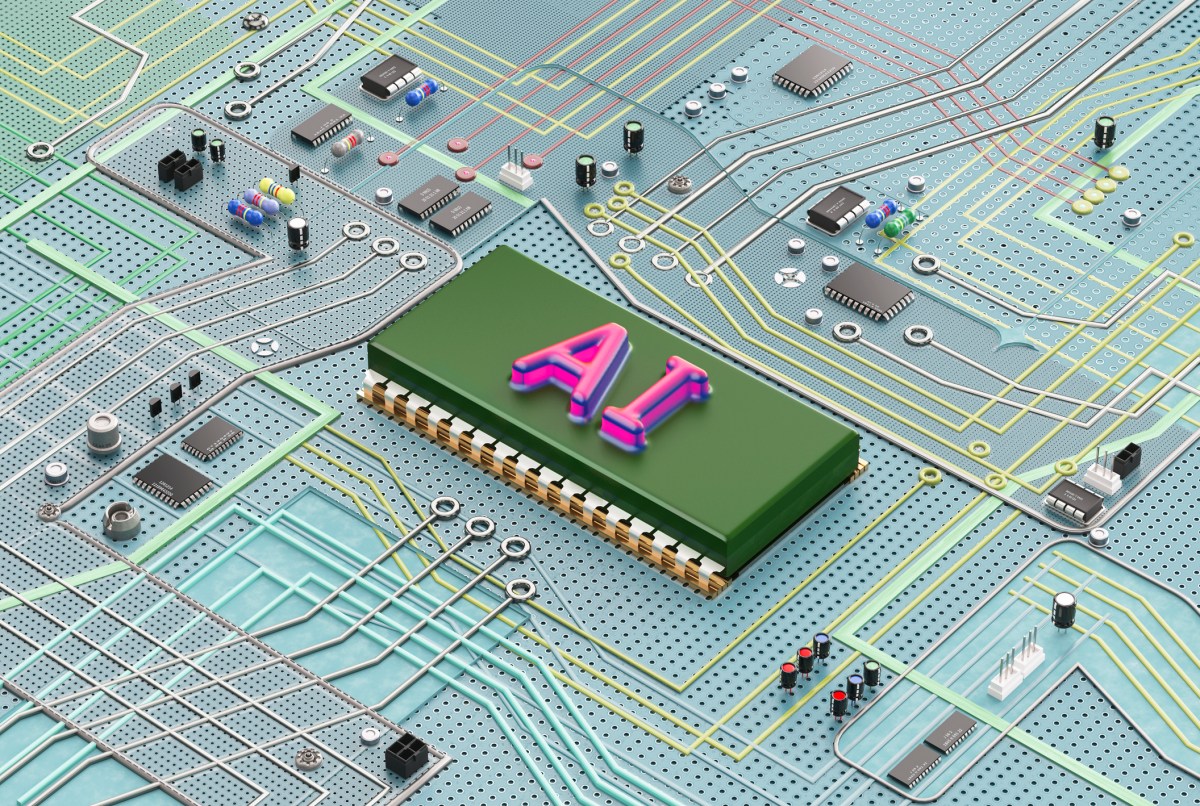
Current AI, a nonprofit organization, is addressing language barriers in AI by developing an offline device called Suno Sutra, which operates in 22 Indian languages. This initiative, launched in collaboration with Bhashini at the India AI Summit, aims to make AI accessible to non-English speakers in India. The significance of this project lies in its potential to democratize AI technology, ensuring that diverse languages and cultures are represented. Current AI's CEO, Ayah Bdeir, emphasizes the need for a public alternative to proprietary AI systems, which often overlook non-English languages and communities. Looking ahead, Current AI has allocated $3.2 million in grants to various projects aimed at building AI datasets and tools that respect community control over data. No further timeline was disclosed at the time of publication.
TechCrunch By Kate Park Jul 19, 2026 AI nonprofit large language models current ai
“In the future, the relationship between humans and robots will deepen, and the distinction between them will probably disappear.” This prediction, from one of the attendees at the recent Humanoids Summit in Tokyo, might have been unremarkable had it not come directly from an android that was first introduced to the world 20 years ago. Geminoid HI-6 is the sixth-generation of a robot originally designed in 2006. The mechanical twin of Osaka University professor Hiroshi Ishiguro, Geminoid HI-6 is now equipped with a large language model trained on Ishiguro’s own writings and interviews. It has advanced conversational skills and can even have a chat with its creator, an eerie spectacle. But at the Humanoids Summit, Geminoid was one of the few humanoid robots from Japan, the country that pioneered the form factor.While the event in Tokyo only had about 40 robots on display, Chinese systems outnumbered Japanese by roughly three to one. Some Japanese robotics firms were even using Chinese robots in their own technology demonstrations, something that would have been unthinkable in the recent past—one Japanese engineer described the situation as “sad.” The conference was a stark reminder of how Japan has ceded its early lead in humanoid robot development to overseas competitors, and the challenge it now faces to secure a place in an ecosystem increasingly dominated by general-purpose robots powered by AI. Twenty-five years ago, Japan was turning out groundbreaking humanoids that were showstopping in their abilities, but they were not commercialized as practical machines in any meaningful way. Heavily influenced by science fiction and lacking practical applications, they were mostly expensive technology demonstrations that were eventually mothballed. What Japan retains, however, is robotics design and know-how, which it must leverage to be a key player in the rapidly evolving humanoid ecosystem. Learning to Walk—Then Standing StillTo anyone who has seen recent videos of Chinese humanoids doing kung-fu and synchronized acrobatics, as well as half-marathon races, China’s remarkable progress in the field is nothing new. At the Humanoids Summit, Toyota showed a video of its latest basketball-playing robot, and Honda exhibited its latest robot hand, but the full-scale humanoids on the floor were mostly Chinese–the kid-size K1 machines from Booster Robotics of Beijing were dancing to Michael Jackson tunes. The full-scale G1 humanoid from Unitree Robotics of Hangzhou was also doing demos. “You cannot sell these bipedal systems in Japan for safety and compliance reasons,” says Shuichi Nagao, a frequent visitor to China as CTO of Omakase Robotics, a division of Zeals, a Japanese humanoid robot developer. Omakase was exhibiting a G1 modified with an external PC controller, a dextrous hand, a suction-cup manipulator and a sensor “hat” with an extra speaker, mic and camera. “In China, the government is pushing humanoid development. They didn’t have an industry 20 years ago. The people pushing it are young, in their 20s and 30s. It’s a really different mentality out there,” says Nagao. “Big players in Japan are still looking for use cases for humanoids. In China, they’re already doing mass production and reducing the cost, so other countries can’t compete with them anymore.”Another Japanese company showing off G1 bots was summit sponsor GMO AI & Robotics, a subsidiary of Japanese internet company GMO. It’s using the robots in partnership with Japan Airlines to load and unload cargo containers at Tokyo’s Haneda airport. The cargo project is a trial—like many other humanoid experiments—but the fact that Chinese machines have penetrated so far into Japan’s ecosystem upends a long history. In 1973, scientists at Waseda University in Tokyo built WABOT-1, considered the first full-scale humanoid robot and capable of slow bipedal locomotion, grasping objects and simple communication. It inspired Honda’s groundbreaking Asimo humanoid, but it was never commercialized. Asimo was eventually retired in 2022, the year ChatGPT was released. Two years later, Unitree’s G1 went on sale for US $16,000. China’s High Torque Technology Co. showed off its Mini Pi biped, customized with an anime-inspired head, at Humanoids Summit in Tokyo. The regular version is priced at $3,500. Tim HornyakSupply and DemandJapan’s development of humanoids happened before practical applications or widespread demand were in place, but bad timing is only part of the story—Japan also has a history of developing technologies that might appeal to domestic consumers but not necessarily those overseas. For example, decades after they first appeared, its highly engineered, multifunction toilets have only recently found a following abroad. Japan’s humanoid prowess was partly built on the back of its legendary industrial automation, yet even that stronghold has eroded. Ani Kelkar, a partner from McKinsey & Company in Boston who produces analytical reports about the robotics industry, told the summit audience that while Japan occupied the top spot in the world in manufacturing robot density (the number of multipurpose industrial robots in operation per 10,000 employees) from at least 1994 to 2009, it then slipped to second in 2014, third in 2019 and fifth in 2024. In that year, South Korea was at the top of the leaderboard with a robot density of 1,220 compared to Japan’s 446. The International Federation of Robotics estimates China now has the most operational industrial robots in the world, with around 2 million total units, approximately 4.5 times more than Japan. “The annual installation numbers are impressive too: 54 percent of all robots installed worldwide in 2024 were deployed in China,” the IFR said in a release in April 2026. “I think the loss of Japanese leadership is more to do with the rise of China as a manufacturing powerhouse including for sectors that Japan had high export levels,” Kelkar said in an email interview. “The recovery has not yet happened as Japan ‘missed’ the rapid acceleration in AI for robotics and is now playing catchup.”How Japan Can Adapt Kelkar believes Japan has a US $100 billion opportunity in general-purpose robotics, which are machines that can perform a wide variety of tasks, and it cannot rely on the slower-growing industrial robot market, which is centered on factory machines that do one simple and predictable task like welding car parts. He points to a McKinsey white paper suggesting that while Japan has much of the hardware and technology experience needed to support general purpose robot development, it must change its strategy to capture more share in AI, software, data collection and robotics platforms.Tetsuya Ogata is a professor of engineering and director of the Institute for AI and Robotics at Waseda University, the birthplace of humanoids in Japan. He briefed the summit on how a nonprofit he chairs, the AI Robot Association (AIRoA), is working with Toyota and other members to develop foundational technologies for collaborative use. For instance, AIRoA has collected some 80,000 hours of data on remote operation of mobile manipulators, and Ogata believes it’s the largest dataset of its kind. Using the data, it built and verified Vision-Language-Action (VLA) models, and it has also started data collection for dual-arm mobile manipulation. In an interview, Ogata acknowledged Japan’s struggle to find its place in the changing landscape. “The world of AI is inherently a game of scale,” says Ogata. “Therefore, Japan’s absolute prerequisite is to secure a competitive baseline of scale—in data, computing resources, and talent. Beyond that, what I consider most critical is a mindset shift: rather than trying to hoard scale within a single nation or company, we must grow stronger by collaborating with a diverse ecosystem of domestic and international players.” Specifically, this means creating a ‘collaborative domain’ to address data—the single biggest bottleneck—through industry-wide cooperation rather than data-siloing. By collectively nurturing a pre-competitive, shared data infrastructure and foundation model, individual companies can then compete on top of it with their own applications. “By offering this open ‘data ecosystem’ to the world, we can engage global players and establish a ‘third pole’ alongside the US and China,” says Ogata. “I believe this is how Japan can reclaim its global presence.”In 1999, Japan introduced the world’s first mobile internet services platform. But being first didn’t turn Japan into a smartphone manufacturing or design center—it’s now merely a supplier of parts to other countries who are leading the smartphone industry. If Japan can avoid a repeat of that experience and successfully deregulate, diversity, and commercialize its original humanoid dreams, it stands a better chance of influencing the direction of the industry and reaping billions in value. As automobiles and electronics were pillars of Japan’s industrial strategy in the last century, Japan could make humanoid robots one of its key value generators in the 21st century, an approach that would not only deliver economic benefits but give Japan greater clout in how the industry will evolve. Just like Japanese cars, electronics, and even toilets, Japanese humanoids could stand for craftsmanship and reliability. It’s a legacy that Japan can’t afford to give up.
Spectrum.ieee.orgAutomaton By Tim Hornyak Jul 04, 2026 Japan Robotics Humanoids Humanoid-robots
Harbinger has introduced a new unmanned hybrid-electric military vehicle platform, marking a significant advancement in defense technology. This initiative is part of the company's newly established business unit, Harbinger Praesidia, which aims to collaborate with government clients and defense contractors. The launch is further bolstered by a strategic investment from In-Q-Tel (IQT), a nonprofit organization that invests in technologies to enhance U.S. national security and support allied governments. This partnership underscores the growing interest in innovative military solutions and the importance of private sector involvement in national defense efforts.
AIInsider By Greg Bock Jun 12, 2026 AI AI Funding & Investment AI Use Cases Robotics Defense Harbinger
Reid Hoffman, a prominent figure in the tech industry and one of the initial donors to OpenAI, stepped down from the organization's board in 2023. His departure coincided with OpenAI's increasing collaboration with Microsoft, signaling a shift in the nonprofit's strategic direction. Hoffman's exit reflects the evolving landscape of artificial intelligence and the growing influence of corporate partnerships within the sector.
CNBCTechnology Jun 05, 2026
Elon Musk took the stand for nearly three days this week in a lawsuit against OpenAI, where he is challenging the company's shift to a for-profit model under CEO Sam Altman. Musk claims this transition represents a betrayal of the organization’s original nonprofit mission. The courtroom proceedings have revealed a trove of emails, texts, and Musk's own tweets, with more witnesses expected to testify in the coming days. The case has already become contentious, highlighting the tensions surrounding the future direction of artificial intelligence and the ethical implications of profit-driven motives in technology development.
TechCrunch By Theresa Loconsolo May 01, 2026 AI Startups Acquisitions ai infrastructure Amazon big tech earnings
Researchers from Carnegie Mellon University's CREATE Lab have collaborated with Climate TRACE, a nonprofit organization co-founded by former Vice President Al Gore, to develop an innovative air pollution monitoring tool. This tool, recently released by Climate TRACE, visualizes and models the flow of air pollution plumes from their sources, enhancing the understanding of global emissions. The initiative aims to address the growing threat of air pollution by providing clearer insights into its origins and impacts. The collaboration underscores the importance of leveraging advanced technology and research to combat climate change and improve environmental monitoring.
ri.cmu.edu By Mallory Lindahl Oct 07, 2025 Uncategorized
The Marine Technology Society (MTS) and Ocean Exchange, two prominent nonprofits in the marine technology field, have announced their merger aimed at fostering innovation and advancing emerging technologies to promote healthy oceans and resilient coastal systems. This strategic combination, revealed recently, is set to enhance the Blue Economy by expanding their geographic reach and utilizing their extensive industry networks to bolster the startup ecosystem. By pooling their expertise and resources, MTS and Ocean Exchange plan to create new business opportunities, facilitate connections between emerging technology leaders and seasoned professionals, and expedite the commercialization of innovative ocean solutions.
ROVplanet.com By ROV Planet Mar 18, 2025 marine technology society ocean exchange innovation marine technologyRSF defines a common language for robot service capability, lifecycle operations, certification pathways, and service-provider networks.