Industry Briefing
A single destination for timely, editor-curated robotics news from around the world.

Rajant Health (RHI) and Chord Robotics Expand Cowbell Platform to Enable Scalable, Multi-Domain Collaborative Autonomy
Rajant Health (RHI) and Chord Robotics have announced an expanded partnership to enhance their Cowbell platform, introducing advanced "Flying Cowbell" capabilities aimed at enabling scalable, multi-domain collaborative autonomy. This collaboration, revealed on May 22, 2026, integrates RHI's Kinetic Mesh® networking with Chord Robotics' TEMPO™ software, facilitating real-time control of mixed fleets operating across air, land, and sea. The "Flying Cowbell" system transforms mobile nodes, including unmanned aerial systems (UAS) and unmanned surface vehicles (USVs), into active participants in a distributed compute and autonomy framework. This architecture allows for distributed workload execution, dynamic cluster formation, and transport-agnostic operations, even in connectivity-constrained environments. The partnership aims to address the need for persistent coverage and dynamic mission adaptation in complex scenarios where traditional infrastructure may be lacking. By leveraging Rajant's InstaMesh® networking capabilities alongside TEMPO, operators can manage heterogeneous fleets effectively, ensuring that each vehicle can make independent decisions while collaborating seamlessly. RHI's CEO, Robert J. Schena, emphasized that the initiative represents a shift from static infrastructure to a mobility-native system, while Chord Robotics' CEO, James Cooney, highlighted the potential for scaling autonomous fleets in challenging environments. Together, the companies are poised to redefine collaborative autonomy in unmanned systems, enhancing operational efficiency and adaptability.

SYOS Strengthens its Multi-domain Uncrewed Portfolio with the Introduction of the SU10 Uncrewed Underwater Vehicle
SYOS has unveiled the SU10 uncrewed underwater vehicle (UUV) today, expanding its portfolio of autonomous systems across multiple domains, including air, land, sea, and subsurface operations. The introduction of the SU10 aims to enhance capabilities in mine countermeasures, protect critical subsea infrastructure, and ensure persistent surveillance and maritime security. This advanced UUV is equipped to undertake a variety of missions, including search and identification, route clearance, and infrastructure inspection and intervention, thereby addressing growing demands for safety and security in maritime environments.
syos multi-domain uncrewed portfolio su10 uuv rov auv
ASELSAN at SAHA 2026: Introducing next-generation multi-domain defense systems
At the SAHA 2026 exhibition, ASELSAN introduced its latest defense portfolio, showcasing a comprehensive and integrated defense architecture. This innovative framework combines electronic warfare, counter-unmanned aerial vehicle (UAV) systems, and capabilities for both airborne and naval operations. The unveiling highlights ASELSAN's commitment to advancing military technology and enhancing operational efficiency in response to evolving security challenges. By integrating these diverse capabilities, the company aims to provide a unified solution that meets the complex demands of modern defense environments.
Global Naval Warfare Sponsored Post Air Force Army Aselsan
Ondas Acquires DZYNE Technologies for $875.8M
The Ondas DZYNE acquisition combines long-endurance ISR, counter-UAS, and autonomous effects under a new operating division for U.S. defense customers. Ondas Inc. (Nasdaq: ONDS) has announced the acquisition of DZYNE Technologies, LLC in a cash and stock transaction valued at $875.8 million. According to Ondas, the Ondas DZYNE acquisition establishes a multi-domain autonomous defense platform […] The post Ondas Acquires DZYNE Technologies for $875.8M appeared first on DRONELIFE.
Defense defense Drone News Drone News Feeds News affordable mass
Palladyne AI Executes $4.2 Million U.S. Air Force Contract to Advance Swarming Capabilities for Integrated Cross-Domain Operations
Palladyne AI Executes $4.2 Million U.S. Air Force Contract to Advance Swarming Capabilities for Integrated Cross-Domain Operations Visit http://www.palladyneai.com for further information Palladyne AI’s SwarmOS™ platform to support satellite integration, marking a major expansion of its multi-domain autonomy and ISR capabilities across space, air, maritime, and land 07/07/26, 06:15 AM | Mobile Robots, Other Topics | Palladyne AI Corp. Palladyne AI Corp. (NASDAQ: PDYN and PDYNW) ("Palladyne AI"), a developer of artificial intelligence software for robotic platforms in the defense and commercial sectors, today announced that it has executed the previously announced contract awarded by the Air Force Research Laboratory (AFRL) to solve one of the most persistent challenges in modern defense operations—how to make different autonomous systems work together as one coordinated team. The "Hierarchical Adaptive Networked Game-Theoretic Integration of Multiple Echelons (HANGTIME)" contract will address this need. More Headlines A3's Automate 2026 Breaks Records as Demand for Robotics, AI and Automation Grows NVIDIA and Hugging Face Bring New Models and Frameworks to LeRobot for the Open Robotics Community ABB Robotics completes its AI-powered Visual SLAM AMR portfolio with new autonomous forklift UMA Unveils Its Vision for the Next Generation of Humanoid Robots Robbyant Unveils LingBot-Depth 2.0 and LingBot-Vision to Redefine Robotic Spatial Perception Articles Unleash AI Innovation: The Power of NVIDIA RTX PRO 6000 Blackwell Workstation Edition Fueled by PNY-Supplied GPUs Automate 2026 Q&A with DESTACO Automate 2026 Q&A with Roboteon Advances in Robots to See & Interpret within Warehouse Environments Building Resilient Fulfillment Networks with Robotics and Real-Time Logistics Data Today, drones, ships, and satellites often operate largely independently, limiting how quickly warfighters can see and respond to threats. HANGTIME will utilize Palladyne AI's patented SwarmOS™ software platform—the defense variant of the Palladyne™ Pilot embodied AI software—as the baseline technology to bridge that gap, connecting disparate systems so they can share intelligence, adapt to changing conditions, and act in sync across domains, including space, air, maritime, and land. By integrating satellites for the first time, this project also extends Palladyne AI's technology from the ground to orbit, enabling faster, more informed decision-making and coordinated mission execution, turning tactical commanders into strategic commanders by giving them more cross-domain intelligence, surveillance, and reconnaissance (ISR) capabilities than ever before. "Our collaboration with AFRL showcases what's next for autonomous operations," said Ben Wolff, President and CEO, Palladyne AI. "This isn't about replacing humans—it's about giving them sharper, faster insight. By connecting satellite, aerial, and ground systems using the patented SwarmOS embodied AI platform as a foundational technology, we're helping the warfighter make better decisions in real time and stay one step ahead on the battlefield." "The HANGTIME project is a breakthrough that unites high-altitude assets and situational unmanned systems into one coordinated sensor network—delivering a major advantage for the defense industry," said Dr. Denis Garagic, Chief Technology Officer, Palladyne AI. "For the first time, a single AI framework can coordinate assets across multiple domains, including satellites. That means these systems can now think and act together as a team, sharing what they see and learning as conditions change." "The HANGTIME effort represents a critical step in multi-domain autonomy for coordinated execution in challenging environments," said Caleb Williams, Program Manager, AFRL/RIEA. For more information on Palladyne AI and its patented collaborative autonomy software, including SwarmOS, please visit www.palladyneai.com. For more information about AFRL, please visit www.afrl.af.mil. About Palladyne AI Palladyne AI is a U.S.-based technology company developing patented embodied artificial intelligence, collaborative autonomy solutions, advanced avionics, autonomous systems, advanced UAV engineering services, and precision-manufactured components for defense and industrial markets. Palladyne AI delivers secure, American-developed and operated platforms designed to meet the stringent requirements of U.S. government and public-sector customers, including data sovereignty, security, and compliance. Palladyne AI's embodied AI is designed to operate in complex, contested, and high-risk environments, enabling distributed tasking, human-on-the-loop decision-making, degraded-communications resilience, and multi-domain coordination. Its platform-agnostic autonomy stack combines real-time sensor fusion, adaptive AI models, and edge-native orchestration—without vendor lock-in—to support autonomous and collaborative systems across air, ground, maritime, and industrial domains w
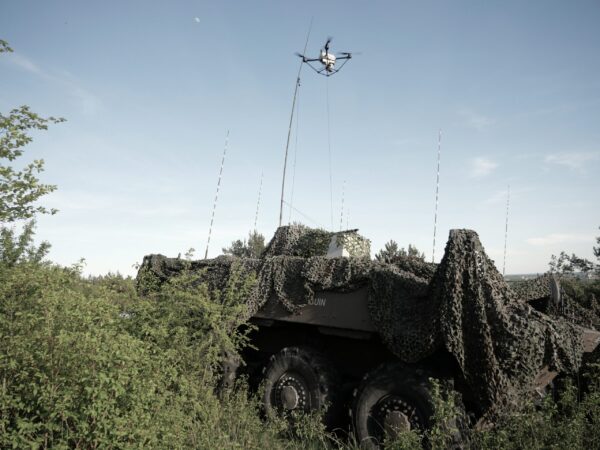
Elistair Khronos Tethered Drone Joins France’s ORION 2026 Exercise
Elistair's Khronos automated tethered drone is participating in ORION 2026, France's largest joint military exercise in decades, which involves 12,500 troops and 1,200 drones. This significant event, aimed at enhancing multi-domain operations, is taking place from April 7 to April 30. The exercise showcases advanced military capabilities, with the automated DroneBox providing continuous aerial surveillance to support the operations. Elistair's involvement highlights the increasing integration of drone technology in modern military strategies.
Drone News Drone News Feeds Europe Drone Industry European Union Military News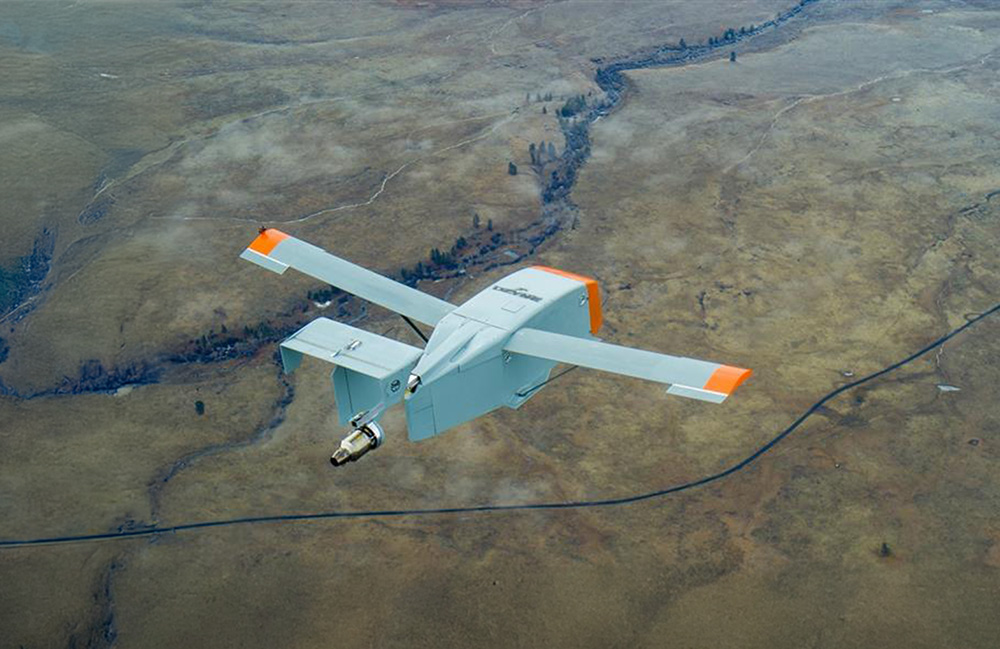
Ondas Acquires DZYNE Technologies for $875.8 Million to Enhance Defense Capabilities
Ondas Inc. has acquired DZYNE Technologies LLC, a defense technology firm based in Irvine, California, for $875.8 million. This acquisition, financed through a cash-and-stock structure, aims to enhance Ondas' capabilities in multi-domain intelligence, surveillance, and reconnaissance (ISR), counter-uncrewed aerial systems (UAS), and autonomous systems to meet the evolving needs of U.S. and allied defense customers. The acquisition is significant as it positions Ondas to leverage DZYNE's advanced technology and engineering talent, which includes long-endurance ISR capabilities and autonomous systems. Eric Brock, chairman and CEO of Ondas, emphasized that the integration of DZYNE's mission-proven technologies will accelerate the development of a next-generation autonomous defense platform, essential for maintaining military advantage in rapidly changing warfare. Looking ahead, Ondas anticipates that DZYNE will generate $191 million in revenue for the full year 2026 and over $300 million in 2027. Ondas is now targeting at least $525 million in revenue for 2026. The integration of DZYNE’s ULTRA and IonStrike systems will expand Ondas' ISR and counter-UAS capabilities, enhancing its portfolio in defense applications.
Aerospace Artificial Intelligence Artificial Intelligence / Cognition Defense / Security Design / Development Drones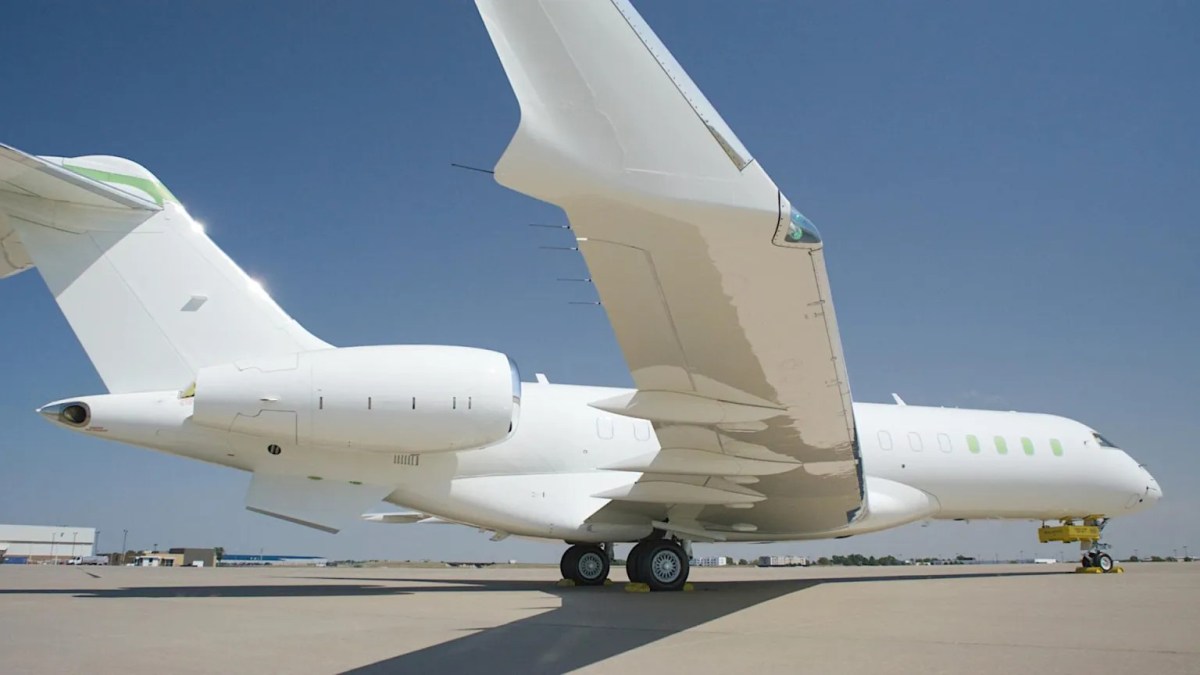
U.S. Army to Establish HADES Aircraft and Drone Battalion at Fort Hood
The U.S. Army has announced that its future fleet of ME-11B High Accuracy Detection and Exploitation System (HADES) aircraft will be stationed at Fort Hood, Texas. This initiative includes the formation of a unique operational drone battalion, aimed at consolidating aerial intelligence, surveillance, and reconnaissance (ISR) assets following the retirement of turboprop ISR planes last year. This development is significant as it marks a pivotal step in modernizing the Army's global aerial ISR capabilities. The relocation of the 116th Military Intelligence Brigade from Fort Gordon to Fort Hood is part of this strategy, enhancing the Army's ability to conduct multi-domain and large-scale combat operations. The ME-11B jets, converted from Bombardier Global 6500 business jets, are expected to improve operational efficiency with higher speed, altitude, and advanced sensor capabilities. Looking ahead, the Army anticipates the delivery of the first ME-11B prototype by the end of the year, with plans to acquire at least six production models. The HADES system is designed to extend the Army's intelligence-gathering reach significantly, utilizing long-range drones to enhance operational effectiveness while minimizing exposure to threats. No further timeline was disclosed at the time of publication.
Air Armies Drones Land Manned ISR News & Features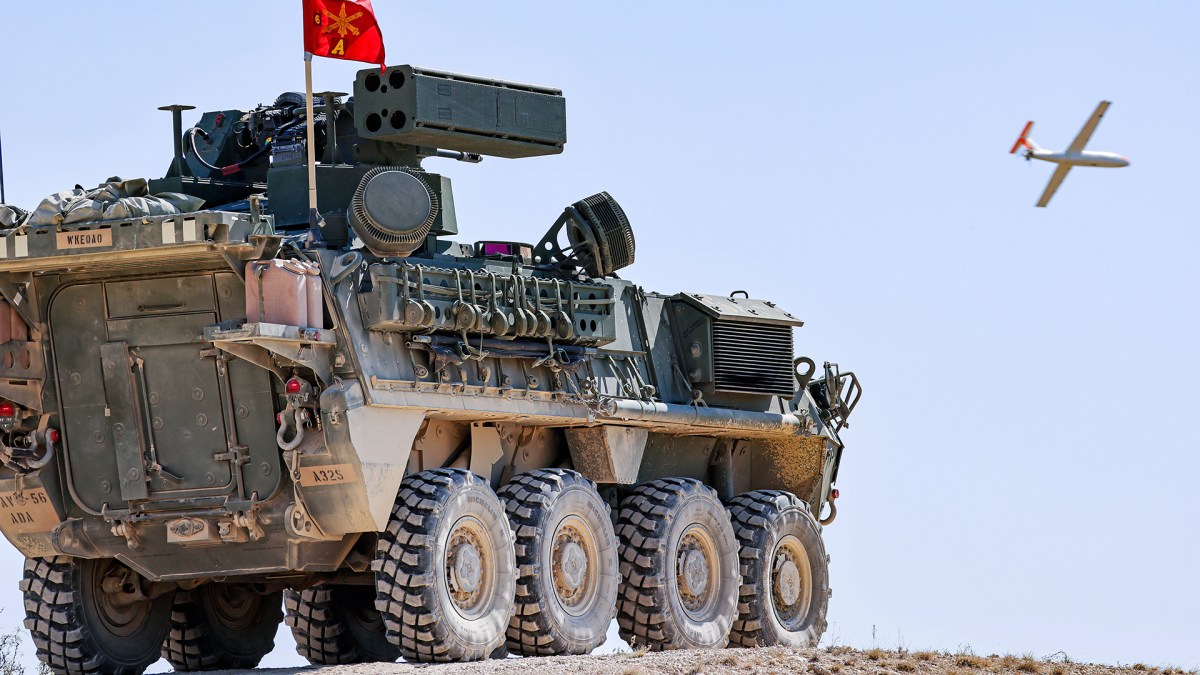
Army’s Newest Unit Aims To “Overwhelm” Adversary With Drones In Pacific Fight
The U.S. Army has established the 7th Infantry Division Multi-Domain Command – Pacific, a new unit designed to integrate drone warfare with the operational strengths of Stryker brigades. This initiative aims to enhance the military's capabilities in the Pacific region, allowing for a more versatile and overwhelming response to potential adversaries. The command will leverage advanced drone technology to support ground operations, providing a strategic advantage in modern warfare. The formation of this unit reflects the Army's commitment to adapting its tactics and resources in response to evolving threats in the region.
Air Armies Around The Globe Drones Indo-Pacific Land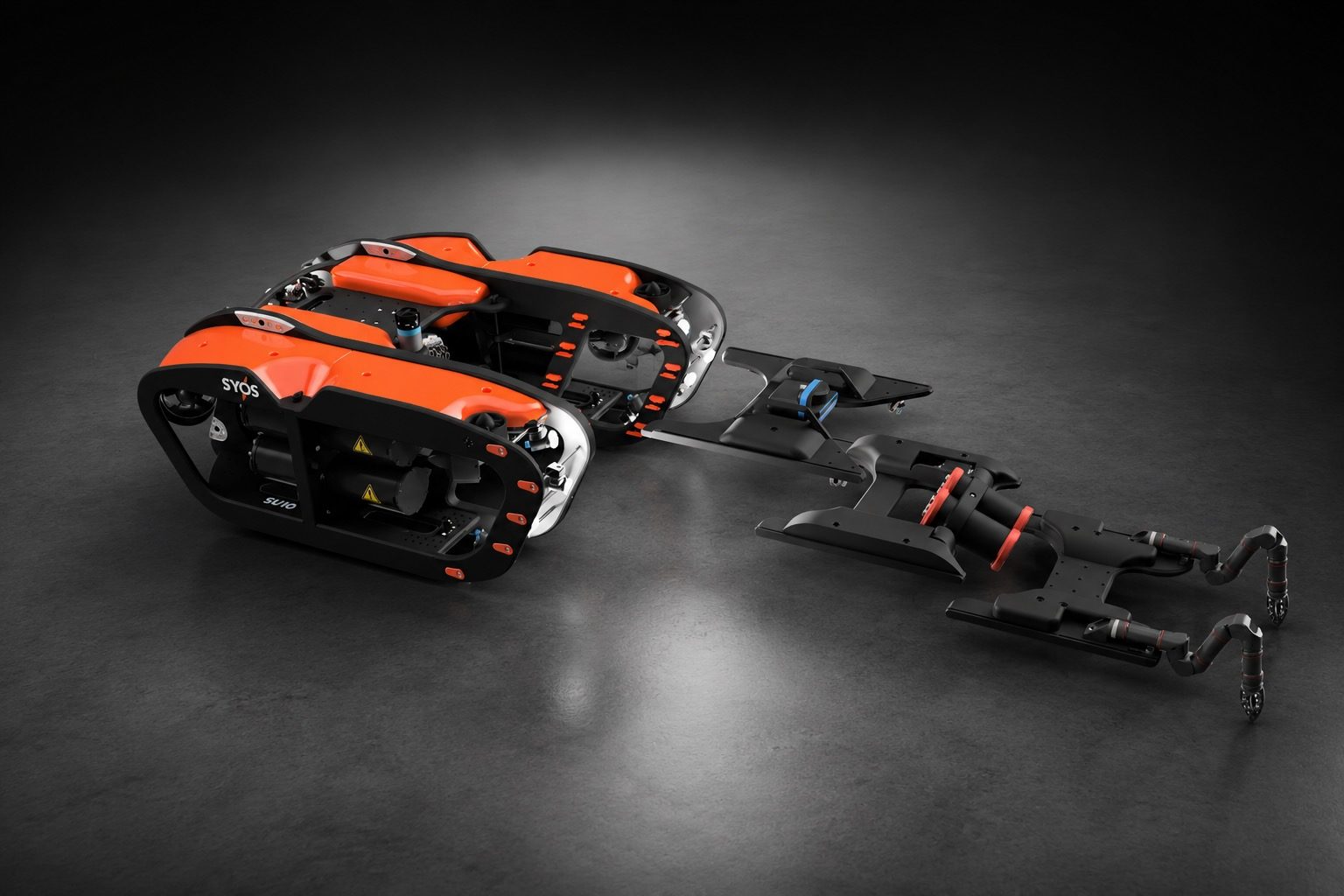
Under the Ice: New SYOS Underwater Drone Targets Maritime Security and Antarctic Exploration
SYOS, an autonomous systems company based in the UK and New Zealand, has unveiled its latest innovation, the SU10 uncrewed underwater vehicle (UUV), aimed at enhancing maritime security and supporting Antarctic exploration. The announcement was made during a recent event, marking a significant expansion of SYOS's portfolio, which previously focused on air and land operations. The introduction of the SU10 allows the company to venture into subsurface missions, addressing the growing demand for advanced technologies in multi-domain operations. This new underwater drone is designed to operate effectively in challenging environments, underscoring SYOS's commitment to developing versatile solutions for both security and exploration purposes.
Applications Arctic Drone News Drone News Feeds Dual Use News
EUROATLAS and Rheinmetall Partner to Integrate GREYSHARK AUVs into Coastal Defense Systems
EUROATLAS, a Bremen-based company specializing in advanced defense technologies, has formed a strategic partnership with Rheinmetall, Germany's leading international defense systems supplier, with support from Stockholm's Mimir Group. The collaboration aims to integrate EUROATLAS's autonomous underwater vehicle, GREYSHARK™, into Rheinmetall's Battlesuite™, a modular and AI-enabled digital platform designed to manage multi-domain defense systems. This integration, announced recently, will enhance coastal defense capabilities by utilizing Battlesuite™ as the digital backbone for Rheinmetall's maritime operations infrastructure. The partnership reflects a growing emphasis on advanced technology in defense strategies, particularly in addressing maritime security challenges.
euroatlas rheinmetall greyshark auvs coastal defense systems
Canadian AI Startup Independent Robotics Wins $2.28M Contract to Bring Conversational AI to Multi-Agent Robot Swarms
A new system called IMPAC has been developed to enhance human interaction with complex robotic systems by allowing operators to communicate using natural, conversational language. This innovation aims to simplify the process of managing multi-robot operations, ensuring that they remain synchronized and aligned with their missions. By translating everyday language commands into actionable plans, IMPAC significantly reduces the cognitive burden on users, effectively acting as a force multiplier for existing teams. The system is designed to operate across various environments and domains, making it a versatile tool for improving efficiency and coordination in robotic operations.
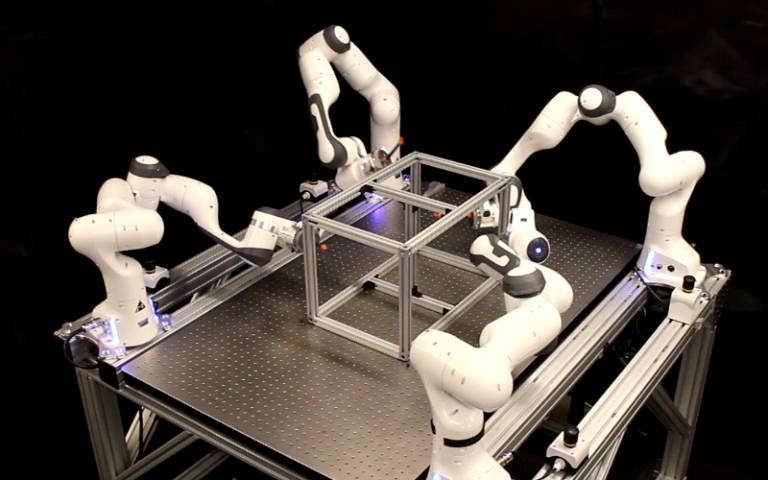
Design, Modeling, and Validation of Multi‐Segmental Adaptive Pipeline Robots in Complex Pipeline Environments
In May 2026, the Journal of Field Robotics published a significant study exploring advancements in robotic technology. Researchers from various institutions collaborated to investigate the applications of autonomous robots in diverse fields, including agriculture, disaster response, and environmental monitoring. The study highlights the increasing importance of robotics in enhancing efficiency and safety in these sectors, driven by the need for innovative solutions to complex challenges. By employing cutting-edge algorithms and machine learning techniques, the researchers demonstrated how these robots can operate in unpredictable environments, making them invaluable tools for future operations. The findings aim to inform policymakers and industry leaders about the potential of robotics to transform traditional practices and improve outcomes across multiple domains.
RESEARCH ARTICLE
China's Robotics Industry Sees Multiple Breakthroughs Across Humanoid Robots and Physical AI
China's robotics industry has achieved significant advancements in humanoid robots and physical artificial intelligence, marking a pivotal moment in the sector's development. These breakthroughs were reported in October 2023, showcasing the country's commitment to enhancing its technological capabilities. The innovations include improved mobility and functionality in humanoid robots, which are now capable of performing complex tasks that were previously thought to be the domain of human workers. This progress is driven by a combination of increased investment in research and development, collaboration between universities and tech companies, and a growing demand for automation across various industries. As China aims to position itself as a global leader in robotics, these developments not only highlight the nation's technological prowess but also its strategic focus on integrating AI into everyday applications. The advancements are expected to have far-reaching implications, potentially transforming sectors such as manufacturing, healthcare, and service industries. By leveraging cutting-edge technology, China is setting the stage for a future where robots play an integral role in both the economy and society.
Robotics
Kinetix AI Introduces KAI Halo to Enhance Data Infrastructure for Robotics
As the robotics industry enters a phase of large-scale development, a critical question arises: how long does it take for newly collected real-world data to translate into actionable capabilities for robots? The data journey, from collection to deployment, is complex and any delays can hinder progress. Kinetix AI is addressing this challenge by connecting every stage of data production rather than simply expanding data volume. The Kai Ego Dataset has amassed over 100,000 hours of first-person multimodal data, covering more than 2,000 atomic skills across various real-world scenarios such as homes, retail, hotels, and factories. This dataset captures the nuances of continuous tasks, allowing robots to learn complex behaviors rather than isolated actions. It integrates diverse information, including visual data, body posture, and motion semantics, providing a unified data foundation for cross-domain transfer. KAI Halo, a standardized data collection tool developed by Kinetix AI, addresses common issues encountered in real data production, such as occlusion and data quality fluctuations. By employing a four-way fisheye global shutter RGB camera and a 200Hz IMU, KAI Halo synchronizes multiple perspectives, enabling a comprehensive reconstruction of human actions and interactions with the environment. No further timeline was disclosed at the time of publication.
Embodied Intelligence Data Infrastructure Robotics AI Data Processing
ABB Robotics completes its AI-powered Visual SLAM AMR portfolio with new autonomous forklift
ABB Robotics completes its AI-powered Visual SLAM AMR portfolio with new autonomous forklift Visit http://go.abb/robotics for further information -The new Flexley Stack F712 extends ABB Robotics’ AI-powered Visual SLAM technology to autonomous forklifts, enabling pallet transport and high-density storage. -Customers can now deploy mixed fleets of Visual SLAM-powered tugs, movers and forklifts on a common navigation, fleet management and software platform. -Powered by ABB Robotics' AMR Studio, the portfolio enables up to 20% faster commissioning while ensuring seamless interoperability and safe, reliable operation. 07/07/26, 07:10 AM | Industrial Robotics, Mobile Robots | ABB Inc. ABB Robotics is expanding its Autonomous Mobile Robotics (AMR) portfolio with the launch of the Flexley® Stack F712, creating a complete interoperable ecosystem across all major Visual SLAM AMR types. Combining autonomous forklifts, tugs and movers on one platform, ABB Robotics enables customers to automate a broader range of material-handling and intralogistics processes. Offering market-leading accuracy, the F712 is designed for demanding material handling, end-of-line storage and warehouse operations across industries including automotive manufacturing, helping increase efficiency, flexibility and scalability. More Headlines A3's Automate 2026 Breaks Records as Demand for Robotics, AI and Automation Grows NVIDIA and Hugging Face Bring New Models and Frameworks to LeRobot for the Open Robotics Community Palladyne AI Executes $4.2 Million U.S. Air Force Contract to Advance Swarming Capabilities for Integrated Cross-Domain Operations UMA Unveils Its Vision for the Next Generation of Humanoid Robots Robbyant Unveils LingBot-Depth 2.0 and LingBot-Vision to Redefine Robotic Spatial Perception Articles Unleash AI Innovation: The Power of NVIDIA RTX PRO 6000 Blackwell Workstation Edition Fueled by PNY-Supplied GPUs Automate 2026 Q&A with DESTACO Automate 2026 Q&A with Roboteon Advances in Robots to See & Interpret within Warehouse Environments Building Resilient Fulfillment Networks with Robotics and Real-Time Logistics Data "Across intralogistics operations, businesses are being asked to process greater volumes in less time, while working with increasingly limited resources," said Marc Segura, President, ABB Robotics. "They are under pressure to move goods faster and with greater flexibility, while labour availability is becoming a critical constraint. As part of our journey to more autonomous and versatile robotics (AVRTM), we have combined advanced vision, mobility and intelligence in the Flexley Stack F712 forklift AMR, completing our scalable, AI-powered AMR portfolio." F712 is versatile, capable of handling multiple load types and sizes - including open and closed pallets, containers or racks- up to 2,000 kg and reaching heights of 8.5 meters. The Flexley Stack AMR F712 joins the Flexley Tug and Flexley Mover in ABB Robotics' growing Visual SLAM AMR portfolio. Applications include intralogistics tasks such as warehouse storage and retrieval, as well as line supply, end-of-line handling, body- and press-shop and drive-in and light buffer in the automotive and industries sector. Unlike conventional AMR forklifts on the market, F712 uses Visual SLAM to map and navigate its environment, eliminating the need for pre-installed infrastructure like markers or reflectors. The AI-enabled Visual SLAM supports the autonomous decisions required to operate in complex, dynamic warehouse operations with a market-leading positional accuracy of ±10 mm. Together with AMR Studio®, this shortens commissioning times by up to 20 percent and creates a versatile and reliable system that can adapt instantly when a warehouse or production floor layout changes. Certified to the latest ISO and ANSI safety standards, Flexley Stack F712 can safely operate at class-leading speeds of up to 1.7 m/s while loaded. F712 is fully integrated with AMR Studio and is VDA5050 compatible, enabling seamless integration with ABB Robotics' Visual SLAM AMRs and existing systems within a unified project. This makes it easy to manage complex projects and integrate different types of mobile robots. The no-code, drag-and-drop software suite supports rapid setup, fleet coordination, traffic management and real-time visualization, allowing ABB Robotics' tugs, movers and forklifts to operate together in the same layout for scalable turnkey automation projects. ABB Robotics as one of the world's leading robotics companies, is the only company with a comprehensive and integrated AI-powered portfolio covering robots, cobots and Autonomous Mobile Robots (AMRs), designed and orchestrated by our value-creating software. We help companies of all sizes and sectors - from automotive to electronics and logistics - to outperform by becoming more resilient, flexible and efficient. ABB Robotics is at the forefront of developing and commercializing a new generation of Autonomous Versatile Robotics

Japan Pioneered Humanoid Robots—Can It Now Catch China?
“In the future, the relationship between humans and robots will deepen, and the distinction between them will probably disappear.” This prediction, from one of the attendees at the recent Humanoids Summit in Tokyo, might have been unremarkable had it not come directly from an android that was first introduced to the world 20 years ago. Geminoid HI-6 is the sixth-generation of a robot originally designed in 2006. The mechanical twin of Osaka University professor Hiroshi Ishiguro, Geminoid HI-6 is now equipped with a large language model trained on Ishiguro’s own writings and interviews. It has advanced conversational skills and can even have a chat with its creator, an eerie spectacle. But at the Humanoids Summit, Geminoid was one of the few humanoid robots from Japan, the country that pioneered the form factor.While the event in Tokyo only had about 40 robots on display, Chinese systems outnumbered Japanese by roughly three to one. Some Japanese robotics firms were even using Chinese robots in their own technology demonstrations, something that would have been unthinkable in the recent past—one Japanese engineer described the situation as “sad.” The conference was a stark reminder of how Japan has ceded its early lead in humanoid robot development to overseas competitors, and the challenge it now faces to secure a place in an ecosystem increasingly dominated by general-purpose robots powered by AI. Twenty-five years ago, Japan was turning out groundbreaking humanoids that were showstopping in their abilities, but they were not commercialized as practical machines in any meaningful way. Heavily influenced by science fiction and lacking practical applications, they were mostly expensive technology demonstrations that were eventually mothballed. What Japan retains, however, is robotics design and know-how, which it must leverage to be a key player in the rapidly evolving humanoid ecosystem. Learning to Walk—Then Standing StillTo anyone who has seen recent videos of Chinese humanoids doing kung-fu and synchronized acrobatics, as well as half-marathon races, China’s remarkable progress in the field is nothing new. At the Humanoids Summit, Toyota showed a video of its latest basketball-playing robot, and Honda exhibited its latest robot hand, but the full-scale humanoids on the floor were mostly Chinese–the kid-size K1 machines from Booster Robotics of Beijing were dancing to Michael Jackson tunes. The full-scale G1 humanoid from Unitree Robotics of Hangzhou was also doing demos. “You cannot sell these bipedal systems in Japan for safety and compliance reasons,” says Shuichi Nagao, a frequent visitor to China as CTO of Omakase Robotics, a division of Zeals, a Japanese humanoid robot developer. Omakase was exhibiting a G1 modified with an external PC controller, a dextrous hand, a suction-cup manipulator and a sensor “hat” with an extra speaker, mic and camera. “In China, the government is pushing humanoid development. They didn’t have an industry 20 years ago. The people pushing it are young, in their 20s and 30s. It’s a really different mentality out there,” says Nagao. “Big players in Japan are still looking for use cases for humanoids. In China, they’re already doing mass production and reducing the cost, so other countries can’t compete with them anymore.”Another Japanese company showing off G1 bots was summit sponsor GMO AI & Robotics, a subsidiary of Japanese internet company GMO. It’s using the robots in partnership with Japan Airlines to load and unload cargo containers at Tokyo’s Haneda airport. The cargo project is a trial—like many other humanoid experiments—but the fact that Chinese machines have penetrated so far into Japan’s ecosystem upends a long history. In 1973, scientists at Waseda University in Tokyo built WABOT-1, considered the first full-scale humanoid robot and capable of slow bipedal locomotion, grasping objects and simple communication. It inspired Honda’s groundbreaking Asimo humanoid, but it was never commercialized. Asimo was eventually retired in 2022, the year ChatGPT was released. Two years later, Unitree’s G1 went on sale for US $16,000. China’s High Torque Technology Co. showed off its Mini Pi biped, customized with an anime-inspired head, at Humanoids Summit in Tokyo. The regular version is priced at $3,500. Tim HornyakSupply and DemandJapan’s development of humanoids happened before practical applications or widespread demand were in place, but bad timing is only part of the story—Japan also has a history of developing technologies that might appeal to domestic consumers but not necessarily those overseas. For example, decades after they first appeared, its highly engineered, multifunction toilets have only recently found a following abroad. Japan’s humanoid prowess was partly built on the back of its legendary industrial automation, yet even that stronghold has eroded. Ani Kelkar, a partner from McKinsey & Company in Boston who produces analytical reports about the robotics industry, told the summit audience that while Japan occupied the top spot in the world in manufacturing robot density (the number of multipurpose industrial robots in operation per 10,000 employees) from at least 1994 to 2009, it then slipped to second in 2014, third in 2019 and fifth in 2024. In that year, South Korea was at the top of the leaderboard with a robot density of 1,220 compared to Japan’s 446. The International Federation of Robotics estimates China now has the most operational industrial robots in the world, with around 2 million total units, approximately 4.5 times more than Japan. “The annual installation numbers are impressive too: 54 percent of all robots installed worldwide in 2024 were deployed in China,” the IFR said in a release in April 2026. “I think the loss of Japanese leadership is more to do with the rise of China as a manufacturing powerhouse including for sectors that Japan had high export levels,” Kelkar said in an email interview. “The recovery has not yet happened as Japan ‘missed’ the rapid acceleration in AI for robotics and is now playing catchup.”How Japan Can Adapt Kelkar believes Japan has a US $100 billion opportunity in general-purpose robotics, which are machines that can perform a wide variety of tasks, and it cannot rely on the slower-growing industrial robot market, which is centered on factory machines that do one simple and predictable task like welding car parts. He points to a McKinsey white paper suggesting that while Japan has much of the hardware and technology experience needed to support general purpose robot development, it must change its strategy to capture more share in AI, software, data collection and robotics platforms.Tetsuya Ogata is a professor of engineering and director of the Institute for AI and Robotics at Waseda University, the birthplace of humanoids in Japan. He briefed the summit on how a nonprofit he chairs, the AI Robot Association (AIRoA), is working with Toyota and other members to develop foundational technologies for collaborative use. For instance, AIRoA has collected some 80,000 hours of data on remote operation of mobile manipulators, and Ogata believes it’s the largest dataset of its kind. Using the data, it built and verified Vision-Language-Action (VLA) models, and it has also started data collection for dual-arm mobile manipulation. In an interview, Ogata acknowledged Japan’s struggle to find its place in the changing landscape. “The world of AI is inherently a game of scale,” says Ogata. “Therefore, Japan’s absolute prerequisite is to secure a competitive baseline of scale—in data, computing resources, and talent. Beyond that, what I consider most critical is a mindset shift: rather than trying to hoard scale within a single nation or company, we must grow stronger by collaborating with a diverse ecosystem of domestic and international players.” Specifically, this means creating a ‘collaborative domain’ to address data—the single biggest bottleneck—through industry-wide cooperation rather than data-siloing. By collectively nurturing a pre-competitive, shared data infrastructure and foundation model, individual companies can then compete on top of it with their own applications. “By offering this open ‘data ecosystem’ to the world, we can engage global players and establish a ‘third pole’ alongside the US and China,” says Ogata. “I believe this is how Japan can reclaim its global presence.”In 1999, Japan introduced the world’s first mobile internet services platform. But being first didn’t turn Japan into a smartphone manufacturing or design center—it’s now merely a supplier of parts to other countries who are leading the smartphone industry. If Japan can avoid a repeat of that experience and successfully deregulate, diversity, and commercialize its original humanoid dreams, it stands a better chance of influencing the direction of the industry and reaping billions in value. As automobiles and electronics were pillars of Japan’s industrial strategy in the last century, Japan could make humanoid robots one of its key value generators in the 21st century, an approach that would not only deliver economic benefits but give Japan greater clout in how the industry will evolve. Just like Japanese cars, electronics, and even toilets, Japanese humanoids could stand for craftsmanship and reliability. It’s a legacy that Japan can’t afford to give up.
Japan Robotics Humanoids Humanoid-robots
NVIDIA Launches Nemotron 3 Nano Omni Model, Unifying Vision, Audio and Language for up to 9x More Efficient AI Agents
NVIDIA has introduced the Nemotron 3 Nano Omni, an innovative open multimodal AI model designed to enhance the efficiency of AI agent systems. Announced today, this model integrates vision, speech, and language capabilities into a single framework, addressing the common issue of time and context loss that occurs when data is transferred between separate models. By streamlining these processes, the Nemotron 3 Nano Omni aims to improve the performance of AI applications across various domains. This advancement is particularly significant as it allows for more cohesive and contextually aware interactions, marking a notable step forward in the development of AI technologies.
A Field‐Adaptive Mechanical Weeding System Coupling Oscillating Pneumatic Mechanism With Deep Learning for Intra‐Row Weed Control in Lettuce
The Journal of Field Robotics has published an early view article highlighting recent advancements in autonomous robotic systems. Researchers from leading universities and technology firms presented their findings on October 15, 2023, during a virtual conference focused on robotics innovation. The study emphasizes the growing importance of these systems in various sectors, including agriculture, search and rescue, and environmental monitoring. The motivation behind this research stems from the increasing demand for efficient and reliable robotic solutions capable of operating in complex environments. By integrating advanced artificial intelligence and machine learning algorithms, the researchers demonstrated how these autonomous systems can enhance operational capabilities and decision-making processes. The article details various case studies showcasing successful implementations of robotic technologies, illustrating their potential to revolutionize traditional practices. The findings suggest that as technology continues to evolve, the integration of autonomous robots will become crucial in addressing global challenges, such as food security and disaster response. This publication marks a significant contribution to the field of robotics, providing insights into future trends and encouraging further exploration of autonomous systems' applications. Researchers and industry professionals are urged to collaborate and innovate, ensuring that the benefits of these technologies are realized across multiple domains.
RESEARCH ARTICLE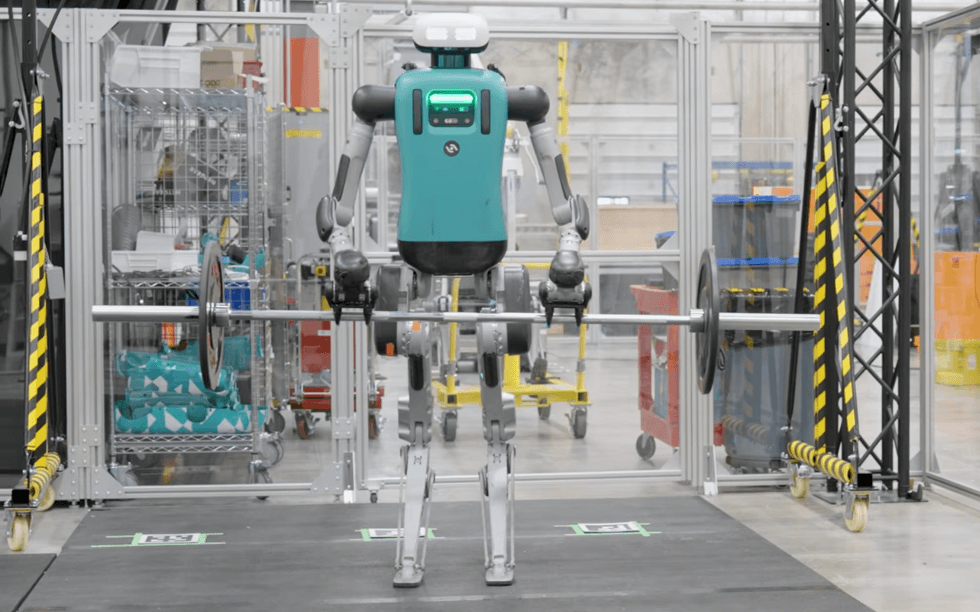
Video Friday: Digit Learns to Deadlift
IEEE Spectrum robotics has released its latest edition of "Video Friday," showcasing a selection of innovative robotics videos and announcing upcoming events in the field. The events include the International Conference on Robotics and Automation (ICRA) scheduled for June 1-5, 2026, in Vienna, the Robotics Science and Systems (RSS) conference from July 13-17, 2026, and a Summer School on Multi-Robot Systems taking place from July 29 to August 4, 2026, in Prague. Among the featured videos, researchers are training the robot Digit to perform a deadlift with a 65-pound object, emphasizing the importance of whole-body coordination and resilience in its actuators. This training allows for the development of a policy that enables Digit to execute a dynamically balanced lift in real-world scenarios. Additionally, Gatlin Robotics has introduced its first commercial showcasing robots in action as part of its Robot-as-a-Service (RaaS) contract. Dexterity highlights the expressive potential of motion intelligence in robotics, while Harvard researchers present a swarm of simple antlike robots capable of constructing and dismantling structures through adaptive group behavior. Lastly, a project from Michigan Robotics demonstrates a microcombustion actuator that rapidly inflates to launch colorful water droplets, challenging conventional notions about the capabilities of soft actuators. These advancements reflect the ongoing evolution and application of robotics technology across various domains.
Industrial-robots Humanoid-robots Video-friday Swarm-robotics Dancing-robot Bipedal-robots
Fusion‐Guided and Distillation‐Optimized Framework for Freespace Detection in Off‐Road Environments
The Journal of Field Robotics has published a new study highlighting advancements in autonomous robotic technologies. Researchers from various institutions collaborated to explore innovative applications of robotics in diverse fields, including agriculture, search and rescue, and environmental monitoring. The findings, released in early October 2023, emphasize the potential of these technologies to enhance efficiency and safety in critical operations. The study showcases how autonomous robots can navigate complex environments and perform tasks with minimal human intervention, driven by the need for improved operational capabilities in challenging conditions. By employing advanced algorithms and machine learning techniques, these robots can adapt to their surroundings and make real-time decisions. The research was conducted across multiple locations, with field tests demonstrating the robots' effectiveness in practical scenarios. The motivation behind this work stems from the increasing demand for automation in various sectors, as industries seek to reduce labor costs and improve productivity. Overall, the study underscores the transformative impact of robotics on traditional practices, paving the way for future innovations that could reshape how tasks are performed across multiple domains.
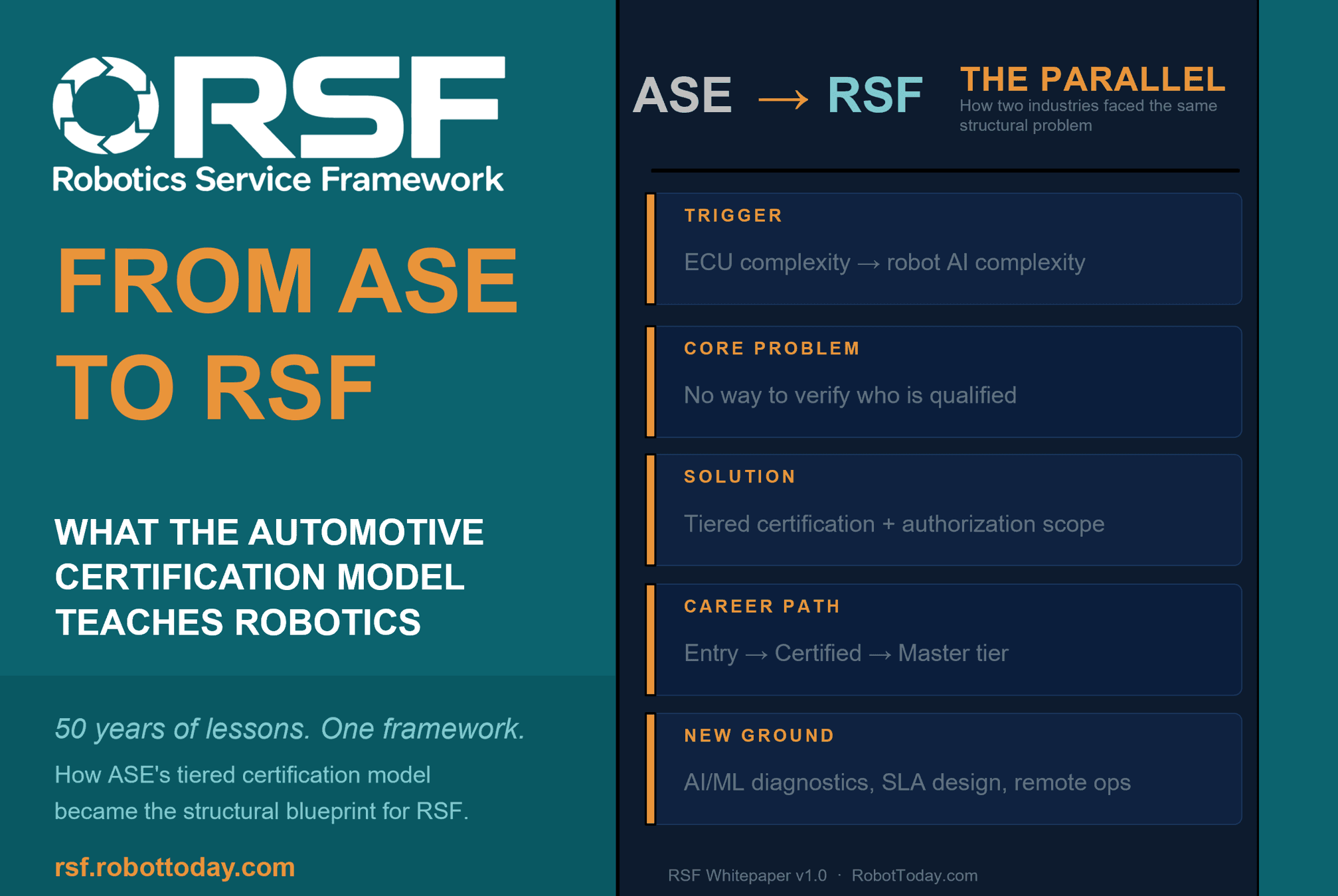
RESEARCH ARTICLERobotics needs a service framework.
RSF defines a common language for robot service capability, lifecycle operations, certification pathways, and service-provider networks.