Industry Briefing
A single destination for timely, editor-curated robotics news from around the world.
Serve Robotics CEO Discusses Delivery Robots' Impact on Last-Mile Logistics
Serve Robotics CEO Ali Kashani recently spoke on Bloomberg Open Interest about the company's strategic shift towards partnerships with DoorDash and Grubhub. He highlighted how delivery robots can significantly reduce last-mile delivery costs, making them a valuable asset in the logistics sector. This shift is crucial as it demonstrates the growing importance of automation in the delivery industry. Kashani emphasized that the AI-powered technology behind these robots has the potential to extend beyond food delivery, with applications in hospitals and everyday logistics. Looking ahead, the conversation around delivery robots is expected to evolve, with potential expansions into various sectors. No further timeline was disclosed at the time of publication.

Robot.com Introduces R-dog Quadruped Robot for Last-Mile Delivery and Advertising
Robot.com has launched R-dog, a quadruped robot designed for last-mile delivery and interactive advertising. This innovative robot addresses the challenges faced by wheeled robots in navigating obstacles such as stairs and curbs, effectively completing the final 100 meters of delivery. R-dog operates on the REMI fleet management platform, allowing it to manage multiple payloads, including food and e-commerce parcels, without hardware changes. The significance of R-dog lies in its dual functionality. Not only does it facilitate efficient deliveries in complex environments like urban streets and campuses, but it also serves as a dynamic advertising platform through R-ads. Brands can engage consumers by remotely managing campaigns on R-dog's dual video screens, creating an interactive experience that enhances brand visibility and consumer interaction. Looking ahead, Robot.com aims to leverage R-dog's capabilities to transform last-mile logistics and advertising. The integration of R-dog with the existing REMI platform streamlines operations, enabling rapid deployment of this new robot form factor. No further timeline was disclosed at the time of publication.
Logistics Robotics autonomous delivery Autonomous robots delivery robots Field Foundation Models
Automation's Impact on Fulfillment and Last-Mile Delivery for Direct-to-Consumer Brands
Direct-to-consumer brands in the US and Canada face significant challenges in managing shipping costs, particularly in the final mile, which accounts for about half of all shipping expenses according to ABI Research. This has led to a growing reliance on automation within outsourced logistics, with technologies such as AI-coordinated fulfillment and autonomous mobile robots enhancing delivery efficiency and reliability. The importance of choosing the right third-party logistics (3PL) provider cannot be overstated, as most brands opt to outsource their warehousing needs rather than automate in-house. Providers like GoBolt, which handle fulfillment and last-mile delivery for shippers with over 3,000 orders monthly, are crucial in this landscape. The integration of software that coordinates storage and labor in real-time is transforming operations, as seen with AutoStore's recent product updates that optimize robot movement without necessitating additional hardware. Looking ahead, the trend towards automation in logistics is expected to continue, with AutoStore recently achieving its 300th installation in Aurora, Colorado. The company's advancements, including the CubeVerse platform, highlight the potential for increased efficiency through software rather than hardware expansion. No further timeline was disclosed at the time of publication.
Automation Logistics 3pl amrs artificial intelligence autonomous mobile robots
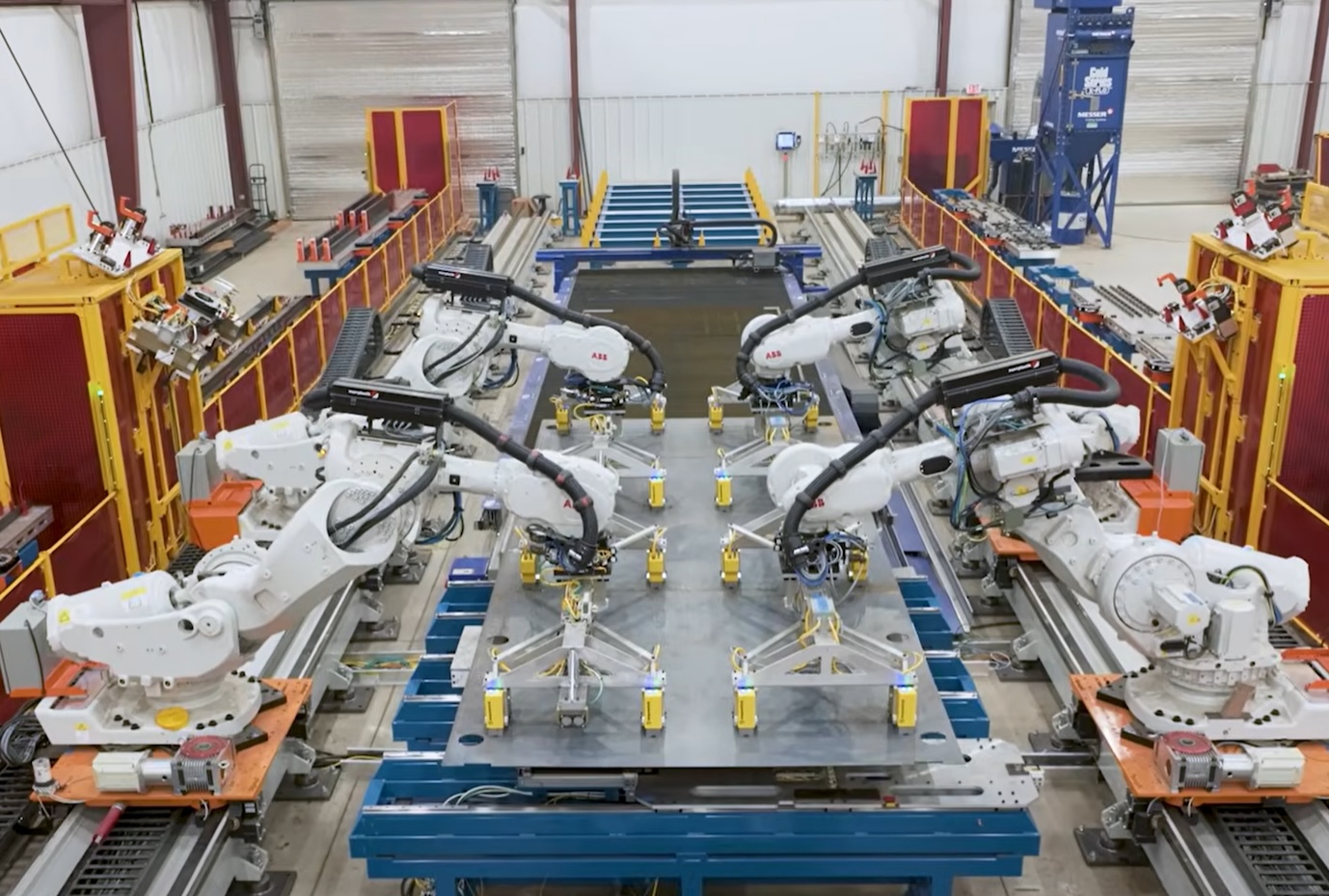
DoorDash's Dot Delivery Robot Encounters Last Mile Challenge, Human Help Costs $5
DoorDash's Dot delivery robot has successfully navigated several kilometers to deliver food, but it struggles with the last few meters from the restaurant to the curb. To address this, DoorDash has opted to pay human delivery workers $5 to assist in this final leg. In early July, a DoorDash driver in Mesa, Arizona, completed a task where she transported food to the robot, raising questions about efficiency. This situation highlights the ongoing challenges in automating food delivery, particularly the handoff from restaurant staff to robots. DoorDash's CEO Tony Xu acknowledged that ensuring a smooth transition of orders to robots has been a significant hurdle. The pilot program aims to enhance efficiency during peak times while providing additional income for delivery workers, emphasizing their continued importance in the delivery process. Looking ahead, DoorDash's reliance on human workers for the last mile raises questions about the future of automation in delivery services. As robots face limitations in completing tasks independently, the $5 fee represents a crucial link between human and machine, underscoring the complexities of achieving full automation in food delivery.
Delivery Robots Last Mile Logistics Automation Food Delivery AI
Army Grants Prototype Contracts to Six Companies for Last Tactical Mile Program
The U.S. Army has awarded prototype contracts to six companies as part of its Last Tactical Mile program. The companies selected include Maren-Go, Overland AI, Forterra, Hendrick’s Motorsports, American Rheinmetall, and HDT, as reported in a service release. This initiative is significant as it aims to enhance the Army's capabilities in delivering supplies and equipment to troops in the final stages of their missions. The involvement of diverse companies indicates a strategic approach to leverage innovative solutions in military logistics. Looking ahead, it will be important to monitor the progress of these prototypes and their potential impact on military operations. No further timeline was disclosed at the time of publication.
Land Warfare American Rheinmetall Vehicles Army autonomy Drones Forterra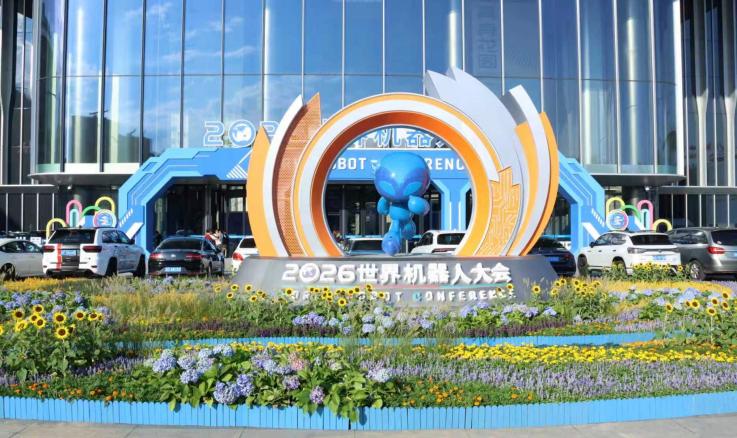
Sainade Unveils iLoabot Solutions to Tackle Last-Mile Logistics Challenges at WRC
At the 2026 World Robot Conference (WRC), Sainade showcased its upgraded iLoabot series solutions, including the iLoabot-M 2.0 autonomous unloading robot and the newly released iLoabot-X autonomous operation robot's de-stacking solution. These innovations address the complex challenges of logistics' last 20 meters, particularly in multi-SKU mixed loading and heavy-load de-stacking scenarios. The significance of these advancements lies in Sainade's ability to redefine the boundaries of embodied technology in logistics unloading. The iLoabot-M 2.0 features critical upgrades in algorithm models and hardware adaptability, allowing for flexible operations without pre-recorded box specifications. This is crucial as traditional methods struggle with the variability and unpredictability of real-world logistics environments. Looking ahead, Sainade's iLoabot-X 2.0 aims to set new industry standards with its heavy-load capabilities, achieving stable loads of up to 46 kilograms. The company emphasizes that its technology is driven by real-world challenges, leveraging extensive field data to enhance robot performance. No further timeline was disclosed at the time of publication.
Logistics Automation Robotic Solutions Warehouse Technology AI Robotics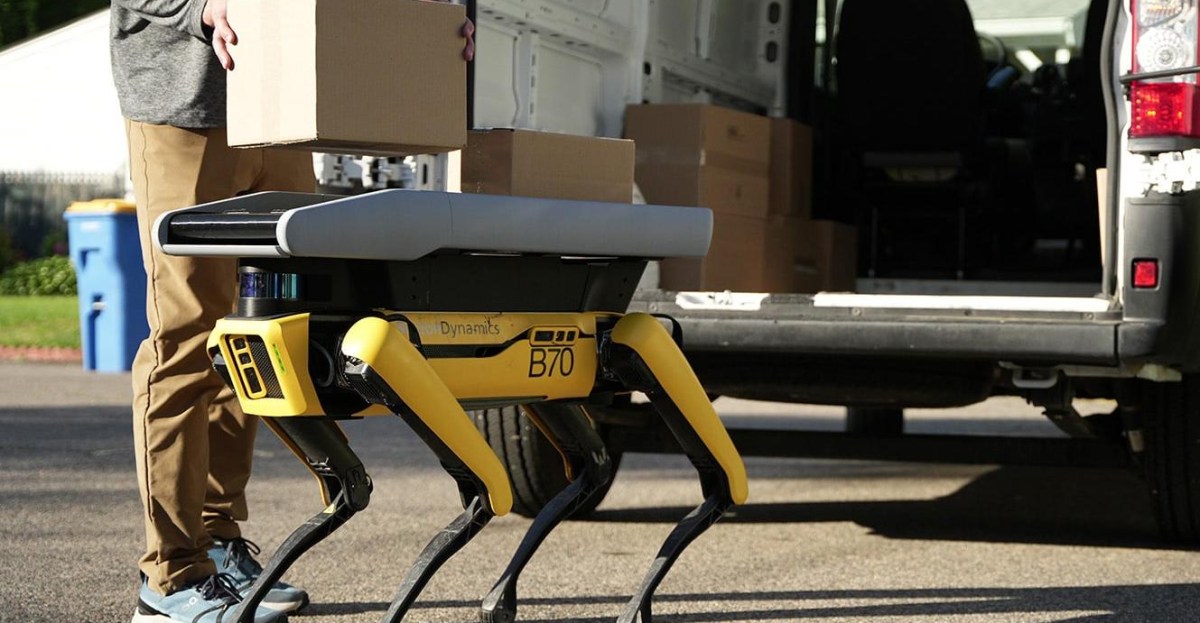
Boston Dynamics Tests Spot Robot for Last-Mile Delivery Solutions
Boston Dynamics is exploring the use of its Spot robot for package deliveries, equipped with a new conveyor belt accessory. This innovation aims to autonomously transport packages from vehicles to customers' doorsteps, potentially easing the workload of delivery drivers. The initiative is significant as it addresses the challenges of last-mile delivery, where human navigational skills are often required to overcome obstacles like stairs and cluttered pathways. Boston Dynamics is currently in discussions with major logistics companies to transition from demonstrations to a full pilot project. Looking ahead, the company believes Spot's ability to navigate uneven terrain will enhance its effectiveness in suburban environments. This could not only alleviate physical strain on delivery drivers but also increase their efficiency, allowing them to handle more packages. No further timeline was disclosed at the time of publication.
Gadgets News Robot Tech
Toyota, GM-backed startup Momenta planning entry into last-mile autonomous delivery
Chinese self-driving technology company Momenta is assembling a team to create Level 4 autonomous delivery robots, aiming to enhance its valuation ahead of a potential public listing. This initiative comes as the company seeks to capitalize on its existing partnerships with major automakers such as Toyota, General Motors, and Mercedes-Benz. While specific details about the project remain undisclosed, sources from the Chinese media outlet Xinliu Car indicate that this move is part of Momenta's broader strategy to solidify its position in the competitive autonomous vehicle market.
News Feed
Challenges in Real-World Implementation of Embodied Intelligence and Robotics
The robotics industry faces significant challenges in transitioning from simulation to real-world applications. While new models and capabilities are frequently demonstrated, many teams struggle with engineering tasks such as kinematics adaptation, sensor calibration, and data synchronization. This gap highlights the need for a unified, stable, and reusable physical validation platform to prevent resource wastage in development. The importance of real-world validation cannot be overstated, as complex factors like collisions and sensor noise cannot be fully modeled in simulations. A reliable physical platform is essential for ensuring consistent kinematic models and control responses, allowing teams to focus on algorithm improvements rather than hardware adjustments. The industry requires a robust platform that is stable, reliable, and open to support various research teams. The TA2 platform from Lingyu Intelligent is a noteworthy example, having demonstrated its capabilities in a competitive setting. It combines remote operation with validated performance in real-world tasks, proving its reliability as a physical base for algorithm testing. This platform could serve as a dependable benchmark for model teams, providing a consistent foundation for performance evaluation and innovation.
Embodied Intelligence Robotics Physical Platforms Data Collection Automation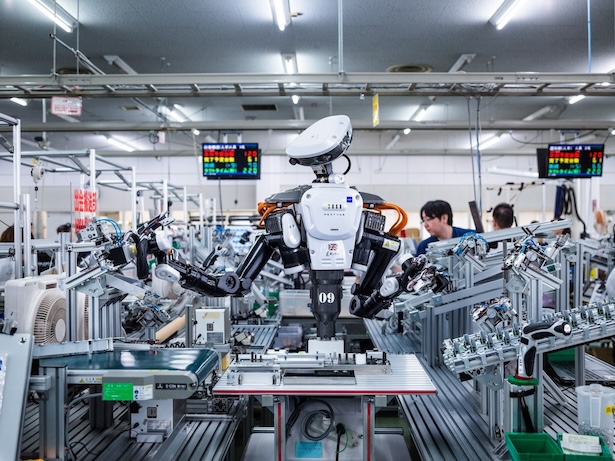
SpaceX's Starship V3 Plans for 1 Million Starmind Satellites by 2030
SpaceX's Starship V3 is set to revolutionize satellite deployment, aiming to launch 1 million Starmind satellites by 2030. The spacecraft can carry over 100 tonnes to low Earth orbit (LEO), significantly more than the Falcon 9's capacity. As of May 2026, Starship has completed 12 flights, with the next mission scheduled for late July 2026, focusing on operational payloads including AI1 prototypes in early 2027. This ambitious plan is crucial for expanding orbital compute capacity, targeting an annual addition of 100 GW through a million tonnes of satellite hardware. SpaceX's strategy hinges on achieving a launch cadence of approximately 12,000 flights, equating to about three launches per day. The company has invested over $15 billion in the Starship program, with expectations to begin payload deliveries in the second half of 2026, starting with Starlink V3 satellites. Looking ahead, the successful deployment of the Starmind constellation will depend on Starship's ability to meet its cost targets of $10–20 million per flight. If achieved, this would make launching satellites more economical than building ground data centers. The next significant milestone will be the launch of AI1 prototypes in early 2027, with full-scale deployments commencing in 2028 from the new Gigasat factory in Texas.

SpaceX's $1.75 Trillion Valuation Driven by Starmind's Future Potential
Starmind is a pivotal element in SpaceX's estimated $1.75 trillion IPO valuation, despite currently generating no confirmed revenue. The stock price reflects optimistic projections regarding AI infrastructure growth, which Starmind has yet to substantiate. As of early July 2026, SpaceX's stock has decreased from its 52-week high of $225.64 to around $150, indicating market skepticism about future execution. The significance of Starmind lies in its potential to transform SpaceX's revenue model beyond traditional launch services. Goldman Sachs has shifted its focus from Starlink subscriber growth to the prospects of AI revenue, including orbital computing, as a cornerstone of SpaceX's long-term valuation. This marks a substantial change in how analysts view the company's growth trajectory, necessitating rates exceeding its historical 33% growth. Looking ahead, the credibility of Starmind as a growth narrative will be crucial for maintaining investor confidence. Analysts have noted a considerable divergence in price targets, reflecting uncertainty about the value of the Starmind and xAI initiatives. No further timeline was disclosed at the time of publication regarding specific milestones for these projects.

Modularizing the Last Mile: AGIBOT Unveils Genie Studio Agent to Scale Robot Deployment
During the fifth day of AI Week, AGIBOT unveiled a new zero-code platform aimed at enhancing operational infrastructure for humanoid rollouts. This strategic shift from model intelligence to practical implementation seeks to address and eliminate engineering bottlenecks that have hindered the deployment of humanoid robots. By simplifying the development process, AGIBOT aims to accelerate the integration of advanced AI technologies into real-world applications, making it easier for organizations to adopt and utilize humanoid systems effectively. The initiative reflects a growing trend in the tech industry to streamline operations and improve accessibility for users without extensive engineering backgrounds.
AI Week Deployment China AGIBOT embodied-ai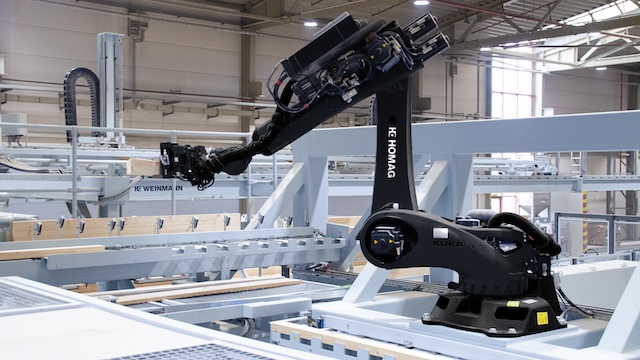
Experiences With a Last Meter Delivery Robot
In May 2026, the Journal of Field Robotics published a significant study highlighting advancements in robotic technology. Researchers from various institutions collaborated to explore innovative applications of field robotics, focusing on enhancing efficiency and safety in agricultural practices. The study was conducted across multiple agricultural sites, showcasing how these robotic systems can optimize crop management and reduce labor costs. The motivation behind this research stems from the increasing demand for sustainable farming solutions amid a growing global population. By integrating advanced robotics into agricultural processes, the team aims to address labor shortages and improve productivity. The findings indicate that these technologies not only streamline operations but also contribute to better resource management, ultimately supporting environmental sustainability. The research involved rigorous field testing of various robotic prototypes, assessing their performance in real-world conditions. The results demonstrate promising capabilities, suggesting that the adoption of such technologies could revolutionize the agricultural sector. This study marks a crucial step towards the future of farming, where robotics play a vital role in meeting the challenges of modern agriculture.
RESEARCH ARTICLERobotics needs a service framework.
RSF defines a common language for robot service capability, lifecycle operations, certification pathways, and service-provider networks.
Join the RobotToday community on LinkedIn
Daily robotics news, in-depth analysis, conference highlights, and discussions with professionals worldwide.