Industry Briefing
A single destination for timely, editor-curated robotics news from around the world.
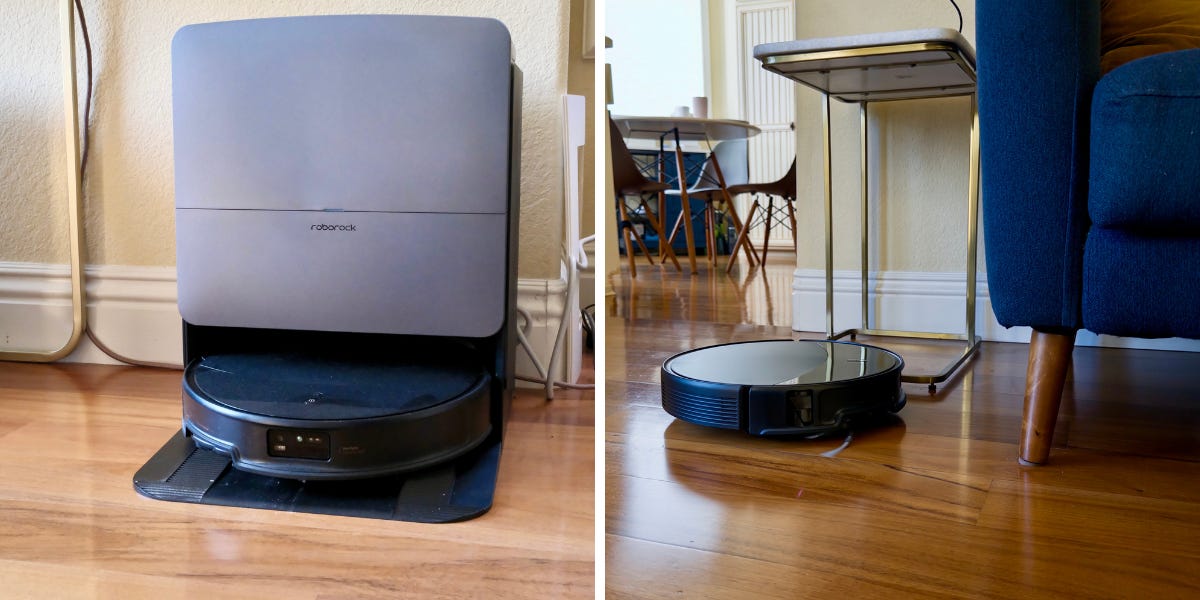
Roborock Saros 20 review: A smarter, more refined robot vacuum, but is it worth the upgrade?
The Roborock Saros 20, a new robotic vacuum, has been designed to navigate various surfaces by raising over three inches to effectively clear rugs and thresholds. However, recent testing has revealed that its cleaning performance does not consistently meet expectations given its price point. While the innovative height adjustment feature aims to enhance usability across different flooring types, users may find that the overall cleaning efficiency falls short of what is anticipated for a product in this price range.
Home (Reviews) Reviews ip-home cleaning insider-picks vacuum-cleaners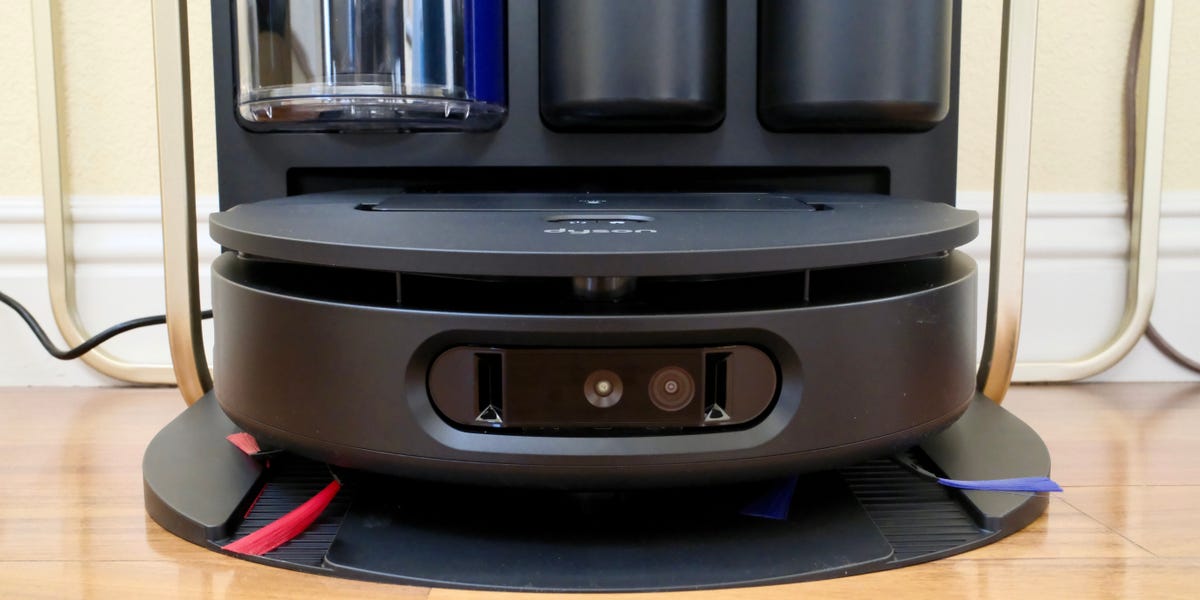
Dyson Spot + Scrub Ai review — Is this $1,200 robot mop worth it?
The Dyson Spot + Scrub Ai, the latest premium robot vacuum and mop from Dyson, has been put to the test in a comprehensive review. This innovative cleaning device is designed to tackle a variety of household challenges, including stubborn stains, pet hair, and carpet cleaning. The review assesses its performance and efficiency in real-world scenarios, highlighting its advanced features and capabilities. With a focus on user experience, the evaluation provides insights into how effectively the Spot + Scrub Ai meets the demands of modern cleaning needs. As consumers increasingly seek smart home solutions, Dyson aims to position this product as a versatile tool for maintaining cleanliness in homes.
Home (Reviews) Reviews ip-home cleaning insider-picks vacuum-cleaners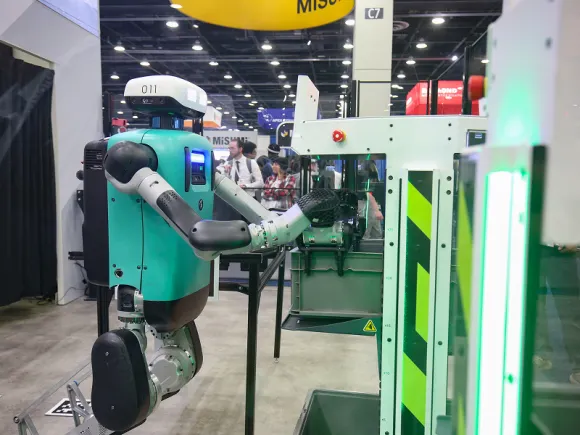
Nvidia and ABB Robotics advance partnerships, Standard Bots raises $200M
Ahead of the upcoming Automate trade show, robotics companies are showcasing their latest innovations in Chicago. The event, scheduled for next week, serves as a platform for these firms to present cutting-edge technologies and advancements in automation. With the industry rapidly evolving, the previews aim to attract attention from potential buyers and industry professionals eager to explore new solutions that enhance productivity and efficiency. The demonstrations will highlight various applications of robotics across different sectors, emphasizing the growing importance of automation in modern manufacturing and logistics. As companies prepare for the trade show, the anticipation builds for what promises to be a significant gathering in the robotics sector.
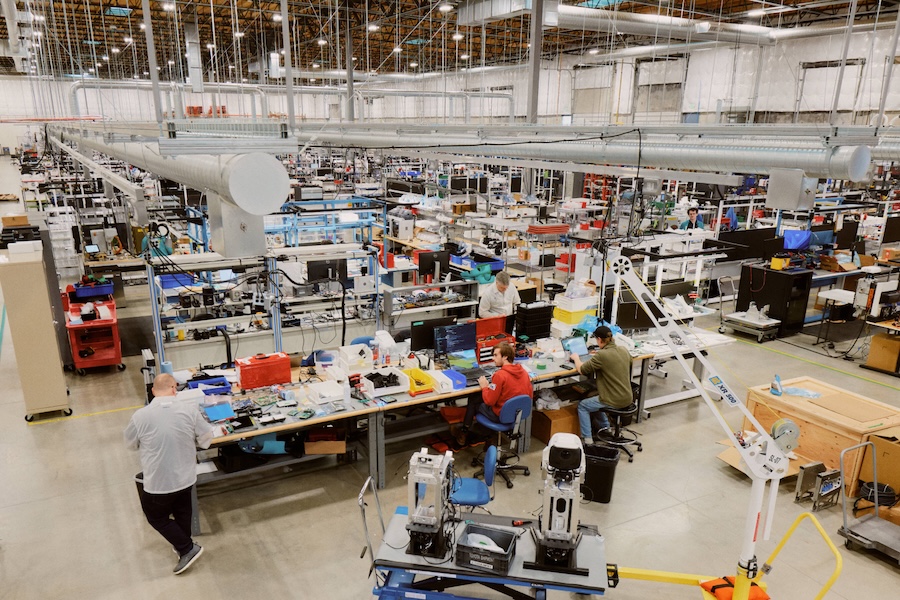
Agility Robotics and Churchill Capital Corp XI Submit Draft Registration for Business Combination
Agility Robotics, creator of the humanoid robot Digit, and Churchill Capital Corp XI have confidentially submitted a draft registration statement on Form S-4 to the SEC. This submission is a significant step towards their proposed business combination, which will make Agility a publicly traded entity. This transaction is poised to establish Agility as the only publicly listed pure-play humanoid company in the U.S. with active commercial deployments. The combined company is expected to be listed under the ticker symbol 'AGLT' and will focus on enhancing human capabilities through its humanoid robots, which are already deployed in various industries. Looking ahead, the proposed business combination is anticipated to close in 2026, pending shareholder approval and regulatory reviews. Agility plans to utilize the expected $620 million in gross proceeds to expand its operations and scale production of its next-generation humanoid, Digit v5, designed for cooperative safety and AI capabilities.

What Makes AI Art Worth Collecting?
In May, an anonymous artist who goes by SHL0MS on X posted that he had used AI to generate an image inspired by Claude Monet and asked people to weigh in on how it missed the mark. More than 600 responses called out issues, saying the colors were off, the depth was all wrong, and that AI didn’t understand how light worked.SHL0MS then revealed that the image was of a real Monet, one of around 250 variations of water lilies the artist had painted in his lifetime. He had simply downloaded a high-resolution image from Wikimedia and cropped out the signature. He minted the exchange as an NFT (a unique digital collectible recording ownership of the work), titled it “Inferior Image,” and sold it for just over US $40,000 after 28 bids.The stunt exposed how charged the conversation around AI art has become, and how quick people are to dismiss anything AI-generated as slop—even when it’s not. Yet even as those arguments continue, a market for AI-generated art has begun to form anyway. It’s fragmented and contested, but bigger than most people realize.Jediwolf, an anonymous collector who says he has spent more than 20 years acquiring digital and AI art, was watching the experiment unfold in real time on X. He had never interacted with SHL0MS before, but when the NFT went up for auction he made a bid and won. “I was buying a unique moment in time,” he says, “captured by an artist and preserved as a token.”The Monet was not AI art, but most of what Jediwolf buys is. One of Jediwolf’s digital collections, which he calls UnderTheGAN—a play on GANs, or generative adversarial networks, the AI technology that preceded today’s diffusion models—comprises roughly 100 works valued at around $72,000, focused on early AI art from 2015 to 2020, before the medium went mainstream. He describes his role as part collector, part researcher, part curator, trying to document a fast-moving field.“A decade ago, digital art was often treated as peripheral to the ‘serious’ art world,” he says. “Today, it is increasingly difficult to separate contemporary culture from the internet.”AI Art Moves Into MuseumsThe market for AI art extends beyond NFTs: AI-generated pieces are also finding their way into physical installations. Last month saw the opening of Dataland, the world’s first generative AI museum, in downtown Los Angeles. It was spearheaded by Refik Anadol, a digital artist who has built a career out of transforming data into large-scale immersive experiences. The opening exhibition has pieces that use data that Anadol collected from rainforests around the world, with real-time weather information from 16 rainforests feeding into all five galleries. In three of the rooms, the imagery also shifts in response to visitors’ own biometric data, tracked by bracelets they wear. Like any museum it sells tickets, ranging from $49 to $79, and has a gift shop. This shop, however, uses visitors’ biometric data collected during their visit to generate a unique design printed on a T-shirt. For $15,000, a robotic painting system called Qualia creates a one-of-a-kind canvas from that same data, painted once a day, with a waiting list already forming. A founding collection of 1,000 AI data sculptures that evolve based on environmental data from global rainforests sold out in 34 minutes at $5,000 each.The system running it all, which Anadol calls the Large Nature Model, was trained on more than 500 million nature images representing 2.2 million species, gathered through field expeditions to 16 rainforests and partnerships with institutions including the Smithsonian and the Cornell Lab of Ornithology.For Anadol, AI art requires a different kind of transparency than any medium that came before it. Because commercial AI tools have shaped how most people understand the technology, artists working with it seriously have to be more open about their process than painters or photographers ever did.“For AI art, we have to know where the data comes from, we have to know which model is trained and how it’s trained,” he says. “We can’t just think about authenticity and uniqueness if a service and product is the fundamental layer of the artwork.”The reviews for Dataland have mostly been positive, with one critic calling it the Citizen Kane of immersive experiences. But Anadol is used to a more divided reception. His 2022 installation at MoMA—a 7-by-7-meter screen of AI-generated fluid forms with shifting colors and sounds—drew 3 million visitors and entered the permanent collection, even as New York Magazine called it “a massive techno lava lamp.” Anadol sees the skepticism as nothing new, just the latest version of a resistance that has greeted all new media. “Every art form has gone through similar cycles of denial,” he says. “We are living in a renaissance that started 10 years ago, and I just don’t think everyone is aware of it yet.”Who Is Buying AI Art?The broader market data points in multiple directions at once. According to the Art Basel and UBS Art Market Report 2026, digital art’s share of sales nearly tripled between 2024 and 2025, and just over half of all fine art collectors surveyed had purchased a digital artwork in 2025, making it the third most popular category after painting and sculpture (the report does not break out AI art specifically).Meanwhile, Christie’s shuttered its pioneering digital art department in September, folding digital works back into its broader contemporary sales after none of its dedicated auctions broke $400,000.The most data-rich window into buyer behavior comes from a less glamorous corner of the market. After one major stock image platform allowed AI-generated images, monthly sales jumped 80 percent, according to Samuel Goldberg, an economist at Stanford Graduate School of Business who published a research paper about the shift. Traditional contributors began leaving the platform as generative images flooded in, and creators using AI tools rushed to fill the gap. “It looks like consumers like generative AI,” Goldberg says, “and it seems like nongenerative artists could be getting crowded out of the market.” Stock images are essentially a commodity version of art, according to Goldberg, and because image-generating models are already very good at producing them, what’s happening there may be a preview of what’s coming for other creative goods markets—including fine arts—as the technology improves.Artists are typically among the first to test the limits of a new technology; early adopters have created AI art since the 1970s. What’s new now is the ability for anyone to generate an image in seconds with a text prompt. That, according to Christiane Paul, curator of digital art at the Whitney Museum of American Art, is not the same thing at all. What fills those stock-image platforms, and what most people encounter when they think of AI art, does not qualify as art.True AI art, Paul says, is a subcategory of digital art that uses artificial intelligence as both a tool and a medium, engaging with it practically and conceptually, doing things like training custom models, building extensions, and layering control systems. “A visual created by a prompt is not art,” she says. What serious AI artists are actually doing is much more than typing a few words into DALL-E.Far from the shortcut most people assume, working seriously with AI as an artistic medium is, by her account, brutally hard. Every artist she talks to says the same thing. “It is much, much harder than a paintbrush to handle,” she says. “You are literally communicating with a system with a completely different logic.”Thanks to bubblemaps.io for its research assistance on the NFT market.
Ai-art Generative-ai Digital-art Blockchain
AI Is Learning to Read the Room
Recent advancements in emotion AI technology are reshaping how machines interpret human feelings, particularly in professional settings. Companies like Meta and startups such as Hume AI are developing systems that analyze facial expressions, voice tones, and behaviors to gauge emotions during interactions like performance reviews. This technology, which has applications in employee well-being, recruitment, and customer service, aims to enhance communication by providing real-time feedback. Despite its rapid growth, current emotion AI systems often struggle to capture the complexity of human emotions, typically categorizing feelings into simplistic labels like "happy" or "sad." Researchers are now focusing on a new approach called human-context AI, which combines multiple inputs—such as facial dynamics and voice modulation—with situational context to better understand emotional nuances. This shift aims to close the gap between human emotional expression and machine interpretation. The origins of emotion AI trace back to the MIT Media Lab, where Rosalind Picard pioneered the concept of affective computing. Over the years, advancements in data collection and analysis have improved the accuracy of emotion detection. However, ethical concerns remain, particularly regarding privacy and the potential for misuse in workplaces and public spaces. As this technology evolves, it promises to enhance various applications, from professional development platforms to health care, by providing a deeper understanding of human emotions. Yet, experts caution against over-reliance on AI for critical decisions, emphasizing the importance of human insight in interpreting emotional signals.
Emotions Affective-computing Facial-expressions Companion-robots Multimodal-ai Machine-learning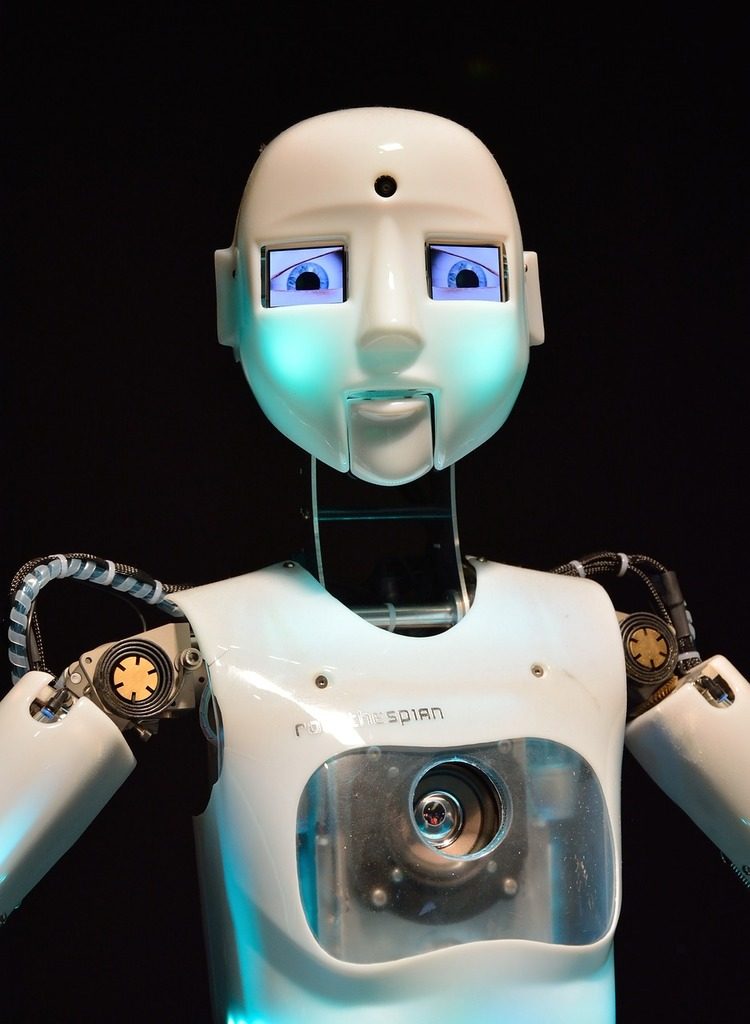
Congress Introduces GUARD Act, Extending FCC Covered List Framework to Robotics
A bipartisan coalition of U.S. lawmakers has introduced the Guarding the U.S. against Adversarial Robotics Dominance (GUARD) Act, aimed at implementing national security reviews for certain foreign-made humanoid and quadruped robots. This legislation reflects a growing concern over the implications of connected autonomous systems on national security. By extending the existing Federal Communications Commission (FCC) covered list framework to include robotics, the bill seeks to ensure that these technologies do not pose risks to U.S. safety and security. The introduction of the GUARD Act marks a significant step in the U.S. government's approach to regulating advanced robotic systems, highlighting the increasing recognition of their potential impact on national defense.
Applications Drone News Drone News Feeds drone security Dual Use News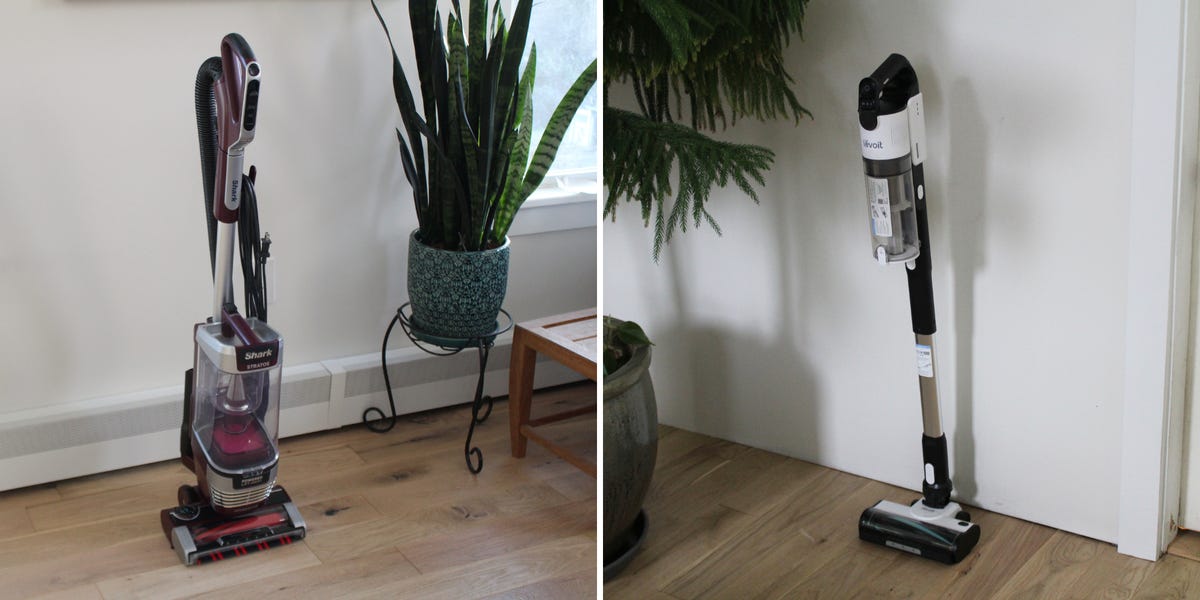
The best vacuum cleaners (2026)
In a comprehensive evaluation of vacuum cleaners, a team of experts has tested numerous models, including cordless, upright, and robot vacuums, to determine the most effective options for tackling pet hair, dust, and everyday messes. The testing process involved rigorous assessments of performance and efficiency, with a focus on how well each vacuum could handle various types of debris commonly found in households. The results highlight the top-performing vacuums that stood out from the competition, providing consumers with informed choices for maintaining a clean living environment. This analysis, conducted in October 2023, aims to guide pet owners and households seeking reliable cleaning solutions.
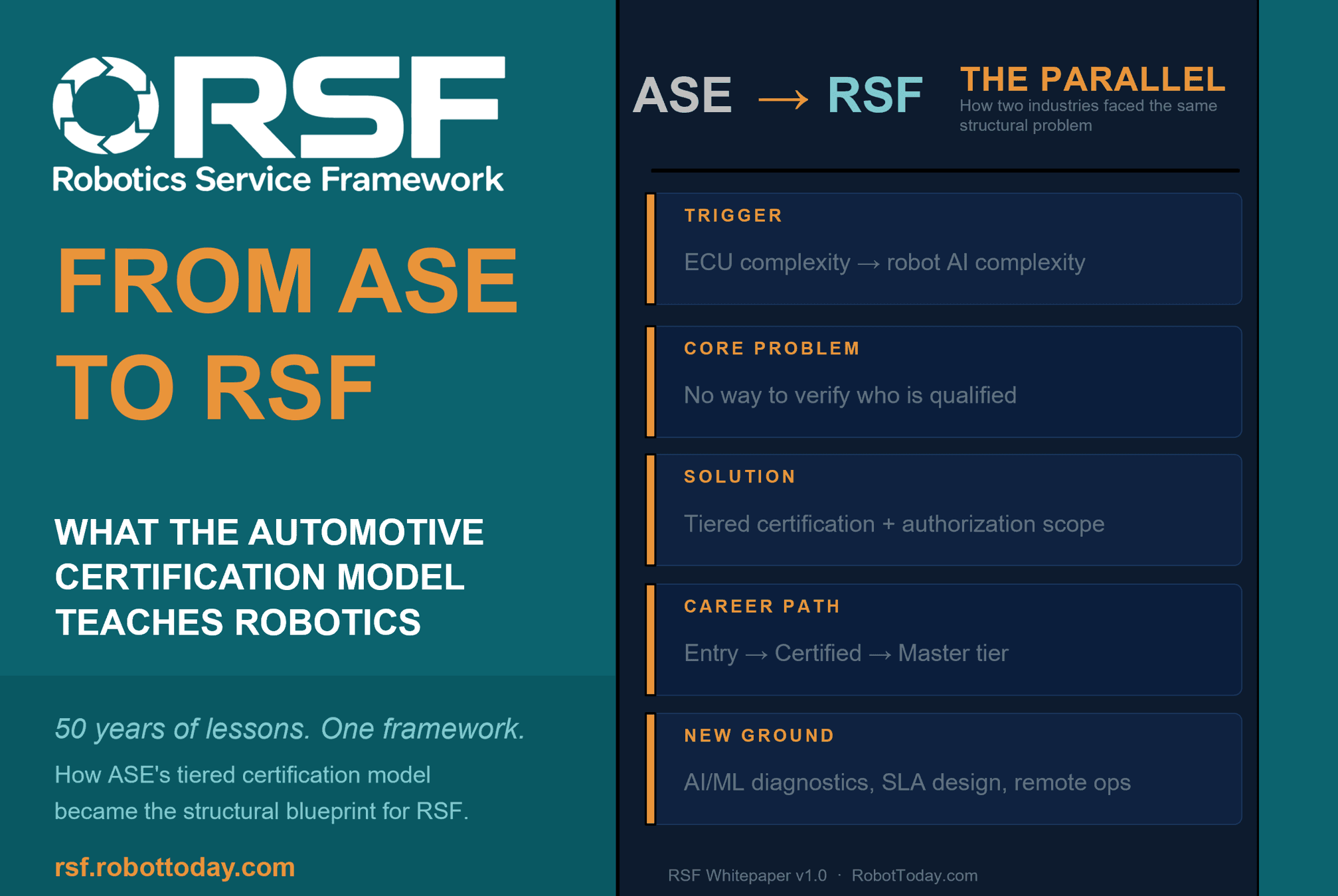
Home (Reviews) Reviews cordless-stick-vacuums vacuums handheld-vacuums cleaningRobotics needs a service framework.
RSF defines a common language for robot service capability, lifecycle operations, certification pathways, and service-provider networks.