Industry Briefing
A single destination for timely, editor-curated robotics news from around the world.
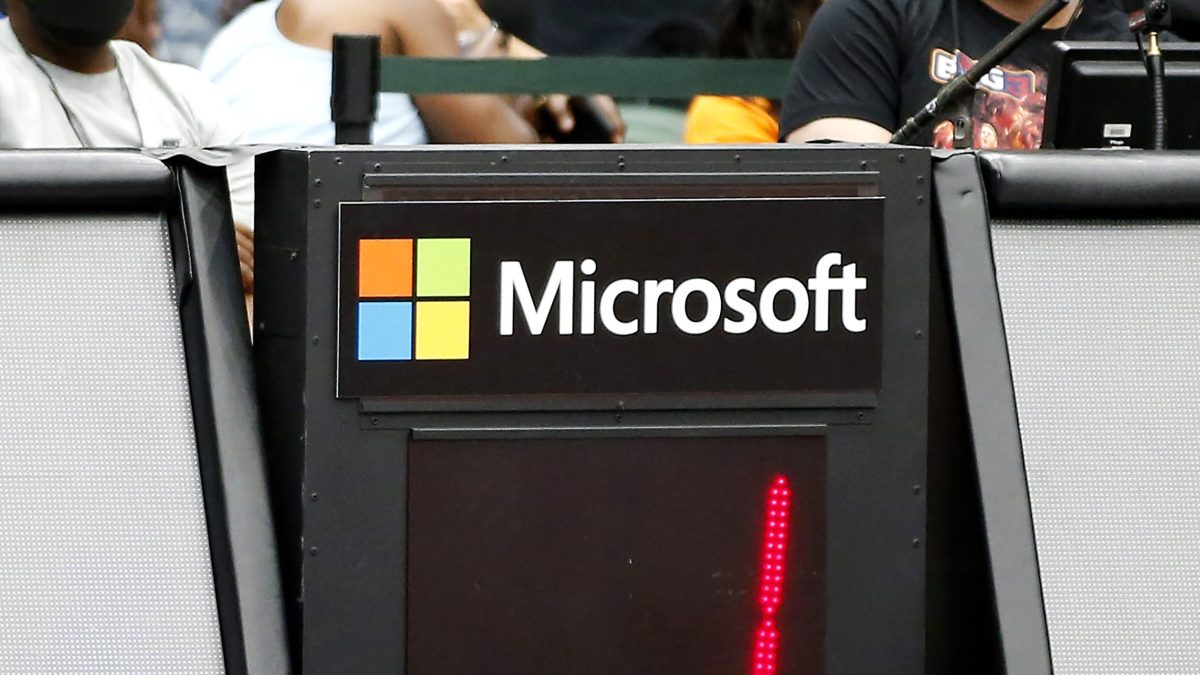
Microsoft’s open source tools were hacked to steal passwords of AI developers
Microsoft has taken the precautionary measure of shutting down multiple GitHub code repositories associated with its Azure and AI coding tools following a reported security breach. The decision, made in response to the hack, aims to protect sensitive information and maintain the integrity of its development platforms. The shutdown occurred recently, although the exact date has not been disclosed. This action underscores the company's commitment to cybersecurity and the importance of safeguarding its technological assets. Microsoft is currently investigating the incident to assess the extent of the breach and to implement further security measures to prevent future attacks.
Security Claude cybersecurity data breach gemini GitHub
AI won’t replace you but someone using AI might
A recent study conducted by researchers at the University of Vaasa highlights the rapid transformation of workplaces due to generative AI technologies. The research, led by Zhe Zhu, indicates that the primary challenge employees face is not the emergence of AI itself, but rather the risk of not adapting to its use effectively. The findings reveal that employees who view AI tools, such as ChatGPT and Gemini, as supportive collaborators instead of threats to their jobs exhibit higher levels of engagement, adaptability, and optimism regarding their career prospects. This underscores the importance of fostering a positive mindset towards AI integration in the workplace to harness its full potential.

Google rolls out Gemini Omni Flash for autonomous video creation across apps
Google has initiated the rollout of its latest multimodal AI model, Gemini Omni Flash, which is designed to enhance user interactions across various platforms. This launch began in October 2023 and aims to integrate advanced AI capabilities into Google's suite of services. The motivation behind this development is to provide users with a more seamless and efficient experience by allowing the model to process and respond to inputs in multiple formats, including text, images, and voice. By leveraging cutting-edge technology, Gemini Omni Flash is expected to significantly improve the way users engage with Google's applications, making interactions more intuitive and responsive. The rollout is part of Google's ongoing commitment to innovation in artificial intelligence, positioning the company at the forefront of the AI landscape.

Google’s Gemini Omni turns images, audio, and text into video — and that’s just the start
Google has unveiled its latest innovation, Gemini Omni, a multimodal model designed to enhance user interaction by reasoning across various formats, including text, images, audio, and video. This cutting-edge technology allows users to generate and edit videos through straightforward conversational prompts, with the initial feature being Omni Flash. The launch of Gemini Omni marks a significant advancement in artificial intelligence, aiming to simplify content creation and editing processes for users. The model is trained on data available up to October 2023, ensuring it incorporates the most recent developments in AI capabilities. This initiative reflects Google's commitment to pushing the boundaries of technology and improving user experiences in digital content creation.
Media & Entertainment AI Google Veo google io 2026 google gemini omni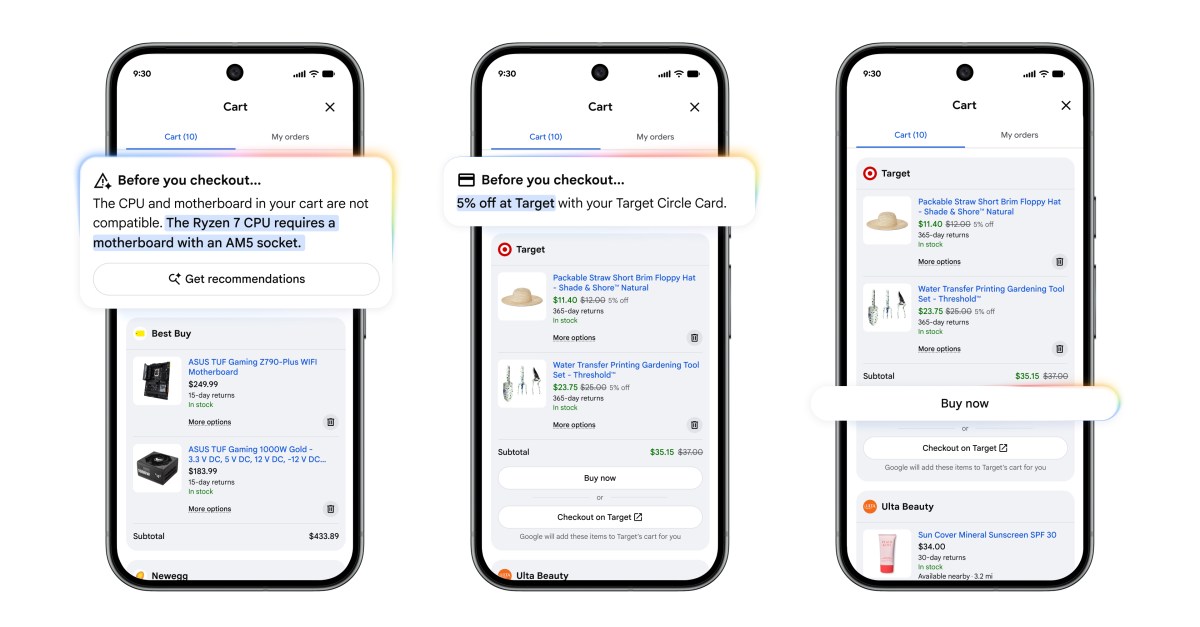
Would you let robots spend your money? Google is betting on it
At the recent Google I/O event, Google announced a significant push into AI-driven shopping, unveiling its latest innovation: a "Universal Cart." This new feature allows users to seamlessly add products from various retailers across Google platforms, including Gemini, and plans to extend to YouTube and Gmail in the future. This initiative comes as some competitors are scaling back their efforts in the AI commerce space, highlighting Google's commitment to enhancing the online shopping experience. By integrating multiple retail options into a single cart, Google aims to streamline the purchasing process for consumers, making it easier to shop across different platforms.
AI Business Google Google I/O 2026 News Online Shopping
Google races to put Gemini at the center of Android before Apple’s AI reboot
Google is leveraging its latest Android rollout to establish Gemini as the central artificial intelligence layer across a range of devices, including smartphones, Chromebooks, laptops, and vehicles. This strategic move aims to enhance user experience by integrating advanced AI capabilities into everyday technology. The rollout, which began in October 2023, reflects Google's commitment to innovation and its vision of a seamlessly connected ecosystem. By embedding Gemini across multiple platforms, the tech giant seeks to streamline operations and improve functionality, making AI more accessible and beneficial for users in their daily lives.

Perceptron Mk1 shocks with highly performant video analysis AI model 80-90% cheaper than Anthropic, OpenAI & Google
Perceptron Inc., a Bellevue-based startup founded by former Meta researchers Armen Aghajanyan and Akshat Shrivastava, has launched its flagship video analysis model, Mk1, aimed at revolutionizing how enterprises utilize AI in real-time video processing. Announced today, this innovative model is priced significantly lower than competitors, at $0.15 per million input tokens and $1.50 per million output tokens, making it accessible for large-scale industrial applications. The Mk1 model, developed over 16 months, excels in understanding complex physical interactions and temporal reasoning, outperforming established models like OpenAI's GPT-5 and Google's Gemini 3.1 Pro in various benchmarks. Its unique architecture allows it to process video streams continuously, maintaining object identity and providing precise analysis of dynamic scenes, which is particularly beneficial for sectors such as security, robotics, and marketing. Perceptron aims to position Mk1 as a leader in the "Efficiency Frontier," balancing high performance with cost-effectiveness. The model's capabilities extend to auto-clipping highlights from live sports and enhancing quality control in manufacturing. A public demo site is available for potential users to explore its functionalities. This launch signifies a significant step towards integrating advanced AI into real-world applications, as the company seeks to make "physical AI" as prevalent as its digital counterpart.
Technology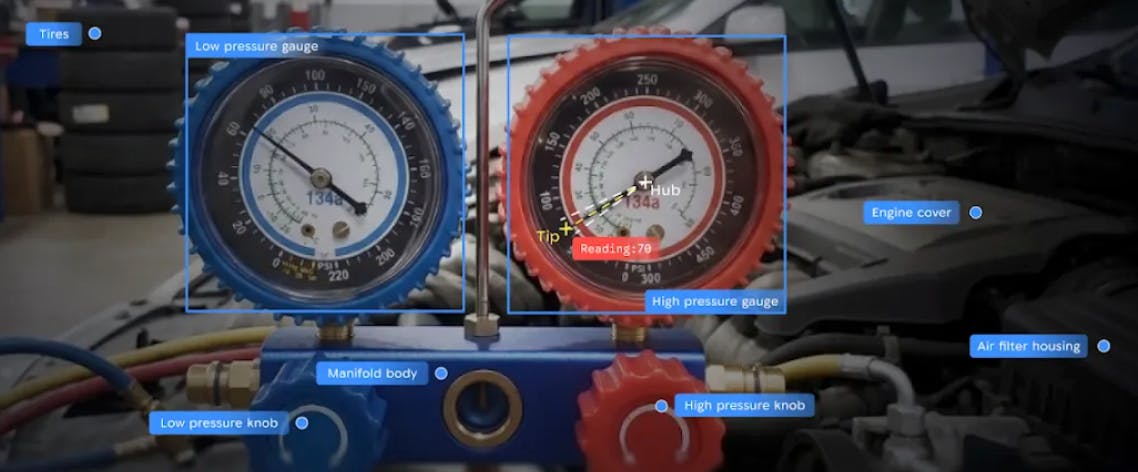
Boston Dynamics and Google Bring Gemini AI to Spot Robot for Smarter Facility Inspections
Boston Dynamics has announced the integration of Google's Gemini Robotics AI into its robotic platform, Spot. This advancement allows Spot to perform automated industrial gauge readings and conduct visual inspections of facilities. The collaboration aims to enhance operational efficiency and accuracy in industrial settings, addressing the growing demand for automation in various sectors. The integration is expected to streamline processes and reduce the need for human intervention in routine inspections, thereby improving safety and productivity. This development comes as part of Boston Dynamics' ongoing efforts to leverage cutting-edge technology to transform the capabilities of its robots, with the integration officially rolling out in late 2023.
Factory / Plant Maintenance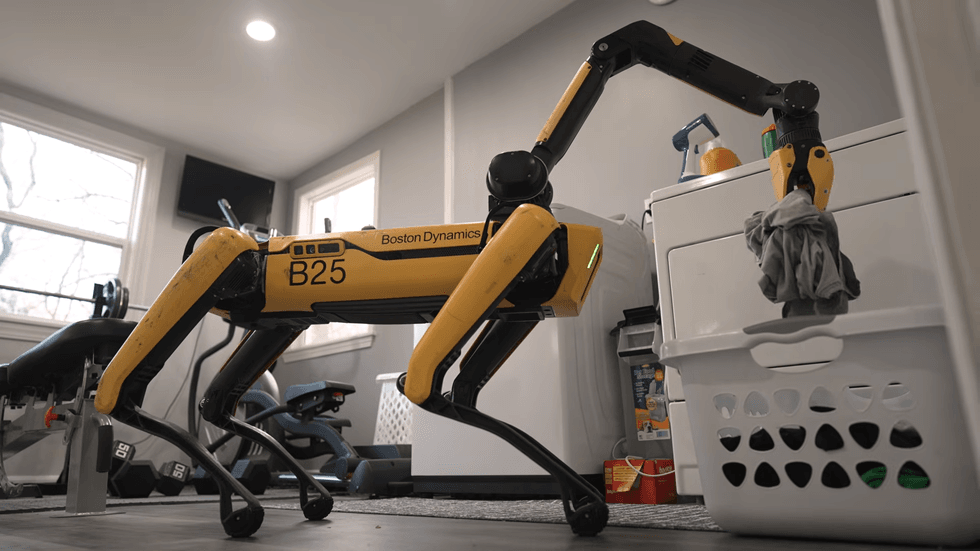
Boston Dynamics and Google DeepMind Teach Spot to Reason
Boston Dynamics has announced that its quadruped robot, Spot, is now equipped with Google DeepMind’s Gemini Robotics-ER 1.6, a high-level embodied reasoning model designed to enhance the robot's usability and intelligence for complex tasks. This development, revealed today, marks a significant advancement in the commercial deployment of legged robots, particularly in industrial inspections, where Spot will autonomously identify hazardous debris, read gauges, and utilize vision-language-action models for better environmental understanding. The collaboration aims to improve how robots interpret and interact with their surroundings, addressing the challenges of ensuring that robotic actions align with human reasoning. Marco da Silva, vice president of Spot at Boston Dynamics, emphasized that the new capabilities will allow Spot to autonomously navigate real-world challenges more effectively. Despite the progress, experts acknowledge ongoing challenges in achieving seamless human-robot interaction. Carolina Parada from Google DeepMind noted that while the Gemini model enhances visual recognition, it currently lacks integration with other sensory data, such as touch, which is crucial for reliable object manipulation. As part of the deployment, customers using Spot for inspections will need to share operational data with Boston Dynamics to further refine the technology. The introduction of Gemini Robotics-ER 1.6 is seen as a step toward creating safer and more reliable robots capable of performing everyday tasks, with the potential to apply these advancements to other robotic platforms in the future.
Boston-dynamics Spot-robot Google-deepmind Inspection-robots Quadruped-robots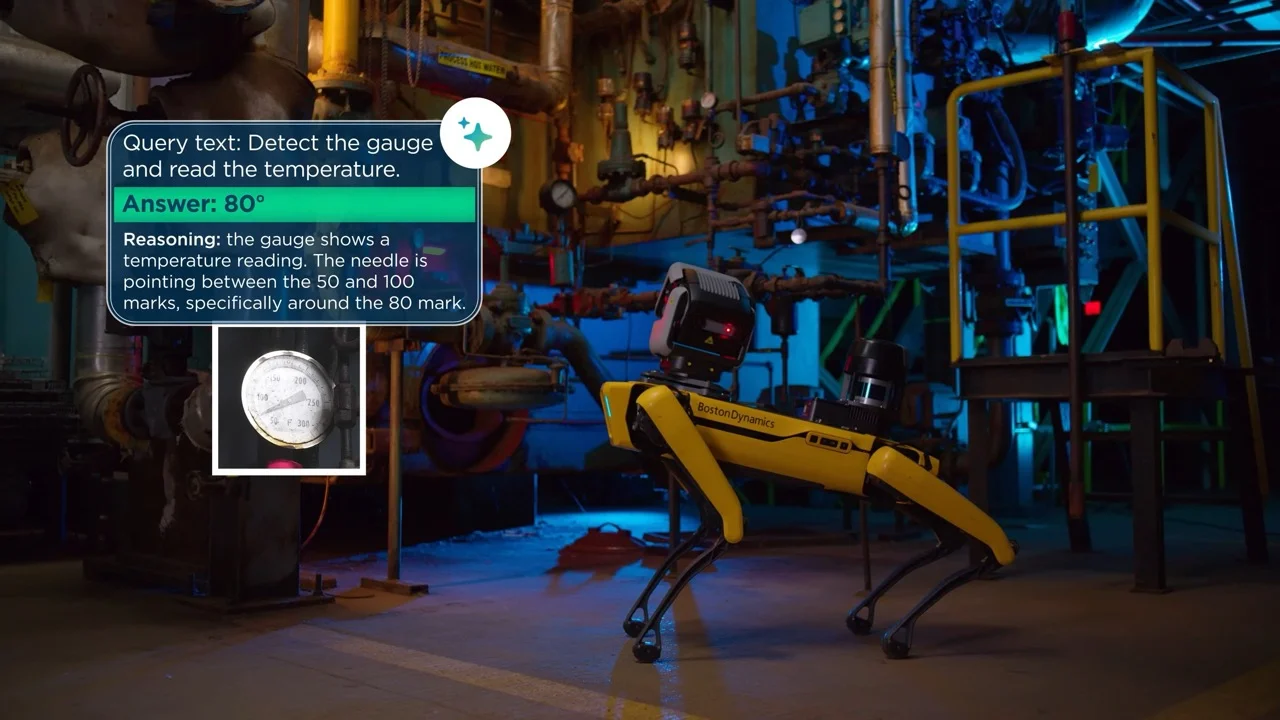
Google DeepMind Unveils Gemini Robotics-ER 1.6: A Leap in Spatial Reasoning and Industrial Utility
DeepMind has unveiled its latest and most sophisticated embodied reasoning model, which incorporates a cutting-edge "agentic vision" system designed specifically for industrial inspections. This new technology aims to improve the accuracy and efficiency of multi-view success detection in various industrial applications. The launch, which took place recently, marks a significant advancement in artificial intelligence capabilities, reflecting DeepMind's commitment to enhancing operational processes across industries. By leveraging advanced machine learning techniques, the model is expected to streamline inspection workflows and reduce the likelihood of errors, ultimately driving productivity and safety in industrial environments.
Google Gemini Gemini Robotics-ER 1.6 google-deepmind Boston Dynamics
Why Are Large Language Models So Terrible at Video Games?
Recent advancements in large language models (LLMs) have led to significant improvements in various domains, particularly in coding. However, a notable limitation remains: LLMs struggle to play video games effectively. Despite some successes, such as Gemini 2.5 Pro defeating Pokémon Blue in May 2025, these models often perform poorly compared to human players, making frequent mistakes and requiring specialized software to assist them. Julian Togelius, director of New York University’s Game Innovation Lab and co-founder of AI game-testing firm Modl.ai, discussed these challenges in a recent interview with IEEE Spectrum. He highlighted that while coding resembles a well-structured game with clear tasks and immediate feedback, video games present a more complex landscape that LLMs have yet to navigate successfully. Unlike games like chess or Go, which have been mastered by AI through retraining, video games vary significantly in mechanics and input requirements, complicating the development of a general game AI. Togelius pointed out that the lack of comprehensive benchmarks for video games further hinders LLMs' performance. While benchmarks have driven improvements in coding, the diverse nature of video games makes it difficult to establish similar metrics. He noted that current LLMs perform poorly even compared to basic algorithms in gaming contexts, primarily due to insufficient training data and challenges in spatial reasoning. Despite their coding capabilities, LLMs cannot engage in the iterative process of game development, which involves testing and refining gameplay. This disparity raises questions about the future of AI in mastering video games and its implications for broader AI applications.
Llms Artificial-intelligence Video-games
Agile Robots and Google DeepMind Partner to Bring Gemini to the Factory Floor
Agile Robots, based in Munich, has entered into a strategic research partnership with Google DeepMind to enhance industrial robotics. This collaboration seeks to integrate Gemini Robotics foundation models with advanced industrial hardware, addressing the prevalent issue of data bottlenecks in the field. By leveraging a scalable AI flywheel, the partnership aims to improve the efficiency and effectiveness of robotic systems in various industries. The initiative highlights the growing intersection of artificial intelligence and robotics, as both companies work together to push the boundaries of technology and innovation.
DeepMind US Agile ONE Europe Google google-deepmind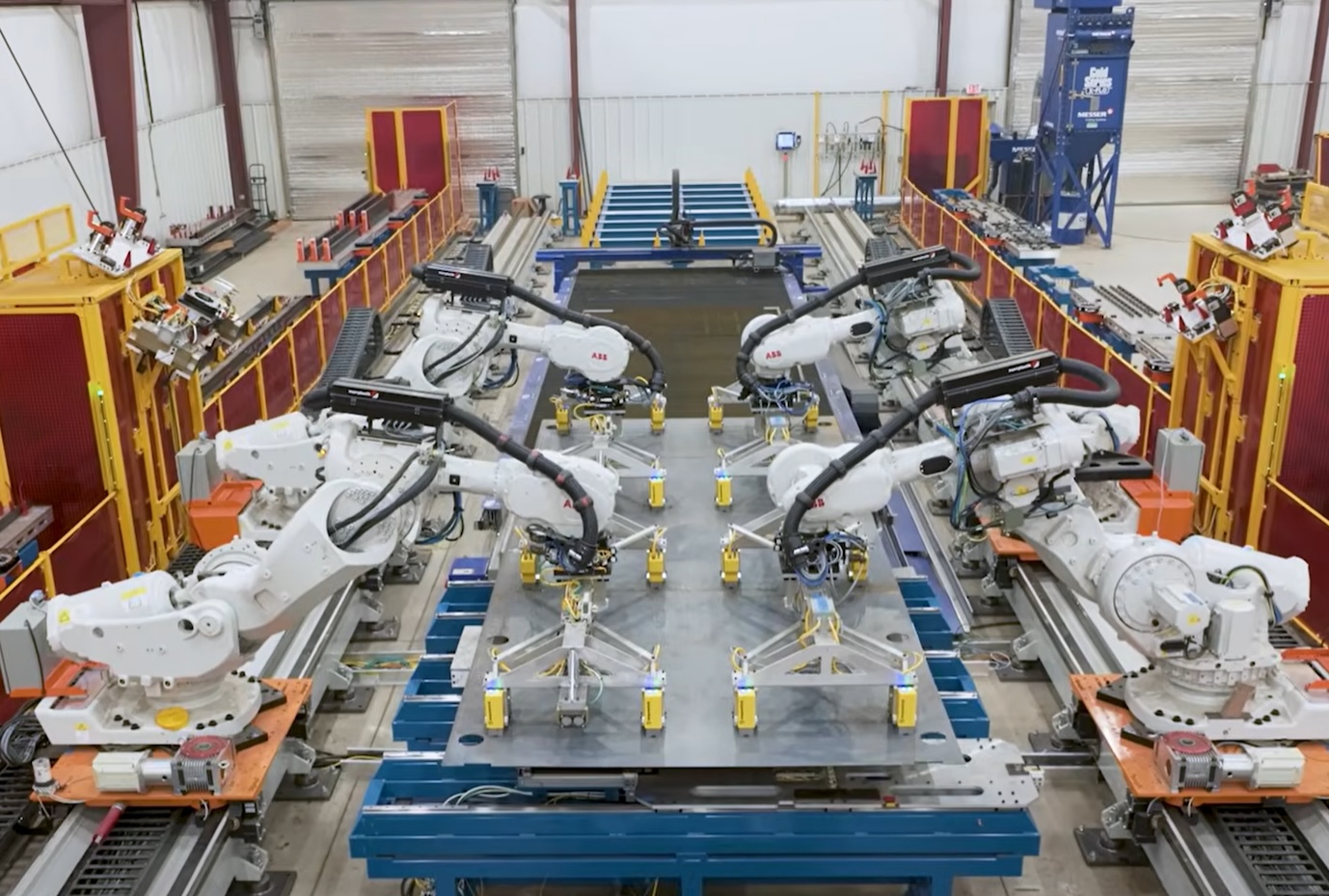
ByteDance Releases Doubao-Seed-2.0, Positions Pro Model Against GPT 5.2 and Gemini 3 Pro
ByteDance has unveiled Doubao-Seed-2.0, the newest iteration of its Doubao large language model series. This latest version, particularly the Pro variant, has been benchmarked against advanced models such as GPT 5.2 and Gemini 3 Pro. It is specifically engineered to excel in long-chain reasoning and agent-based tasks. According to ByteDance, Doubao 2.0 Pro has demonstrated superior performance across various multimodal, mathematical, and coding benchmarks, positioning it as a leading contender in the competitive landscape of artificial intelligence. The release reflects ByteDance's commitment to advancing AI technology and enhancing its capabilities for complex problem-solving tasks.
News Feed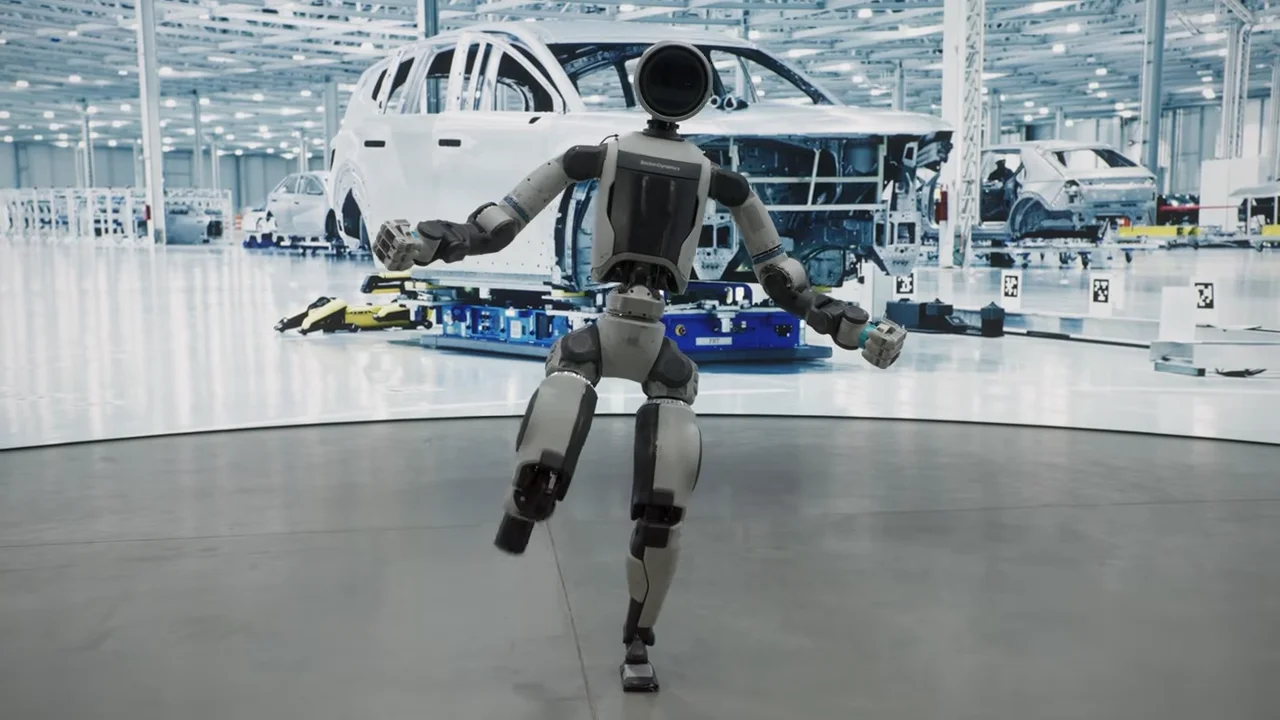
DeepMind Hires Former Boston Dynamics CTO to Build the ‘Android of Robotics’
Google DeepMind has announced the appointment of Aaron Saunders as Vice President of Hardware Engineering, a significant move aimed at advancing its Gemini project into a comprehensive operating system for physical artificial intelligence. Saunders, who brings over 23 years of experience from Boston Dynamics, is expected to leverage his expertise to enhance the integration of hardware and AI technologies. This strategic decision underscores DeepMind's commitment to expanding its capabilities in the rapidly evolving field of AI, particularly in creating systems that can interact seamlessly with the physical world. The announcement comes as the company seeks to solidify its position at the forefront of AI innovation.
Google Gemini Boston Dynamics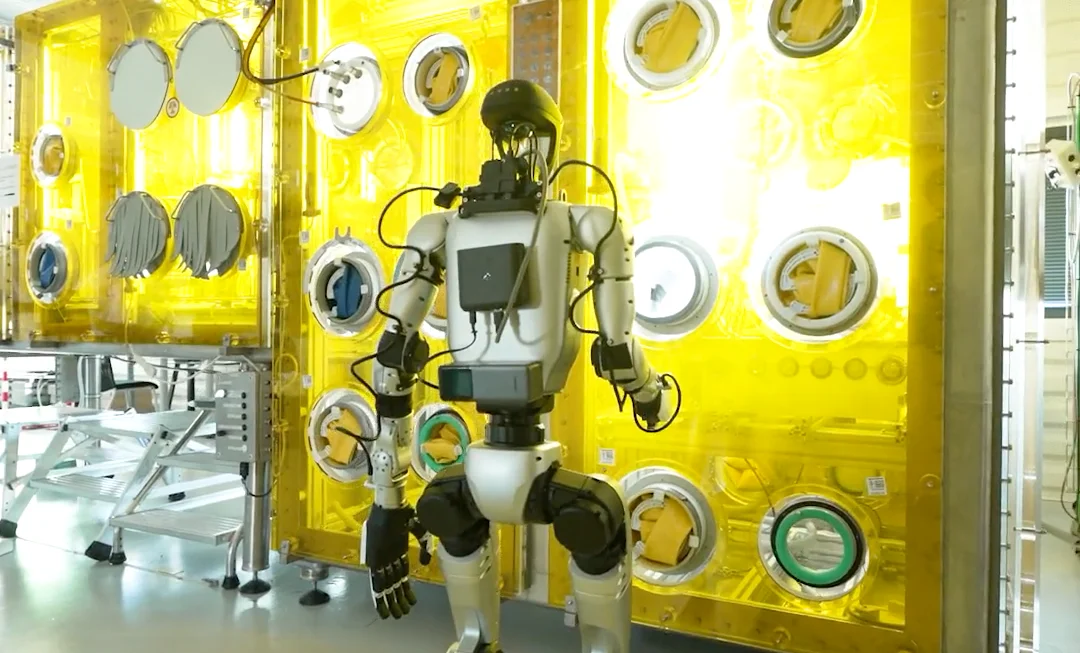
Capgemini and Orano Deploy Humanoid Robot ''Hoxo'' for Nuclear Operations
Nuclear materials company Orano, in collaboration with technology partner Capgemini, is currently testing a humanoid robot named Hoxo at a facility in France. This innovative project utilizes a Unitree G1 robot to improve safety and operational efficiency in sensitive industrial settings. The initiative reflects a growing trend in the integration of robotics within the nuclear sector, aimed at minimizing human risk and enhancing performance in challenging environments.
G1 Unitree Robotics
Google DeepMind Robotics Head Details 'Surprising' Cross-Embodiment AI, Calls Home 'The Hardest Environment'
In a recent interview, Carolina Parada from Google DeepMind highlighted the innovative features of Gemini Robotics 1.5, particularly its unique 'agentic' two-part brain. Parada emphasized the robot's impressive capability to transfer skills across different robotic platforms, showcasing a significant advancement in robotics technology. She also expressed her belief that the home environment represents one of the final frontiers for the application of such technology, suggesting a future where robots could play an integral role in daily household tasks. This discussion sheds light on the ongoing developments in robotics and the potential for transformative impacts in personal living spaces.
vla World-Models AI Gemini google-deepmind Carolina-Parada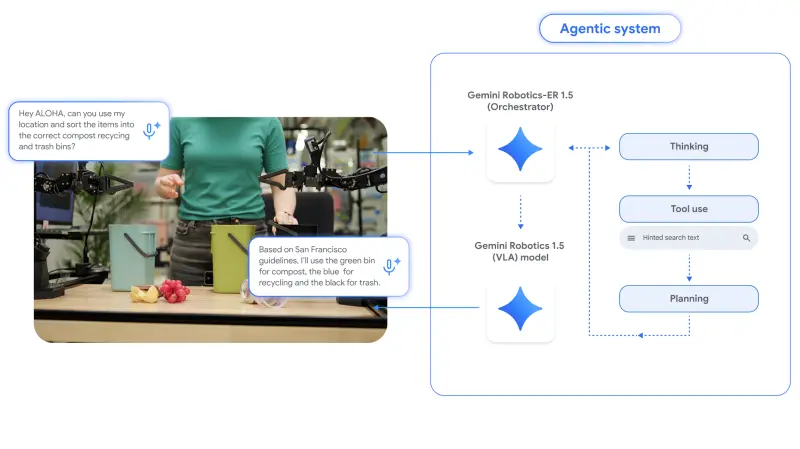
Google DeepMind Gives Robots a 'Thinking' Brain with Agentic Gemini 1.5 Models
Google DeepMind has introduced Gemini Robotics 1.5, an advanced AI framework aimed at enhancing the capabilities of robots. This new system allows robots to evolve from merely following commands to becoming 'physical agents' capable of reasoning, planning, and acquiring skills across various hardware platforms, including Apptronik's Apollo humanoid robot. The announcement marks a significant step in the development of intelligent robotics, reflecting the company's commitment to pushing the boundaries of artificial intelligence. By enabling robots to learn and adapt, DeepMind seeks to revolutionize the way machines interact with their environments and perform complex tasks. The unveiling of this framework comes as part of a broader trend in the tech industry to create more autonomous and versatile robotic systems.
ai-agents vla Gemini Apptronik google-deepmind robotics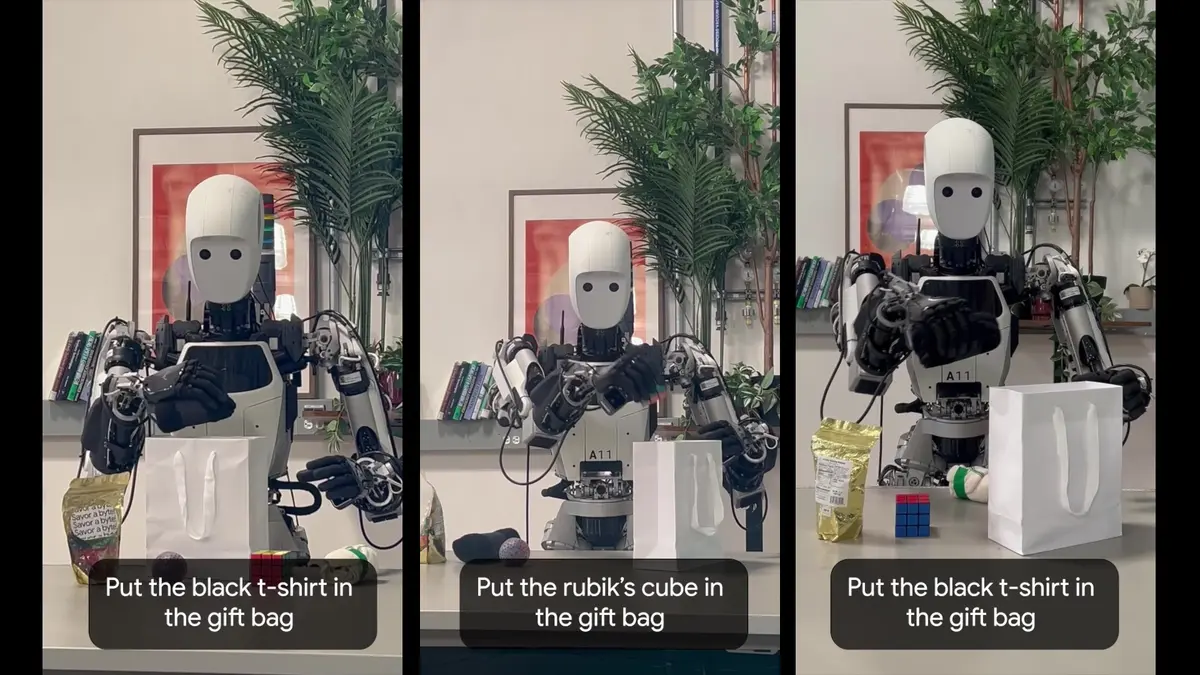
Google DeepMind Unveils On-Device Gemini Robotics, Pushing AI Closer to Autonomous Dexterity
Google DeepMind has introduced Gemini Robotics On-Device, a cutting-edge vision-language-action model that operates directly on robotic hardware. This innovative technology is designed to enhance the performance of autonomous robots by minimizing latency and increasing robustness across diverse environments. By enabling advanced dexterous manipulation, Gemini Robotics On-Device aims to equip a new generation of robots with the ability to quickly adapt to various tasks. The launch marks a significant step forward in the development of more efficient and capable robotic systems, reflecting DeepMind's commitment to pushing the boundaries of artificial intelligence in practical applications.
vla Apollo AI Humanoids Apptronik google-deepmind