Industry Briefing
A single destination for timely, editor-curated robotics news from around the world.

Alibaba Partnership Committee Directly Rebukes DingTalk Management After Viral Resignation Essay
Alibaba's Partnership Committee has publicly addressed concerns regarding the management culture at DingTalk following the viral resignation essay of a former product manager. The memo, which is unusual for the company, highlights issues of toxic workplace practices that have been brought to light on Chinese social media platforms. This internal communication underscores Alibaba's recognition of the need to address and improve its workplace environment amid growing scrutiny and criticism from employees and the public. The incident reflects broader concerns about corporate culture in tech companies and the impact of employee experiences on company reputation.
Technology
Evaluating Office Relocation Versus Refurbishment for Business Growth
As businesses grow, they often face the decision of whether to relocate to a new office or refurbish their current space. Both options can enhance productivity and employee satisfaction, but they come with distinct advantages and challenges. Factors such as available space, budget, and business objectives play a crucial role in determining the best course of action. Investing in office refurbishment can modernize workspaces without the disruption of moving, allowing for improvements like flexible workspaces, better lighting, and upgraded facilities. These changes can create a more comfortable and professional environment for employees and clients alike. However, it is essential to assess whether the current office is genuinely limiting business operations or if minor adjustments could suffice. Consulting with workplace experts can provide valuable insights into optimizing existing spaces and identifying efficiency opportunities. Staying in the same location allows employees to maintain familiar routines and access to local amenities. However, if refurbishment cannot resolve fundamental issues, relocation may be necessary. No further timeline was disclosed at the time of publication.
Business Infrastructure business operations commercial property employee experience facilities management
This AI stock is surging after an ex-OpenAI employee's fund disclosed a stake. Here's why
Dutch cloud provider Nebius has experienced a significant increase in its valuation following a substantial investment from a fund associated with a former OpenAI employee. The investment comes as the tech industry continues to evolve, with companies seeking innovative cloud solutions to support their operations. This strategic move highlights the growing interest in cloud services and the potential for Nebius to expand its market presence. The deal was finalized recently, marking a pivotal moment for the company as it aims to leverage the expertise and resources brought in by the investment. This development underscores the competitive landscape of cloud computing and the importance of securing financial backing to drive growth and innovation in the sector.

Japan Pioneered Humanoid Robots—Can It Now Catch China?
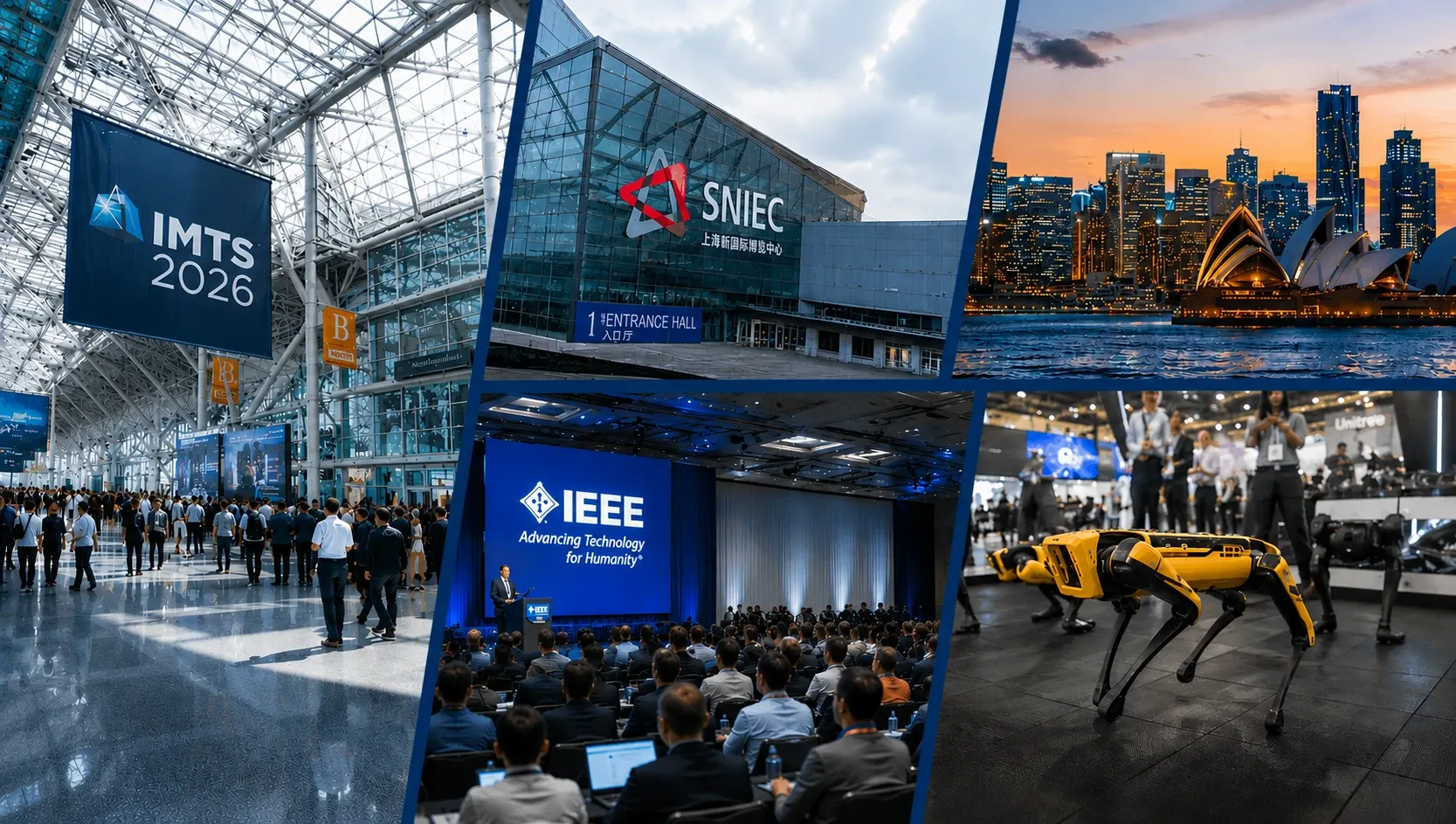
“In the future, the relationship between humans and robots will deepen, and the distinction between them will probably disappear.” This prediction, from one of the attendees at the recent Humanoids Summit in Tokyo, might have been unremarkable had it not come directly from an android that was first introduced to the world 20 years ago. Geminoid HI-6 is the sixth-generation of a robot originally designed in 2006. The mechanical twin of Osaka University professor Hiroshi Ishiguro, Geminoid HI-6 is now equipped with a large language model trained on Ishiguro’s own writings and interviews. It has advanced conversational skills and can even have a chat with its creator, an eerie spectacle. But at the Humanoids Summit, Geminoid was one of the few humanoid robots from Japan, the country that pioneered the form factor.While the event in Tokyo only had about 40 robots on display, Chinese systems outnumbered Japanese by roughly three to one. Some Japanese robotics firms were even using Chinese robots in their own technology demonstrations, something that would have been unthinkable in the recent past—one Japanese engineer described the situation as “sad.” The conference was a stark reminder of how Japan has ceded its early lead in humanoid robot development to overseas competitors, and the challenge it now faces to secure a place in an ecosystem increasingly dominated by general-purpose robots powered by AI. Twenty-five years ago, Japan was turning out groundbreaking humanoids that were showstopping in their abilities, but they were not commercialized as practical machines in any meaningful way. Heavily influenced by science fiction and lacking practical applications, they were mostly expensive technology demonstrations that were eventually mothballed. What Japan retains, however, is robotics design and know-how, which it must leverage to be a key player in the rapidly evolving humanoid ecosystem. Learning to Walk—Then Standing StillTo anyone who has seen recent videos of Chinese humanoids doing kung-fu and synchronized acrobatics, as well as half-marathon races, China’s remarkable progress in the field is nothing new. At the Humanoids Summit, Toyota showed a video of its latest basketball-playing robot, and Honda exhibited its latest robot hand, but the full-scale humanoids on the floor were mostly Chinese–the kid-size K1 machines from Booster Robotics of Beijing were dancing to Michael Jackson tunes. The full-scale G1 humanoid from Unitree Robotics of Hangzhou was also doing demos. “You cannot sell these bipedal systems in Japan for safety and compliance reasons,” says Shuichi Nagao, a frequent visitor to China as CTO of Omakase Robotics, a division of Zeals, a Japanese humanoid robot developer. Omakase was exhibiting a G1 modified with an external PC controller, a dextrous hand, a suction-cup manipulator and a sensor “hat” with an extra speaker, mic and camera. “In China, the government is pushing humanoid development. They didn’t have an industry 20 years ago. The people pushing it are young, in their 20s and 30s. It’s a really different mentality out there,” says Nagao. “Big players in Japan are still looking for use cases for humanoids. In China, they’re already doing mass production and reducing the cost, so other countries can’t compete with them anymore.”Another Japanese company showing off G1 bots was summit sponsor GMO AI & Robotics, a subsidiary of Japanese internet company GMO. It’s using the robots in partnership with Japan Airlines to load and unload cargo containers at Tokyo’s Haneda airport. The cargo project is a trial—like many other humanoid experiments—but the fact that Chinese machines have penetrated so far into Japan’s ecosystem upends a long history. In 1973, scientists at Waseda University in Tokyo built WABOT-1, considered the first full-scale humanoid robot and capable of slow bipedal locomotion, grasping objects and simple communication. It inspired Honda’s groundbreaking Asimo humanoid, but it was never commercialized. Asimo was eventually retired in 2022, the year ChatGPT was released. Two years later, Unitree’s G1 went on sale for US $16,000. China’s High Torque Technology Co. showed off its Mini Pi biped, customized with an anime-inspired head, at Humanoids Summit in Tokyo. The regular version is priced at $3,500. Tim HornyakSupply and DemandJapan’s development of humanoids happened before practical applications or widespread demand were in place, but bad timing is only part of the story—Japan also has a history of developing technologies that might appeal to domestic consumers but not necessarily those overseas. For example, decades after they first appeared, its highly engineered, multifunction toilets have only recently found a following abroad. Japan’s humanoid prowess was partly built on the back of its legendary industrial automation, yet even that stronghold has eroded. Ani Kelkar, a partner from McKinsey & Company in Boston who produces analytical reports about the robotics industry, told the summit audience that while Japan occupied the top spot in the world in manufacturing robot density (the number of multipurpose industrial robots in operation per 10,000 employees) from at least 1994 to 2009, it then slipped to second in 2014, third in 2019 and fifth in 2024. In that year, South Korea was at the top of the leaderboard with a robot density of 1,220 compared to Japan’s 446. The International Federation of Robotics estimates China now has the most operational industrial robots in the world, with around 2 million total units, approximately 4.5 times more than Japan. “The annual installation numbers are impressive too: 54 percent of all robots installed worldwide in 2024 were deployed in China,” the IFR said in a release in April 2026. “I think the loss of Japanese leadership is more to do with the rise of China as a manufacturing powerhouse including for sectors that Japan had high export levels,” Kelkar said in an email interview. “The recovery has not yet happened as Japan ‘missed’ the rapid acceleration in AI for robotics and is now playing catchup.”How Japan Can Adapt Kelkar believes Japan has a US $100 billion opportunity in general-purpose robotics, which are machines that can perform a wide variety of tasks, and it cannot rely on the slower-growing industrial robot market, which is centered on factory machines that do one simple and predictable task like welding car parts. He points to a McKinsey white paper suggesting that while Japan has much of the hardware and technology experience needed to support general purpose robot development, it must change its strategy to capture more share in AI, software, data collection and robotics platforms.Tetsuya Ogata is a professor of engineering and director of the Institute for AI and Robotics at Waseda University, the birthplace of humanoids in Japan. He briefed the summit on how a nonprofit he chairs, the AI Robot Association (AIRoA), is working with Toyota and other members to develop foundational technologies for collaborative use. For instance, AIRoA has collected some 80,000 hours of data on remote operation of mobile manipulators, and Ogata believes it’s the largest dataset of its kind. Using the data, it built and verified Vision-Language-Action (VLA) models, and it has also started data collection for dual-arm mobile manipulation. In an interview, Ogata acknowledged Japan’s struggle to find its place in the changing landscape. “The world of AI is inherently a game of scale,” says Ogata. “Therefore, Japan’s absolute prerequisite is to secure a competitive baseline of scale—in data, computing resources, and talent. Beyond that, what I consider most critical is a mindset shift: rather than trying to hoard scale within a single nation or company, we must grow stronger by collaborating with a diverse ecosystem of domestic and international players.” Specifically, this means creating a ‘collaborative domain’ to address data—the single biggest bottleneck—through industry-wide cooperation rather than data-siloing. By collectively nurturing a pre-competitive, shared data infrastructure and foundation model, individual companies can then compete on top of it with their own applications. “By offering this open ‘data ecosystem’ to the world, we can engage global players and establish a ‘third pole’ alongside the US and China,” says Ogata. “I believe this is how Japan can reclaim its global presence.”In 1999, Japan introduced the world’s first mobile internet services platform. But being first didn’t turn Japan into a smartphone manufacturing or design center—it’s now merely a supplier of parts to other countries who are leading the smartphone industry. If Japan can avoid a repeat of that experience and successfully deregulate, diversity, and commercialize its original humanoid dreams, it stands a better chance of influencing the direction of the industry and reaping billions in value. As automobiles and electronics were pillars of Japan’s industrial strategy in the last century, Japan could make humanoid robots one of its key value generators in the 21st century, an approach that would not only deliver economic benefits but give Japan greater clout in how the industry will evolve. Just like Japanese cars, electronics, and even toilets, Japanese humanoids could stand for craftsmanship and reliability. It’s a legacy that Japan can’t afford to give up.
Japan Robotics Humanoids Humanoid-robots
JD.com Launches 'Nirvana Plan' for Transforming 700,000 Couriers into Robotics Experts
JD.com has launched the 'Nirvana Plan,' an initiative aimed at retraining 700,000 couriers as robotics maintenance technicians in response to the growing trend of robotic delivery systems. This program, announced recently, involves collaborations with 120 educational institutions to deliver specialized training that capitalizes on the couriers' existing on-ground experience. By doing so, JD.com intends to enhance its robotic logistics capabilities while fostering a new ecosystem within the logistics sector. The initiative not only addresses the technological advancements in delivery services but also prioritizes job security for its workforce, ensuring that employees can transition into new roles as the industry evolves.
Robotics Logistics Workforce Transformation Training Programs
Chasing rumors: Car CEO's departure untrue; WeChat tests native AI assistant; Apple, Tesla supplier data leaked.
On June 23, the ChiNext Index experienced its largest decline of the year, falling over 4% during trading and closing down 3.84%, dipping below the critical 4200-point mark. This downturn followed a record high set just a day prior. The trading volume for the day reached approximately 901.65 billion yuan, a decrease of 118.9 billion yuan from the previous day. All ten of the index's top-weighted stocks saw declines, particularly those in the AI computing sector. In a separate development, Tata Electronics confirmed a significant data breach, with over 630GB of sensitive information leaked, including design and specification documents for key clients like Apple and Tesla. The company stated that it had initiated a response plan and that operations remained unaffected. Apple is reportedly conducting a thorough investigation into the incident. Meanwhile, SpaceX has entered a multi-billion dollar agreement with AI startup Reflection AI to provide computing resources, with payments set to begin in July and continue through 2029. In the robotics sector, Nvidia unveiled its "Halos for Robotics" safety system aimed at enhancing the security of physical AI applications, while Faraday Future introduced its industrial-grade robotic arm series at a robotics expo in Chicago. Additionally, Meta has paused an internal AI training program that tracked employee mouse movements due to data security concerns, and Oracle announced a workforce reduction of approximately 21,000 employees, marking a 13% decrease in its total workforce as part of a business restructuring.

Humanizing robots makes factory workers more productive
Recent research from the Alberta School of Business reveals that factory workers who view industrial robots as co-workers and attribute human-like qualities to them experience enhanced productivity and overall well-being. This study highlights the psychological impact of human-robot interaction in industrial settings, suggesting that fostering a collaborative mindset towards automation can lead to significant improvements in workplace efficiency. By encouraging workers to engage with robots as partners rather than mere tools, companies may not only boost output but also enhance employee satisfaction. The findings underscore the importance of integrating technology in a way that promotes a positive work environment, ultimately benefiting both workers and organizations alike.
Business
LLMs help robots understand vague instructions and focus on key details
In a future workplace scenario, employees may find themselves training robots as new colleagues. This innovative approach involves a method akin to "show and tell," where human workers demonstrate tasks physically while explaining the processes involved. This training method aims to enhance the integration of robots into various environments, such as warehouses and offices, by providing them with practical, hands-on learning experiences. As industries increasingly adopt automation, the need for effective training techniques for robotic assistants becomes essential to ensure smooth operations and collaboration between humans and machines. This shift reflects a broader trend towards the incorporation of advanced technology in the workforce, emphasizing the importance of adaptability and skill development in an evolving job landscape.
Robotics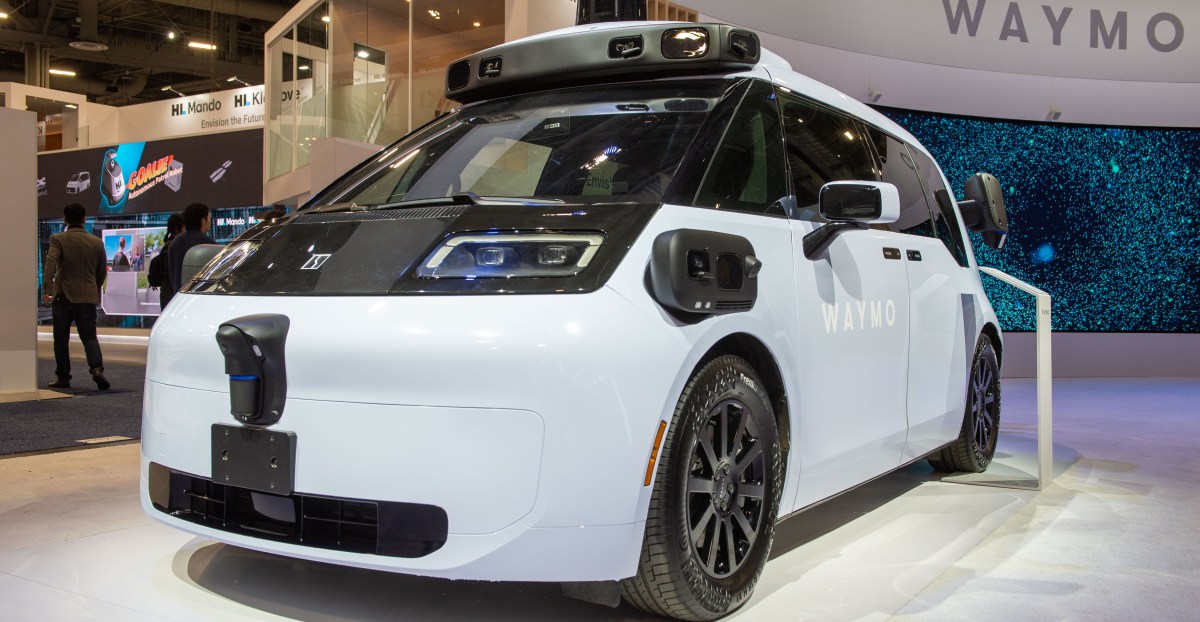
Waymo to begin passenger rides in its new Ojai robotaxi
Waymo has announced the launch of its latest vehicle, the Zeekr RT minivan, now rebranded as Ojai, for non-employee passengers following several months of testing. Starting soon, select riders in San Francisco, Los Angeles, and Phoenix will have the opportunity to experience rides in the autonomous minivan, with plans for a gradual expansion to more riders and additional cities. The initial trips will be offered free of charge, marking a significant step in Waymo's efforts to broaden access to its self-driving technology.
Autonomous Cars News Transportation Waymo
Samsung recruitment drive eyes robotics expansion
Samsung Electronics is bolstering its workforce for its robotics control tower as part of a strategic move to enhance its robot business, according to industry sources. The company’s device experience division is concluding applications today for an internal recruitment initiative aimed at forming a new robotics promotion team. This unit was established late last year following Samsung's acquisition of a majority stake in Rainbow Robotics. Recently, Samsung conducted briefing sessions for employees to outline the team's objectives and functions, signaling a significant commitment to advancing its robotics capabilities in the competitive tech landscape.
All News
Import AI 452: Scaling laws for cyberwar; rising tides of AI automation; and a puzzle over gDP forecasting
A recent analysis highlights the potential of artificial intelligence (AI) to significantly transform the global economy. Experts predict that by 2030, AI could contribute an additional $15.7 trillion to the world’s GDP, driven by advancements in productivity and innovation across various sectors. This economic shift is expected to occur as businesses increasingly adopt AI technologies to streamline operations and enhance decision-making processes. The report, released in October 2023, emphasizes that industries such as healthcare, finance, and manufacturing stand to benefit the most from AI integration. In healthcare, for instance, AI can improve diagnostics and patient care, while in finance, it can optimize trading strategies and risk management. The manufacturing sector may see increased efficiency through automation and predictive maintenance. The motivation behind this economic revolution stems from the need for companies to remain competitive in an evolving market. As organizations face rising operational costs and the demand for faster service, AI offers solutions that can lead to substantial cost savings and improved customer experiences. To capitalize on these opportunities, businesses are encouraged to invest in AI research and development, as well as workforce training to ensure employees are equipped to work alongside advanced technologies. The transition to an AI-driven economy is expected to require collaboration between governments, private sectors, and educational institutions to create a supportive environment for innovation and growth. As the world approaches this pivotal shift, the implications of AI on job markets, economic inequality, and ethical considerations will also need to be addressed to ensure a balanced and inclusive economic future.

Solving Real-World Problems with Robotics That Actually Work
In a recent discussion on the future of the workforce, experts emphasized the potential of robots to take over heavy and repetitive tasks that often lead to employee burnout. By automating these behind-the-scenes operations, businesses can enable their staff to focus more on enhancing customer service and communication, ultimately improving the overall guest experience. This shift is seen as a necessary evolution in the workplace, allowing human workers to engage in more meaningful and fulfilling roles. The conversation highlights the growing trend of integrating technology into various industries, aiming to create a more efficient and satisfying work environment for employees while simultaneously elevating customer satisfaction.

Robot Talk Episode 142 – Collaborative robot arms, with Mark Gray
Claire recently engaged in a discussion with Mark Gray, the country manager of Universal Robots, regarding the company's innovative lightweight robotic arms designed for collaboration with human workers. With three decades of experience in automation, including expertise in machine vision and robotics, Gray has been instrumental in advancing the field of collaborative robots, commonly referred to as cobots. His leadership marks a significant milestone for Universal Robots, as he was the first employee in the country, paving the way for the company's growth and integration of automation solutions in various industries. The conversation highlighted the increasing importance of cobots in enhancing productivity and safety in workplaces, showcasing how these technologies can effectively complement human labor.

The Hiring Philosophy Behind Soltaros OÜ: Why Culture Fit Matters as Much as Skill
Soltaros OÜ, a company known for its innovative hiring practices, emphasizes the importance of culture fit over traditional qualifications like polished résumés. This approach stems from years of experience in building cross-functional teams across various markets. By prioritizing cultural alignment, Soltaros aims to create a cohesive work environment that enhances collaboration and productivity. The company’s unique hiring philosophy reflects a commitment to fostering a strong organizational culture, which they believe is crucial for long-term success. This focus on culture fit not only differentiates Soltaros in a competitive job market but also aligns with their strategic goals of maintaining a dynamic and engaged workforce.
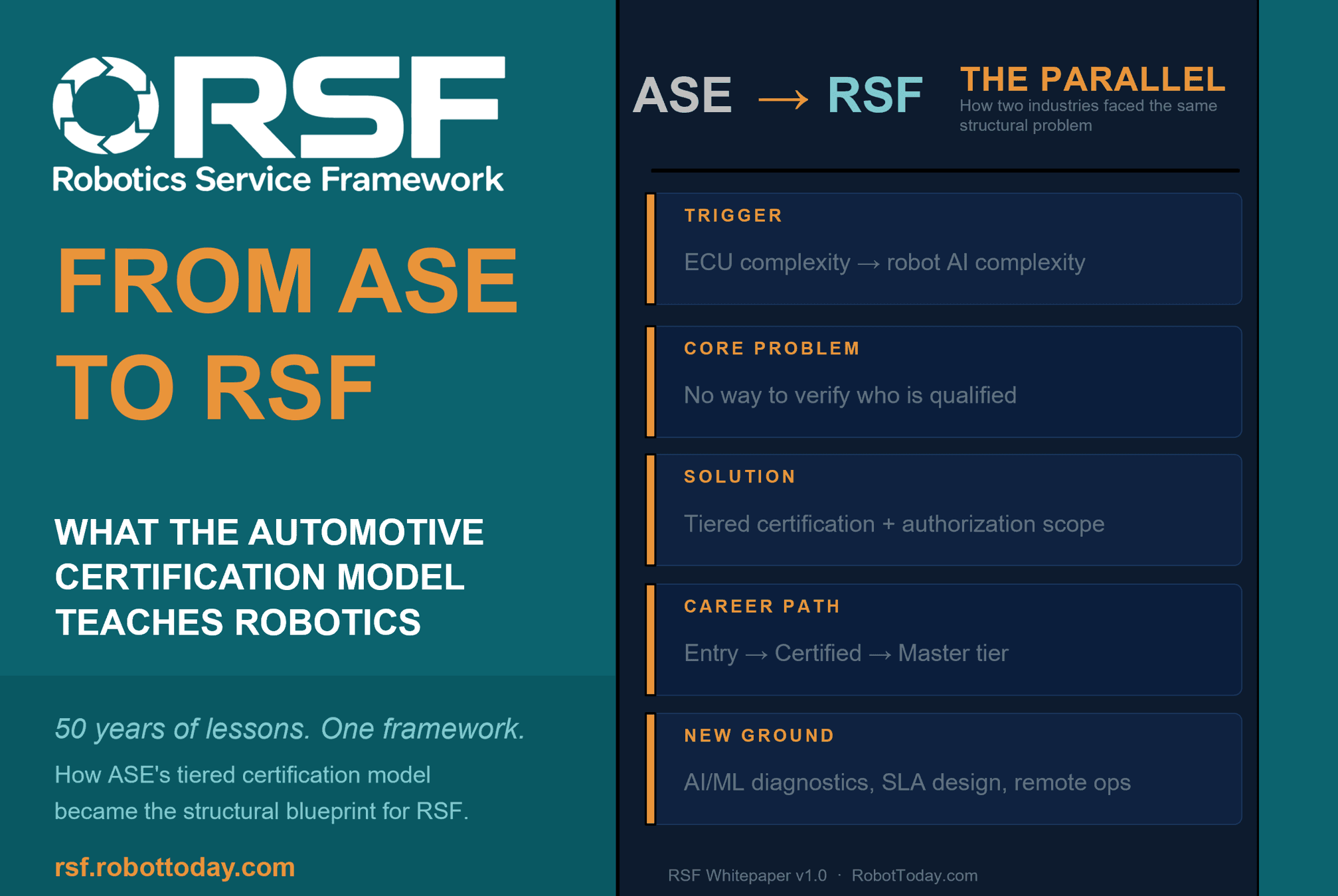
Business Culture Technology automation news business operations collaborationRobotics needs a service framework.
RSF defines a common language for robot service capability, lifecycle operations, certification pathways, and service-provider networks.