Industry Briefing
A single destination for timely, editor-curated robotics news from around the world.

Automation's Impact on Fulfillment and Last-Mile Delivery for Direct-to-Consumer Brands
Direct-to-consumer brands in the US and Canada face significant challenges in managing shipping costs, particularly in the final mile, which accounts for about half of all shipping expenses according to ABI Research. This has led to a growing reliance on automation within outsourced logistics, with technologies such as AI-coordinated fulfillment and autonomous mobile robots enhancing delivery efficiency and reliability. The importance of choosing the right third-party logistics (3PL) provider cannot be overstated, as most brands opt to outsource their warehousing needs rather than automate in-house. Providers like GoBolt, which handle fulfillment and last-mile delivery for shippers with over 3,000 orders monthly, are crucial in this landscape. The integration of software that coordinates storage and labor in real-time is transforming operations, as seen with AutoStore's recent product updates that optimize robot movement without necessitating additional hardware. Looking ahead, the trend towards automation in logistics is expected to continue, with AutoStore recently achieving its 300th installation in Aurora, Colorado. The company's advancements, including the CubeVerse platform, highlight the potential for increased efficiency through software rather than hardware expansion. No further timeline was disclosed at the time of publication.
Automation Logistics 3pl amrs artificial intelligence autonomous mobile robots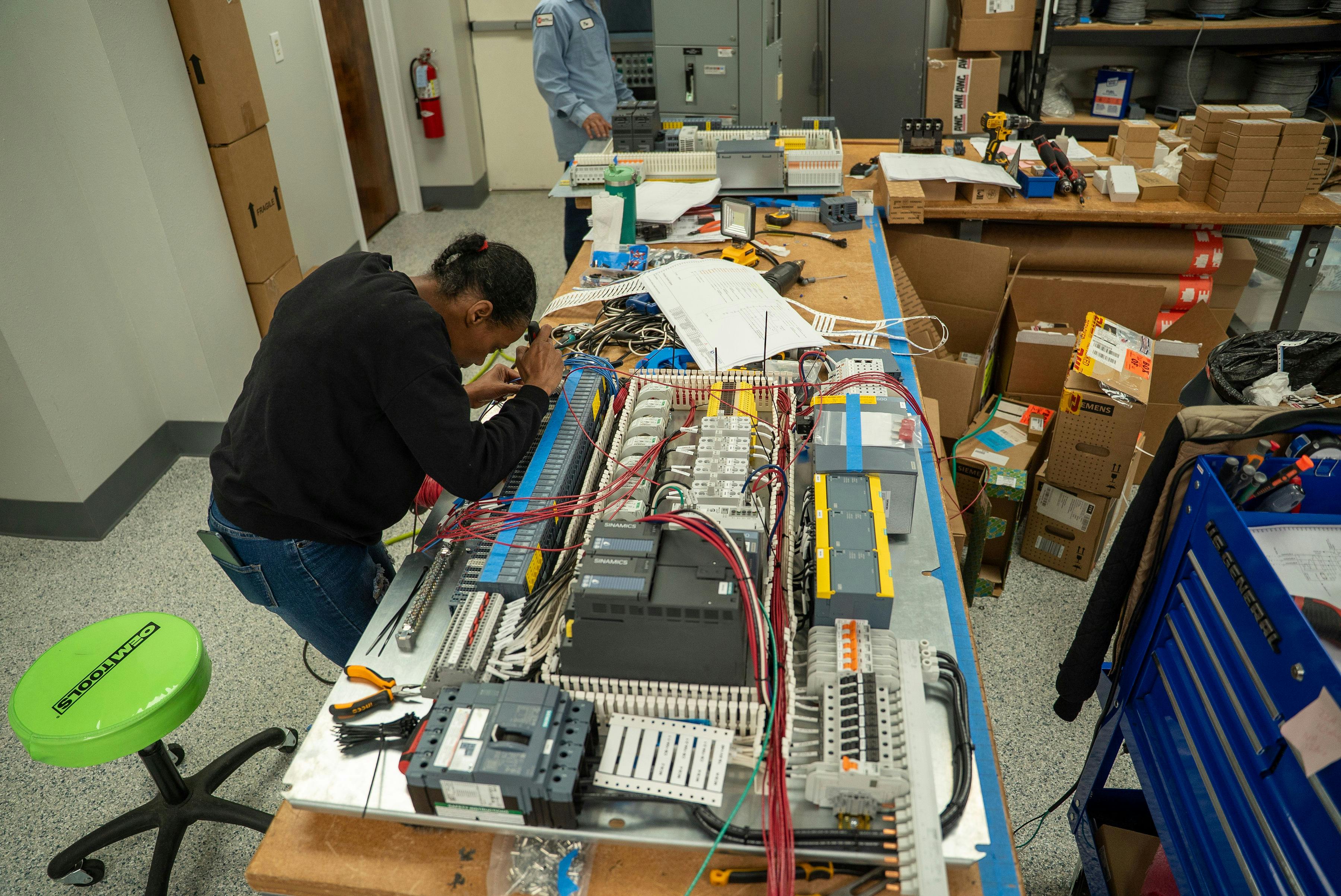
Solid State Automation and Controls Cuts Motor Control Center Delivery Time by 50 Weeks
Solid State Automation and Controls (SSAC) faced a significant challenge when a customer required a Motor Control Center (MCC) for a new facility, with a traditional lead time of 14 months. The facility needed to be operational in just eight months, prompting SSAC to innovate a solution. They designed the custom Motor Control Complex, MC-PLEX, in collaboration with Rittal, successfully delivering it in 22 weeks, thus saving 50 weeks compared to the standard timeline. This achievement is crucial as it highlights SSAC's ability to adapt and meet urgent customer needs in the building materials and logistics industry. By leveraging a modular enclosure and busbar platform, SSAC not only fulfilled the immediate requirement but also laid the groundwork for a more efficient and flexible product line. The company’s commitment to customer trust through expertise and accountability was pivotal in overcoming the traditional limitations of MCC delivery. Looking ahead, SSAC's innovative approach to the MCC design and delivery process may set a new standard in the industry. Their collaboration with Rittal and the use of advanced design tools like Eplan could lead to further enhancements in efficiency and flexibility for future projects. No further timeline was disclosed at the time of publication.
Factory / Digital Transformation
How Pick and Pack Fulfillment is Transforming Order Delivery in the Automation Age
The modern supply chain has undergone a significant transformation, with consumers now expecting two-day shipping as a standard. This shift necessitates a complete rethinking of traditional logistics practices, moving away from manual processes to technology-driven solutions. Companies face challenges in managing increased order volumes while maintaining accuracy, highlighting the need for advanced robotics and smart software in logistics. The implementation of intelligent pick and pack fulfillment workflows is crucial for warehouses to enhance efficiency. By analyzing order data in real time, these systems optimize item retrieval and minimize unnecessary movement within the facility. Techniques such as batch picking and zone picking streamline operations, allowing workers to compile orders more quickly, which leads to faster delivery times and improved customer satisfaction. The rise of autonomous mobile robots (AMRs) marks a significant change in warehouse operations. These robots have evolved from being a novelty to a necessity, utilizing advanced navigation technologies to operate safely in dynamic environments. As logistics providers continue to adopt these innovations, the focus will be on further enhancing operational efficiency and meeting the growing demands of consumers.
Automation Logistics Supply chain amrs autonomous mobile robots e-commerceRobotics needs a service framework.
RSF defines a common language for robot service capability, lifecycle operations, certification pathways, and service-provider networks.
Join the RobotToday community on LinkedIn
Daily robotics news, in-depth analysis, conference highlights, and discussions with professionals worldwide.