Industry Briefing
A single destination for timely, editor-curated robotics news from around the world.
Neuralink's Valuation and Investment Insights Ahead of Potential IPO in 2026
Neuralink Corporation, a private company specializing in brain-computer interfaces, has not yet gone public, and its shares are not available on any stock exchange. Following a $650 million Series E funding round in June 2025, the company's valuation stands at approximately $9.65 billion, with a per-share price estimated at $240.03 as of August 25, 2026. The absence of a public stock ticker and no announced IPO date means that Neuralink remains a private entity, with no SEC filings indicating a move toward public trading. The company's innovative technology, including the N1 chip and its application in clinical trials, highlights its potential impact on the medical field, particularly for individuals with paralysis. As Neuralink continues its PRIME clinical trial, which has enrolled 26 patients globally, the results from its two-year study show promising advancements in neural decoding speeds. Investors and stakeholders should monitor any developments regarding a potential IPO, as no timeline has been disclosed at this time.

Neros Technologies Secures $250 Million to Enhance Defense Drone Production by 2026
Neros Technologies announced the successful completion of a $250 million Series C funding round, elevating its valuation to $2.5 billion. The funding aims to expedite the development and production of its defense drones, including the Archer AI and Bandit models, which are set for deployment by the end of 2026. This funding is crucial as Neros seeks to fulfill its ambitious goal of producing 1 million drones annually, a mission that remains unchanged despite the expanding range of capabilities and mission sets. The company has secured significant contracts with the U.S. Army, Marine Corps, and various allied nations, positioning itself as a key player in the defense drone market amid rising global demand. Looking ahead, Neros Technologies plans to leverage this capital to enhance its drone manufacturing capabilities, particularly in response to the ongoing conflicts in Ukraine, Gaza, and Iran. The company aims to deliver advanced drone solutions that provide credible deterrence and support military operations effectively.
Defense / Security Drones Financial Investments Markets / Industries News
Ant-backed DSC debuts on Nasdaq, marking China's first cross-border IPO of 2026.
DSC Holdings, a Chinese provider of used-car dealer solutions, successfully raised $51 million in its initial public offering on Nasdaq, marking a significant milestone as the first cross-border IPO from China in 2026. This event occurred on June 26, 2026, after the China Securities Regulatory Commission approved the company's IPO application, which had been pending for over two years. The approval reflects a notable easing of regulatory hurdles for Chinese companies seeking to list abroad, as DSC navigated the complexities of Beijing's stringent oversight. The successful listing underscores a renewed interest in cross-border investments and signals potential opportunities for other Chinese firms aiming to access international capital markets.

SpaceX IPO Overview: Stock Performance, Earnings, and Future Projections
SpaceX (NASDAQ: SPCX) went public on June 12, 2026, raising $85.7 billion at $135 per share, marking the largest US IPO since Alibaba. The stock initially surged to $225.64 within three trading sessions but faced a decline after the August 6 insider lock-up expiry and the company's first earnings report. As of September 10, 2026, SPCX trades at approximately $148.76, valuing SpaceX at around $2 trillion. This IPO is significant as it reflects investor expectations for SpaceX's future revenue streams, particularly from Starlink, AI infrastructure, and Starship, projected to generate $100 billion annually by the end of 2026. The stock's volatility, with a 52-week range of $104.83 to $225.64, highlights the speculative nature of the investment, driven more by aspirations than by fundamentals, according to industry experts. Looking ahead, investors should monitor SpaceX's performance in its revenue segments, particularly Starlink, which reported $4.3 billion in Q2 2026 revenue and 12 million subscribers. The company's ability to meet its ambitious revenue targets will be crucial for maintaining investor confidence and stock stability. No further timeline was disclosed at the time of publication.

U.S. Departments of Energy and Defense Showcase Automated Manufacturing at IMTS 2026
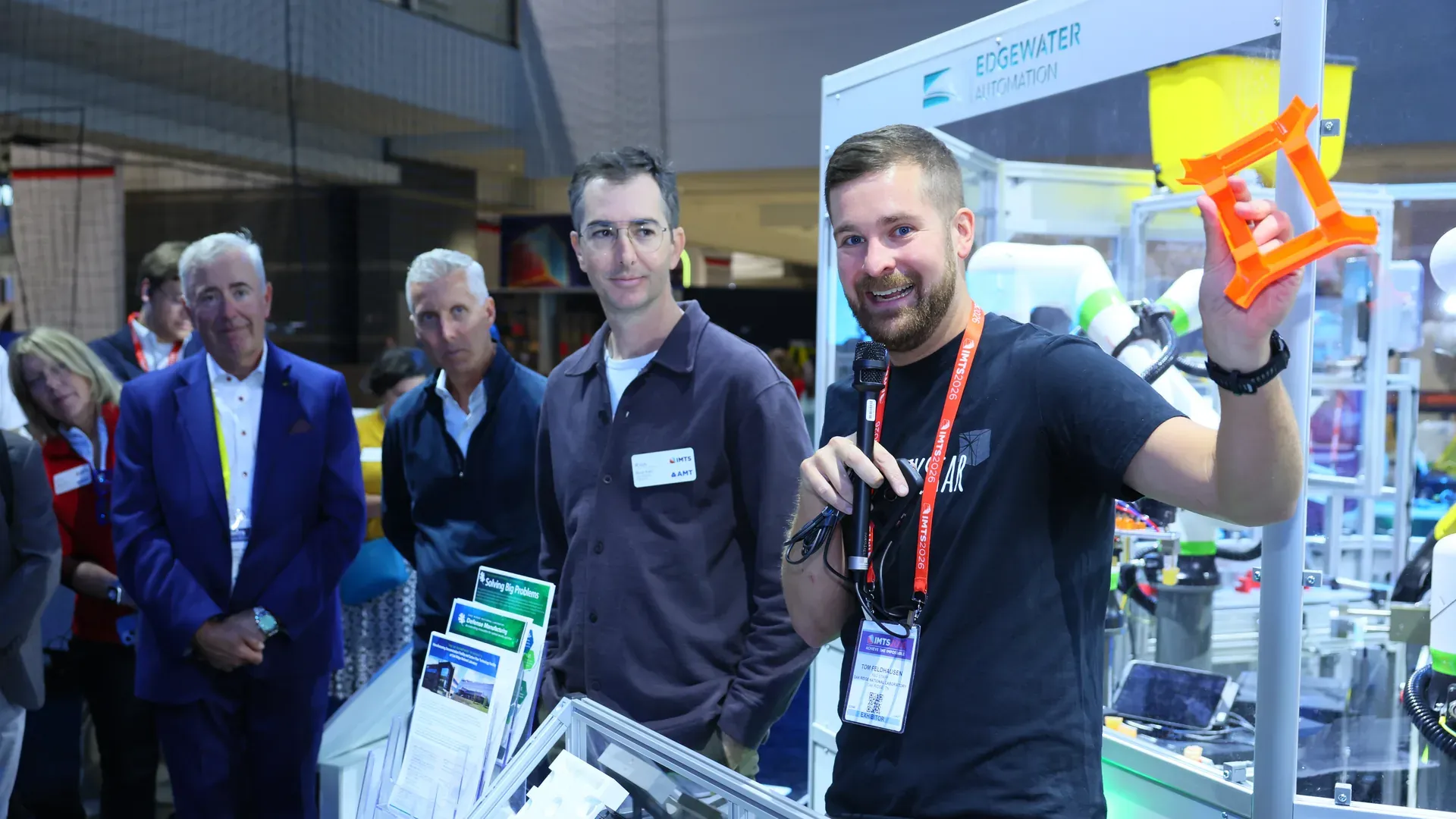
Leaders from the U.S. Departments of Energy and Defense will showcase live production and flight demonstrations of quadcopter drones and the 11-foot-tall Aires Tide test flight vehicle at The International Manufacturing Technology Show 2026. This event will highlight how advanced manufacturing technologies can enhance the speed and flexibility of U.S. defense production. The demonstration, taking place at the AMT Emerging Technology Center, will feature a full-scale manufacturing cell developed by the DOE’s Manufacturing Demonstration Facility at Oak Ridge National Laboratory. This cell integrates automation with both subtractive and additive manufacturing to produce quadcopter airframes, which will be flown in a secured area, showcasing the potential of these technologies in national security applications. Looking ahead, the project exemplifies the Genesis Mission, a DOE initiative aimed at leveraging AI and advanced computing for rapid scientific discovery and national security solutions. No further timeline was disclosed at the time of publication.
Factory / Design
U.S. Aerospace and Defense Sector Achieves $995 Billion in Sales in 2025
The Aerospace Industries Association (AIA) reported that the U.S. aerospace and defense sector generated $995 billion in sales in 2025, employing 2.2 million workers with an average operator wage of $115,000. The industry maintained a trade surplus of approximately 73%. This significant revenue underscores the importance of the aerospace and defense sector to the U.S. economy, highlighting its role in job creation and technological advancement. Boeing's acquisition of the F-47 next-generation fighter aircraft and Lockheed Martin's record delivery of 191 F-35 Lightning II fighter planes are notable achievements within this thriving industry. Looking ahead, companies like Astronics Corporation and Ducommun are making strides, with Astronics acquiring Bühler Motor Group and Ducommun being recognized as a BAE Supplier of the Year. No further timeline was disclosed at the time of publication.
Technology and IIoT
SpaceX's Supply Chain Structure and Vendor Opportunities Ahead of 2026 IPO
SpaceX operates a hybrid supply chain, with approximately 85% of core components manufactured in-house and over 3,000 external suppliers fulfilling the remainder. The company's IPO in June 2026 marked a significant shift, making its supply chain more transparent and investable. This structure includes three distinct supply chains for rockets, satellites, and AI infrastructure, each with unique supplier profiles and operational cadences. The importance of these developments lies in the substantial capital expenditure (capex) run rate of $73.5 billion, which is the largest procurement pipeline in the private space industry. Notably, $15.8 billion of the capex is allocated to AI infrastructure, highlighting a shift towards data-center hardware over traditional aerospace components. This shift indicates that suppliers must adapt to the evolving landscape of SpaceX's supply chain to remain competitive. Looking ahead, potential vendors should focus on qualifying for Tier 1 or Tier 2 status, as SpaceX's procurement strategy emphasizes the importance of vendor replaceability. The company's innovative supply chain model presents both challenges and opportunities for suppliers, particularly in raw materials and semiconductor categories where substitution is complex. No further timeline was disclosed at the time of publication.

Carnegie Mellon University Showcases Innovations in Defense Manufacturing at 2026 Summit
Carnegie Mellon University (CMU) presented several new partnerships and technologies at the 2026 Pennsylvania Defense and Innovation Summit. This event took place from July 14-15 at the U.S. Army War College in Carlisle, Pennsylvania, and was hosted by U.S. Senator David McCormick. The summit highlighted CMU's commitment to advancing defense manufacturing and military education through innovative research and collaboration. These efforts are crucial for enhancing the capabilities of the defense sector and ensuring that military personnel are equipped with the latest technologies. Looking ahead, stakeholders in the defense industry should monitor CMU's ongoing initiatives and partnerships that may emerge from this summit. No further timeline was disclosed at the time of publication.
Announcements
SpaceX's Starmind Project: Supplier Strategy and Chip Manufacturing Plans for 2026
SpaceX's Starmind project, aimed at deploying up to 1 million AI satellites, was filed with the FCC on January 30, 2026. The initiative is designed to minimize reliance on external suppliers, with CEO Elon Musk stating that current chip production capabilities only meet 2% of the projected needs. The first satellite, AI1, is set for prototype launches in early 2027, featuring a 70-meter wingspan and a modular payload system that allows for interchangeable chips from various suppliers. The significance of Starmind lies in its ambitious supply chain strategy, which seeks to transition from external hardware suppliers to a fully integrated Musk-owned facility by 2028. The Gigasat manufacturing site in Bastrop, Texas, is expected to be operational by the end of 2027, with plans for high-volume production of the D3 chip, specifically designed for space applications. This approach aims to consolidate chip manufacturing processes under the Terafab joint venture, which has an estimated initial investment of $55 billion. Looking ahead, the next milestone for Starmind is the launch of AI1 prototypes in early 2027, while the full-scale chip production at Terafab is projected to ramp up significantly thereafter. However, analysts express skepticism regarding the feasibility of achieving Musk's ambitious compute goals, which may require substantial investment and time to establish the necessary manufacturing capabilities.

SpaceX IPO Provides Indirect Investment Opportunity in Starmind Project
Starmind does not have a standalone stock or ticker; investors can gain exposure through SpaceX (ticker: SPCX), which began trading on Nasdaq after its IPO on June 12, 2026. Starmind is integrated within SpaceX, contributing to the company's AI and space initiatives, and its performance directly influences SPCX shares. The significance of Starmind lies in its role as a division of SpaceX, which encompasses other projects like Starlink and Starship. As of early July 2026, SPCX shares are trading between $149 and $150, significantly lower than their 52-week high of $225.64. The project’s milestones, such as AI1 prototype updates, can impact SpaceX's stock performance, making it essential for investors to monitor these developments closely. Looking ahead, the early 2027 launch of AI1 prototype satellites is a critical milestone that could provide verifiable data affecting Starmind's valuation and, consequently, SPCX stock. No further timeline was disclosed at the time of publication, but the upcoming events will be pivotal for investors tracking the relationship between Starmind and SpaceX's stock performance.

Croatia's Defense Spending Expected to Exceed 2% of GDP by 2025
According to NATO statistics, Croatia's defense spending is projected to surpass 2% of its GDP by 2025. This increase reflects the country's commitment to enhancing its military capabilities and aligning with NATO standards. The significance of this development lies in Croatia's strategic efforts to bolster its defense budget, which is crucial for national security and regional stability. By meeting the 2% GDP threshold, Croatia aims to strengthen its defense posture and contribute more effectively to collective security initiatives. Looking ahead, stakeholders will be keen to monitor Croatia's defense budget allocations and the implications for military modernization and procurement strategies. No further timeline was disclosed at the time of publication.
Features
Starlink's Financial Impact: Investing Through SpaceX's SPCX IPO
Starlink, a division of SpaceX, went public on June 12, 2026, as part of SpaceX's IPO on Nasdaq under the ticker SPCX. In 2025, Starlink generated $11.4 billion in revenue, accounting for 61% of SpaceX's total revenue, and is the only segment producing operating profit. This significant revenue contribution highlights Starlink's role as a key driver for SpaceX, especially as it transitions from consumer to enterprise clients, which are expected to yield higher average revenue per user (ARPU). The enterprise and government segment alone generated $1.81 billion in Q2 2026, marking a 108% year-over-year increase. Looking ahead, the focus will be on how Starlink continues to evolve within SpaceX's financial structure, particularly as it supports the company's overall profitability amidst losses in other segments. No further timeline was disclosed at the time of publication.

AgiBot Becomes Leading Global Humanoid Robot Vendor, Surpassing Unitree in 2026
AgiBot has emerged as the world's largest humanoid robot vendor in the first half of 2026, overtaking Unitree Robotics. The Shanghai-based company captured 44 percent of the global market by shipping approximately 8,400 humanoid robots, marking a remarkable 562 percent increase in shipments year on year. This significant growth is attributed to AgiBot's diverse product portfolio, which includes full-size bipedal A-series models, compact X-series units, and wheeled G-series robots. As the demand for humanoid robots rises amid a physical AI boom, AgiBot's success highlights the competitive landscape of the robotics industry. Looking ahead, both AgiBot and Unitree are preparing for public listings, indicating a shift towards capital markets. Industry stakeholders should monitor how these developments will impact their market positions and the overall growth of humanoid robotics. No further timeline was disclosed at the time of publication.
SpaceX's Starmind Targets AI Labs with $6.3 Billion Compute Contracts
SpaceX's Starmind is designed to provide wholesale AI compute services to businesses, particularly AI labs and cloud customers, rather than individual consumers. The service operates similarly to AWS, where users benefit from applications running on Starmind without direct subscriptions. The compute capacity of a single AI1 satellite is comparable to one NVIDIA GB300 rack, emphasizing its enterprise-grade capabilities. The significance of Starmind lies in its positioning as a potential fourth hyperscaler, joining the ranks of AWS, Microsoft Azure, and Google Cloud. The Reflection AI contract, valued at $150 million per month, exemplifies the enterprise-focused model, with total payments potentially reaching $6.3 billion through 2029. This contract highlights the growing demand for AI compute resources, particularly from AI-native startups and labs. Looking ahead, the focus will remain on securing additional enterprise contracts as Starmind expands its offerings. No consumer-facing products or subscriptions have been announced, and the current strategy is to cater to businesses with substantial AI workloads. No further timeline was disclosed at the time of publication.

SpaceX's $1.75 Trillion Valuation Driven by Starmind's Future Potential
Starmind is a pivotal element in SpaceX's estimated $1.75 trillion IPO valuation, despite currently generating no confirmed revenue. The stock price reflects optimistic projections regarding AI infrastructure growth, which Starmind has yet to substantiate. As of early July 2026, SpaceX's stock has decreased from its 52-week high of $225.64 to around $150, indicating market skepticism about future execution. The significance of Starmind lies in its potential to transform SpaceX's revenue model beyond traditional launch services. Goldman Sachs has shifted its focus from Starlink subscriber growth to the prospects of AI revenue, including orbital computing, as a cornerstone of SpaceX's long-term valuation. This marks a substantial change in how analysts view the company's growth trajectory, necessitating rates exceeding its historical 33% growth. Looking ahead, the credibility of Starmind as a growth narrative will be crucial for maintaining investor confidence. Analysts have noted a considerable divergence in price targets, reflecting uncertainty about the value of the Starmind and xAI initiatives. No further timeline was disclosed at the time of publication regarding specific milestones for these projects.

SpaceX's Starmind Faces Feasibility Challenges for 1 Million Satellite Deployment
On January 30, 2026, SpaceX submitted a request to the FCC to launch up to 1 million satellites as part of its Starmind orbital compute constellation. This ambitious plan is unprecedented, as the total number of satellites ever launched globally is in the low tens of thousands. The proposal seeks a waiver from standard deployment milestones, citing reliance on the Starship's full reusability for success. The significance of this request lies in the technical and logistical challenges it presents. Experts warn that low Earth orbit may not support the proposed number of active satellites without risking a debris cascade. SpaceX's own IPO prospectus acknowledges unresolved dependencies related to Starship's launch cadence and reusability, which are critical for the orbital AI compute strategy. Looking ahead, the timeline for achieving the necessary launch cadence and manufacturing capacity remains uncertain. SpaceX's Gigasat facility in Texas aims for volume production by late 2027, but this would require unprecedented output levels. No further timeline was disclosed at the time of publication, leaving the feasibility of the Starmind project in question.

Go eyes robotaxis and acquisitions after Japan’s biggest IPO of 2026. Here’s why it matters
Go, a prominent taxi-hailing app in Japan, successfully launched its initial public offering (IPO) on Tuesday, marking the largest IPO in the country for the year. This event not only revitalizes Japan's sluggish listing season but also provides Go with crucial funding amounting to ¥88.6 billion. The capital raised through the IPO is intended to tackle a pressing challenge: the ongoing shortage of drivers in Japan. By addressing this issue, Go aims to enhance its operational capacity and improve service delivery in a competitive market.
Apps Transportation Go initial public offering Japan taxi hailing
ASELSAN at SAHA 2026: Introducing next-generation multi-domain defense systems
At the SAHA 2026 exhibition, ASELSAN introduced its latest defense portfolio, showcasing a comprehensive and integrated defense architecture. This innovative framework combines electronic warfare, counter-unmanned aerial vehicle (UAV) systems, and capabilities for both airborne and naval operations. The unveiling highlights ASELSAN's commitment to advancing military technology and enhancing operational efficiency in response to evolving security challenges. By integrating these diverse capabilities, the company aims to provide a unified solution that meets the complex demands of modern defense environments.
Global Naval Warfare Sponsored Post Air Force Army Aselsan
‘Millions of drones’: What to expect from Turkey’s SAHA 2026 defense expo
The upcoming 2026 edition of SAHA is set to highlight its transformation from a national showcase to a significant global hub for the defense and aerospace industry. Industry experts emphasize that this evolution reflects the event's growing importance on the international stage. The conference will serve as a platform for key stakeholders to engage, share innovations, and discuss trends shaping the future of defense and aerospace. As the event approaches, anticipation builds around the opportunities it will present for collaboration and networking among global leaders in the sector.
Global baykar business Drones Eurofighter Typhoon EuropeRobotics needs a service framework.
RSF defines a common language for robot service capability, lifecycle operations, certification pathways, and service-provider networks.
Join the RobotToday community on LinkedIn
Daily robotics news, in-depth analysis, conference highlights, and discussions with professionals worldwide.