Industry Briefing
A single destination for timely, editor-curated robotics news from around the world.

Shadow IT: Risks, Realities, and How to Manage it
In a growing trend, many employees are increasingly utilizing shadow IT—tools and services that bypass official approval from their organization's IT departments. This practice includes actions such as storing company files in personal cloud accounts or employing external password managers for convenience. While these alternatives may offer ease of use, they pose significant risks to data security and compliance, as they are not vetted by the organization's security protocols. As businesses grapple with the implications of this unauthorized technology usage, experts emphasize the need for clear policies and employee training to mitigate potential vulnerabilities. The rise of shadow IT highlights the ongoing challenge organizations face in balancing employee autonomy with the necessity of maintaining robust cybersecurity measures.
Computing Technology access control automation news browser security cloud security
Claude Mythos Preview Requires New Ways to Keep Code Secure
Malicious actors are increasingly leveraging generative AI to conduct cyberattacks, employing AI-generated deepfakes for scams, AI-assisted malware, and chatbots for phishing campaigns. In early April, Anthropic’s Frontier Red Team revealed that its Claude Mythos Preview model identified thousands of critical vulnerabilities across major operating systems and web browsers, despite not being specifically trained for this purpose. This prompted the launch of Project Glasswing, a collaborative initiative with tech giants like Amazon Web Services, Apple, Google, Microsoft, and Nvidia, aimed at using Mythos Preview to enhance software security. While generative AI demonstrates remarkable capabilities in identifying code vulnerabilities, experts warn that these same abilities can be exploited by cybercriminals. Jeremy Katz, vice president of code security at Sonar, noted that AI can effectively pinpoint security flaws within extensive codebases. However, the technology is not without its challenges, including the potential for false positives, which complicates the process for open-source maintainers. To mitigate these issues, cybersecurity professionals advocate for a balanced approach that incorporates human oversight in the verification of AI findings. Techniques such as adversarial self-review and dynamic threat modeling are suggested to enhance the reliability of AI tools. Experts emphasize the importance of integrating security measures earlier in the software development lifecycle and providing ongoing training for developers to preemptively address vulnerabilities. As AI continues to evolve in its ability to detect and classify security weaknesses, the focus will shift towards effectively remediating these vulnerabilities at scale.
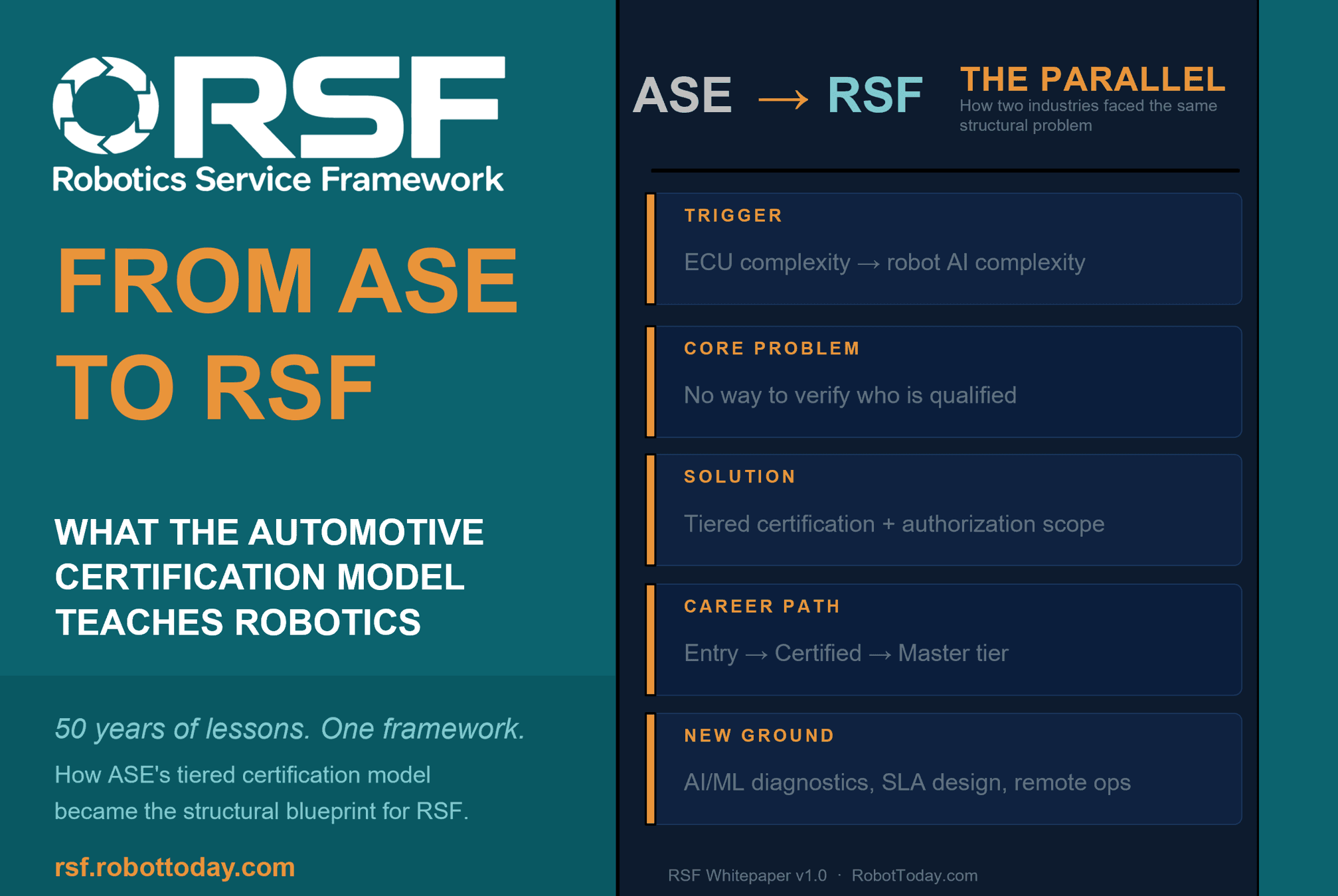
Anthropic Coding Artificial-intelligenceRobotics needs a service framework.
RSF defines a common language for robot service capability, lifecycle operations, certification pathways, and service-provider networks.