Top News

Industry Briefing

A single destination for timely, editor-curated robotics news from around the world.

Microsoft announces customizable isolation environment "Microsoft Execution Containers" for AI agents, compatible with OpenClaw.

Microsoft announces customizable isolation environment "Microsoft Execution Containers" for AI agents, compatible with OpenClaw.

Microsoft has unveiled a new customizable isolated environment for AI agents, known as Microsoft Execution Containers (MXC). This announcement was made recently as part of the tech giant's ongoing efforts to enhance AI development and deployment capabilities. The MXC aims to provide developers with a secure and flexible platform to create and manage AI applications, ensuring that they can operate independently while maintaining high levels of performance and security. By offering this innovative solution, Microsoft seeks to address the growing demand for robust AI systems that can be tailored to specific needs, thereby facilitating more efficient and effective AI integration across various industries.

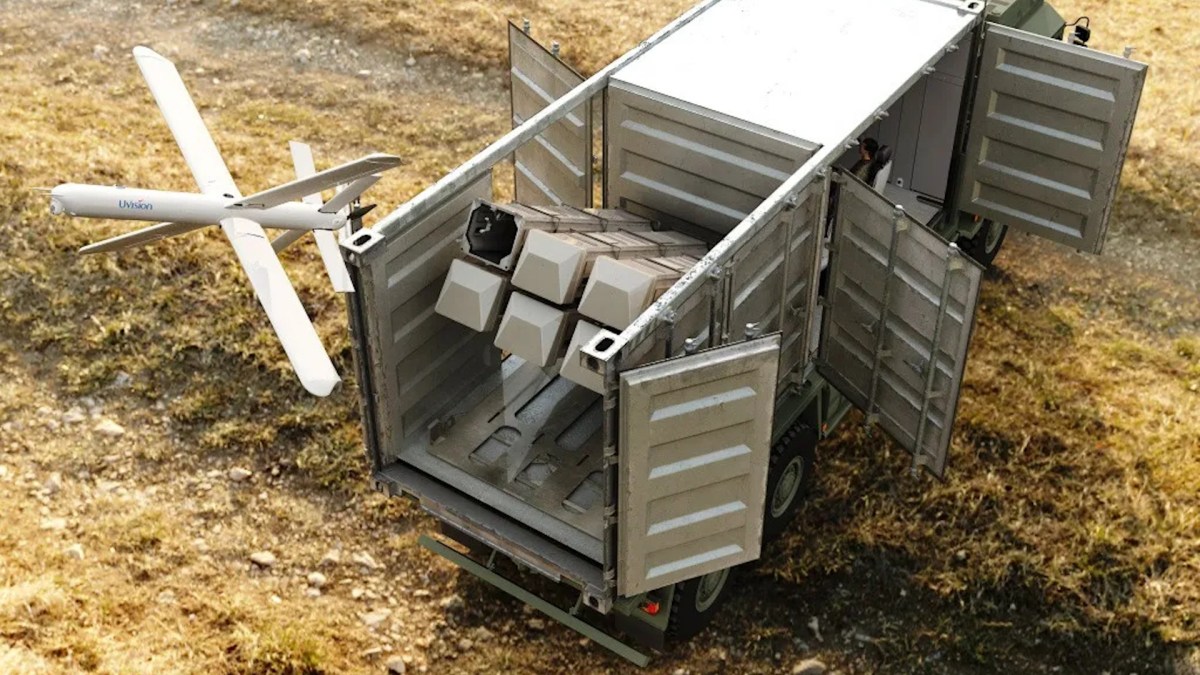
Drone Swarms Packed Into Unassuming Containers Sought By DARPA

Drone Swarms Packed Into Unassuming Containers Sought By DARPA

The Defense Advanced Research Projects Agency (DARPA) is exploring the development of remotely triggered drone swarms that can be concealed within unassuming containers. This innovative approach aims to enhance military capabilities by deploying swarms behind enemy lines, creating a versatile and challenging threat that could emerge from multiple locations. The initiative reflects a growing interest in advanced drone technology and its potential applications in modern warfare, as military strategists seek to outmaneuver traditional defense systems. By leveraging containerized drones, DARPA aims to increase operational flexibility and surprise in combat scenarios, posing significant implications for future military engagements.

News & Features Air Drones Unmanned
IRGC Attacks MSC Containership in Gulf

IRGC Attacks MSC Containership in Gulf

The Islamic Revolutionary Guards Corps (IRGC) has announced its responsibility for a recent attack, asserting that the action was a direct response to U.S. military strikes on an Iranian vessel. This escalation in hostilities highlights the ongoing tensions between Iran and the United States, particularly in the context of maritime security in the region. The IRGC's statement indicates a calculated retaliation, emphasizing the group's commitment to defending Iranian interests against perceived aggression. The incident underscores the fragile state of relations and the potential for further conflict in the area.
Tesseract Ventures Selected for Pentagon's Autonomous Drone Delivery System Prototype Program

Tesseract Ventures Selected for Pentagon's Autonomous Drone Delivery System Prototype Program

Tesseract Ventures, a Kansas City-based robotics and drone company, has been chosen by the Defense Innovation Unit (DIU) to participate in a prototype program aimed at enhancing the U.S. military's use of autonomous drones. This initiative, known as the Containerized Autonomous Drone Delivery System (CADDS), focuses on deploying unmanned aerial systems in challenging environments with limited infrastructure. The CADDS project represents a significant advancement for Tesseract Ventures, as it seeks to transition from single-operator drone control to a system where one individual can manage multiple drones simultaneously. This approach aims to improve operational efficiency and reduce the personnel required for drone missions, aligning with the Pentagon's goal of utilizing unmanned systems more extensively in military operations. Looking ahead, Tesseract Ventures will demonstrate its NOMAD modular autonomous platform as part of the prototype project. This platform is designed to facilitate the deployment, launch, recovery, and management of multiple drones from transportable containers. No further timeline was disclosed at the time of publication.

Military
ABB Robotics completes its AI-powered Visual SLAM AMR portfolio with new autonomous forklift

ABB Robotics completes its AI-powered Visual SLAM AMR portfolio with new autonomous forklift

ABB Robotics completes its AI-powered Visual SLAM AMR portfolio with new autonomous forklift Visit http://go.abb/robotics for further information -The new Flexley Stack F712 extends ABB Robotics’ AI-powered Visual SLAM technology to autonomous forklifts, enabling pallet transport and high-density storage. -Customers can now deploy mixed fleets of Visual SLAM-powered tugs, movers and forklifts on a common navigation, fleet management and software platform. -Powered by ABB Robotics' AMR Studio, the portfolio enables up to 20% faster commissioning while ensuring seamless interoperability and safe, reliable operation. 07/07/26, 07:10 AM | Industrial Robotics, Mobile Robots | ABB Inc. ABB Robotics is expanding its Autonomous Mobile Robotics (AMR) portfolio with the launch of the Flexley® Stack F712, creating a complete interoperable ecosystem across all major Visual SLAM AMR types. Combining autonomous forklifts, tugs and movers on one platform, ABB Robotics enables customers to automate a broader range of material-handling and intralogistics processes. Offering market-leading accuracy, the F712 is designed for demanding material handling, end-of-line storage and warehouse operations across industries including automotive manufacturing, helping increase efficiency, flexibility and scalability. More Headlines A3's Automate 2026 Breaks Records as Demand for Robotics, AI and Automation Grows NVIDIA and Hugging Face Bring New Models and Frameworks to LeRobot for the Open Robotics Community Palladyne AI Executes $4.2 Million U.S. Air Force Contract to Advance Swarming Capabilities for Integrated Cross-Domain Operations UMA Unveils Its Vision for the Next Generation of Humanoid Robots Robbyant Unveils LingBot-Depth 2.0 and LingBot-Vision to Redefine Robotic Spatial Perception Articles Unleash AI Innovation: The Power of NVIDIA RTX PRO 6000 Blackwell Workstation Edition Fueled by PNY-Supplied GPUs Automate 2026 Q&A with DESTACO Automate 2026 Q&A with Roboteon Advances in Robots to See & Interpret within Warehouse Environments Building Resilient Fulfillment Networks with Robotics and Real-Time Logistics Data "Across intralogistics operations, businesses are being asked to process greater volumes in less time, while working with increasingly limited resources," said Marc Segura, President, ABB Robotics. "They are under pressure to move goods faster and with greater flexibility, while labour availability is becoming a critical constraint. As part of our journey to more autonomous and versatile robotics (AVRTM), we have combined advanced vision, mobility and intelligence in the Flexley Stack F712 forklift AMR, completing our scalable, AI-powered AMR portfolio." F712 is versatile, capable of handling multiple load types and sizes - including open and closed pallets, containers or racks- up to 2,000 kg and reaching heights of 8.5 meters. The Flexley Stack AMR F712 joins the Flexley Tug and Flexley Mover in ABB Robotics' growing Visual SLAM AMR portfolio. Applications include intralogistics tasks such as warehouse storage and retrieval, as well as line supply, end-of-line handling, body- and press-shop and drive-in and light buffer in the automotive and industries sector. Unlike conventional AMR forklifts on the market, F712 uses Visual SLAM to map and navigate its environment, eliminating the need for pre-installed infrastructure like markers or reflectors. The AI-enabled Visual SLAM supports the autonomous decisions required to operate in complex, dynamic warehouse operations with a market-leading positional accuracy of ±10 mm. Together with AMR Studio®, this shortens commissioning times by up to 20 percent and creates a versatile and reliable system that can adapt instantly when a warehouse or production floor layout changes. Certified to the latest ISO and ANSI safety standards, Flexley Stack F712 can safely operate at class-leading speeds of up to 1.7 m/s while loaded. F712 is fully integrated with AMR Studio and is VDA5050 compatible, enabling seamless integration with ABB Robotics' Visual SLAM AMRs and existing systems within a unified project. This makes it easy to manage complex projects and integrate different types of mobile robots. The no-code, drag-and-drop software suite supports rapid setup, fleet coordination, traffic management and real-time visualization, allowing ABB Robotics' tugs, movers and forklifts to operate together in the same layout for scalable turnkey automation projects. ABB Robotics as one of the world's leading robotics companies, is the only company with a comprehensive and integrated AI-powered portfolio covering robots, cobots and Autonomous Mobile Robots (AMRs), designed and orchestrated by our value-creating software. We help companies of all sizes and sectors - from automotive to electronics and logistics - to outperform by becoming more resilient, flexible and efficient. ABB Robotics is at the forefront of developing and commercializing a new generation of Autonomous Versatile Robotics

Japan Pioneered Humanoid Robots—Can It Now Catch China?

Japan Pioneered Humanoid Robots—Can It Now Catch China?

“In the future, the relationship between humans and robots will deepen, and the distinction between them will probably disappear.” This prediction, from one of the attendees at the recent Humanoids Summit in Tokyo, might have been unremarkable had it not come directly from an android that was first introduced to the world 20 years ago. Geminoid HI-6 is the sixth-generation of a robot originally designed in 2006. The mechanical twin of Osaka University professor Hiroshi Ishiguro, Geminoid HI-6 is now equipped with a large language model trained on Ishiguro’s own writings and interviews. It has advanced conversational skills and can even have a chat with its creator, an eerie spectacle. But at the Humanoids Summit, Geminoid was one of the few humanoid robots from Japan, the country that pioneered the form factor.While the event in Tokyo only had about 40 robots on display, Chinese systems outnumbered Japanese by roughly three to one. Some Japanese robotics firms were even using Chinese robots in their own technology demonstrations, something that would have been unthinkable in the recent past—one Japanese engineer described the situation as “sad.” The conference was a stark reminder of how Japan has ceded its early lead in humanoid robot development to overseas competitors, and the challenge it now faces to secure a place in an ecosystem increasingly dominated by general-purpose robots powered by AI. Twenty-five years ago, Japan was turning out groundbreaking humanoids that were showstopping in their abilities, but they were not commercialized as practical machines in any meaningful way. Heavily influenced by science fiction and lacking practical applications, they were mostly expensive technology demonstrations that were eventually mothballed. What Japan retains, however, is robotics design and know-how, which it must leverage to be a key player in the rapidly evolving humanoid ecosystem. Learning to Walk—Then Standing StillTo anyone who has seen recent videos of Chinese humanoids doing kung-fu and synchronized acrobatics, as well as half-marathon races, China’s remarkable progress in the field is nothing new. At the Humanoids Summit, Toyota showed a video of its latest basketball-playing robot, and Honda exhibited its latest robot hand, but the full-scale humanoids on the floor were mostly Chinese–the kid-size K1 machines from Booster Robotics of Beijing were dancing to Michael Jackson tunes. The full-scale G1 humanoid from Unitree Robotics of Hangzhou was also doing demos. “You cannot sell these bipedal systems in Japan for safety and compliance reasons,” says Shuichi Nagao, a frequent visitor to China as CTO of Omakase Robotics, a division of Zeals, a Japanese humanoid robot developer. Omakase was exhibiting a G1 modified with an external PC controller, a dextrous hand, a suction-cup manipulator and a sensor “hat” with an extra speaker, mic and camera. “In China, the government is pushing humanoid development. They didn’t have an industry 20 years ago. The people pushing it are young, in their 20s and 30s. It’s a really different mentality out there,” says Nagao. “Big players in Japan are still looking for use cases for humanoids. In China, they’re already doing mass production and reducing the cost, so other countries can’t compete with them anymore.”Another Japanese company showing off G1 bots was summit sponsor GMO AI & Robotics, a subsidiary of Japanese internet company GMO. It’s using the robots in partnership with Japan Airlines to load and unload cargo containers at Tokyo’s Haneda airport. The cargo project is a trial—like many other humanoid experiments—but the fact that Chinese machines have penetrated so far into Japan’s ecosystem upends a long history. In 1973, scientists at Waseda University in Tokyo built WABOT-1, considered the first full-scale humanoid robot and capable of slow bipedal locomotion, grasping objects and simple communication. It inspired Honda’s groundbreaking Asimo humanoid, but it was never commercialized. Asimo was eventually retired in 2022, the year ChatGPT was released. Two years later, Unitree’s G1 went on sale for US $16,000. China’s High Torque Technology Co. showed off its Mini Pi biped, customized with an anime-inspired head, at Humanoids Summit in Tokyo. The regular version is priced at $3,500. Tim HornyakSupply and DemandJapan’s development of humanoids happened before practical applications or widespread demand were in place, but bad timing is only part of the story—Japan also has a history of developing technologies that might appeal to domestic consumers but not necessarily those overseas. For example, decades after they first appeared, its highly engineered, multifunction toilets have only recently found a following abroad. Japan’s humanoid prowess was partly built on the back of its legendary industrial automation, yet even that stronghold has eroded. Ani Kelkar, a partner from McKinsey & Company in Boston who produces analytical reports about the robotics industry, told the summit audience that while Japan occupied the top spot in the world in manufacturing robot density (the number of multipurpose industrial robots in operation per 10,000 employees) from at least 1994 to 2009, it then slipped to second in 2014, third in 2019 and fifth in 2024. In that year, South Korea was at the top of the leaderboard with a robot density of 1,220 compared to Japan’s 446. The International Federation of Robotics estimates China now has the most operational industrial robots in the world, with around 2 million total units, approximately 4.5 times more than Japan. “The annual installation numbers are impressive too: 54 percent of all robots installed worldwide in 2024 were deployed in China,” the IFR said in a release in April 2026. “I think the loss of Japanese leadership is more to do with the rise of China as a manufacturing powerhouse including for sectors that Japan had high export levels,” Kelkar said in an email interview. “The recovery has not yet happened as Japan ‘missed’ the rapid acceleration in AI for robotics and is now playing catchup.”How Japan Can Adapt Kelkar believes Japan has a US $100 billion opportunity in general-purpose robotics, which are machines that can perform a wide variety of tasks, and it cannot rely on the slower-growing industrial robot market, which is centered on factory machines that do one simple and predictable task like welding car parts. He points to a McKinsey white paper suggesting that while Japan has much of the hardware and technology experience needed to support general purpose robot development, it must change its strategy to capture more share in AI, software, data collection and robotics platforms.Tetsuya Ogata is a professor of engineering and director of the Institute for AI and Robotics at Waseda University, the birthplace of humanoids in Japan. He briefed the summit on how a nonprofit he chairs, the AI Robot Association (AIRoA), is working with Toyota and other members to develop foundational technologies for collaborative use. For instance, AIRoA has collected some 80,000 hours of data on remote operation of mobile manipulators, and Ogata believes it’s the largest dataset of its kind. Using the data, it built and verified Vision-Language-Action (VLA) models, and it has also started data collection for dual-arm mobile manipulation. In an interview, Ogata acknowledged Japan’s struggle to find its place in the changing landscape. “The world of AI is inherently a game of scale,” says Ogata. “Therefore, Japan’s absolute prerequisite is to secure a competitive baseline of scale—in data, computing resources, and talent. Beyond that, what I consider most critical is a mindset shift: rather than trying to hoard scale within a single nation or company, we must grow stronger by collaborating with a diverse ecosystem of domestic and international players.” Specifically, this means creating a ‘collaborative domain’ to address data—the single biggest bottleneck—through industry-wide cooperation rather than data-siloing. By collectively nurturing a pre-competitive, shared data infrastructure and foundation model, individual companies can then compete on top of it with their own applications. “By offering this open ‘data ecosystem’ to the world, we can engage global players and establish a ‘third pole’ alongside the US and China,” says Ogata. “I believe this is how Japan can reclaim its global presence.”In 1999, Japan introduced the world’s first mobile internet services platform. But being first didn’t turn Japan into a smartphone manufacturing or design center—it’s now merely a supplier of parts to other countries who are leading the smartphone industry. If Japan can avoid a repeat of that experience and successfully deregulate, diversity, and commercialize its original humanoid dreams, it stands a better chance of influencing the direction of the industry and reaping billions in value. As automobiles and electronics were pillars of Japan’s industrial strategy in the last century, Japan could make humanoid robots one of its key value generators in the 21st century, an approach that would not only deliver economic benefits but give Japan greater clout in how the industry will evolve. Just like Japanese cars, electronics, and even toilets, Japanese humanoids could stand for craftsmanship and reliability. It’s a legacy that Japan can’t afford to give up.

Japan Robotics Humanoids Humanoid-robots
Humanoid Announces its KinetIQ Ascend Reinforcement Learning Approach

Humanoid Announces its KinetIQ Ascend Reinforcement Learning Approach

A groundbreaking robotic system has demonstrated its effectiveness in various manipulation tasks, including retrieving parts from bins, delivering objects to humans, and lifting and moving containers with its dual arms. This innovative technology was rigorously tested and has shown promising results across multiple scenarios, showcasing its potential for practical applications in industries requiring automation. The trials were conducted recently, highlighting the system's versatility and efficiency in handling complex tasks that typically require human intervention. As industries increasingly seek to enhance productivity through automation, this new robotic solution could play a significant role in transforming operational workflows.

How Roomba started a robot revolution

How Roomba started a robot revolution

In the early days of robotic vacuum technology, the Roomba was characterized by its simplicity and limited functionality. These devices navigated homes by randomly bumping into obstacles while attempting to clean, often ceasing operation once their batteries depleted or their dust containers filled. Despite these shortcomings, the Roomba gained popularity among consumers for its convenience, marking a significant step in the evolution of home cleaning appliances. As technology has advanced, newer models have incorporated sophisticated navigation systems and improved suction capabilities, reflecting the growing demand for more efficient and user-friendly cleaning solutions.

Gadgets Podcasts Smart Home Tech Version History
Life Outside the Box for the Warehouse Worker | Boston Dynamics

Life Outside the Box for the Warehouse Worker | Boston Dynamics

In a significant advancement for workplace safety and efficiency, automated unloading systems are being implemented to alleviate the physically demanding task of unloading cargo containers. This innovation is particularly beneficial during the sweltering summer months, as it reduces the need for workers to endure extreme heat inside containers. By minimizing exposure to hazardous conditions, the technology not only enhances safety but also improves the overall quality of life for employees engaged in this labor-intensive work. The transition to automated systems is part of a broader effort to modernize logistics operations and protect workers from the risks associated with manual unloading.

AmbiStack Selected for 2026 RBR50 Awards, Marking Third Recognition for Ambi Robotics

AmbiStack Selected for 2026 RBR50 Awards, Marking Third Recognition for Ambi Robotics

AmbiStack has been recognized for its innovative contributions to the field of physical AI, showcasing its ability to efficiently stack both uniform and non-uniform packages. Utilizing advanced cameras, machine vision, and artificial intelligence, the robot identifies items without prior knowledge of their size, position, or appearance. This technology enables AmbiStack to strategically arrange packages onto pallets or within walled containers, enhancing operational efficiency in logistics and warehousing. The selection highlights the growing importance of automation and AI in streamlining complex tasks in various industries.

Chef Robotics Physical AI Models Can Now Automate Baked Goods Packing

Chef Robotics Physical AI Models Can Now Automate Baked Goods Packing

A new application has been developed to streamline the packaging process for various baked goods, including burger buns, chocolate chip cookies, biscotti, butter cookies, biscuits, fortune cookies, granola bars, rusks, and shortbreads. This innovative technology automates the placement of these products into trays and packaging containers, followed by sealing to ensure freshness and quality. The application aims to enhance efficiency in production lines, reducing manual labor and minimizing the risk of contamination. By implementing this system, bakeries and food manufacturers can improve their operational workflow and meet increasing consumer demand for packaged baked items. The rollout of this application is expected to take place in the coming months, with trials already underway in select facilities.

Chef Robotics Physical AI Models Can Now Automate Baked Goods Packing

Chef Robotics Physical AI Models Can Now Automate Baked Goods Packing

A new application has been developed to streamline the packaging process for various baked goods, including burger buns, chocolate chip cookies, biscotti, butter cookies, biscuits, fortune cookies, granola bars, rusks, and shortbreads. This innovative technology automates the placement of these products into trays and packaging containers, followed by sealing to ensure freshness and quality. The application aims to enhance efficiency in production lines, reducing manual labor and minimizing the risk of contamination. By implementing this system, manufacturers can improve their output and maintain high standards in food safety. The rollout of this application is expected to significantly benefit the baking industry, particularly as demand for packaged baked goods continues to rise.

Siemens and Humanoid bring Physical AI to the factory floor: deploying humanoids in industrial operations with NVIDIA

Siemens and Humanoid bring Physical AI to the factory floor: deploying humanoids in industrial operations with NVIDIA

Siemens and Humanoid have achieved a significant milestone in integrating physical AI into industrial operations with the successful testing of the HMND 01 Alpha humanoid robot at Siemens' electronics factory in Erlangen, Germany. This event, which took place on April 16, 2026, marks a key development in their strategic partnership with NVIDIA, aimed at creating fully AI-driven, adaptive manufacturing environments. The HMND 01 Alpha, equipped with NVIDIA's physical AI technology, autonomously performed logistics tasks such as picking, transporting, and placing containers, meeting all target performance metrics. It achieved a throughput of 60 tote moves per hour, maintained over 8 hours of uptime, and demonstrated a pick-and-place success rate exceeding 90 percent. Siemens' Xcelerator portfolio plays a crucial role in this integration, providing the necessary digital infrastructure for real-time data exchange and synchronized workflows between the humanoid robot, other machinery, and human operators. This collaboration aims to address labor shortages and operational complexities in modern manufacturing. Humanoid’s development process was accelerated through the use of NVIDIA's AI stack, enabling a reduction in prototype development time from 18-24 months to just 7 months. This deployment signifies a step forward in the evolution of humanoid robots, positioning them as valuable assets in factory settings capable of adapting to dynamic conditions alongside human workers.

Saddle Creek Logistics Transforms Container Unloading with Anyware Robotics’ Pixmo

Saddle Creek Logistics Transforms Container Unloading with Anyware Robotics’ Pixmo

Saddle Creek has announced a partnership with Anyware Robotics, a prominent company specializing in multi-purpose mobile robots that utilize advanced physical AI technology. This collaboration focuses on the deployment of Pixmo, an innovative AI-powered mobile robot specifically engineered for box handling tasks. Pixmo is designed to autonomously unload containers and trailers, enhancing operational efficiency in logistics and supply chain management. This partnership marks a significant step forward in automating warehouse processes, aiming to streamline operations and reduce labor costs. The initiative is part of a broader trend towards integrating robotics in industrial settings, reflecting the growing demand for automation solutions in the logistics sector.

Composite Energy Technologies Announces HADALUS-XL Expanding Flat Pack AUV Family

Composite Energy Technologies Announces HADALUS-XL Expanding Flat Pack AUV Family

Composite Energy Technologies (CET) has introduced HADALUS-XL, the latest model in its line of Flat Pack Autonomous Underwater Vehicles (AUVs). This unveiling took place recently as CET aims to enhance logistics capabilities in contested environments. The HADALUS AUVs are specifically designed for efficient transport in standard shipping containers, allowing for quick assembly at deployment sites. This innovation is expected to streamline operations and improve logistical support for underwater missions.

composite energy technologies hadalus-xl auv
Deep Ocean Search Launches its New 6,000m Depth Rated ROV: Mariner XL

Deep Ocean Search Launches its New 6,000m Depth Rated ROV: Mariner XL

Deep Ocean Search, in partnership with Marine Operations London LTD, has introduced the Mariner XL, a highly capable work-class remotely operated vehicle (WROV) designed for ultra-deep operations. This advanced ROV can operate at depths of up to 6,000 meters and is available for hire, offering rapid deployment capabilities worldwide. The system includes a launch and recovery mechanism, an ultra-long range inertial and acoustic positioning system, a pilot station, and storage space, all efficiently packed into four 20-foot containers. The Mariner XL is engineered for a variety of tasks, including inspection, sampling, object recovery, imaging, and data acquisition, making it a versatile tool for marine operations. Notably, its deployment does not necessitate significant structural modifications to the support vessel, nor does it require calibration, streamlining the operational process. This innovative solution aims to enhance efficiency and effectiveness in deep-sea exploration and recovery missions.

deep ocean search 6 000m depth rated rov mariner xl deep sea rov
Container terminal in Republic of the Congo expands fleet

Container terminal in Republic of the Congo expands fleet

A container terminal in the Republic of the Congo is set to enhance its operations with a new order of Konecranes equipment, aimed at accommodating the rising container volumes. This order, placed in the first quarter of 2026, is expected to be delivered in the second half of the same year. Situated on the west coast of the country, the terminal plays a crucial role in facilitating regional container traffic across Central Africa, reflecting the growing demand for efficient logistics solutions in the area. The expansion of the terminal's fleet underscores its commitment to supporting increased trade and improving service capabilities in the region.

Forklifts and Warehouse Vehicles Materials Handling Ports & Maritime Congo containers fleet
RobotToday Initiative

Robotics needs a service framework.

RSF defines a common language for robot service capability, lifecycle operations, certification pathways, and service-provider networks.