Industry Briefing
A single destination for timely, editor-curated robotics news from around the world.

Integrating Automated Guided Vehicles in Hospitals: Key Considerations and Benefits
Aerocom, specialists in AGV systems, explore the integration of Automated Guided Vehicles (AGVs) into busy hospital environments. They emphasize the importance of thorough planning and staff buy-in to ensure successful deployment. The integration of AGVs can streamline operations, reduce labor costs, and improve patient care, making it a vital technology for modern healthcare facilities. The significance of AGVs in hospitals lies in their ability to enhance operational efficiency and patient safety. By automating routine tasks such as transporting medications and supplies, hospitals can allocate staff resources more effectively, ultimately leading to better patient outcomes. The successful integration of AGVs can also alleviate the burden on healthcare workers, allowing them to focus on critical care responsibilities. Looking ahead, stakeholders should monitor the ongoing developments in AGV technology and its applications in healthcare. As hospitals continue to seek innovative solutions to improve efficiency and patient care, the role of AGVs is expected to expand. No further timeline was disclosed at the time of publication.

The Increasing Importance of Automated Guided Vehicles in Modern Manufacturing
Automated Guided Vehicles (AGVs) are becoming essential in manufacturing by enhancing material handling efficiency. They streamline logistics, ensuring timely delivery of components and improving production flow. As manufacturers face challenges like rising production demands and labor shortages, AGVs offer a solution by automating material transport, thus creating safer and more reliable operations. The deployment of AGVs allows manufacturers to maintain high safety standards while reducing costs associated with manual handling. Their predictable movements minimize accidents and product damage, contributing to a smoother operational environment. AGVs also provide consistency in processes, which is crucial for production performance, particularly in facilities where material availability directly impacts output. Looking ahead, manufacturers are increasingly recognizing the need for customized AGV solutions tailored to their specific operational requirements. These tailored systems can address unique challenges such as limited space and strict safety protocols, ensuring that AGVs integrate seamlessly into existing workflows. No further timeline was disclosed at the time of publication.
AMR and AGV Materials Handling AGVs in Advanced Manufacturing CTi Systems
Drive solutions for shuttles, automated guided vehicles, and autonomous mobile robots.
At the SPS Italia exhibition, Bonfiglioli showcased its innovative mechatronic ecosystem, highlighting advanced drive solutions tailored for shuttles, automated guided vehicles (AGVs), and autonomous mobile robots (AMRs). This presentation underscores Bonfiglioli's commitment to enhancing automation and efficiency in various industrial applications. The event, held in Italy, serves as a platform for industry leaders to explore cutting-edge technologies and solutions that address the evolving needs of the market. Through its participation, Bonfiglioli aims to demonstrate its leadership in the field and foster collaborations that drive technological advancements in automation.
Allgemein Antriebs- und Lineartechnik Robotik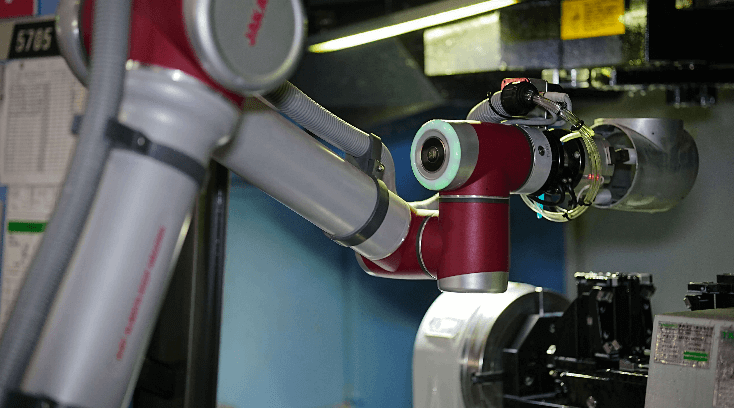
Industrial Cobots vs. Automated Guided Vehicles (AGVs): Better for Assembly Logistics?
In the evolving landscape of modern manufacturing, JAKA is advocating for the adoption of industrial collaborative robots (cobots) over traditional Automated Guided Vehicles (AGVs) for assembly logistics. This shift is driven by the need for greater flexibility and efficiency in material handling, particularly as production demands change. While AGVs have long been utilized for point-to-point transport along fixed paths, they struggle to adapt to the dynamic requirements of assembly lines, which often necessitate rapid reconfiguration for different product variants. In contrast, a stationary cobot can easily manage hand-offs between multiple workstations and human operators, allowing for quicker reprogramming and less disruption during production adjustments. Moreover, cobots offer added value by performing tasks such as quality inspections or light assembly during the transport process, transforming logistics nodes into productive checkpoints. This capability not only reduces handling time but also shortens overall cycle times, a benefit that standalone AGVs cannot match. Additionally, the integration of cobots simplifies factory layouts by eliminating the need for dedicated navigation lanes and charging stations required by AGVs. Operating within existing workspaces, cobots streamline operations and reduce the complexity of managing multiple systems. Ultimately, while AGVs remain effective for long-distance transport of standardized loads, JAKA's cobots present a compelling alternative for intricate, variable tasks within compact assembly environments, enhancing both logistical efficiency and production value.
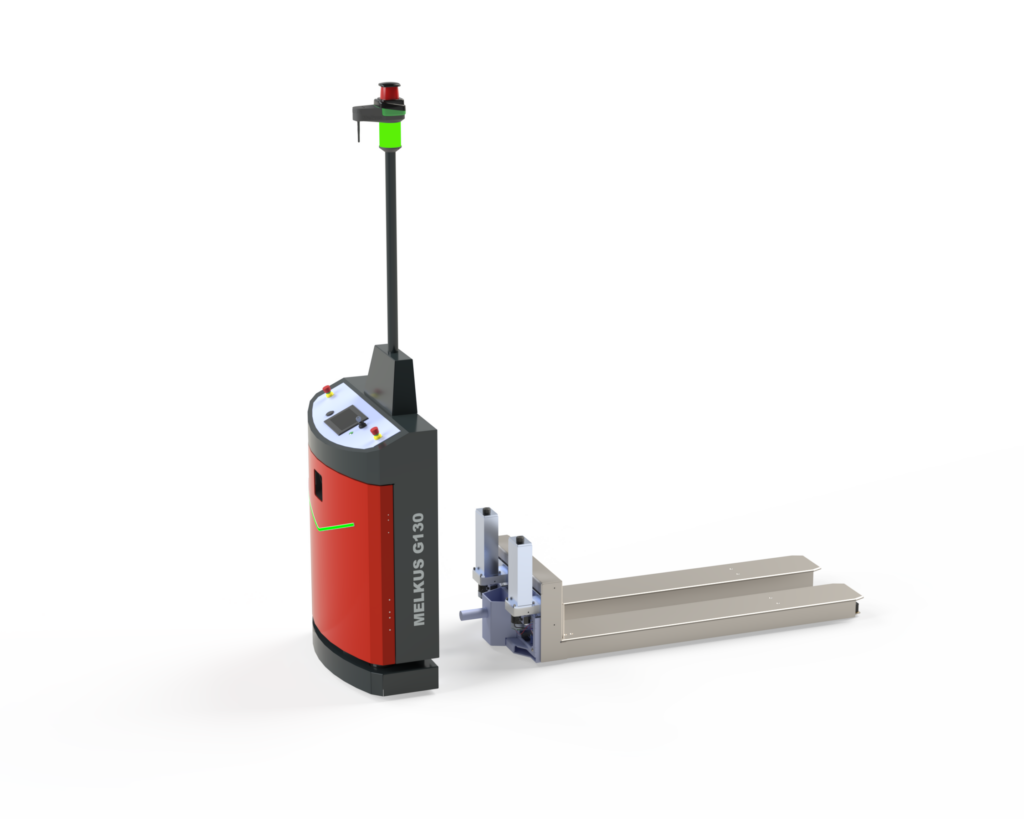
Detachable Automated Guided Vehicle
Melkus Mechatronic has unveiled a redesigned version of its pallet automated guided vehicle (AGV), the Melkus G130 3.0. This update aims to enhance the vehicle's efficiency and functionality in material handling processes. The redesign reflects the company's commitment to innovation in robotics and automation technology, catering to the evolving needs of industries that rely on automated solutions for logistics and production. The new model is expected to improve operational workflows and reduce manual labor, aligning with the growing trend towards automation in various sectors.
Allgemein Automation Fördertechnik & Handling Lagerlogistik & Materialfluss Mobile Robotik
From Forklifts to Laser Guided Vehicles — The Operational Shift in High-Volume Manufacturing
In response to the growing demands of manufacturing systems, which require increased efficiency and precision, the use of Automated Guided Vehicles (LGVs) is becoming more prevalent. Unlike traditional forklifts, which rely heavily on operator skill and can be affected by factors such as fatigue and congestion, LGVs offer a consistent and repeatable solution for material handling. This shift is particularly crucial as production volumes rise and tolerances become tighter, necessitating a more reliable flow of materials within facilities. As industries seek to enhance their operational capabilities, the integration of LGVs is seen as a strategic move to improve productivity and reduce the risks associated with human error.
Robotics needs a service framework.
RSF defines a common language for robot service capability, lifecycle operations, certification pathways, and service-provider networks.
Join the RobotToday community on LinkedIn
Daily robotics news, in-depth analysis, conference highlights, and discussions with professionals worldwide.