Industry Briefing
A single destination for timely, editor-curated robotics news from around the world.

Xiaomi's Robots Achieve High Success Rates in Factory Automation Tasks
On July 29, Xiaomi's founder and CEO Lei Jun shared a video showcasing the company's robots in action at its automotive factory. The video highlights a white robot efficiently stacking storage boxes while a black Xiaomi robot oversees the operation, signaling a significant advancement in automation. This development is crucial as Xiaomi's robots have improved their dual-side operation success rate from 90.2% to 98% within four months, nearing the 99% benchmark set by skilled workers. Additionally, the robots have successfully tackled new tasks involving complex components, demonstrating their capability in handling flexible workpieces in a factory setting. Looking ahead, Xiaomi's robots have begun to collaborate in multi-robot scenarios, a rarity in humanoid robotics. As the industry observes these advancements, Xiaomi stands out as the only company to achieve such high-level operational success in real factory environments, indicating a promising future for their automation technology.
Industrial Automation Robotics Factory Automation AI Collaborative Robots
Advancing End-to-End Automation by Integrating Factory Operations with Business Systems
Manufacturers have long automated physical production processes, utilizing robots and sensors for efficiency. However, many surrounding processes still rely on manual data entry and communication, leading to inefficiencies. The next phase of automation focuses on integrating operational systems with business software, enhancing communication across departments. This integration is crucial as it allows for real-time information sharing between operational technology and business systems, which traditionally serve different purposes. For instance, while a machine can detect performance issues, the process of creating maintenance tickets often remains manual. End-to-end automation aims to streamline these handoffs, ensuring that relevant information flows seamlessly across organizational boundaries. Looking ahead, the implementation of an embedded integration platform is essential for connecting operational data with various business applications like ERP and CRM systems. This approach not only simplifies the integration process but also ensures that operational decisions remain within the appropriate environments while coordinating necessary administrative actions. No further timeline was disclosed at the time of publication.
Automation Business Design Engineering ai agents business process automation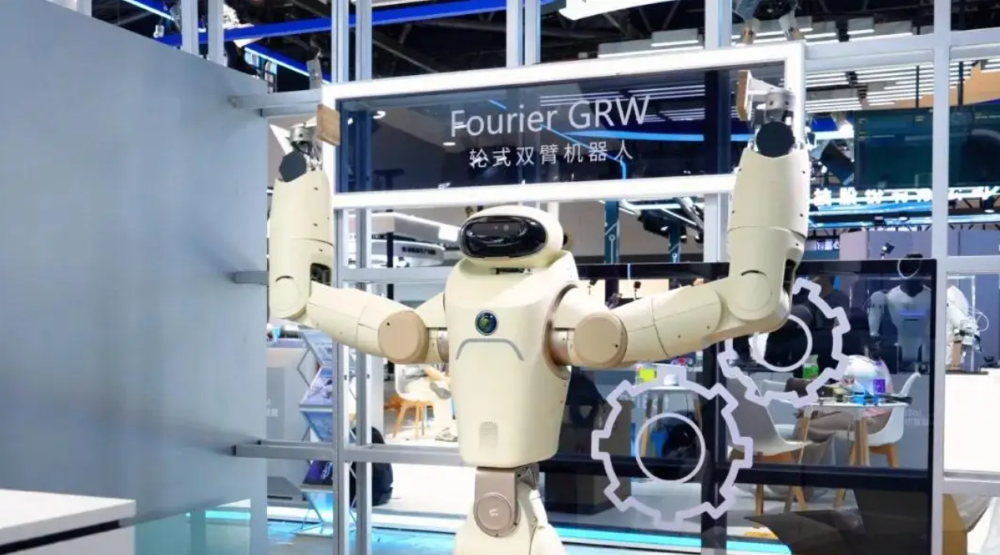
Fourier Unveils GRW: Its First Wheeled Dual-Arm Robot for Factory Automation
On July 17, 2026, Fourier introduced the GRW, its first wheeled dual-arm robot, at the World Artificial Intelligence Conference in Shanghai. This innovative robot is designed for flexible industrial operations, focusing on stability, efficiency, and continuous assistance in factory settings. The GRW features a narrow 585mm body, a dual-arm span of 1970mm, and a repeat positioning accuracy of ±0.1mm, with a dual-arm load capacity of 16kg. Its hardware supports hot-swappable power, enabling 24/7 continuous operation. This robot addresses the automation gap in auxiliary tasks across various industries, including automotive manufacturing and logistics. As factories face challenges in automating auxiliary roles, the GRW targets six key operational areas: line-side delivery, box handling, machine loading/unloading, material sorting, assembly, and palletizing. With 29 degrees of freedom and a peak torque of 500 N·m, the GRW is poised to meet approximately 80% of manual material handling needs in sectors like automotive and warehousing.
Wheeled Robots Industrial Automation Dual-Arm Robots Manufacturing Technology
Implementing Simple Automation Solutions in Older Factories
Older factories can benefit from automation without a complete overhaul. Instead of replacing entire systems, focusing on automating specific repetitive tasks can yield significant improvements. Identifying bottlenecks, such as manual lifting or misalignment, allows for targeted automation efforts that enhance efficiency. This approach is crucial as it minimizes disruption and costs while proving the value of automation incrementally. By starting with manageable projects, facilities can gradually build their automation capabilities. Simple motion components, like electric linear actuators, can effectively handle controlled movements without the complexity of full robotic systems. Looking ahead, factories should consider how to integrate these simpler automation solutions into their operations. As they gain experience, they may explore more advanced technologies. No further timeline was disclosed at the time of publication.
Automation Factories Industry Technology actory automation automation retrofits
AI Agents Revolutionize Service Layer Automation Beyond Traditional Factory Settings
Industrial automation has significantly changed physical production, yet the service layer remains largely manual. Maintenance requests still require human coordination, consuming valuable operational time. AI agents are now emerging to automate this service layer, handling unstructured requests and integrating with various systems to streamline operations. This shift is crucial as it allows organizations to redirect skilled labor from administrative tasks to more strategic work. By automating the intake, triage, and coordination processes, AI agents enhance efficiency and reduce the burden on human operators. The ability to manage requests end-to-end marks a significant advancement in operational capabilities. Looking ahead, the continued development of AI agents in the service layer will be essential for organizations aiming to improve productivity and responsiveness. As these technologies evolve, they promise to further integrate with existing systems and transform how service operations are managed. No further timeline was disclosed at the time of publication.
Automation Computing ai agents artificial intelligence automation chatbots
Walden Robotics Launches AI-Driven Factory Robots for Real-World Automation
Walden Robotics, a US-based startup, has unveiled a general-purpose robotics platform that enables Physical AI robots to learn and adapt while performing real work. Unlike traditional robots that follow pre-programmed workflows, Walden's robots continuously improve through real-world operations, making them suitable for complex tasks alongside human workers from the outset. The significance of Walden Robotics lies in its full-stack approach, which integrates hardware, AI, and deployment software to create robots that evolve in capability over time. With $300 million in funding and a valuation of $1.1 billion, the company is addressing the growing demand for flexible automation in sectors like automotive, aerospace, and logistics, driven by labor shortages and increasing product complexity. Looking ahead, Walden Robotics has already begun deploying its robots in production environments, including a Toyota manufacturing plant in North America. The company aims to enhance its robots' skills through real-world experience, utilizing advanced AI techniques such as Large Behavior Models and Diffusion Policy. No further timeline was disclosed at the time of publication.
AI and Robotics Innovation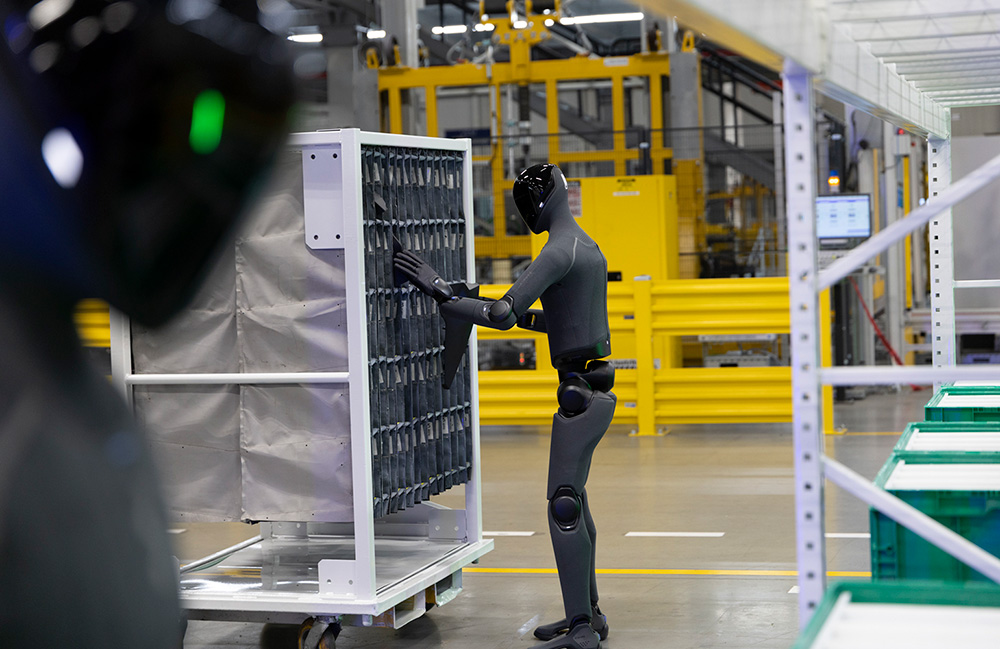
BMW to Deploy Figure 03 Humanoid Amid Cost Challenges in Manufacturing Automation
BMW announced plans to deploy the Figure 03 humanoid robot at its Spartanburg, S.C. plant following a successful pilot with Figure 02. Despite advancements in AI and robotics, the high costs associated with humanoid automation remain a significant barrier for manufacturers. Current robotic unit economics make it difficult to justify the investment, especially when specialized robots outperform humanoids in productivity. The evolution of physical AI has led to improved manipulation capabilities, with robots now able to perform tasks previously deemed challenging. However, the conversation has shifted from whether robots can perform tasks to whether their costs can be justified. Human oversight remains essential, particularly in unexpected situations, with some developers relying on teleoperation, which limits scalability. While humanoids offer flexibility for various tasks, their cost-effectiveness is questioned compared to specialized robots optimized for specific workflows. For instance, humanoids achieve around 1,000 picks per hour in parcel sorting, while specialized robots can reach up to 3,000 picks per hour. The primary challenge for humanoid robots lies in their economics, as they are currently too expensive for widespread adoption in most applications.
Humanoids News Opinion
You Automated Your Factory Floor, But What About Your Yard? Automation Prepares to Step Outside
Automation at the distribution center has reached a standstill in the yard area, where manual processes still dominate. Despite advancements in technology, the transition to fully automated operations has not yet extended to this crucial part of the facility. This limitation highlights ongoing challenges in integrating automated systems into all aspects of logistics and supply chain management. As companies strive to enhance efficiency and reduce labor costs, the yard remains a significant hurdle that requires further innovation and investment. The situation underscores the need for a balanced approach that combines automation with human oversight to ensure seamless operations in the distribution process.
Factory / Workforce
The integration of artificial intelligence and physical robot technology promotes the entry of factory automation into a new era.
The integration of artificial intelligence with physical robotics is ushering in a transformative era for factory automation. This advancement is set to revolutionize manufacturing processes, enhancing efficiency and productivity across various industries. As companies increasingly adopt these technologies, the shift is expected to occur rapidly, with significant developments anticipated in the coming months. The push towards automation is driven by the need for improved operational efficiency, cost reduction, and the ability to meet growing consumer demands. By leveraging AI capabilities, robots can now perform complex tasks with greater precision and adaptability, allowing factories to streamline operations and reduce human error. This evolution in technology not only promises to reshape the manufacturing landscape but also raises questions about the future of the workforce and the skills required in an increasingly automated environment.
Robotics Automation AI
Automation is Leaving the Factory Floor and Moving into the Back Office
For decades, automation has primarily been associated with industrial settings, such as factories and warehouses, where robots and programmable systems efficiently managed repetitive physical tasks. However, recent developments indicate a significant shift in the application of automation beyond traditional environments. As of late 2023, various sectors are increasingly integrating automation into diverse areas, including service industries and everyday consumer interactions. This expansion is driven by the need for enhanced efficiency and precision, as organizations seek to reduce labor costs and improve productivity. The transition is facilitated by advancements in technology, which allow for more sophisticated automation solutions that can adapt to a wider range of tasks. As businesses recognize the potential benefits, the conversation around automation is evolving, highlighting its growing presence in non-industrial contexts.
Automation Business Industry ai agents artificial intelligence automation news
Brownfield Is the Real Test of Automation: How ForwardX Scaled 484 AMRs in a Live Auto OEM Factory Without Production Downtime
Over a year since its implementation, ForwardX's autonomous mobile robot (AMR) system is successfully expanding within Chery Automobile's manufacturing facility in Dalian, China, while maintaining uninterrupted production. This project has emerged as one of the largest brownfield AMR deployments in the automotive sector, showcasing the effectiveness of integrating advanced robotics into existing manufacturing processes. The deployment aims to enhance operational efficiency and streamline logistics within the facility, reflecting the growing trend of automation in the automotive industry.
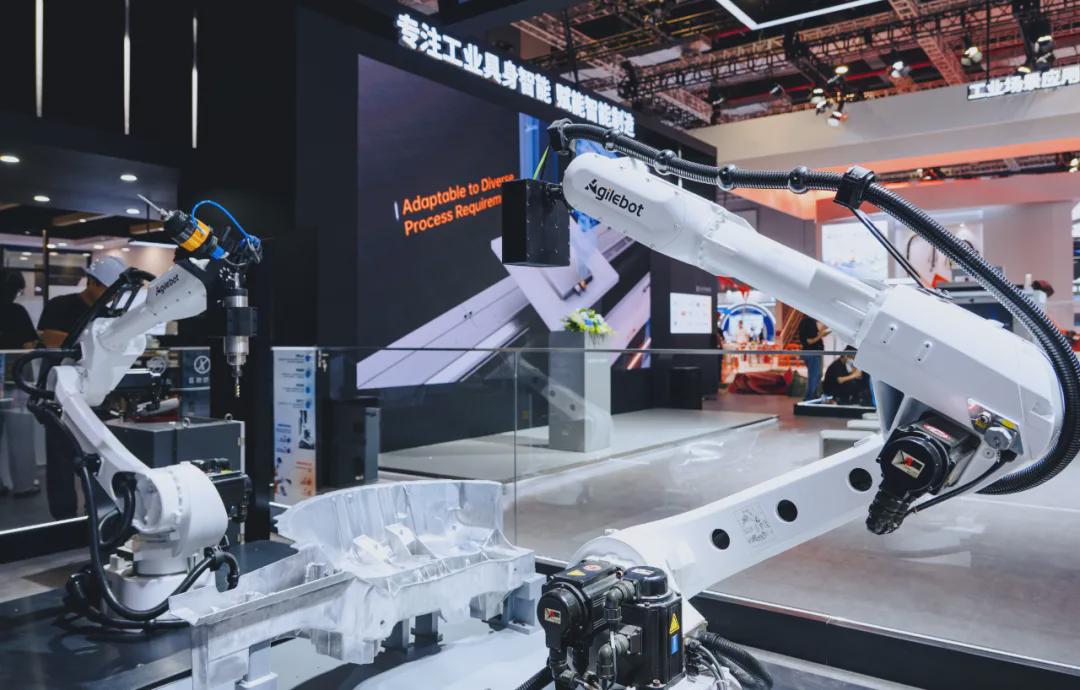
Is Physical AI the Optimal Solution for Factory Automation?
At the recent Zhangjiang Robot Forum, industry leaders convened to address the shortcomings of current Variable Length Architecture (VLA) models in manufacturing environments. Despite substantial investments in humanoid robotics, the majority have struggled to achieve consistent production levels. Experts emphasized the need to transition from merely enhancing model architecture to developing comprehensive operational systems that guarantee return on investment, facilitate environmental interaction, and ensure precise control. WeiYi's innovative approach, which integrates artificial intelligence with industrial requirements, was highlighted as a potential solution to these challenges. The forum underscored the urgency for the robotics sector to evolve in order to meet the demands of modern manufacturing.
Physical AI Factory Automation Humanoid Robots Industrial Robotics
Why Factory Automation Now Depends on Software-Savvy Workers
As automation increasingly integrates into production environments, the demand for workers skilled in managing technology is rising. Traditionally, factory automation was characterized by robotic arms performing repetitive tasks behind safety barriers. However, the evolving landscape now requires employees to navigate complex dashboards, respond to alerts, and make data-driven decisions. This shift reflects a broader trend in which the role of human workers is transforming from manual labor to technological oversight, necessitating a new set of skills to effectively collaborate with advanced machinery. The growing reliance on automation is reshaping the workforce, prompting a need for training and adaptation to ensure that employees can thrive in a more automated future.
Automation Factories Robotics automation news automation workforce cobots
China: Pudu unveils semi-humanoid learning robot built to transform factory automation
Chinese robotics company Pudu has introduced a next-generation industrial semi-humanoid robot aimed at enhancing manufacturing processes. The unveiling took place at a technology expo in Shanghai on October 15, 2023. This innovative robot is designed to improve efficiency and productivity in factories, addressing the growing demand for automation in the manufacturing sector. Pudu's latest development incorporates advanced AI and machine learning capabilities, allowing the robot to adapt to various tasks and environments seamlessly. By leveraging cutting-edge technology, the company aims to support manufacturers in overcoming labor shortages and increasing operational efficiency. The introduction of this semi-humanoid robot marks a significant step forward in the integration of robotics within industrial settings, reflecting Pudu's commitment to leading the way in automation solutions.
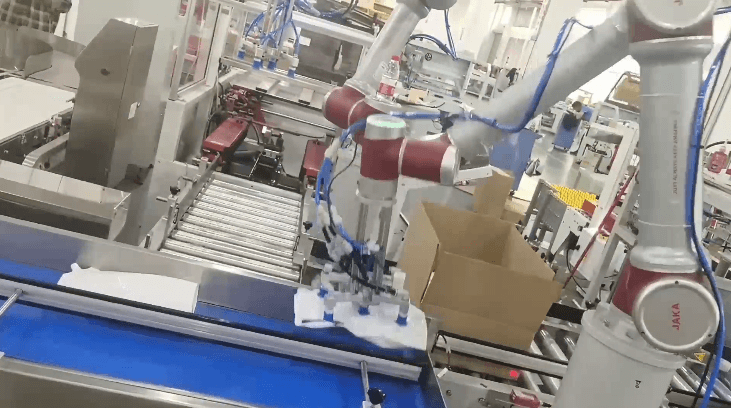
The Role of Collaborative Robots in the Future of Smart Factory Automation
As smart factories evolve, JAKA highlights a significant shift towards collaborative automation, where robots work alongside human operators rather than in isolation. This transition is driven by the need for flexible automation solutions that can adapt to changing production demands. Collaborative robots, designed for shared workspaces, assist in repetitive and precision-critical tasks, allowing manufacturers to respond swiftly to variations in product designs and smaller batch sizes without extensive reconfiguration of production lines. A notable example of this collaborative approach is the JAKA Zu7, engineered for automated screwdriving tasks that require high accuracy and stability. With adjustable torque settings tailored to specific product needs, the Zu7 ensures consistent assembly quality while integrating seamlessly into existing manufacturing processes. This capability enhances operational efficiency and quality control, reducing manual strain on workers. The integration of collaborative robots into broader automation systems is crucial for maintaining production rhythm and scalability. By combining human oversight with automated precision, these robots contribute to a balanced and sustainable production environment. JAKA envisions collaborative robot technology as essential for creating adaptable, people-centered automation systems that evolve with the manufacturing landscape, reinforcing the importance of collaboration in the future of smart factory automation.
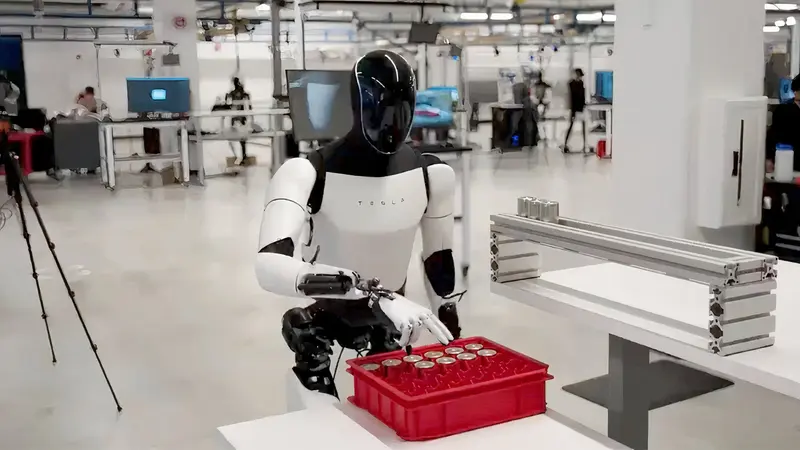
The Humanoid Question: Ex-Tesla Optimus Lead Voices Factory Skepticism, Bets on Simpler Automation
Chris Walti, the former head of Tesla's Optimus project, has raised concerns regarding the effectiveness of humanoid robots in industrial settings. He argues that their design is not conducive to performing repetitive tasks commonly found in factories. In response to these challenges, Walti has launched a new company, Mytra, which aims to develop alternative solutions for warehouse automation. By shifting focus away from humanoid robots, Mytra seeks to enhance efficiency and productivity in the logistics sector.
Optimus Tesla Elon MuskRobotics needs a service framework.
RSF defines a common language for robot service capability, lifecycle operations, certification pathways, and service-provider networks.
Join the RobotToday community on LinkedIn
Daily robotics news, in-depth analysis, conference highlights, and discussions with professionals worldwide.