

Industry Briefing
A single destination for timely, editor-curated robotics news from around the world.
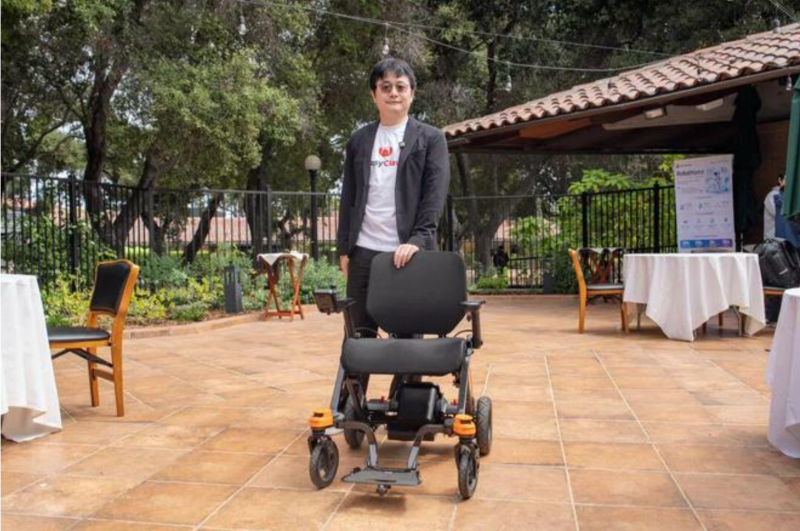
Smart Wheelchair Captivates Attention at Stanford AI Summit Over Humanoid Robots
At the Humanity & AGI Summit held at Stanford University, a smart wheelchair presented by Fu Sheng, Chairman of Cheetah Mobile, garnered significant attention, overshadowing humanoid robots. Attendees were drawn to the wheelchair's autonomous obstacle avoidance and user-friendly features, prompting many to experience it firsthand. The interest in the smart wheelchair highlights a critical shift in the robotics landscape, as Fu Sheng noted that humanoid robots are unlikely to achieve commercial scalability in the next five to ten years. He emphasized that the current limitations in software and hardware development hinder the practical application of humanoid robots, with most sales directed towards research institutions rather than commercial markets. Looking ahead, the focus on practical solutions like the smart wheelchair suggests a growing recognition that functionality is more important than form in robotics. As the industry continues to evolve, the demand for effective, user-centric products will likely shape future innovations, steering attention away from humanoid designs towards more practical applications.
Smart Wheelchairs Humanoid Robots AI Technology Robotics Assistive Devices
SensHB.Q: A Cost‐Effective Force‐Sensitive Handlebar to Control Omnidirectional Robots and Wheelchairs
In a recent study published in the Journal of Field Robotics, researchers explored advancements in robotic technologies aimed at enhancing agricultural efficiency. The study, which appears in the May 2026 issue, highlights innovative robotic systems designed to optimize crop management and reduce labor costs. Conducted by a team of engineers and agricultural scientists, the research took place over several months at various test farms across the Midwest. The motivation behind this initiative stems from the increasing demand for sustainable farming practices amid a growing global population. By integrating cutting-edge robotics into agricultural processes, the researchers aim to address labor shortages and improve productivity. The study details the implementation of autonomous robots equipped with advanced sensors and AI algorithms that can monitor crop health, automate planting, and facilitate precision irrigation. Through a series of field trials, the team demonstrated the robots' capabilities in real-world farming conditions, showcasing their potential to revolutionize traditional agricultural methods. The findings suggest that these robotic systems could significantly enhance yield while minimizing environmental impact, paving the way for smarter farming solutions in the future.
RESEARCH ARTICLERobotics needs a service framework.
RSF defines a common language for robot service capability, lifecycle operations, certification pathways, and service-provider networks.
Join the RobotToday community on LinkedIn
Daily robotics news, in-depth analysis, conference highlights, and discussions with professionals worldwide.






