A single destination for timely, editor-curated robotics news from around the world.
Dexory, a leader in warehouse intelligence technology, has unveiled its latest innovation, DexoryView Adapt, during the MODEX event held in April. The company, known for its platform that offers real-time visibility into warehouse operations and inventory management, aims to enhance operational efficiency and decision-making for businesses. In an interview, Emily Nerland from Dexory discussed how this new advancement represents a significant step forward in the evolution of warehouse intelligence. The introduction of DexoryView Adapt is expected to transform how companies manage their logistics and inventory, addressing the growing demand for improved operational insights in the industry.
LogisticsBusiness By Paul Hamblin May 22, 2026 AI AMR and AGV Computing and Scanners IT in Logistics Magazine Features Storage & Racking
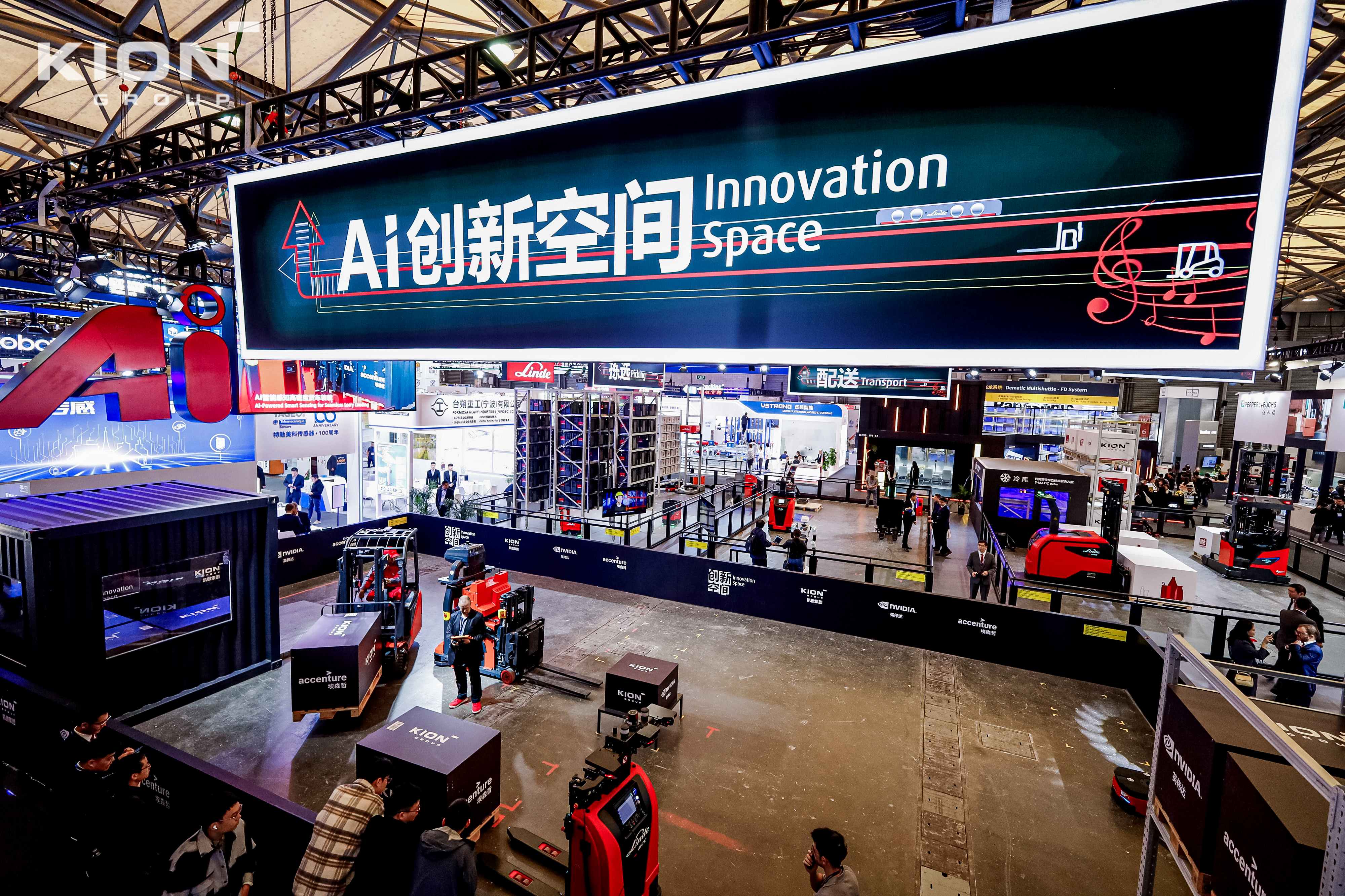
At CeMAT Shanghai, KION Group presented its cutting-edge physical AI solutions, emphasizing a partnership with NVIDIA and Accenture aimed at advancing warehouse automation. The event showcased innovative AI-driven industrial trucks and digital twin technology, designed to optimize supply chain operations and enhance efficiency in real-time. This collaboration reflects KION's commitment to integrating advanced technology into logistics, addressing the growing demand for smarter and more efficient warehouse solutions in the industry.
KIONgroup.com By KION Group Oct 28, 2025 intralogistics supply chain solutions industrial trucks forklift trucks warehouse trucks automation technology
Verity, a leading technology company, has been acknowledged for its innovative development and successful market launch of a cutting-edge warehouse intelligence system. This recognition comes as the company aims to enhance operational efficiency and streamline logistics processes within the supply chain sector. The system, which leverages advanced data analytics and artificial intelligence, was officially unveiled in October 2023, positioning Verity at the forefront of warehouse management solutions. The initiative is part of Verity's broader strategy to address the growing demand for smarter, more efficient inventory management in an increasingly competitive market. By integrating real-time data insights, the warehouse intelligence system is designed to optimize inventory tracking, reduce operational costs, and improve overall productivity for businesses.
RoboticsTomorrow.com Jun 16, 2026
A groundbreaking platform has been developed to enhance inventory management across warehouse networks by utilizing genetic principles. This innovative technology aims to optimize decision-making processes, allowing companies to streamline their operations and improve efficiency. The platform leverages advanced data analysis techniques to predict inventory needs and adapt to changing market demands. By integrating these genetic algorithms, businesses can make more informed choices regarding stock levels and distribution strategies. The launch of this platform comes at a time when efficient inventory management is crucial for companies looking to remain competitive in an increasingly complex supply chain landscape.
SupplyChainBrain Jun 05, 2026
A new device has been introduced that tracks the movement of pallets from the moment they are received to when they are shipped out. This technology aims to enhance supply chain efficiency by providing detailed records of pallet logistics. The device is designed to streamline operations and improve inventory management, allowing companies to monitor their goods more effectively. With training data available up to October 2023, users can expect to leverage the latest advancements in tracking and data analysis to optimize their shipping processes. This innovation is set to significantly impact warehouse management practices, ensuring better accountability and transparency in the movement of goods.
AutomationWorld.com By (undefined) May 15, 2026 Factory / Analytics
A recent advancement in robotics technology introduces a novel method for determining which robots should have the right of way in various environments. This innovative approach aims to minimize congestion and enhance overall efficiency in robotic operations. By utilizing real-time data and sophisticated algorithms, the system can dynamically assess traffic conditions among robots, ensuring smoother interactions and increased throughput. This development is particularly significant in settings where multiple autonomous machines operate simultaneously, such as warehouses or manufacturing facilities. The implementation of this technology is expected to streamline processes and improve productivity, marking a substantial step forward in the integration of robotics into everyday tasks.
Robohub.org By MIT News Apr 20, 2026
JAKA, a leader in automation robotics technology, is revolutionizing warehouse operations by integrating intelligent robotic systems to enhance efficiency and accuracy. As e-commerce volumes rise and supply chains become more complex, the company emphasizes that adopting automation is essential for maintaining competitiveness. Recently, JAKA implemented polishing robots designed for high-precision sorting tasks, capable of adapting to various item sizes and surface requirements. These robots utilize advanced control systems to ensure consistent results while minimizing operational downtime. By combining these solutions with data-driven tracking systems, JAKA can monitor throughput and continuously improve efficiency across multiple sorting lines. A crucial aspect of JAKA's automated operations is the JAKA S Screwdriving system, which offers high efficiency and stability for assembling transport equipment. This system allows for customizable torque adjustments and can be seamlessly integrated with conveyor systems, enhancing overall workflow connectivity. The quick and responsive nature of JAKA robots enables human workers to focus on complex decision-making while robots manage repetitive tasks. Safety protocols are embedded within the system to ensure a secure working environment, allowing for smooth coexistence between human workers and robots. By leveraging automation robotics technology, JAKA aims to enhance operational flexibility, scalability, and safety, ultimately achieving higher productivity without compromising quality. The company's commitment to refining its automation solutions positions it to meet the evolving demands of logistics and support sustainable growth for both itself and its clients.
jaka.com By JAKA Mar 20, 2026
Cartesian Kinetics is revolutionizing warehouse operations by integrating digital twin software and advanced motion control technology to automate existing facilities. This innovative approach aims to enhance efficiency and productivity within the logistics sector. The company’s solutions are designed to optimize workflows, reduce operational costs, and improve overall performance in warehouses. By leveraging real-time data and simulations, Cartesian Kinetics enables businesses to visualize and streamline their processes, ultimately transforming traditional warehouses into automated powerhouses. This initiative reflects a growing trend in the industry, as companies seek to adapt to the increasing demands of e-commerce and supply chain management.
roboticstomorrow-Robotics Mar 12, 2026
SAP SE and Cyberwave have successfully deployed fully autonomous, AI-powered robots in SAP's logistics warehouse located in St. Leon-Rot, Germany, as of May 11, 2026. This initiative represents a significant advancement for SAP, transitioning its Physical AI technology from research to practical application. The robots, powered by SAP’s cloud-native Logistics Management solution and the SAP Business Technology Platform, are now capable of performing various tasks including box folding, packaging, and shipping fulfillment. The deployment addresses common challenges in logistics robotics, such as unpredictable environments and diverse object shapes that often hinder traditional systems. Cyberwave's innovative platform utilizes Vision-Language-Action and Reinforcement Learning models, enabling non-expert operators to teach robots new tasks through simple demonstrations. This approach significantly reduces training time from weeks to hours and allows robots to adapt to dynamic conditions in real-time. As a result of this integration, SAP has reported increased warehouse throughput and a decrease in physically demanding tasks for human workers. The project serves as a successful reference implementation, showcasing how a robust digital infrastructure combined with adaptive AI can enhance logistics operations. Both SAP and Cyberwave are now focused on further developing these Embodied AI capabilities to support future large-scale deployments.
YahooFinance Jun 01, 2026
In a significant advancement in technology, intelligent robots are now being developed to learn and adapt in real-time, enhancing their effectiveness in various industries. These innovations are complemented by AI-powered orchestration platforms that leverage predictive analytics and data-driven decision-making to optimize operations. This evolution in robotics and artificial intelligence is expected to transform workflows and improve efficiency across sectors. As organizations increasingly adopt these technologies, the focus is on harnessing their capabilities to streamline processes and drive productivity. The integration of such advanced systems is anticipated to reshape the landscape of work, making it essential for businesses to adapt to these changes to remain competitive in the market.
LocusRobotics.com By Locus Robotics Aug 22, 2025
Boulanger, a prominent French retailer, has partnered with Locus to enhance its operational efficiency through advanced technology. This collaboration comes as part of a broader trend among leading retailers in France seeking to optimize their logistics and supply chain management. The initiative was announced recently, reflecting the increasing demand for innovative solutions in the retail sector. By integrating Locus’s intelligent systems, Boulanger aims to streamline its processes, improve customer satisfaction, and stay competitive in a rapidly evolving market. This strategic move underscores the importance of leveraging data-driven technologies to meet the challenges of modern retail.
LocusRobotics.com By Locus Robotics Apr 17, 2025
Computation is the largest hurdle. 360-degree sensor data that is granular enough to detect small obstacles in the environment is very large. For Stretch to have a real time reaction, that data has to be processed at a very high rate.
roboticstomorrow-Robotics Jul 08, 2026
A recent exploration into the potential of physical AI and humanoid robotics highlights their transformative impact on supply chains and the emergence of innovative business models. Industry experts gathered at a conference in San Francisco on October 15, 2023, to discuss the integration of these advanced technologies into logistics and manufacturing processes. The motivation behind this exploration stems from the increasing demand for efficiency and adaptability in supply chains, particularly in the wake of global disruptions caused by the pandemic. During the event, speakers emphasized how humanoid robots equipped with AI capabilities can streamline operations, reduce labor costs, and enhance productivity. Demonstrations showcased robots performing tasks traditionally handled by human workers, illustrating their ability to adapt to various environments and workflows. The discussions also addressed the ethical implications and workforce changes that may arise from widespread adoption of these technologies. As businesses seek to navigate the complexities of modern supply chains, the insights shared at the conference underscore the potential for physical AI and robotics to not only optimize existing processes but also to create entirely new business models that leverage automation and data analytics. The ongoing research and development in this field suggest that the future of supply chain management may be significantly reshaped by these innovations, paving the way for a more efficient and resilient economy.
RoboticsTomorrow.com Apr 22, 2026
Locus Robotics, a leader in AI-driven mobile warehouse automation, has announced significant advancements in its technology aimed at enhancing operational efficiency for logistics companies. The announcement was made today, highlighting the company's commitment to innovation in the rapidly evolving supply chain sector. By integrating advanced artificial intelligence and robotics, Locus Robotics aims to streamline warehouse operations, reduce labor costs, and improve order fulfillment speed. This initiative comes in response to the growing demand for automation solutions in warehouses, driven by the increasing complexity of supply chains and the need for businesses to adapt to changing consumer expectations. The company plans to implement these advancements through strategic partnerships and ongoing research and development, positioning itself at the forefront of the industry as it addresses the challenges faced by logistics providers worldwide.
LocusRobotics.com By Locus Robotics Jun 12, 2025
SVT Robotics, a prominent provider of interoperability software for enterprise and physical AI, has reported a significant milestone with its Softbot Platform surpassing four billion transactions. This achievement highlights the platform's robust infrastructure, which is designed to support high-volume data processing on a global scale. Currently, transaction volumes are rapidly increasing, reaching between 100 million and 130 million transactions per week. This surge reflects the growing demand for efficient and resilient data solutions in various industries, positioning SVT Robotics as a key player in the technology landscape.
RoboticsAndAutomationNews.com By Sam Francis Jun 30, 2026 Computing News Robotics AI-ready data automation infrastructure automation software
The modern supply chain has undergone a significant transformation, with consumers now expecting two-day shipping as a standard. This shift necessitates a complete rethinking of traditional logistics practices, moving away from manual processes to technology-driven solutions. Companies face challenges in managing increased order volumes while maintaining accuracy, highlighting the need for advanced robotics and smart software in logistics. The implementation of intelligent pick and pack fulfillment workflows is crucial for warehouses to enhance efficiency. By analyzing order data in real time, these systems optimize item retrieval and minimize unnecessary movement within the facility. Techniques such as batch picking and zone picking streamline operations, allowing workers to compile orders more quickly, which leads to faster delivery times and improved customer satisfaction. The rise of autonomous mobile robots (AMRs) marks a significant change in warehouse operations. These robots have evolved from being a novelty to a necessity, utilizing advanced navigation technologies to operate safely in dynamic environments. As logistics providers continue to adopt these innovations, the focus will be on further enhancing operational efficiency and meeting the growing demands of consumers.
RoboticsAndAutomationNews.com By Sam Francis Jul 13, 2026 Automation Logistics Supply chain amrs autonomous mobile robots e-commerce
NEURA Robotics and Amazon Web Services (AWS) have announced a strategic collaboration aimed at advancing Physical AI on a global scale. This partnership, revealed on April 21, 2026, will leverage NEURA's cognitive robotics platform alongside AWS's cloud and AI infrastructure to develop and deploy intelligent robots capable of working alongside humans. The collaboration will focus on three key areas: utilizing AWS's cloud infrastructure to support the Neuraverse for training and data processing, integrating NEURA's training environments with Amazon SageMaker to enhance AI development, and joining the AWS Partner Network to explore the deployment of NEURA's robotic systems in Amazon's fulfillment centers. This initiative aims to address the challenge of acquiring real-world training data, which is essential for the effective deployment of robotics in logistics and warehouse operations. David Reger, CEO of NEURA Robotics, emphasized that the partnership will enable the scaling of their technology in one of the most advanced operational environments, while Jason Bennett, VP at AWS, highlighted NEURA's innovative approach as crucial for unlocking the potential of Physical AI. Together, they aim to create a robust ecosystem that facilitates continuous learning and improvement of robotic intelligence, ultimately bringing the vision of Physical AI into reality.
RoboticsTomorrow.com Apr 21, 2026
The digitization of warehouse processes and logistics is introducing new security risks, prompting businesses to adopt a Zero-Trust approach to enhance their resilience. This strategy is gaining traction as companies seek to protect their operations from potential cyber threats that arise with increased automation and digital integration. By implementing a Zero-Trust framework, organizations aim to ensure that every access request is thoroughly verified, regardless of the source, thereby bolstering their defenses against unauthorized access and data breaches. As the logistics sector continues to evolve, the emphasis on security measures becomes paramount to safeguard sensitive information and maintain operational integrity.
LocusRobotics.com By Locus Robotics Nov 04, 2025
Hamid Montazeri recently addressed the transformative effects of "physical AI" on warehouse operations and productivity. In a discussion held in October 2023, Montazeri highlighted how advancements in artificial intelligence are reshaping the logistics sector. He emphasized that the integration of AI technologies is not only streamlining processes but also enhancing efficiency within warehouses. This evolution is driven by the need for businesses to optimize their operations and reduce costs in an increasingly competitive market. Montazeri explained that the implementation of AI solutions involves automating routine tasks, improving inventory management, and enabling real-time data analysis, which collectively contribute to a more productive work environment. As companies continue to adopt these innovations, the landscape of warehouse management is expected to evolve significantly, paving the way for smarter and more agile operations.
LocusRobotics.com By Locus Robotics Oct 13, 2025
At LogiMAT 2025 in Stuttgart, KION Group introduced an advanced AI-powered industrial truck solution, developed in collaboration with NVIDIA and Accenture. This cutting-edge technology leverages digital twins and real-time data to optimize supply chain operations, significantly improving efficiency and adaptability in warehouse management. The unveiling of this solution highlights KION's commitment to innovation in the logistics sector, aiming to address the growing demands for streamlined operations in an increasingly complex supply chain environment.
KIONgroup.com By KION Group Mar 11, 2025 intralogistics supply chain solutions industrial trucks forklift trucks warehouse trucks automation technology
The robotics industry is currently experiencing a significant influx of investment and media coverage, driven by ambitious projections regarding the future of humanoid machines. Numerous companies have unveiled plans to produce thousands of robots, leveraging recent advancements in artificial intelligence that have heightened expectations for the integration of general-purpose robots into various environments, including factories, warehouses, workplaces, and homes. This surge in interest reflects a growing belief that robots could soon become a standard presence in everyday life. However, amidst the enthusiasm, there are underlying challenges and considerations that the industry must address to realize these ambitious goals.
RoboticsAndAutomationNews.com By Sam Francis Jun 05, 2026 Artificial Intelligence Features Robotics ai robotics artificial intelligence automation news
Recent advancements in robotics are shifting focus from enhancing processors and mechanical designs to improving data quality, particularly through realistic training environments. This emerging field, known as Physical AI, emphasizes the creation of 3D assets and simulation environments that incorporate genuine physical properties. By accurately mimicking real-world behaviors, these simulations aim to enhance the training of robotic systems, enabling them to perform more effectively in various applications. As researchers and developers prioritize realistic data over traditional methods, the potential for breakthroughs in robotic capabilities is becoming increasingly evident. This evolution in robotics is expected to redefine how machines interact with their environments, paving the way for more sophisticated and adaptable technologies.
RoboticsAndAutomationNews.com By Sam Francis Jun 04, 2026 Artificial Intelligence Robotics ai robotics automation news Autonomous robots digital twins
In the past two years, the humanoid robot industry has seen numerous impressive demonstrations, but a shift is emerging in the second half of 2026. Companies are now focusing on developing training frameworks, development platforms, data tools, open-source models, and various R&D infrastructures. The competition is evolving from showcasing superior robots to enabling more developers to create robots faster. Recently, RoboParty established RoboParty Lab (RPLab) and introduced Party OS, an open-source embodied intelligence R&D foundation for next-generation humanoid robots. Alongside this, they released three R&D infrastructures: MimicLite, UFO, and hhtools. This move signifies a transition from merely demonstrating capabilities to building a robust R&D ecosystem that fosters collaboration and scalability within the developer community. As humanoid robots move from laboratories to practical applications in factories, warehouses, and homes, the industry is shifting its focus toward creating a reproducible, collaborative, and scalable R&D system. The emphasis is now on sustaining and accelerating development capabilities, marking a significant change in industry dynamics over the past year.
leaderobot.com By Leaderobot Jul 15, 2026 Humanoid Robots R&D Infrastructure Open Source Embodied AI Robot Development Tools
A recent report by Kaufman Rossin highlights the struggles of mid-market manufacturers in adopting AI technologies. While these companies are experimenting with AI, widespread deployment remains uncommon due to inadequate data infrastructure and legacy systems. Only 27% of manufacturing firms have a data warehouse, and 45% still rely on siloed data, making it difficult to leverage AI effectively. The urgency for digital transformation is increasing as manufacturers face pressure from customers to digitize and automate operations. However, many industrial companies lack the foundational data capabilities necessary for successful AI integration. The report reveals that 73% of manufacturing firms are still in the testing phase of AI implementation, with none operating AI as a core business function. Looking ahead, the challenge for mid-market manufacturers will be to overcome these barriers and build the necessary data infrastructure to support AI initiatives. As the demand for digital solutions continues to grow, companies must prioritize data governance and integration to fully realize the potential of AI technologies. No further timeline was disclosed at the time of publication.
AutomationWorld.com By (Vera Nieuwland) Jul 08, 2026 Factory / Digital Transformation
ABB Robotics completes its AI-powered Visual SLAM AMR portfolio with new autonomous forklift Visit http://go.abb/robotics for further information -The new Flexley Stack F712 extends ABB Robotics’ AI-powered Visual SLAM technology to autonomous forklifts, enabling pallet transport and high-density storage. -Customers can now deploy mixed fleets of Visual SLAM-powered tugs, movers and forklifts on a common navigation, fleet management and software platform. -Powered by ABB Robotics' AMR Studio, the portfolio enables up to 20% faster commissioning while ensuring seamless interoperability and safe, reliable operation. 07/07/26, 07:10 AM | Industrial Robotics, Mobile Robots | ABB Inc. ABB Robotics is expanding its Autonomous Mobile Robotics (AMR) portfolio with the launch of the Flexley® Stack F712, creating a complete interoperable ecosystem across all major Visual SLAM AMR types. Combining autonomous forklifts, tugs and movers on one platform, ABB Robotics enables customers to automate a broader range of material-handling and intralogistics processes. Offering market-leading accuracy, the F712 is designed for demanding material handling, end-of-line storage and warehouse operations across industries including automotive manufacturing, helping increase efficiency, flexibility and scalability. More Headlines A3's Automate 2026 Breaks Records as Demand for Robotics, AI and Automation Grows NVIDIA and Hugging Face Bring New Models and Frameworks to LeRobot for the Open Robotics Community Palladyne AI Executes $4.2 Million U.S. Air Force Contract to Advance Swarming Capabilities for Integrated Cross-Domain Operations UMA Unveils Its Vision for the Next Generation of Humanoid Robots Robbyant Unveils LingBot-Depth 2.0 and LingBot-Vision to Redefine Robotic Spatial Perception Articles Unleash AI Innovation: The Power of NVIDIA RTX PRO 6000 Blackwell Workstation Edition Fueled by PNY-Supplied GPUs Automate 2026 Q&A with DESTACO Automate 2026 Q&A with Roboteon Advances in Robots to See & Interpret within Warehouse Environments Building Resilient Fulfillment Networks with Robotics and Real-Time Logistics Data "Across intralogistics operations, businesses are being asked to process greater volumes in less time, while working with increasingly limited resources," said Marc Segura, President, ABB Robotics. "They are under pressure to move goods faster and with greater flexibility, while labour availability is becoming a critical constraint. As part of our journey to more autonomous and versatile robotics (AVRTM), we have combined advanced vision, mobility and intelligence in the Flexley Stack F712 forklift AMR, completing our scalable, AI-powered AMR portfolio." F712 is versatile, capable of handling multiple load types and sizes - including open and closed pallets, containers or racks- up to 2,000 kg and reaching heights of 8.5 meters. The Flexley Stack AMR F712 joins the Flexley Tug and Flexley Mover in ABB Robotics' growing Visual SLAM AMR portfolio. Applications include intralogistics tasks such as warehouse storage and retrieval, as well as line supply, end-of-line handling, body- and press-shop and drive-in and light buffer in the automotive and industries sector. Unlike conventional AMR forklifts on the market, F712 uses Visual SLAM to map and navigate its environment, eliminating the need for pre-installed infrastructure like markers or reflectors. The AI-enabled Visual SLAM supports the autonomous decisions required to operate in complex, dynamic warehouse operations with a market-leading positional accuracy of ±10 mm. Together with AMR Studio®, this shortens commissioning times by up to 20 percent and creates a versatile and reliable system that can adapt instantly when a warehouse or production floor layout changes. Certified to the latest ISO and ANSI safety standards, Flexley Stack F712 can safely operate at class-leading speeds of up to 1.7 m/s while loaded. F712 is fully integrated with AMR Studio and is VDA5050 compatible, enabling seamless integration with ABB Robotics' Visual SLAM AMRs and existing systems within a unified project. This makes it easy to manage complex projects and integrate different types of mobile robots. The no-code, drag-and-drop software suite supports rapid setup, fleet coordination, traffic management and real-time visualization, allowing ABB Robotics' tugs, movers and forklifts to operate together in the same layout for scalable turnkey automation projects. ABB Robotics as one of the world's leading robotics companies, is the only company with a comprehensive and integrated AI-powered portfolio covering robots, cobots and Autonomous Mobile Robots (AMRs), designed and orchestrated by our value-creating software. We help companies of all sizes and sectors - from automotive to electronics and logistics - to outperform by becoming more resilient, flexible and efficient. ABB Robotics is at the forefront of developing and commercializing a new generation of Autonomous Versatile Robotics
RoboticsTomorrow.com Jul 07, 2026
Palladyne AI Executes $4.2 Million U.S. Air Force Contract to Advance Swarming Capabilities for Integrated Cross-Domain Operations Visit http://www.palladyneai.com for further information Palladyne AI’s SwarmOS™ platform to support satellite integration, marking a major expansion of its multi-domain autonomy and ISR capabilities across space, air, maritime, and land 07/07/26, 06:15 AM | Mobile Robots, Other Topics | Palladyne AI Corp. Palladyne AI Corp. (NASDAQ: PDYN and PDYNW) ("Palladyne AI"), a developer of artificial intelligence software for robotic platforms in the defense and commercial sectors, today announced that it has executed the previously announced contract awarded by the Air Force Research Laboratory (AFRL) to solve one of the most persistent challenges in modern defense operations—how to make different autonomous systems work together as one coordinated team. The "Hierarchical Adaptive Networked Game-Theoretic Integration of Multiple Echelons (HANGTIME)" contract will address this need. More Headlines A3's Automate 2026 Breaks Records as Demand for Robotics, AI and Automation Grows NVIDIA and Hugging Face Bring New Models and Frameworks to LeRobot for the Open Robotics Community ABB Robotics completes its AI-powered Visual SLAM AMR portfolio with new autonomous forklift UMA Unveils Its Vision for the Next Generation of Humanoid Robots Robbyant Unveils LingBot-Depth 2.0 and LingBot-Vision to Redefine Robotic Spatial Perception Articles Unleash AI Innovation: The Power of NVIDIA RTX PRO 6000 Blackwell Workstation Edition Fueled by PNY-Supplied GPUs Automate 2026 Q&A with DESTACO Automate 2026 Q&A with Roboteon Advances in Robots to See & Interpret within Warehouse Environments Building Resilient Fulfillment Networks with Robotics and Real-Time Logistics Data Today, drones, ships, and satellites often operate largely independently, limiting how quickly warfighters can see and respond to threats. HANGTIME will utilize Palladyne AI's patented SwarmOS™ software platform—the defense variant of the Palladyne™ Pilot embodied AI software—as the baseline technology to bridge that gap, connecting disparate systems so they can share intelligence, adapt to changing conditions, and act in sync across domains, including space, air, maritime, and land. By integrating satellites for the first time, this project also extends Palladyne AI's technology from the ground to orbit, enabling faster, more informed decision-making and coordinated mission execution, turning tactical commanders into strategic commanders by giving them more cross-domain intelligence, surveillance, and reconnaissance (ISR) capabilities than ever before. "Our collaboration with AFRL showcases what's next for autonomous operations," said Ben Wolff, President and CEO, Palladyne AI. "This isn't about replacing humans—it's about giving them sharper, faster insight. By connecting satellite, aerial, and ground systems using the patented SwarmOS embodied AI platform as a foundational technology, we're helping the warfighter make better decisions in real time and stay one step ahead on the battlefield." "The HANGTIME project is a breakthrough that unites high-altitude assets and situational unmanned systems into one coordinated sensor network—delivering a major advantage for the defense industry," said Dr. Denis Garagic, Chief Technology Officer, Palladyne AI. "For the first time, a single AI framework can coordinate assets across multiple domains, including satellites. That means these systems can now think and act together as a team, sharing what they see and learning as conditions change." "The HANGTIME effort represents a critical step in multi-domain autonomy for coordinated execution in challenging environments," said Caleb Williams, Program Manager, AFRL/RIEA. For more information on Palladyne AI and its patented collaborative autonomy software, including SwarmOS, please visit www.palladyneai.com. For more information about AFRL, please visit www.afrl.af.mil. About Palladyne AI Palladyne AI is a U.S.-based technology company developing patented embodied artificial intelligence, collaborative autonomy solutions, advanced avionics, autonomous systems, advanced UAV engineering services, and precision-manufactured components for defense and industrial markets. Palladyne AI delivers secure, American-developed and operated platforms designed to meet the stringent requirements of U.S. government and public-sector customers, including data sovereignty, security, and compliance. Palladyne AI's embodied AI is designed to operate in complex, contested, and high-risk environments, enabling distributed tasking, human-on-the-loop decision-making, degraded-communications resilience, and multi-domain coordination. Its platform-agnostic autonomy stack combines real-time sensor fusion, adaptive AI models, and edge-native orchestration—without vendor lock-in—to support autonomous and collaborative systems across air, ground, maritime, and industrial domains w
RoboticsTomorrow.com Jul 07, 2026
A leading logistics technology company is set to showcase its latest innovations in warehouse automation at an upcoming industry trade show. The event, scheduled for next month in Chicago, will feature the company's autonomous precision stacking solution, designed to enhance efficiency in material handling. Additionally, attendees will have the opportunity to explore the capabilities of a new counterbalance truck, which aims to improve safety and productivity in warehouse operations. The company will also present its advanced warehouse visibility platform, which provides real-time data analytics to optimize inventory management and streamline operations. This initiative reflects the company's commitment to addressing the growing demand for automation and efficiency in the logistics sector, driven by the need for businesses to adapt to rapidly changing market conditions and consumer expectations. By integrating cutting-edge technology into their offerings, the company aims to empower warehouses to operate more effectively and reduce operational costs.
RoboticsTomorrow.com Jun 12, 2026
In the coming decades, billions of AI-powered robots are expected to collaborate with humans across various sectors, including factories, warehouses, elder care, disaster response, and home assistance. By 2025, investments in robotics reached a record $40.7 billion, highlighting the growing interest in this technology. Despite ambitious claims from robotics companies about humanoid robots entering homes soon, significant challenges remain in bridging the gap between current capabilities and the promises made. Experts in AI and robotics, including a professor from Oregon State University and a former Google X executive, emphasize that while AI is revolutionizing robotics, the complexity of real-world environments poses substantial hurdles. Current demonstrations of humanoid robots, such as those showcased at the 2026 Spring Festival Gala in China, often rely on scripted performances rather than genuine autonomy, revealing the limitations of existing technology. The development of general-purpose robots is hindered by the need for vast amounts of high-quality training data and the challenge of creating hardware that can safely interact with humans. As robotics evolves, the focus will shift to practical applications that address real-world needs, with an emphasis on safety and reliability. The path forward involves a series of incremental advancements rather than a single breakthrough, as AI-driven robots gradually begin to deliver tangible benefits across various industries, potentially transforming the economy and improving daily life.
IEEESpectrumRobotics By Hans Peter Brondmo May 20, 2026 Robotics Everyday-robots Agility-robotics Artificial-intelligence
A new research initiative has unveiled a VSLAM (Visual Simultaneous Localization and Mapping) framework designed to enhance obstacle avoidance in indoor logistics. This innovative approach utilizes advanced algorithms and integrates multiple sensors to improve navigation efficiency within complex environments. Conducted by a team of researchers, the study aims to address the growing challenges faced in warehouse and distribution center operations. By optimizing the movement of automated systems, the framework seeks to minimize accidents and increase productivity. The findings, which were developed using data collected up to October 2023, promise to significantly advance the capabilities of indoor logistics technology.
AZOrobotics.com Apr 20, 2026
Artificial intelligence is rapidly transforming warehouse operations, significantly enhancing efficiency and providing measurable returns on investment. As companies seek to streamline their logistics and reduce operational costs, the integration of AI technologies has become a strategic priority. This shift is particularly evident in various sectors, where automation and data analytics are being leveraged to optimize inventory management, improve order fulfillment, and minimize errors. The trend has gained momentum throughout 2023, with many businesses adopting AI-driven solutions to stay competitive in a challenging economic landscape. By employing machine learning algorithms and robotics, warehouses can now process orders faster and more accurately, leading to improved customer satisfaction and increased profitability. Industry experts highlight that the motivation behind this technological adoption is not only to enhance operational capabilities but also to respond to the growing demand for faster delivery times and greater efficiency in supply chain management. As AI continues to evolve, its role in warehouse operations is expected to expand further, paving the way for innovations that could redefine the logistics sector. In summary, the increasing reliance on AI in warehouses is reshaping how businesses operate, driving significant improvements in efficiency and financial performance, and setting the stage for future advancements in the industry.
LocusRobotics.com By Locus Robotics Nov 12, 2025
Oscar Mendez, the Head of AI & Data Science at Locus Robotics, participated in a panel discussion with industry experts focused on the emerging role of the "AI fulfillment optimization manager." This event took place recently, highlighting the growing significance of artificial intelligence in supply chain management and logistics. The discussion aimed to explore how AI technologies are revolutionizing fulfillment processes, enhancing efficiency, and addressing the increasing demands of consumers for faster delivery times. By leveraging data-driven insights, the panelists examined the potential of AI to streamline operations and optimize resource allocation in warehouses and distribution centers. Mendez's insights contributed to a broader understanding of the transformative impact of AI on the logistics sector, emphasizing the need for businesses to adapt to these technological advancements to remain competitive.
LocusRobotics.com By Locus Robotics Nov 04, 2025
AI-powered robotics company Apptronik has announced the opening of the newly expanded Robot Park, its flagship data collection and training facility for humanoid robots in Austin, Texas. The facility in Austin anchors a growing global network of Robot Parks at customer and partner sites around the world, and the company plans to open new Robot […]
RoboticsAndAutomationNews.com By Sam Francis Jul 06, 2026 Features Humanoids News apollo Apollo 2 apptronik
The robotics industry is experiencing a significant transformation, marked by advancements in autonomous mobile robots that are now navigating warehouses with enhanced precision and intelligence. As of October 2023, industrial robots are evolving to become smarter and more adaptable, while AI-powered vision systems are revolutionizing sectors such as manufacturing, logistics, and defense. This surge in technological capabilities is driven by the increasing demand for efficiency and automation across various industries, highlighting the critical role of innovation in shaping the future of robotics.
RoboticsAndAutomationNews.com By Sam Francis Jun 22, 2026 Aircraft Artificial Intelligence Engineering Features AI deployment AI infrastructure
Robotiq has launched IQ, an innovative AI-enabled platform aimed at streamlining the integration of robotic Workcells. This new technology is designed to accelerate the transition from traditional, manual integration processes that rely heavily on expert input to a more automated and efficient system. By capturing unstructured data from automation projects and coordinating engineering workflows, IQ facilitates the creation of validated Workcell designs that reflect actual customer needs and historical data. This advancement addresses the growing demand for scalable solutions in the robotics industry, making it easier for partners to implement effective automation strategies.
RoboticsAndAutomationNews.com By Sam Francis Jun 03, 2026 Industrial robots News Robotics AI in robotics AI-powered engineering automation integration
The robotics industry is undergoing a transformation due to the swift advancement of embodied artificial intelligence, prompting companies to innovate machines that can tackle diverse real-world tasks instead of being limited to single functions. Notably, Shenzhen-based X Square Robot has emerged as a key player in this competitive landscape, successfully completing four consecutive financing rounds. This funding achievement underscores the growing interest and investment in versatile robotic technologies, as firms strive to enhance their capabilities and meet the increasing demand for intelligent automation solutions.
RoboticsAndAutomationNews.com By Sam Francis Jul 03, 2026 Business Features Robotics artificial intelligence Artixon china roboticsRSF defines a common language for robot service capability, lifecycle operations, certification pathways, and service-provider networks.