Industry Briefing
A single destination for timely, editor-curated robotics news from around the world.
Researchers Suggests More Safety Measures Needed for Robots than AI Chatbots
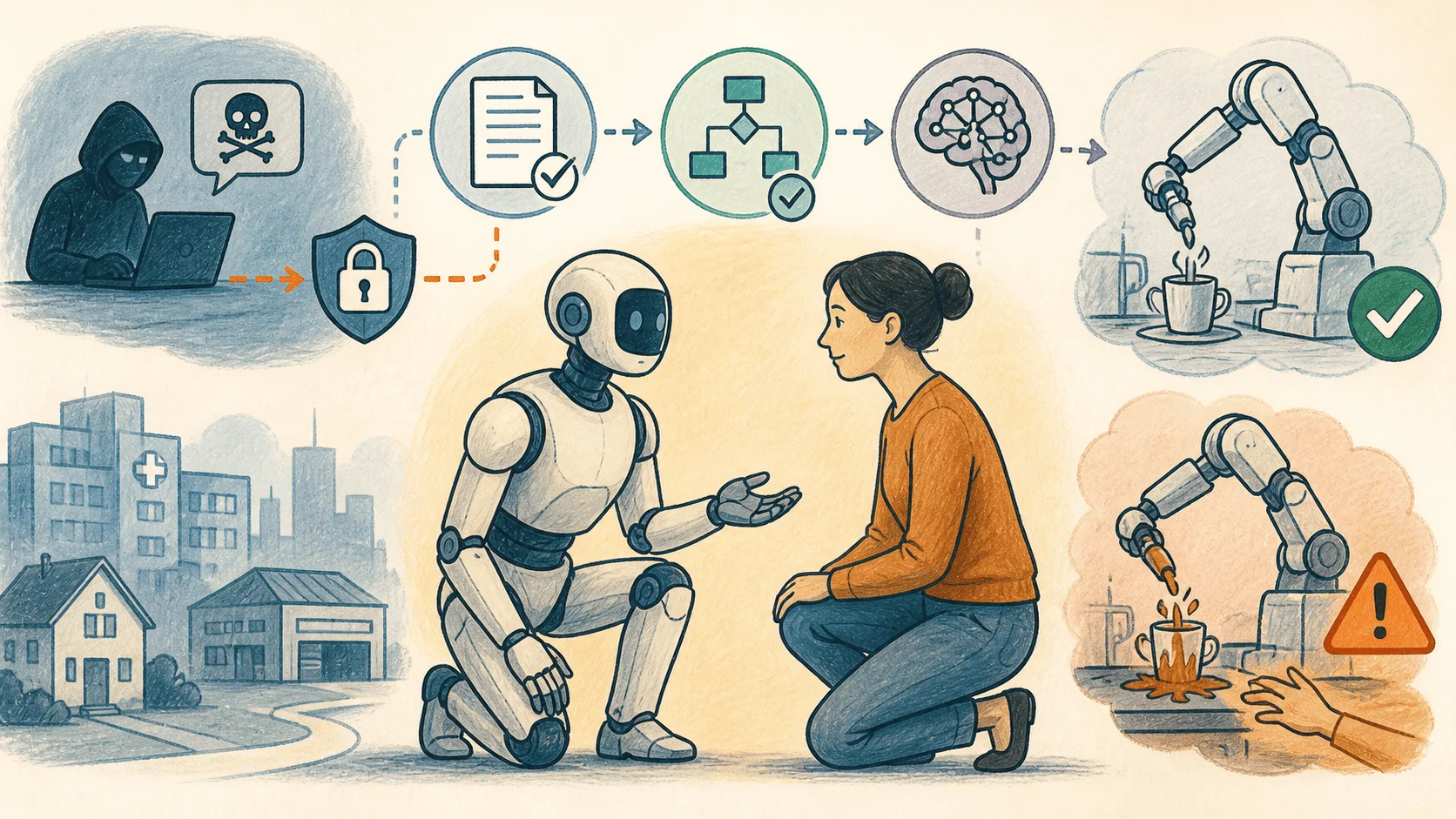
A recent study conducted by researchers from the University of Pennsylvania, Carnegie Mellon University, and the University of Oxford highlights significant concerns regarding the safety of AI-powered machines operating in close proximity to humans. The findings suggest that current safety protocols may be inadequate as these robots begin to interact with people in physical environments. The researchers emphasize the necessity for more advanced, context-aware safety systems that go beyond the existing measures used for AI chatbots. This study raises alarms about the potential risks associated with deploying AI technologies in real-world settings, urging developers and policymakers to prioritize enhanced safety measures to protect individuals from unforeseen consequences.
AI AI Research & Advances Robotics Carnegie Mellon University Research robots
What will it take to make AI-enabled robots safer?
Researchers from Penn Engineering, Carnegie Mellon University, and the University of Oxford have raised concerns about the inadequacy of current efforts to align artificial intelligence with human values, particularly in robotic systems. Their findings, published in the journal Science Robotics, emphasize the urgent need for more comprehensive frameworks to ensure that AI-enabled robots adhere to fundamental ethical principles. This call to action echoes the famous dictum by science fiction writer Isaac Asimov, which states, "A robot may not injure a human being." The study highlights the potential risks associated with the integration of AI in robotics and advocates for a proactive approach to safeguard human welfare.
Robotics
Robot Talk Episode 153 – Origami-inspired robots, with Chenying Liu
In a recent discussion, Claire engaged with Chenying Liu, a Junior Research Fellow and Associate Member of Faculty in the Department of Engineering Science at the University of Oxford, to explore the significant role of a robot's physical form in enhancing its capabilities. Liu, who leads an independent research program, emphasized how the design and structure of robots can influence their ability to sense their environment, process information, make decisions, and execute movements effectively. This conversation sheds light on the intersection of robotics and engineering, highlighting the importance of physical attributes in advancing robotic technology.

The science of human touch – and why it’s so hard to replicate in robots
Researchers at the University of Oxford are exploring the advancements in robotic technology, highlighting the significant progress robots have made in visual recognition and navigation. These machines can now identify objects and maneuver through complex environments, sorting thousands of parcels each hour. However, challenges remain when it comes to delicate interactions; robots struggle to perform tasks that require gentle, safe, or meaningful touch. This research aims to bridge the gap between current capabilities and the nuanced skills necessary for robots to interact more effectively with their surroundings and human counterparts. As the field evolves, understanding and overcoming these limitations will be crucial for the future integration of robots in everyday tasks.

Robot Talk Episode 136 – Making driverless vehicles smarter, with Shimon Whiteson
Claire engaged in a discussion with Shimon Whiteson, a prominent figure in the field of machine learning and autonomous vehicles. Whiteson, who serves as a Professor of Computer Science at the University of Oxford and a Senior Staff Research Scientist at Waymo UK, shared insights on his research, which emphasizes deep reinforcement learning and imitation learning. These areas of study are pivotal for advancements in robotics and video game technology. The conversation highlighted the significance of machine learning in enhancing the capabilities of autonomous vehicles, reflecting the growing intersection of academia and industry in this rapidly evolving field.
Robotics needs a service framework.
RSF defines a common language for robot service capability, lifecycle operations, certification pathways, and service-provider networks.