Industry Briefing
A single destination for timely, editor-curated robotics news from around the world.

Qingche Intelligent's RoboPocket Kicks Off the Year with Over Hundreds of Orders in the First Month
In 2026, Qingche Intelligent launched its innovative data collection product, RoboPocket, which quickly gained traction in the market by securing hundreds of orders within its first month. This portable device is designed to simplify the data collection process, enabling users to gather information effortlessly. The introduction of RoboPocket aims to revolutionize the traditional methods of data collection by focusing on real-time quality control and providing model-driven insights. This advancement reflects Qingche Intelligent's commitment to enhancing data management and analytics for a wide range of users.
Data Collection AI Technology Smartphone Integration Real-time Analytics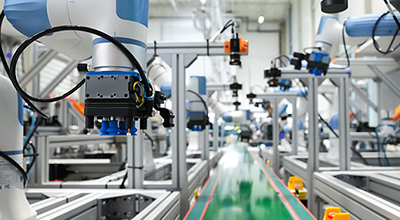
Dobot Cobots Power AI-Driven Smartphone Refurbishment at Breezy
Breezy, a leading company in smartphone refurbishment, is utilizing Dobot Nova Series collaborative robots (cobots) and MG400 robots to enhance its automation processes. This initiative aims to streamline operations and improve efficiency in the refurbishment of smartphones. The integration of these advanced robotic systems is part of Breezy's strategy to meet the growing demand for refurbished devices while maintaining high-quality standards. By automating various tasks within the refurbishment process, Breezy is not only reducing labor costs but also increasing productivity. This innovative approach positions the company at the forefront of the smartphone refurbishment industry, allowing it to respond swiftly to market needs and consumer preferences.
Dobot Breezy smartphone refurbishment AI automation Industry 5.0 collaborative robots
Honor Robot Phone: A Smartphone That Literally Reaches Out and Takes Photos for You
At Qualcomm's annual Snapdragon Fans event held in Shenzhen on May 24, Honor introduced the Robot Phone, marking a significant innovation in smartphone technology. This device is recognized as the world's first smartphone equipped with a motorized arm that functions as an integrated gimbal, enhancing photography capabilities. Additionally, the Robot Phone features on-device embodied AI, enabling users to engage in autonomous photography and control smart home devices seamlessly. Honor's unveiling of this groundbreaking technology aims to redefine user interaction with smartphones, combining advanced photography and smart home integration in a single device.
Technology
Honor’s first robot smartphone revealed in high-resolution images
On Saturday, Qualcomm celebrated the anniversary of its Snapdragon Fans community with a special event where Honor introduced the groundbreaking Honor Robot Phone, touted as the world's first robot smartphone. The event featured high-resolution images released by Qualcomm, highlighting the device's innovative back design and its unique robotic-arm camera gimbal. This cutting-edge smartphone is powered by a flagship Snapdragon chipset, emphasizing Qualcomm's commitment to advancing mobile technology. The unveiling marks a significant milestone in the integration of robotics and smartphones, showcasing the potential for enhanced functionality and user experience in the mobile market.
News Feed
Huawei rolls out HarmonyOS 6, ahead of next month’s Mate 80 launch
On Wednesday, Huawei introduced its latest operating system, HarmonyOS 6, during a press event. This new system will debut on the upcoming Mate 80 series, marking the company's first flagship smartphones to incorporate the updated software. The release focuses on providing a "smooth, intelligent, and secure" user experience, achieved through advanced integration of software and hardware. This strategic move aims to enhance the overall functionality and connectivity of Huawei devices, reinforcing the company's commitment to innovation in the competitive smartphone market.
Heavy Hitters E-commerce and New Retail Highlight News smartphone and devices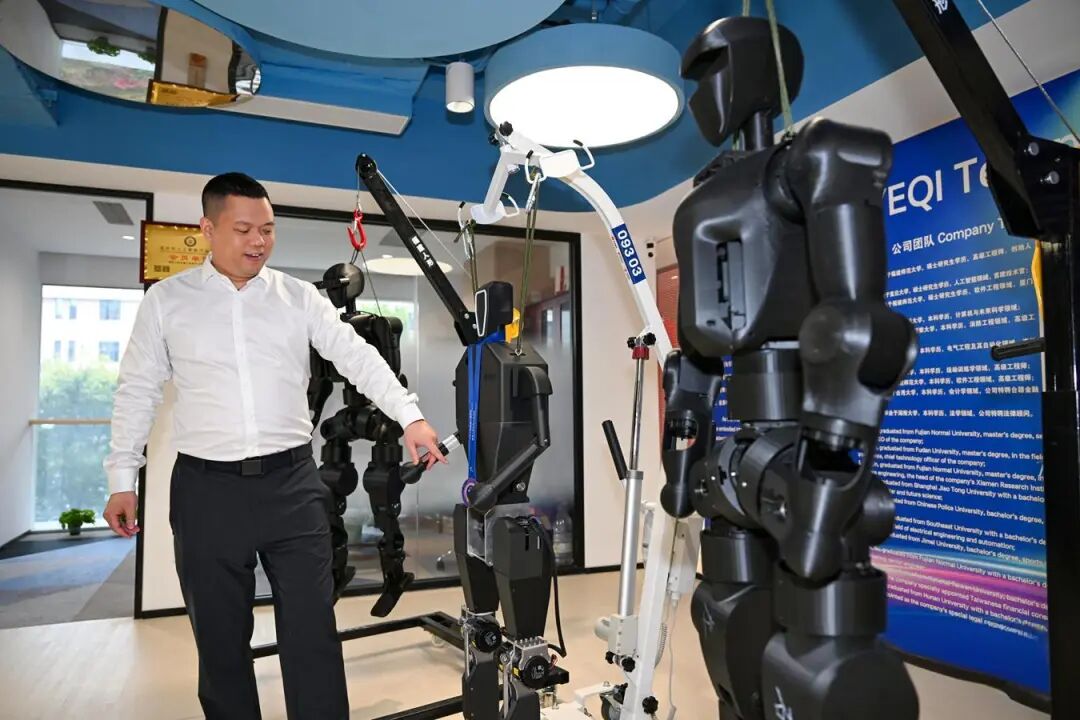
Beyond Beijing, Shanghai, and Guangzhou: Fujian Quietly Emerges as a Hub for Affordable Humanoid Robots
The Fujian Humanoid Robot Innovation Center has successfully secured Pre-A financing to advance its motion control technology and product development for humanoid robots. This funding initiative aims to make humanoid robots more accessible to consumers by targeting a price point similar to that of mid-range smartphones. This development represents a notable advancement in the robotics industry, potentially expanding the market for humanoid robots and enhancing their integration into everyday life.
Humanoid Robots Robot Technology AI Manufacturing Innovation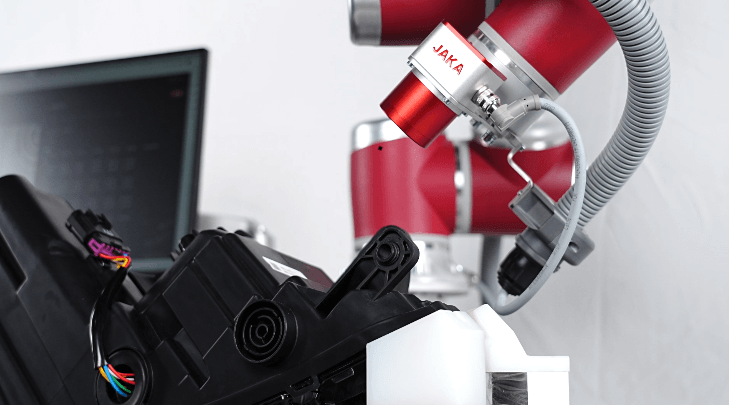
Assembly Robots for Consumer Electronics: Challenges and Solutions
The consumer electronics industry is increasingly adopting specialized assembly robots to address the challenges posed by rapid product life cycles and the need for precision in manufacturing. As smartphones, wearables, and home gadgets evolve, traditional manual assembly methods struggle to keep up with the demand for high-quality production. This shift is driven by the need for accuracy in handling densely packed components, which require sub-millimeter precision and are sensitive to electrostatic discharge. To adapt to frequent design changes and seasonal updates, manufacturers are turning to flexible automation solutions. These advanced robots can be quickly reprogrammed and equipped with modular end-effectors, enabling them to perform various tasks across different product lines. The integration of 2D and 3D vision systems enhances quality control, allowing robots to make real-time adjustments to ensure precise assembly. JAKA, a leader in robotics technology, has developed the JAKA A12L, designed specifically for the electronics sector. This robot offers a long reach and high payload capacity, making it suitable for large-format assembly. With an impressive repeatability of ±0.03mm, JAKA's solutions meet the stringent requirements of consumer electronics manufacturing. The company emphasizes ease of integration and safety, providing an open software ecosystem for seamless communication with vision sensors and factory systems, along with user-friendly wireless control through the JAKA App. This innovation positions manufacturers to turn production challenges into competitive advantages.
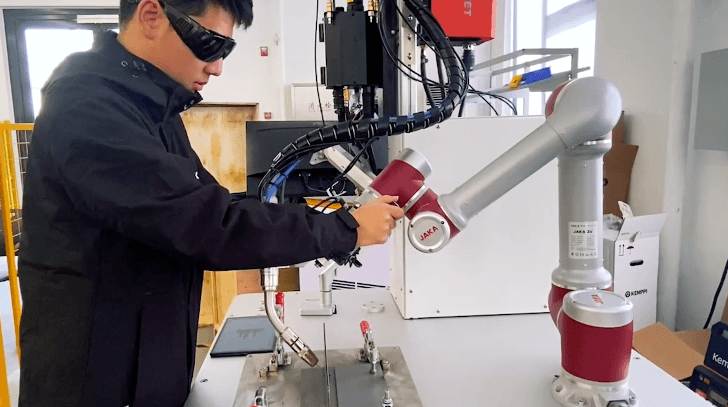
How Does Someone Control a Robot Arm?
JAKA Robotics is revolutionizing the interaction between humans and industrial machinery by simplifying the control of robotic arms. Traditionally, operating these systems required extensive knowledge of complex coding and strict safety protocols. However, JAKA's innovative approach now enables operators with diverse technical skills to manage high-precision movements through user-friendly interfaces. The company has introduced several methods for controlling collaborative robots, including handheld teach pendants and tablet-based graphical user interfaces (GUIs) that allow users to create action sequences by dragging and dropping command blocks. One of the standout features is direct teaching, where operators can manually guide the robot arm to desired positions, which the system records in real-time, streamlining tasks like gluing and polishing. Additionally, advancements in IoT and wireless technology have made it possible for operators to control robotic arms remotely via smartphones or laptops, facilitating efficient management in smart factory settings. JAKA's Zu30 and AL series arms can be programmed using standard tablets, supporting a "Drag-and-Graphic Programming" feature that simplifies the control process. By prioritizing accessibility and flexibility, JAKA Robotics aims to eliminate the barriers of traditional automation, catering to everyone from small workshop owners to large manufacturers. The company also supports various programming languages and ROS integration for advanced users, combining safety features with intuitive control methods to foster a collaborative environment between humans and machines.
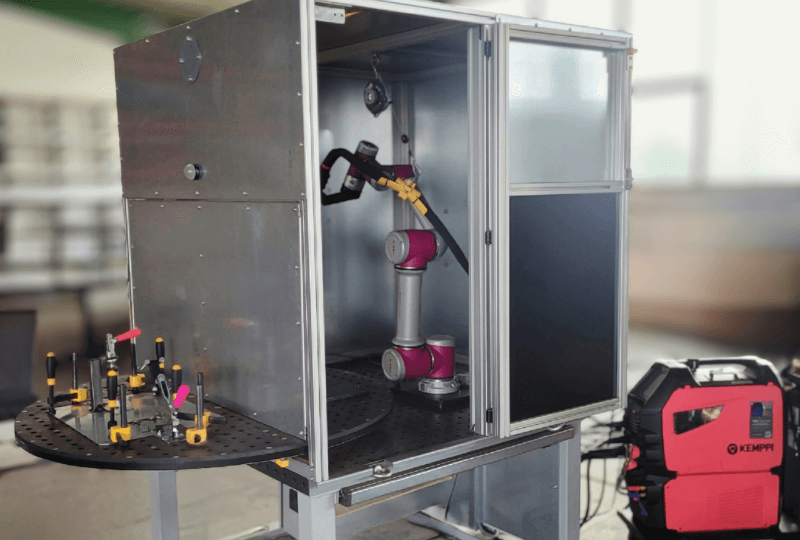
ASK-100-CB – Une introduction pratique au soudage cobot
Akon Robotics has introduced the ASK-100-CB, a collaborative welding cell designed to address the challenges faced by small and medium-sized industrial enterprises, including fluctuating production volumes and a shortage of skilled welders. Launched recently, this innovative solution combines a JAKA collaborative robot with a Kemppi welding system, creating a compact and mobile unit that allows for quick automation of welding processes with minimal complexity. The ASK-100-CB is specifically tailored for flexible and high-mix welding applications, enabling operators to easily adapt the system to changing components through a user-friendly drag-and-drop programming interface. This flexibility is enhanced by its ability to be controlled via PC, tablet, or smartphone, making it suitable for various workshop environments. Featuring a 180° rotating table, the cell allows for simultaneous loading and unloading during welding, significantly optimizing battery usage and reducing downtime—critical factors for achieving a rapid return on investment, especially in small batch production. Safety is prioritized with a CE-compliant risk assessment enclosure, while integrated fume extraction contributes to a clean and ergonomic workspace. Clients have reported measurable improvements in their welding operations after implementing the ASK-100-CB, including reduced waste, increased productivity, and enhanced working conditions without the need for additional skilled labor. Akon Robotics emphasizes that this fully integrated solution ensures seamless compatibility between the robot, peripherals, software, and safety concepts, allowing manufacturers to focus on production outcomes rather than system integration.
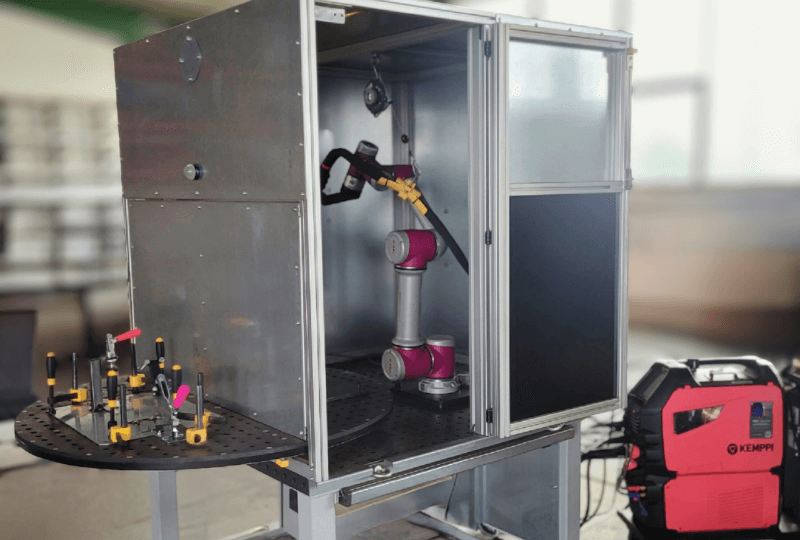
ASK-100-CB – A Practical Entry into Cobot Welding
Akon Robotics has unveiled the ASK-100-CB, a cobot-assisted welding cell designed to tackle the challenges faced by small and medium-sized manufacturers, such as fluctuating batch sizes and a shortage of skilled welders. Launched recently, this innovative solution combines a JAKA collaborative robot with a Kemppi welding system, providing a compact and mobile unit that simplifies the automation of welding processes. The ASK-100-CB is engineered for flexible, high-mix welding applications, allowing manufacturers to adapt quickly to changing components without extensive reprogramming. Operators can easily program the system through a user-friendly drag-and-drop interface and access controls via PC, tablet, or smartphone, enhancing usability on the shop floor. Key features include a 180° rotary table for simultaneous loading and unloading, which maximizes efficiency and minimizes idle time, crucial for achieving rapid returns on investment in low-volume production. Safety is prioritized with a protective enclosure and compliance with CE risk assessments, while connections for fume extraction promote a clean working environment. Customers who have implemented the ASK-100-CB report significant improvements, including reduced scrap rates, enhanced productivity, and better ergonomic conditions for operators. The fully integrated solution ensures that all components work seamlessly together, allowing manufacturers to focus on production outcomes rather than system integration challenges. This development illustrates how collaborative robotics can make welding automation both practical and economically viable for modern manufacturing.
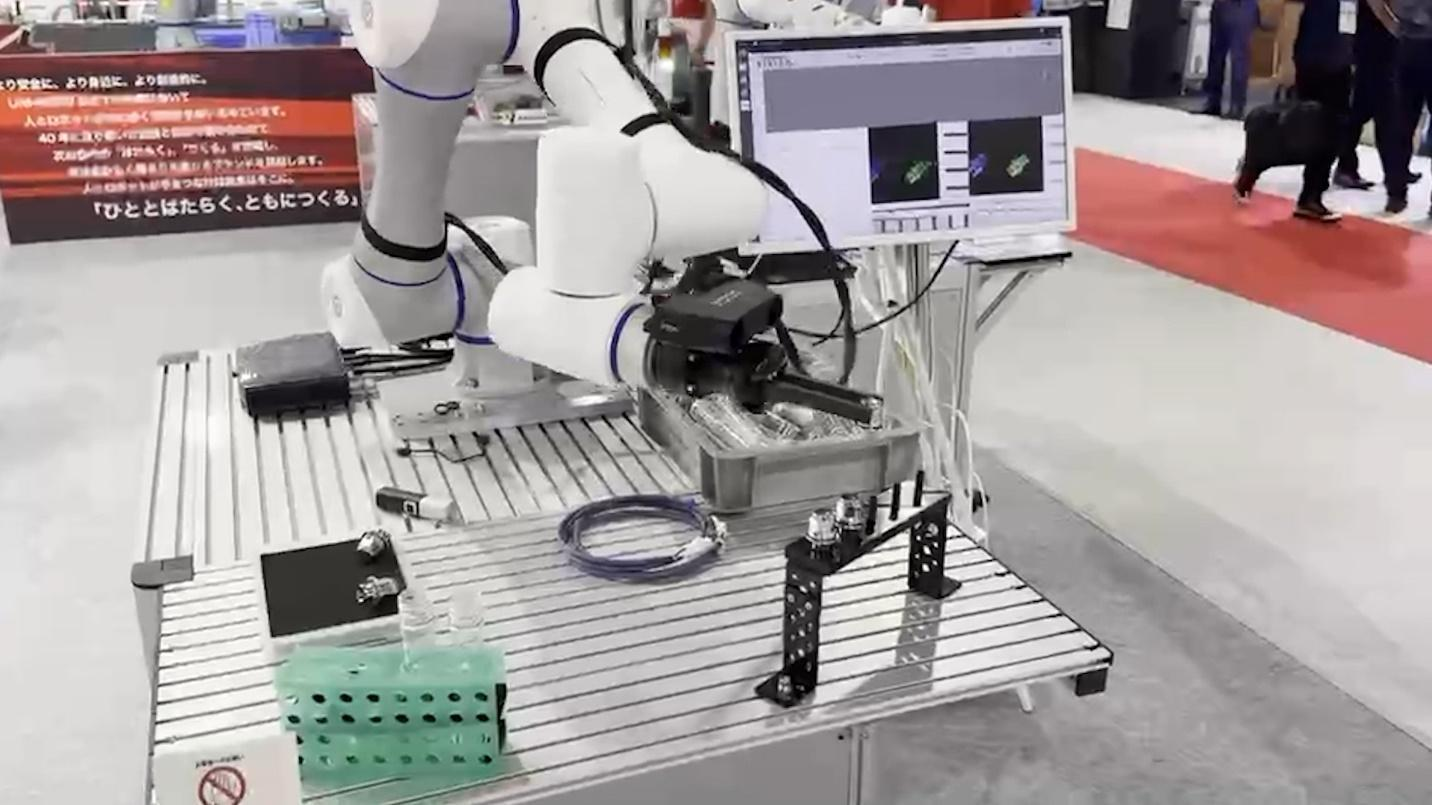
Collaborative Robots (Cobots) in Manufacturing: The Future of Human-Robot Teams
A recent exploration into the future of manufacturing highlights the potential of human-robot collaboration, focusing on how human workers can effectively partner with collaborative robots. As industries evolve, the integration of these advanced technologies aims to enhance productivity and efficiency on the factory floor. This shift is particularly relevant in light of ongoing labor shortages and the need for increased output in a competitive market. The study emphasizes that by 2024, many manufacturing sectors are expected to adopt these collaborative robots, which are designed to work alongside humans safely and efficiently. This partnership not only aims to alleviate the physical demands on workers but also to leverage the precision and speed of robots in repetitive tasks. The motivation behind this trend is driven by the need for innovation in manufacturing processes, as companies seek to remain competitive while addressing workforce challenges. By implementing collaborative robots, businesses can optimize operations, reduce costs, and improve overall product quality. The research indicates that successful integration will require training for human workers to effectively interact with these robots, ensuring a seamless workflow. As this technology continues to advance, the future of human-robot teams in manufacturing appears promising, potentially transforming the landscape of the industry and redefining the roles of human workers.
Dobot Breezy smartphone refurbishment AI automation Industry 5.0 collaborative robotsRobotics needs a service framework.
RSF defines a common language for robot service capability, lifecycle operations, certification pathways, and service-provider networks.