Industry Briefing
A single destination for timely, editor-curated robotics news from around the world.

Modular Self-Reconfigurable Robots Adapt to Various Tasks with MSRCR Technology
A research team has introduced a modular self-reconfigurable robot named MSRCR, capable of adapting its shape for different tasks. This robot can mimic various movements, such as slithering like a snake or crawling with limbs, by reconfiguring its modules. Each module can bend and connect with others, allowing for versatile motion strategies. The significance of this development lies in its potential to revolutionize robotics by enabling a single robot to perform multiple functions without the need for extensive re-engineering. This approach mirrors industrial logic, where tasks dictate design, but with the added flexibility of modularity. The MSRCR robot can change its form dynamically, enhancing its utility in diverse applications. Looking ahead, the research team has conceptualized an 'evolutionary diversification tree' to illustrate the various movement strategies derived from different biological organisms. This innovative robot design could pave the way for more adaptable and efficient robotic systems. No further timeline was disclosed at the time of publication.
Modular Robotics Self-Reconfigurable Robots Robotic Algorithms Bionic Robotics
Xiaomi Achieves Stability with AI Models, Self-Built Chips, and Humanoid Robots
Xiaomi reported a revenue of 108.92 billion yuan in Q2 2026, marking a significant stabilization amidst fierce competition. The company's attributable net profit has doubled, reflecting its successful diversification beyond traditional markets like phones and cars. This growth is attributed to several key advancements, including the MiMo-V2.5 model, which has dominated OpenRouter's monthly and weekly call charts. Additionally, Xiaomi's self-developed Xuanjie chip has successfully passed mass verification, showcasing the company's commitment to in-house technology development. Furthermore, a new humanoid robot has been deployed in factory settings, achieving a remarkable 98% success rate. This indicates Xiaomi's strategic shift towards robotics and AI, positioning the company for future growth. No further timeline was disclosed at the time of publication.

MIT Develops FloatForm Swarm of Modular Aquatic Robots for Dynamic Structures
MIT researchers have unveiled FloatForm, a swarm of small square robotic boats capable of self-assembly into larger structures on water. This innovative system allows the robots to break apart and reconfigure with minimal human intervention, showcasing a new approach to aquatic construction. The project emphasizes the potential for dynamic, adaptable structures in marine environments, with applications in environmental monitoring and infrastructure development. The significance of FloatForm lies in its ability to create modular and reconfigurable structures, which can respond to changing environmental conditions. This technology could revolutionize how we think about construction and deployment in aquatic settings, offering flexibility and efficiency in design. The robots' self-assembly capabilities could lead to advancements in marine architecture and environmental sustainability. Looking ahead, the next steps for the FloatForm project include further testing and potential applications in real-world scenarios. No further timeline was disclosed at the time of publication, but the implications of this technology could influence future developments in robotics and marine engineering.
Robotics
SpaceX's Starmind Project: Supplier Strategy and Chip Manufacturing Plans for 2026
SpaceX's Starmind project, aimed at deploying up to 1 million AI satellites, was filed with the FCC on January 30, 2026. The initiative is designed to minimize reliance on external suppliers, with CEO Elon Musk stating that current chip production capabilities only meet 2% of the projected needs. The first satellite, AI1, is set for prototype launches in early 2027, featuring a 70-meter wingspan and a modular payload system that allows for interchangeable chips from various suppliers. The significance of Starmind lies in its ambitious supply chain strategy, which seeks to transition from external hardware suppliers to a fully integrated Musk-owned facility by 2028. The Gigasat manufacturing site in Bastrop, Texas, is expected to be operational by the end of 2027, with plans for high-volume production of the D3 chip, specifically designed for space applications. This approach aims to consolidate chip manufacturing processes under the Terafab joint venture, which has an estimated initial investment of $55 billion. Looking ahead, the next milestone for Starmind is the launch of AI1 prototypes in early 2027, while the full-scale chip production at Terafab is projected to ramp up significantly thereafter. However, analysts express skepticism regarding the feasibility of achieving Musk's ambitious compute goals, which may require substantial investment and time to establish the necessary manufacturing capabilities.

Sutton partners with Tianshan Technology to launch "Robot Kindergarten," using tactile perception to enable robots' self-learning abilities in the real world.
Sutton has announced a collaboration with Tianshan Technology to introduce "Robot Kindergarten," an innovative initiative aimed at enhancing robots' self-learning capabilities through tactile perception. This partnership seeks to bridge the gap between artificial intelligence and real-world applications by allowing robots to learn from their interactions with the environment. The launch of Robot Kindergarten is set to take place in the coming months, with the aim of revolutionizing how robots adapt and respond to various stimuli. By leveraging advanced sensory technology, the project aspires to create more autonomous and intelligent robotic systems, ultimately paving the way for broader applications in industries such as education, healthcare, and manufacturing.
Robotics Automation AI
Transforming Smart Models into Productive Robots: The Journey of Self-Variables
Self-Variables has made significant strides in robotics by evolving from advanced models to practical applications, showcasing their self-developed technologies and engineering expertise. This transition, achieved through overcoming challenges in training, hardware development, and real-world implementation, has enabled the company to demonstrate its capabilities across various sectors, including home cleaning and logistics. The successful application of their robots has garnered substantial investment from industry leaders, highlighting the growing interest in their innovative solutions.
Robotics AI Automation Machine Learning
Import AI 463: Self-improving robots; a 10k Chinese GPU cluster; and an elegiac essay for the human era
In a recent discussion, historians and scholars gathered to explore the significant periods that frame the current interregnum, a term referring to a gap or pause in governance or authority. The event took place on October 15, 2023, at the National History Museum, where experts aimed to analyze the socio-political transitions that have shaped contemporary society. The motivation behind this gathering stemmed from a growing interest in understanding how historical events influence present-day governance and societal norms. Participants delved into various eras, examining their impacts on current political structures and cultural dynamics. Through a series of presentations and panel discussions, attendees engaged in critical dialogue, sharing insights on how past events can inform future governance. The discussions highlighted the importance of recognizing historical patterns to navigate the complexities of today’s political landscape. This event not only aimed to foster a deeper understanding of historical contexts but also sought to encourage proactive thinking about the future of governance in an increasingly uncertain world.

"Building a Brain for Robots: How Chip Bridge Semiconductor Positions Itself in the Foundation of Embodied Intelligent Computing Power"
Chip Bridge Semiconductor is making significant strides in the development of advanced computing technology aimed at enhancing robotic intelligence. The company is focused on creating a new generation of chips designed to serve as the foundational brain for robots, enabling them to process information and respond to their environments more effectively. This initiative comes at a time when the demand for embodied intelligent computing is rapidly increasing, driven by advancements in artificial intelligence and automation. Located in Silicon Valley, Chip Bridge Semiconductor is leveraging cutting-edge research and development to innovate in this competitive field. The company aims to address the growing need for robots that can operate autonomously in various settings, from manufacturing to healthcare. By integrating sophisticated algorithms with powerful semiconductor technology, Chip Bridge is positioning itself as a leader in the robotics sector. The motivation behind this initiative is to create robots that not only perform tasks but also learn and adapt to new challenges, thereby improving efficiency and productivity across industries. Through strategic partnerships and investments in research, Chip Bridge Semiconductor is working to refine its chip designs and enhance their capabilities, ensuring that they meet the evolving needs of the market. As the landscape of robotics continues to evolve, Chip Bridge Semiconductor’s efforts could play a crucial role in shaping the future of intelligent machines, making them more capable and versatile in their applications.
Robotics Automation AI
US engineers make ‘artificial eyes’ to improve vision in robots, self-driving cars
Researchers at Penn State University have developed an innovative device inspired by the human eye, aimed at enhancing the vision capabilities of self-driving cars. This groundbreaking technology was unveiled recently as part of ongoing efforts to improve the safety and reliability of autonomous vehicles. The device mimics the eye's ability to adapt to varying light conditions, which is crucial for navigating complex environments. The motivation behind this advancement stems from the challenges faced by self-driving cars in low-light situations, where traditional sensors often struggle to provide accurate data. By integrating this eye-inspired technology, the researchers hope to significantly reduce the risk of accidents and improve the overall performance of autonomous systems. This development is part of a broader initiative to advance automotive technology and ensure that self-driving cars can operate effectively in diverse conditions. The research team utilized a combination of advanced materials and optical engineering to create a device that can dynamically adjust its sensitivity, much like the human eye does when transitioning from bright to dim environments. As the automotive industry continues to push towards fully autonomous vehicles, innovations like this are essential for addressing safety concerns and building public trust in self-driving technology. The research findings are expected to contribute to future advancements in vehicle design and functionality, paving the way for safer roads.
Robots' 'Muscles' Can Now Self-Regulate Force: Bionic Exoskeleton Tendon Featured in Science Advances
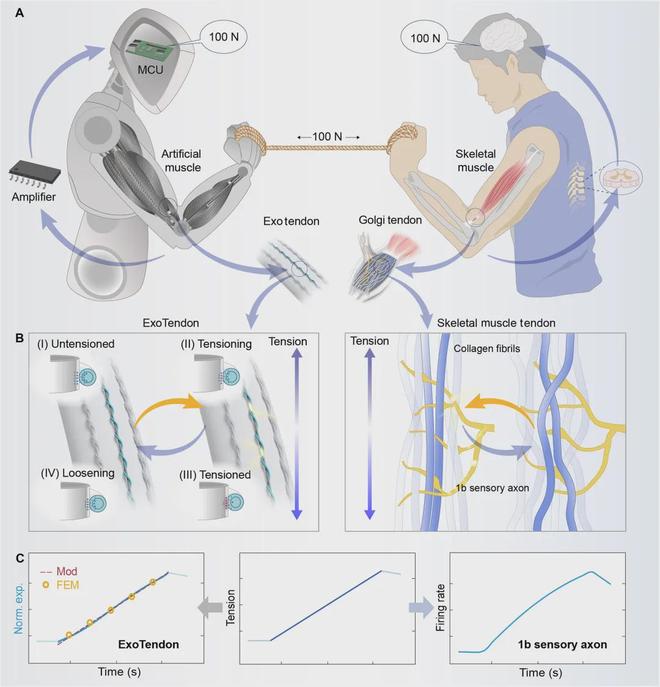
Researchers from various Chinese universities have unveiled ExoTendon, an innovative bionic exoskeleton tendon designed to mimic human muscle sensors. This groundbreaking development enables robotic muscles to autonomously adjust their force, which is expected to greatly improve walking balance and speed for stroke patients. The project highlights the potential for advanced rehabilitation technologies to enhance mobility and quality of life for individuals recovering from strokes. The announcement comes as part of ongoing efforts to integrate robotics and healthcare, showcasing how technology can address specific medical challenges.
Bionic Exoskeletons Artificial Muscles Rehabilitation Technology Biomedical Engineering
New reconfigurable block system allows robots to assemble and reuse buildings
Researchers at the Massachusetts Institute of Technology (MIT) have unveiled an innovative construction system that utilizes modular, interlocking building blocks. This groundbreaking approach aims to revolutionize the way structures are built, enhancing efficiency and sustainability in the construction industry. The development was announced in October 2023, showcasing the potential for these blocks to be easily assembled and disassembled, allowing for greater flexibility in design and use. The motivation behind this project stems from the need for more adaptable and environmentally friendly building solutions, particularly in response to the increasing demand for sustainable architecture. By employing a system that minimizes waste and maximizes reusability, the researchers hope to address some of the pressing challenges faced by traditional construction methods. The construction system operates by allowing builders to connect the blocks in various configurations, which not only simplifies the building process but also reduces the time and labor typically required for construction projects. This innovative method could significantly lower costs and improve accessibility to quality housing and infrastructure, particularly in underserved areas. As the construction industry continues to evolve, MIT's modular building blocks represent a significant step towards a more sustainable future, demonstrating how technology can be harnessed to meet modern needs while promoting environmental stewardship.
Joule Heating Enables Self-Folding Origami Robots
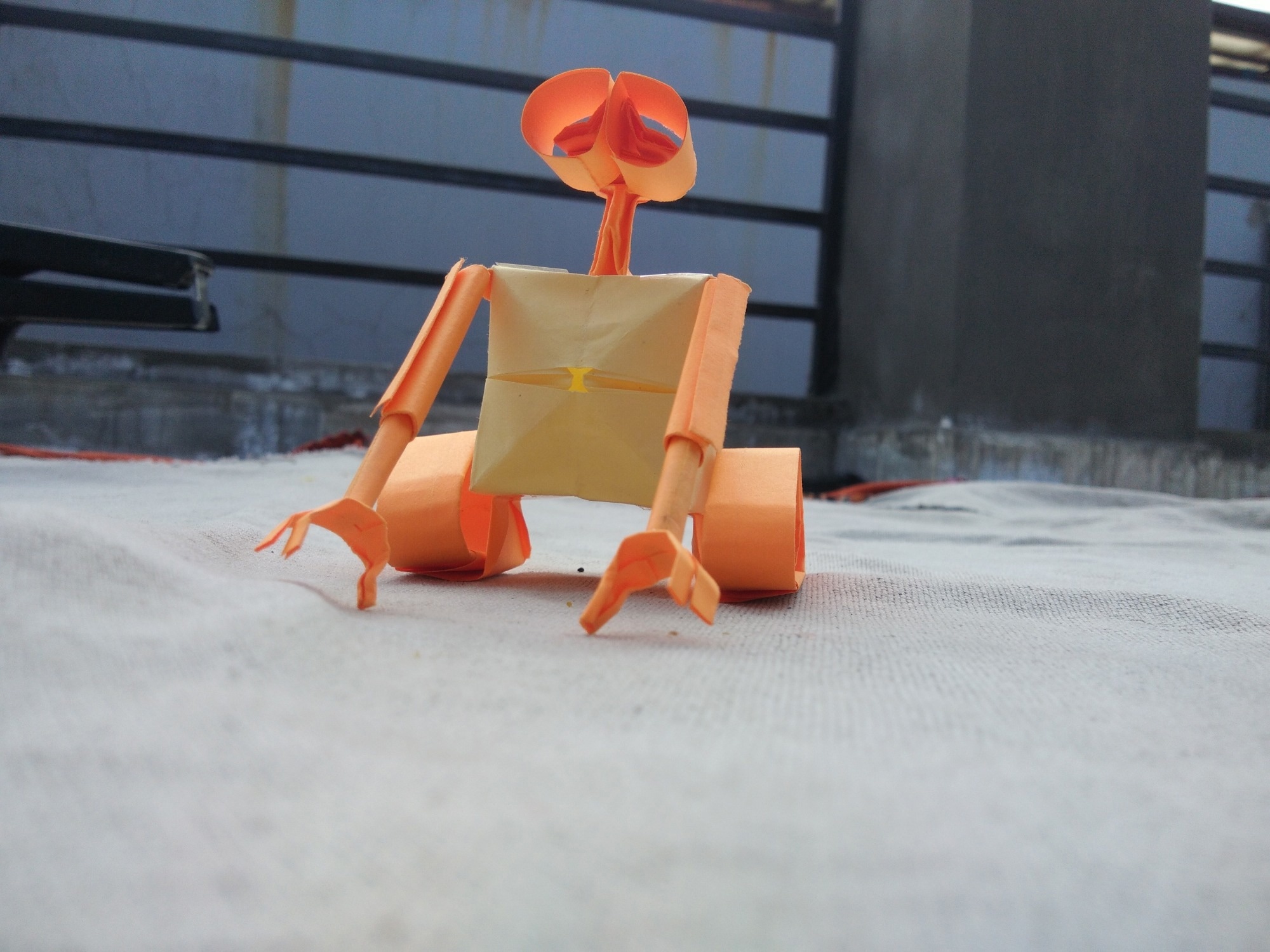
Researchers have developed innovative liquid crystal elastomer hinges integrated with Joule heating technology, resulting in highly adaptable origami robots. These advanced robots demonstrate exceptional actuation precision and impressive durability over numerous cycles. This breakthrough was achieved through the combination of materials science and engineering techniques, allowing for the creation of reconfigurable structures that can perform complex movements. The development aims to enhance the functionality and versatility of soft robotics, making them suitable for a variety of applications, including medical devices and environmental monitoring. The findings were published in a recent study, showcasing the potential for these robots to revolutionize fields that require flexible and resilient robotic solutions.
Robotics needs a service framework.
RSF defines a common language for robot service capability, lifecycle operations, certification pathways, and service-provider networks.
Join the RobotToday community on LinkedIn
Daily robotics news, in-depth analysis, conference highlights, and discussions with professionals worldwide.