Industry Briefing
A single destination for timely, editor-curated robotics news from around the world.
Real Estate Decline Drives *ST Jiuding to Invest in Humanoid Robotics
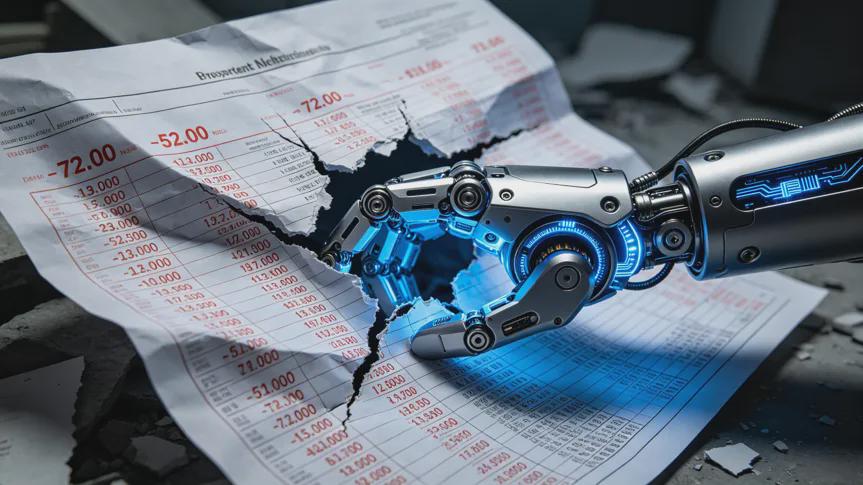
In the first half of 2026, China's real estate development investment fell by 18.0%, with new housing sales and revenue also declining significantly. Traditional real estate companies are facing a crisis as the land market benefits diminish, prompting a shift towards humanoid robotics as a potential lifeline. *ST Jiuding, experiencing a drastic 79.19% drop in real estate revenue, is pivoting to humanoid robotics, focusing on core components and strategic investments to secure its future. This transition is crucial as *ST Jiuding's traditional business is retreating, with plans to exit real estate and private equity sectors. The only growth area is construction, which saw a 346.15% increase in revenue, but it is insufficient to cover losses. The company is now betting on humanoid robotics, having restructured its operations to separate traditional and new business lines, with the latter focusing on robotics. Key steps include acquiring a majority stake in Nanjing Shenyuan to enter the six-dimensional force sensor market, establishing a joint venture for robotic joint modules, and strategically investing in promising companies within the AI and humanoid robotics sectors. No further timeline was disclosed at the time of publication.
Real Estate Robotics AI Technology Innovation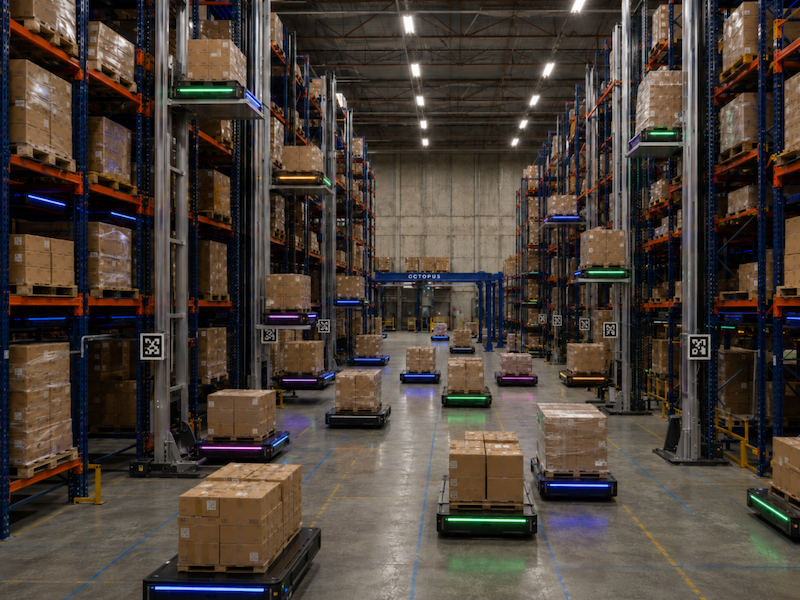
Real-Time Supply Chains Transform Industrial Real Estate and Inventory Management
Recent advancements in predictive analytics, robotics, and data-driven logistics are reshaping industrial real estate by reducing reliance on large inventories. Traditionally, warehouses were designed to manage uncertainty through storage, but the shift towards real-time coordination is changing this paradigm. As supply chains become more connected and visibility improves, the need for extensive inventory diminishes, leading to a redesign of facilities focused on efficient operations. This transformation is significant as it alters the fundamental structure of industrial real estate, moving away from storage-heavy models to those optimized for continuous movement. Just as the introduction of standardized shipping containers revolutionized logistics, the new design principles for automation and throughput will set long-lasting standards for future infrastructure. The choice of facilities that prioritize flow over storage will influence the development of buildings, vehicles, and logistics networks for years to come. Looking ahead, the role of intermediate facilities is evolving from inventory storage to dynamic transfer points, facilitating the movement of goods between transportation modes. As data accessibility increases and transportation systems become more coordinated, the industry must adapt to these changes. No further timeline was disclosed at the time of publication.
Features Logistics Supply chain automation autonomous logistics digital twins
Nippon Steel Kowa Real Estate Begins Domestic Trials of Loki Cleaning Robot with JDSC and SoftBank Robotics
Nippon Steel Kowa Real Estate and JDSC have announced the start of domestic trials for the Loki cleaning robot, developed by Loki Robotics in Switzerland. This initiative aims to innovate building maintenance operations in next-generation smart buildings, addressing the growing demand for automation in high-workload areas like restroom cleaning due to a shortage of maintenance personnel. The collaboration, formalized through a memorandum of understanding among Nippon Steel Kowa Real Estate, JDSC, and SoftBank Robotics, seeks to validate the cleaning quality and environmental compatibility of Loki within Japan's office buildings. The first phase of trials is set to begin in August 2026, starting with the introduction of Loki in Nippon Steel Kowa's own office building to assess its operational compatibility and remote operation capabilities. Following the initial trials, the three companies will develop a phased operational design tailored to Japan's building environments and cleaning operations. They will also explore the potential for expanding Loki's deployment to other properties managed by Nippon Steel Kowa Real Estate based on insights gained from the trials. This initiative represents a significant step toward establishing a practical model for cleaning robots in Japan's building maintenance sector.

Town & Country Living Engages JLL for Logistics Network Analysis and Consolidation
Town & Country Living has partnered with JLL to analyze its logistics network in an effort to reduce inefficiencies within its fragmented distribution system. This comprehensive analysis aims to identify potential opportunities for consolidating operations, which could lead to improved efficiency and cost savings. The collaboration with JLL is significant as it highlights the importance of optimizing supply chain strategies in today's competitive market. By addressing inefficiencies in its logistics network, Town & Country Living can enhance its operational performance and better meet customer demands, ultimately strengthening its market position. Looking ahead, stakeholders will be keen to see the outcomes of this analysis and the specific strategies that will be implemented as a result. No further timeline was disclosed at the time of publication.
From $4 To $500? Eric Jackson's Bold Thesis Pitches Opendoor As Real Estate's Tesla Moment
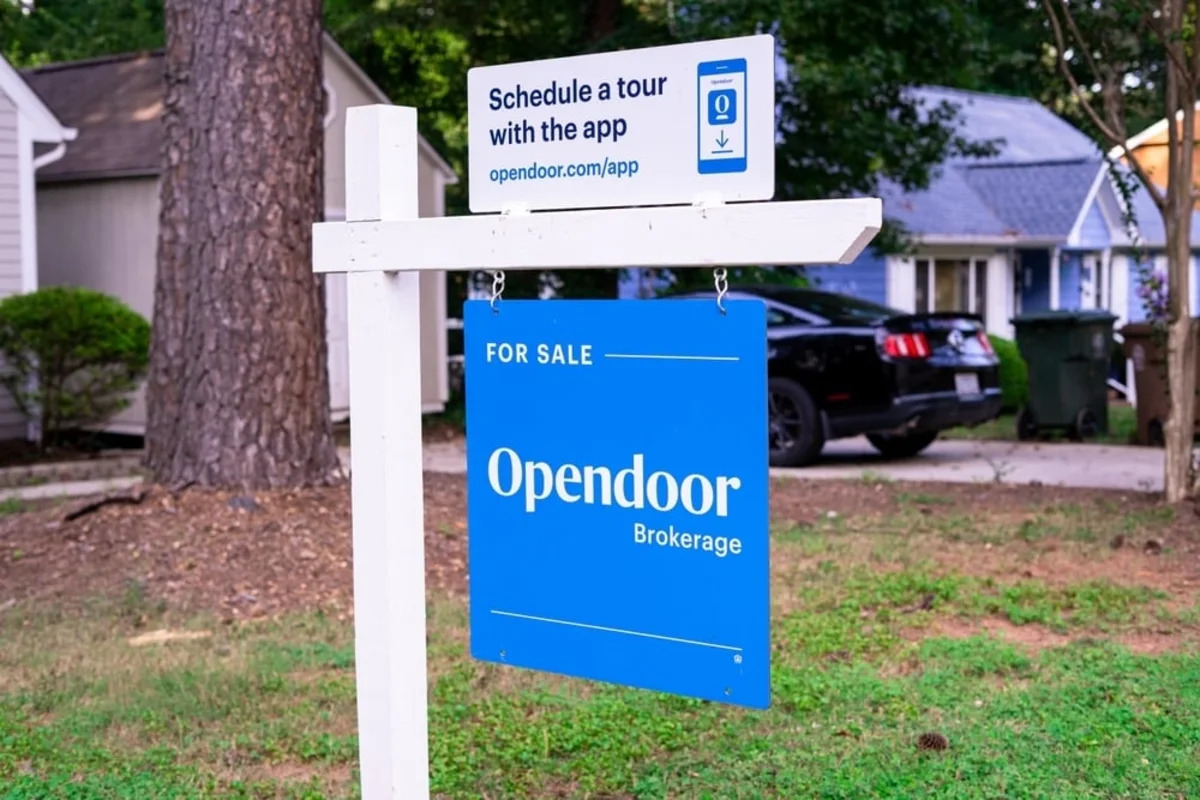
Eric Jackson, founder of EMJ Capital, has proposed a bold investment thesis suggesting that Opendoor Technologies Inc., currently trading at approximately $4.34, could evolve into a $500 stock within the next five to seven years. This prediction stands in stark contrast to Wall Street analysts, who have set price targets ranging from $1 to $8. Jackson's optimism stems from a fundamental shift in the housing market, specifically the tokenization of real estate, which he believes will significantly lower homeownership costs and attract institutional capital. During a recent meeting with Opendoor CEO Kaz Nejatian in Toronto, Jackson outlined a "three-layer tokenization build" that separates land ownership from physical structures. He argues that this innovative approach positions Opendoor uniquely in the market, akin to the transformative trajectories of companies like Tesla and Shopify. Despite a challenging year for Opendoor, with a 25.56% decline in stock value year-to-date, Jackson maintains that the company's asset-class control and extensive pricing data give it a competitive edge over rivals. Jackson's thesis highlights the potential for substantial returns, estimating a 25-35x increase from current prices, while emphasizing the importance of recognizing architectural transitions in the real estate sector. As the market evolves, he believes investors will come to appreciate Opendoor's strategy and the significant upside it offers.
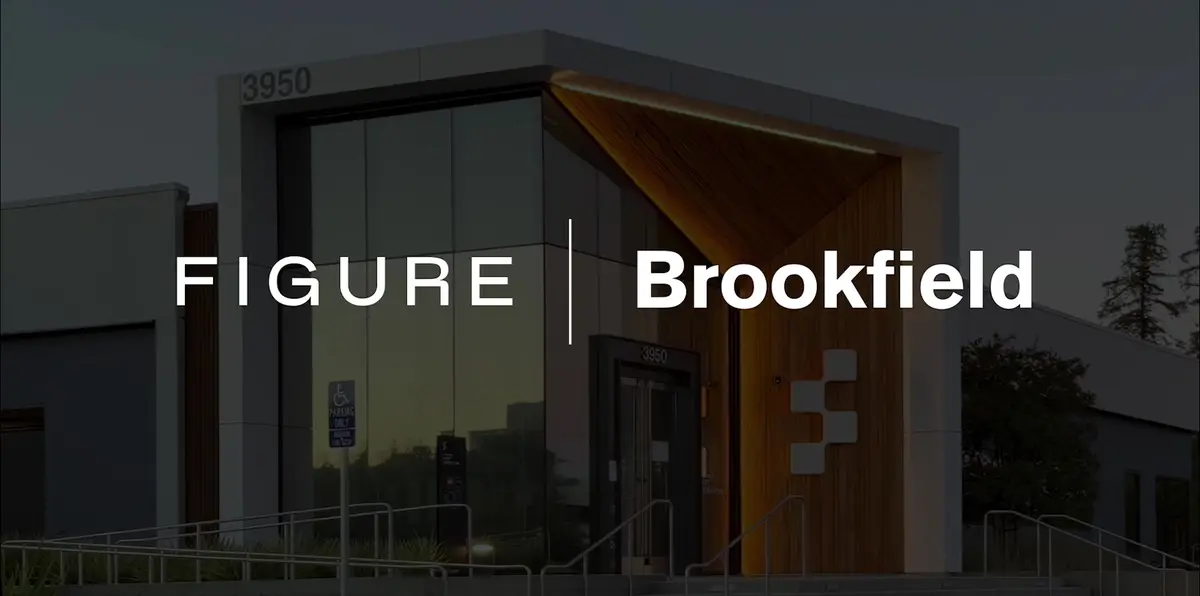
Figure Taps Brookfield's Global Real Estate Portfolio to Scale AI Training
Figure, a humanoid robotics company, has formed a strategic partnership with asset management firm Brookfield. This collaboration will provide Figure with access to an extensive portfolio of real estate, enabling the company to develop a significant real-world training dataset for its Helix AI model. The partnership aims to expedite the commercial deployment of Figure's robotics technology. By leveraging Brookfield's diverse properties, Figure seeks to enhance the capabilities of its AI, ultimately advancing the integration of humanoid robots into various sectors.
Brett Adcock Figure brookfield helixRobotics needs a service framework.
RSF defines a common language for robot service capability, lifecycle operations, certification pathways, and service-provider networks.
Join the RobotToday community on LinkedIn
Daily robotics news, in-depth analysis, conference highlights, and discussions with professionals worldwide.