Industry Briefing
A single destination for timely, editor-curated robotics news from around the world.

After Issuing Its First Stock Split in 2020, Tesla Took Just 2 Years to Issue Its Second Split. Could a Third Stock Split Come in 2026?
Tesla, the electric vehicle manufacturer, is facing speculation about a potential third stock split in 2026, following its previous splits in 2020 and 2022. The company, which last split its shares when prices were significantly higher—around $1,400 in 2020 and nearly $900 in 2022—currently sees its stock trading at approximately $375. Analysts suggest that a split is unlikely unless the stock price nearly triples, as historical trends indicate that splits typically occur when shares become too expensive for retail investors. While stock splits can enhance investor psychology by making shares appear more affordable and potentially attracting more retail investors, they do not fundamentally change a company's value. Research indicates that companies that split their stocks often experience average returns of over 25% in the year following the announcement. However, with the rise of fractional share investing, the necessity for splits may diminish, as higher stock prices can be perceived as a sign of strength and demand. As Tesla continues to focus on advancements in robotics, autonomous vehicles, and energy storage, analysts emphasize that these developments will be more critical to the company's long-term success than any stock split.

Human-Robot Collaboration: How Modern Workplaces Can Be Designed for Safety, Productivity, and Employee Wellbeing
The industrial robotics market, valued at $85 billion, is transforming production floors by eliminating physical barriers between humans and machines. This shift allows for a collaborative environment where workers and robotics operate side by side. As millions of industrial robots are deployed globally, effective management of this transition is crucial. It necessitates a comprehensive understanding of spatial geometry, workforce psychology, and adherence to functional safety standards to ensure a seamless integration of technology into the workplace. This evolution in manufacturing aims to enhance efficiency and productivity while prioritizing safety and worker well-being.
Engineering Robotics automation news automation strategy cobots collaborative automation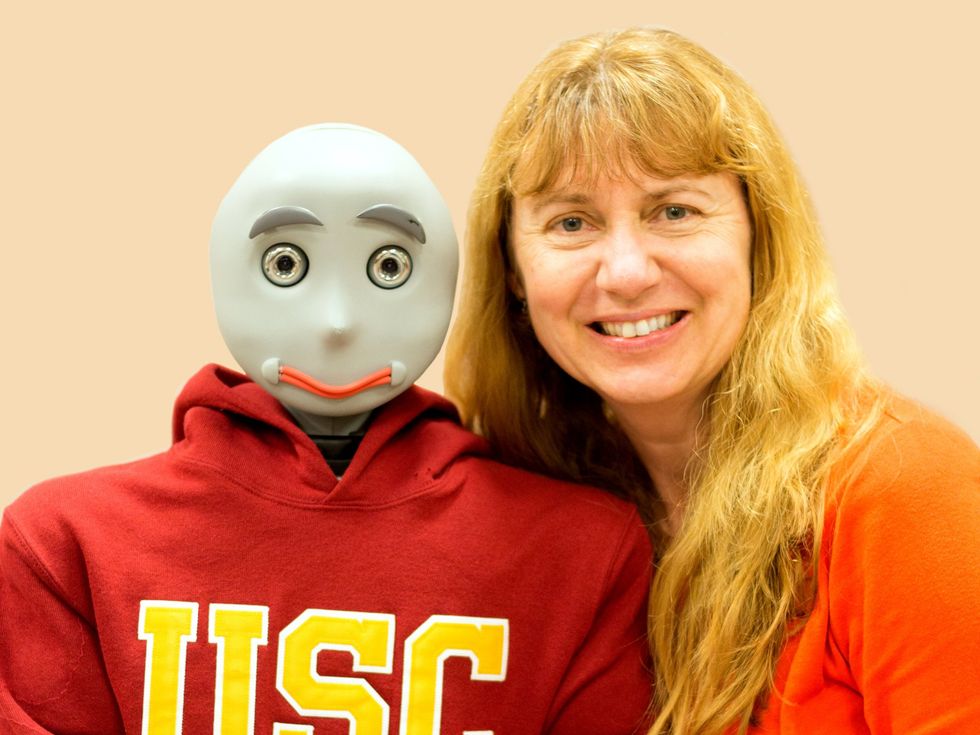
The USC Professor Who Pioneered Socially Assistive Robotics
Maja Matarić, a professor at the University of Southern California, has been a pioneering force in the field of socially assistive robotics since co-defining the area in 2005. Her work focuses on developing robots that provide personalized therapy and support through social interactions, particularly for individuals with anxiety, depression, and autism spectrum disorder. Matarić's research has led to the creation of robots like Bandit, which helps children with autism improve communication skills, and Blossom, designed to assist students in practicing cognitive behavioral therapy (CBT). Recently, Matarić was honored with the 2025 Robotics Medal from MassRobotics, recognizing her contributions to advancing robotics. The award ceremony took place in Boston, where she expressed her joy and gratitude for the support of her peers. Matarić's journey began in Belgrade, Serbia, and she credits her family for inspiring her interest in engineering and computer science. Her current research includes a clinical trial funded by the U.S. National Institute of Mental Health, exploring the effectiveness of Blossom in delivering CBT to students. The trial involves 120 participants and aims to assess the robot's ability to adapt to individual user preferences while measuring their mental health outcomes. Matarić emphasizes the importance of combining engineering with psychology in her work and encourages her students to engage with professional communities like IEEE, which she joined as a graduate student in 1992.
Ieee-member-news Robots Socially-assistive-robotics Mental-health Ieee-robotics-and-automation-soc Type-ti
Import AI 450: China's electronic warfare model; traumatized LLMs; and a scaling law for cyberattacks
In a thought-provoking discussion, experts in psychology and philosophy gathered to explore the concept of time and its valuation by individuals across different ages. This event took place on October 15, 2023, at the University of Philosophy and Psychology in New York City. The panel aimed to address how perceptions of time evolve as people age and the implications this has for decision-making and life satisfaction. The motivation behind the discussion stemmed from a growing interest in understanding how various life experiences shape our relationship with time. As individuals transition through different life stages, their priorities and the significance they place on time can shift dramatically. The panelists emphasized that younger individuals often view time as an abundant resource, while older adults may perceive it as limited, leading to differing approaches to life choices. Through a series of presentations and interactive discussions, the experts shared insights on how cultural, social, and personal factors influence the way time is valued. Attendees were encouraged to reflect on their own experiences and consider how their understanding of time might change as they age. The event concluded with a call for further research into the psychological aspects of time perception, aiming to foster a deeper understanding of how individuals can make more meaningful choices throughout their lives.

Robot Talk Episode 144 – Robot trust in humans, with Samuele Vinanzi
In a recent conversation, Claire spoke with Samuele Vinanzi, a Senior Lecturer in Robotics and Artificial Intelligence at Sheffield Hallam University, about the intriguing capabilities of robots in assessing human trustworthiness. Vinanzi, who specializes in Cognitive Robotics—a field that merges robotics, artificial intelligence, cognitive science, and psychology—discussed how advancements in this area enable robots to discern whether to trust or distrust individuals. This exploration highlights the growing intersection of technology and human interaction, shedding light on the potential for robots to navigate social dynamics effectively. The dialogue underscores the importance of understanding these mechanisms as society increasingly integrates robotic systems into daily life.

Import AI 444: LLM societies; Huawei makes kernels with AI; ChipBench
Researchers are exploring methods to quantify creativity, a concept that has long been considered subjective and difficult to measure. This initiative is gaining traction as experts from various fields, including psychology, education, and artificial intelligence, collaborate to develop metrics that can objectively assess creative output. The project is particularly relevant in today's rapidly evolving technological landscape, where creativity is increasingly recognized as a vital skill in both personal and professional contexts. The exploration into quantifying creativity is taking place across multiple institutions and conferences, with significant discussions occurring in late 2023. These efforts aim to establish standardized frameworks that can be applied in educational settings, workplaces, and even in evaluating artistic endeavors. By creating reliable assessment tools, researchers hope to enhance understanding of the creative process and its impact on innovation. The motivation behind this research stems from the need to better understand how creativity can be fostered and utilized, especially as industries seek to adapt to changing demands. By employing a combination of qualitative and quantitative analysis, researchers are investigating various approaches, including the use of algorithms and psychological assessments, to create a comprehensive picture of creativity. As this field of study progresses, it holds the potential to transform how creativity is perceived and nurtured, ultimately leading to more effective strategies for encouraging innovative thinking across diverse sectors.

Rethinking how our brains use categories to make sense of the world
A team of researchers has put forth a new perspective that challenges the conventional understanding of how the brain categorizes information. Their findings, which were presented in a recent study, suggest that the brain's categorization process may be more complex than previously thought. This research, conducted by a group of neuroscientists, aims to shed light on the underlying mechanisms of cognitive function and how individuals interpret and organize their experiences. The study, published in a leading neuroscience journal, highlights the importance of reevaluating existing theories in light of new evidence. By employing advanced imaging techniques and experimental methods, the researchers were able to observe brain activity in real-time, providing insights into the dynamic nature of categorization. This work not only contributes to the field of neuroscience but also has implications for understanding cognitive disorders and improving educational strategies. The researchers hope that their findings will inspire further exploration into the intricacies of brain function and the ways in which we process information.
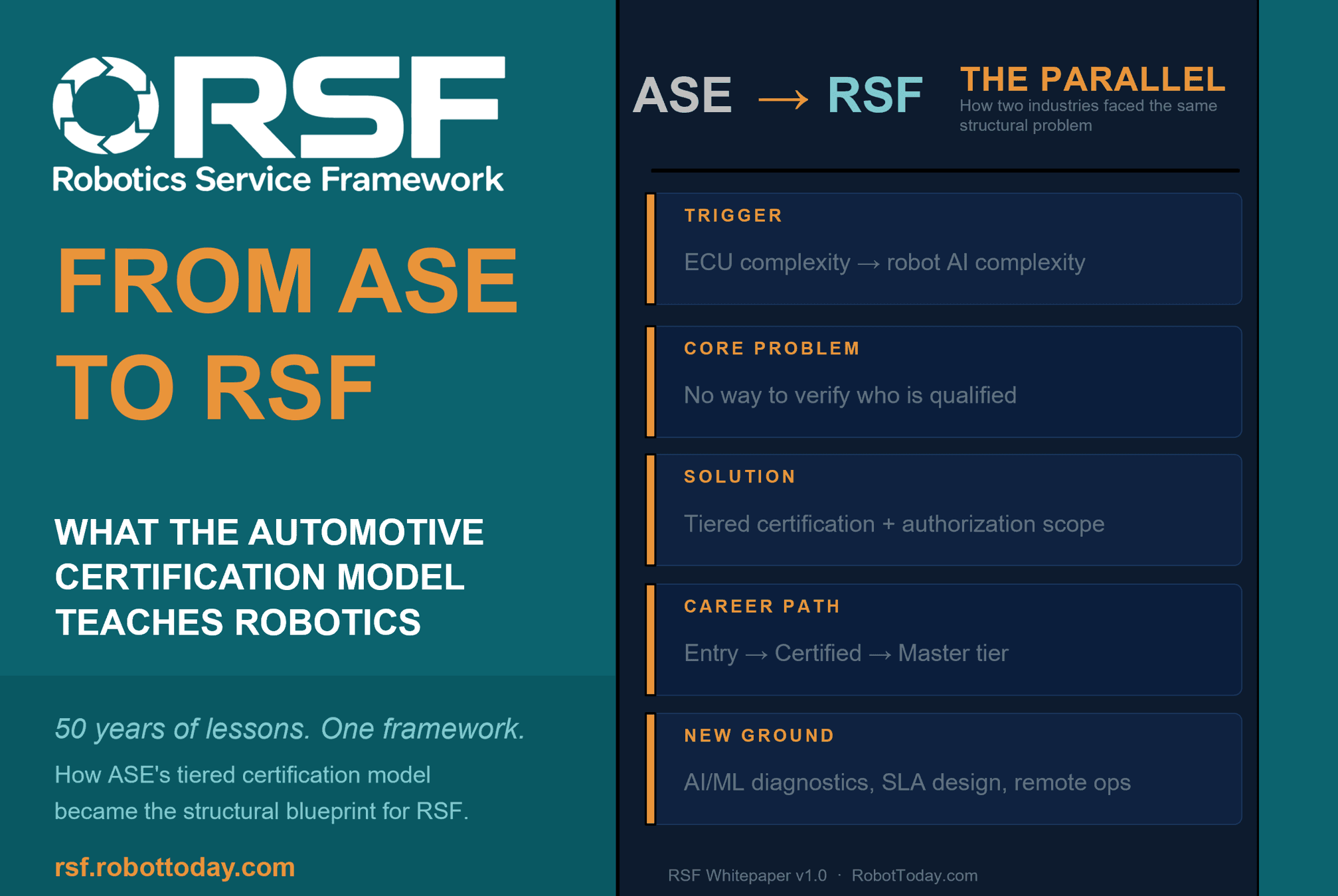
Research Neuroscience Behavior Learning Psychology Brain and cognitive sciencesRobotics needs a service framework.
RSF defines a common language for robot service capability, lifecycle operations, certification pathways, and service-provider networks.