Industry Briefing
A single destination for timely, editor-curated robotics news from around the world.

World's First Autonomous Piano Robot Unveiled at AWE: Performs 687 Songs with Over 1.25 Million Impressions
At the 2026 AWE in Shanghai, the TermiPianist, recognized as the world's first autonomous piano robot, enthralled attendees with a remarkable performance of 687 songs. Created by Chenhunxian Technology, this innovative robot exemplifies cutting-edge embodied intelligence, drawing considerable media interest and opening doors for potential collaborations in the field of robotics and artificial intelligence. The event highlighted the growing intersection of technology and the arts, showcasing how advancements in robotics can enhance creative expression.
Piano Robots Embodied Intelligence Automation Technology Robotics Consumer Electronics
China's Robots Try World Cup-Style Penalty Kicks
At the Mobile World Congress in Shanghai, Chinese humanoid robots are capturing attention with their impressive capabilities, showcasing a range of skills from executing penalty kicks to playing the piano. Bloomberg's Stephen Engle conducted a hands-on evaluation of these robots, testing their performance and adaptability in a lively environment. The event, which highlights advancements in technology and robotics, raises questions about the robots' ability to engage with the excitement and spirit of global events like the World Cup. As the congress unfolds, the demonstration of these robots serves to illustrate the rapid development of artificial intelligence and robotics in China, reflecting the country's ambition to lead in innovative technology.
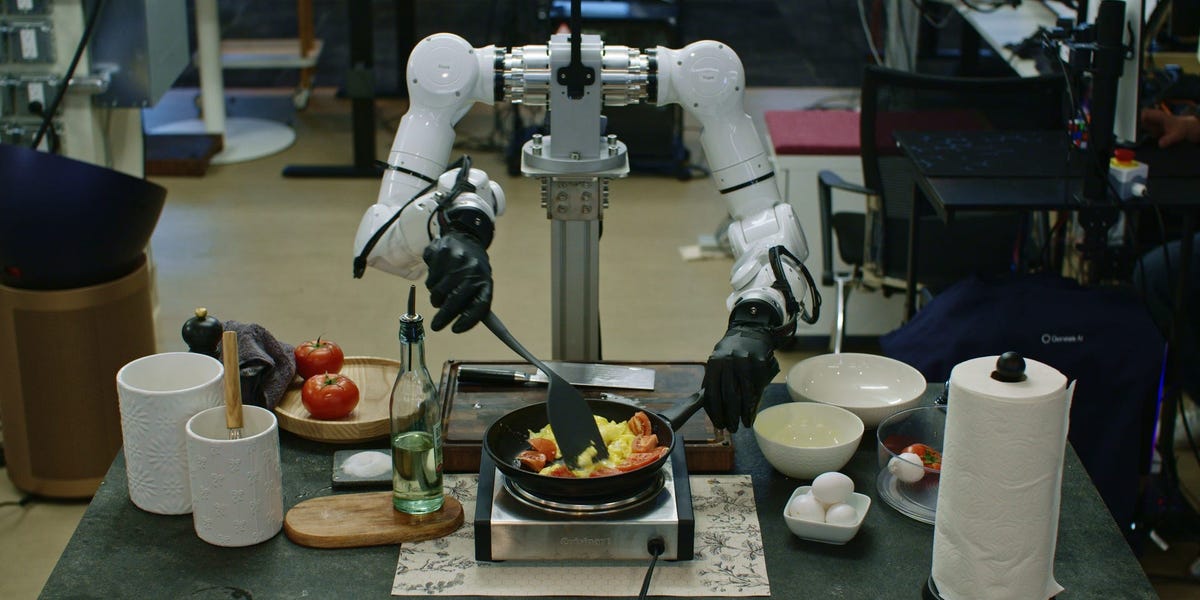
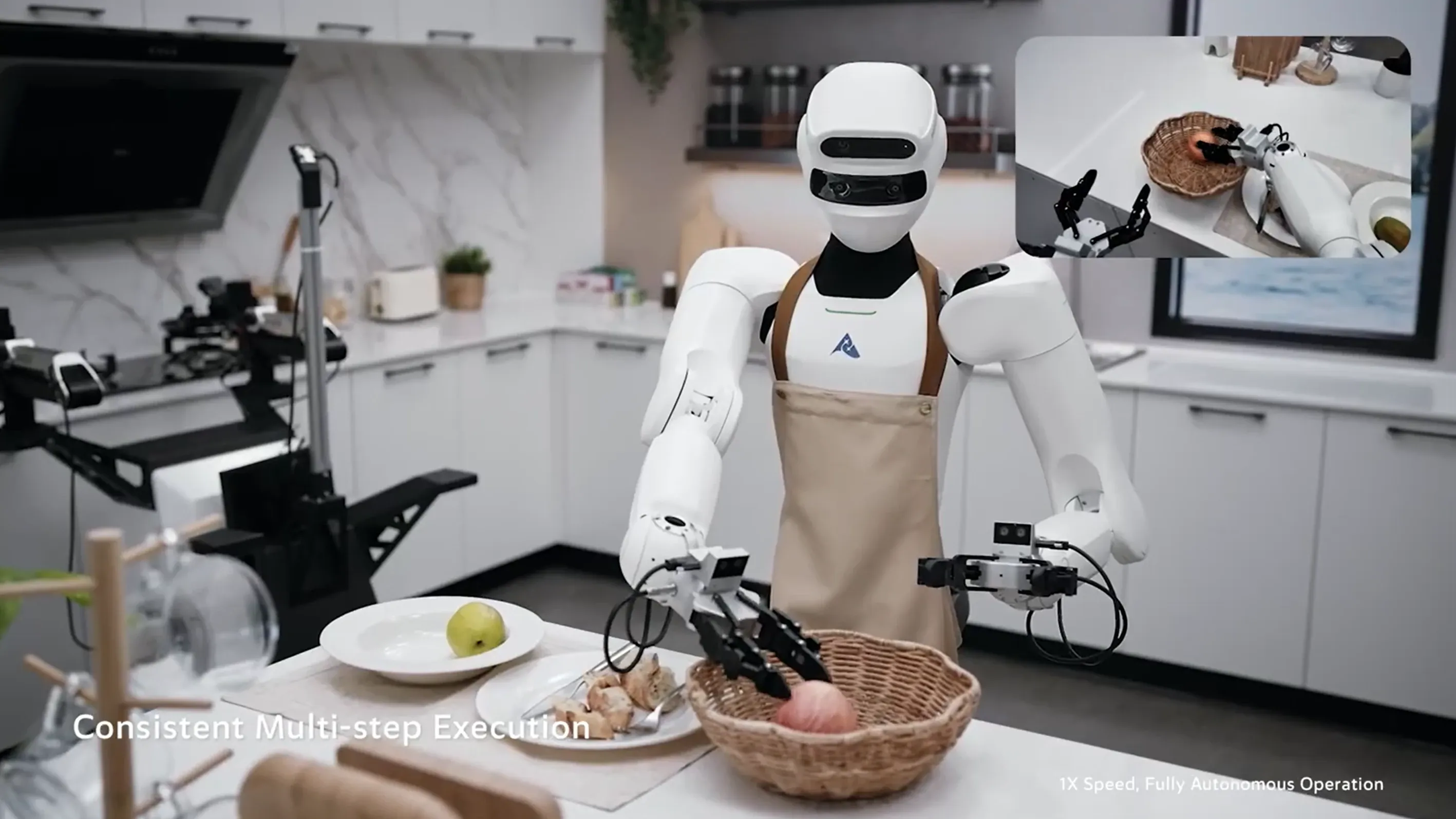
Take a look at these hands: Genesis AI says it taught a robot to cook and play piano close to human-level performance
Genesis AI has announced the development of advanced robotic hands that exhibit dexterity and performance comparable to that of human hands. CEO Zhou Xian revealed this breakthrough during a recent presentation, highlighting the company's commitment to pushing the boundaries of artificial intelligence and robotics. The announcement comes as part of Genesis AI's ongoing efforts to innovate within the tech industry and enhance the capabilities of robotic systems. This advancement could have significant implications for various sectors, including manufacturing, healthcare, and service industries, where precision and adaptability are crucial. The technology is expected to be further refined and tested in the coming months, with the potential for commercial applications in the near future.
Tech robots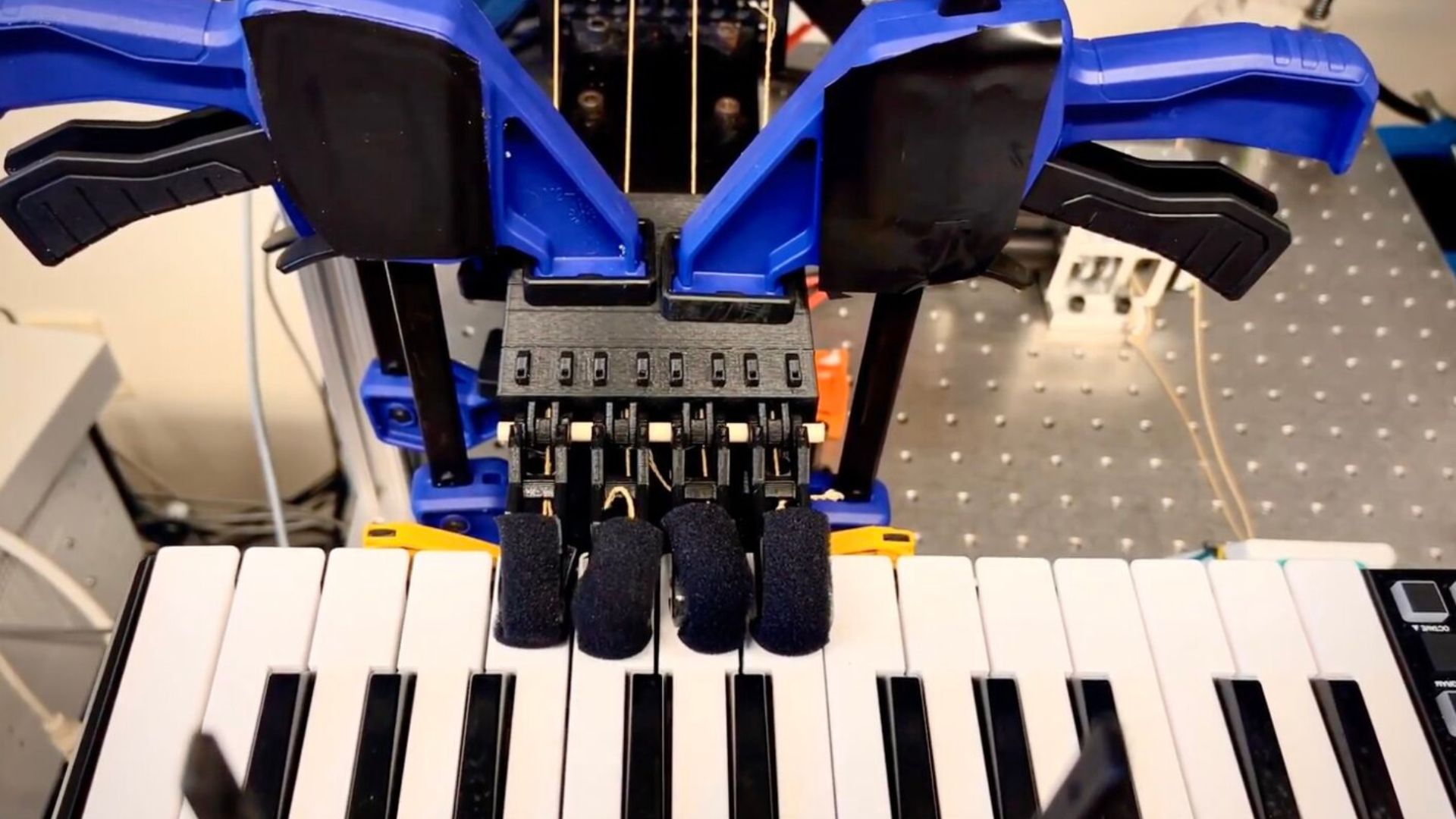
New piano-playing robotic hand learns notes after just two minutes of practice
A team of researchers has introduced an innovative robotic system known as the “Musician Hand,” capable of listening to and interpreting music in real-time. This groundbreaking technology was revealed during a recent conference focused on advancements in robotics and artificial intelligence. The unveiling took place in October 2023, showcasing the system's ability to analyze musical compositions and respond with precise movements that mimic human musicians. The motivation behind developing the “Musician Hand” stems from a desire to enhance the interaction between humans and machines in creative fields, particularly in music. By integrating advanced auditory processing capabilities, the robotic hand can not only play instruments but also adapt its performance based on the nuances of the music it hears. This innovation aims to bridge the gap between technology and artistry, providing new opportunities for collaboration between musicians and robots. The researchers demonstrated the system's functionality by having it perform alongside live musicians, illustrating its potential to revolutionize music education and performance. The “Musician Hand” represents a significant step forward in the field of robotics, highlighting the increasing role of artificial intelligence in creative endeavors. As the technology continues to evolve, it may pave the way for more sophisticated applications in various artistic domains, fostering a deeper connection between human creativity and robotic assistance.
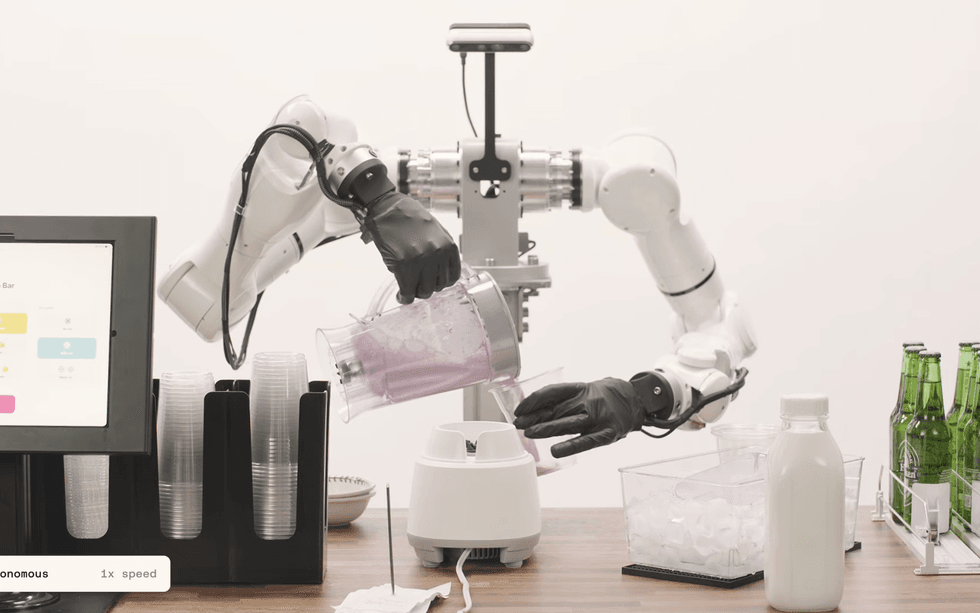
Video Friday: AI Gives Robot Hands Human-Like Dexterity
IEEE Spectrum robotics has released its weekly roundup of notable robotics videos, along with a calendar of upcoming robotics events scheduled for 2026. Key events include ICRA 2026 in Vienna from June 1-5, and the Summer School on Multi-Robot Systems in Prague from July 29 to August 4. Among the highlights is the introduction of GENE-26.5, an AI brain that enables robots to perform complex tasks such as cooking, conducting lab experiments, and playing the piano, showcasing significant advancements in robotic capabilities. Another featured robot, Labububot, is a unique creation that critiques social robots through its design, merging various pop culture elements into a single entity. In other developments, NASA's Jet Propulsion Laboratory is testing next-generation helicopter rotor blades on Mars, achieving speeds that exceed Mach 1 in a simulated Martian atmosphere. Additionally, Boston Dynamics is balancing commercial interests with robotics research through its Atlas robot, while the Robomechanics Lab has introduced Sally, a magnetic-wheeled robot designed for inspecting steel structures, capable of navigating challenging interior corners. These innovations reflect the ongoing evolution in robotics, driven by advancements in AI and engineering, as the field continues to explore new applications and capabilities.
Humanoid-robots Video-friday Manipulation Robot-videos Autonomous-robots Quadruped-robots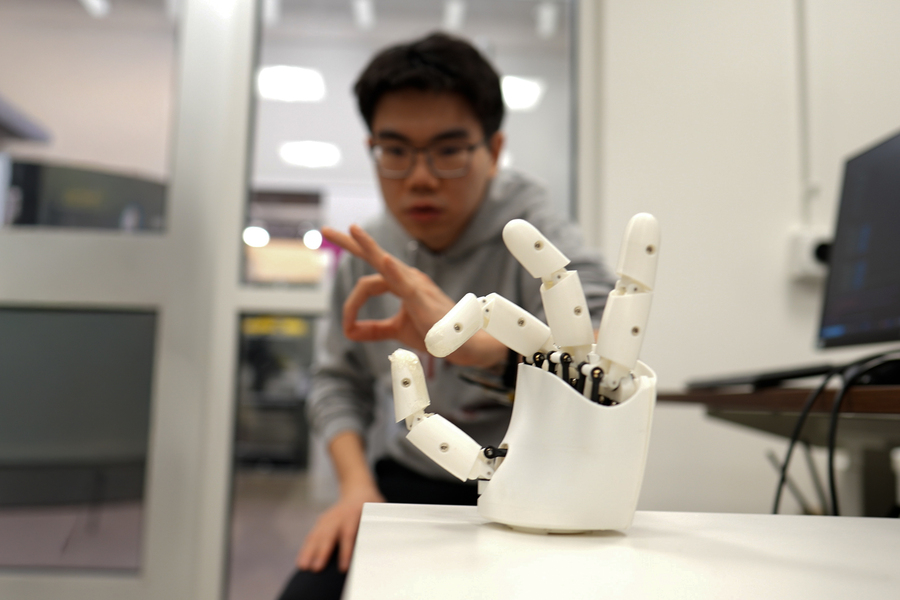
MIT Engineers Develop Ultrasound Wristband for Real-Time Robotic Hand Control
MIT engineers have created an innovative ultrasound wristband that allows wearers to control a robotic hand through their own movements. This wristband captures real-time images of the wrist's muscles and tendons, translating them into the positions of the fingers and palm using an AI algorithm. Demonstrations have shown that users can wirelessly manipulate a robotic hand to perform tasks like playing the piano or shooting a basketball. This technology is significant as it offers a new method for hand tracking in robotics and virtual reality, potentially replacing traditional techniques that rely on cameras or sensor-laden gloves. The wristband's ability to gather diverse hand motion data could lead to advancements in training humanoid robots for dexterous tasks, including surgical procedures. Xuanhe Zhao, a professor at MIT, emphasizes the immediate impact this work could have on both virtual environments and robotic dexterity. Looking ahead, the research team aims to expand their dataset of hand motions by collecting data from users with varying hand sizes and gestures. This could enhance the capabilities of humanoid robots and improve interactions in virtual settings. No further timeline was disclosed at the time of publication.
Robotics needs a service framework.
RSF defines a common language for robot service capability, lifecycle operations, certification pathways, and service-provider networks.