Top News

Industry Briefing

A single destination for timely, editor-curated robotics news from around the world.

Stanford Teaches Robots to Wash Clothes, Deliver, and Set Tables Using Just Three iPhones

Stanford Teaches Robots to Wash Clothes, Deliver, and Set Tables Using Just Three iPhones

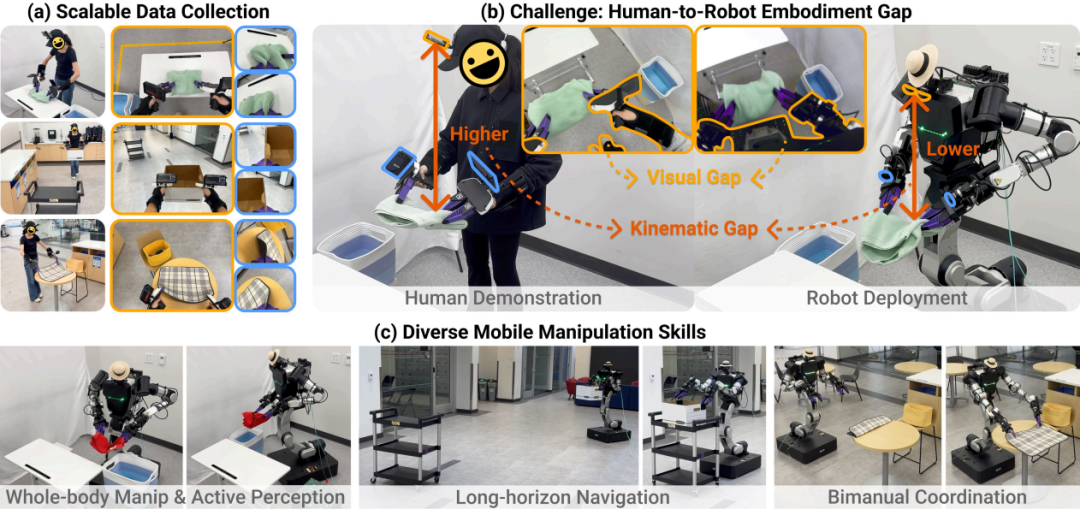
Stanford University, in collaboration with the Toyota Research Institute, has introduced the HoMMI framework, a groundbreaking system that allows robots to acquire complex movement skills through human demonstrations without direct robot participation. This innovative approach employs three iPhones to gather data, effectively tackling the physical disparities between humans and robots. The framework significantly improves robot coordination in various tasks, including navigation and manipulation, paving the way for more advanced robotic applications in real-world scenarios.

Robotics Machine Learning Human-Robot Interaction AI
World's First Robot Phone Unveiled: Honor CEO Says, 'We’ve Given Phones Hands and Feet!'

World's First Robot Phone Unveiled: Honor CEO Says, 'We’ve Given Phones Hands and Feet!'

At the Mobile World Congress (MWC) 2026, Honor CEO Zhao Jian unveiled the groundbreaking Robot Phone, which boasts a dynamic camera and advanced AI capabilities that aim to revolutionize mobile technology. This launch signifies Honor's strategic expansion into the robotics sector, as the event also featured a humanoid robot that captivated attendees with its impressive dance performance. This move underscores Honor's ambition to establish itself as a leader in the AI ecosystem, showcasing the company's commitment to innovation and technological advancement in an increasingly competitive market.

Robot Phone Humanoid Robots AI Technology Mobile Innovation
From phones to robots: China’s supply chain eyes next growth curve in humanoid

From phones to robots: China’s supply chain eyes next growth curve in humanoid

China's smartphone and electronics supply chain is pivoting to support the rapidly emerging humanoid robotics industry as component suppliers look for new growth opportunities amid a stagnating mobile market. This shift was highlighted when Honor's humanoid robot D1, a newcomer from the smartphone manufacturer, triumphed in a recent robot half-marathon in Beijing, outperforming established competitors like Unitree. Honor's entry into the humanoid robotics sector marks a significant crossover of expertise from mobile technology to robotics, reflecting the industry's potential for innovation and expansion.

This Ukrainian company is upgrading its battlefield robots like smartphones. Here's how it's chasing the edge in combat.

This Ukrainian company is upgrading its battlefield robots like smartphones. Here's how it's chasing the edge in combat.

Ukrainian combat robot manufacturer DevDroid is actively engaged in continuous updates to its technology to remain competitive in the evolving landscape of warfare. The company recognizes the necessity of adapting its robotic systems to meet the demands of modern combat, ensuring that their innovations do not become outdated. This commitment to advancement is crucial as the nature of battlefield technology rapidly changes, driven by both strategic needs and technological advancements. By staying ahead of the curve, DevDroid aims to enhance the effectiveness of its robotic solutions, thereby maintaining its relevance in a highly dynamic military environment.

Military & Defense ukraine ground-robots russia
Honor reportedly partnering with Pop Mart, designer toy aesthetics coming to smartphones

Honor reportedly partnering with Pop Mart, designer toy aesthetics coming to smartphones

Honor is set to unveil a co-branded collaboration with the popular toy manufacturer Pop Mart, as reported by China Star Market. This partnership, which aims to integrate intellectual property across industries, comes despite Pop Mart's previous statements indicating no intentions to venture into smartphone development. The collaboration is expected to leverage the success of Pop Mart's earlier partnerships, which have yielded impressive sales figures. The launch is anticipated to attract attention within both the tech and toy sectors, highlighting the growing trend of cross-industry collaborations.

News Feed
Someone out-Trumped the Trump phone

Someone out-Trumped the Trump phone

The ongoing mystery surrounding the whereabouts of the so-called "Trump phone" continues to capture attention, with inquiries being made weekly. This week, the focus has shifted as the elusive device, associated with former President Donald Trump, remains unaccounted for. As the search persists, concerns have also arisen regarding other missing phones, including those linked to robotic technology. The situation highlights the ongoing intrigue and speculation surrounding Trump's communications and the implications of missing devices in the current political landscape.

Gadgets Mobile Phones Tech
Ant Group Launches Open-AoE Framework for Embodied Intelligence Data Collection

Ant Group Launches Open-AoE Framework for Embodied Intelligence Data Collection

Ant Group, in collaboration with several universities and research institutions, has introduced the Open-AoE framework aimed at enhancing embodied intelligence data collection. This initiative addresses the scarcity of high-quality 3D operational data necessary for training robots, which often rely on limited and standardized datasets from controlled environments. The Open-AoE framework plans to release approximately 2,000 hours of first-person human operation data collected using consumer smartphones. Currently, around 100 hours of this data is accessible, with the remainder set to be released in batches by July 30. Alongside the data, a comprehensive toolchain for data visualization, 4D reconstruction, and model training format conversion will also be made available to the community. The significance of this initiative lies in its potential to democratize data collection, allowing ordinary users to contribute valuable training data through their smartphones. Initial experiments have shown promising results, with the integration of smartphone-collected data significantly improving the performance of robotic tasks, indicating that such data can indeed enhance model training effectiveness.

Embodied Intelligence Open Source Data Robot Training AI Data Processing
Alibaba's Qwen AI Model to Enhance Apple Intelligence Across Multiple Platforms

Alibaba's Qwen AI Model to Enhance Apple Intelligence Across Multiple Platforms

Alibaba's Qwen AI model is set to be integrated into Apple Intelligence, enhancing user experiences in China across various Apple operating systems including iOS, iPadOS, macOS, and visionOS. This integration allows users to utilize Qwen's features such as text and image understanding and content generation without the need to switch between applications. The significance of this integration lies in its potential to streamline AI-powered interactions for Apple users in China, aligning with the growing trend of incorporating advanced AI capabilities into consumer technology. The announcement coincides with the Cyberspace Administration of China filing for seven on-device generative AI services for smartphones, highlighting the competitive landscape among major tech players like Huawei and OPPO. Looking ahead, the integration of Qwen into Apple Intelligence marks a notable development in the AI sector, particularly in the context of mobile technology. No further timeline was disclosed at the time of publication.

News Feed
Alipay Introduces AI Open Platform to Enhance Ant Group's AI Commerce Infrastructure

Alipay Introduces AI Open Platform to Enhance Ant Group's AI Commerce Infrastructure

Alipay has launched an AI open platform that enables merchants to package their services as plug-ins for AI agents. This initiative is part of Ant Group's strategy to enhance its AI commerce infrastructure, which has been developed over the past three months. The introduction of this platform is significant as it allows for greater integration of services across various devices, including phones, cars, and terminals. This move is expected to streamline commerce and improve user experiences, aligning with the growing trend of AI-driven solutions in the financial technology sector. Looking ahead, it will be important to monitor how merchants adopt this platform and the impact it has on their service offerings. No further timeline was disclosed at the time of publication.

Technology
MIT and Samsung Enhance Quantum Dot LED Lifespan for Energy-Efficient Displays

MIT and Samsung Enhance Quantum Dot LED Lifespan for Energy-Efficient Displays

MIT researchers, in collaboration with Samsung, have developed a method to improve the lifespan and efficiency of quantum dot LEDs (QD-LEDs) used in digital displays. By encapsulating QD-LEDs in an acrylate-based resin, the team achieved a remarkable 5,000-fold increase in lifespan, addressing previous limitations that hindered commercial applications. This advancement could significantly impact various devices, including TVs, smartphones, and medical imaging equipment. The significance of this research lies in its potential to transform digital display technology. Quantum dots, known for emitting pure colors, are already utilized in high-quality displays. The new encapsulation technique not only enhances the stability of QD-LEDs but also simplifies their manufacturing process, paving the way for broader adoption in consumer electronics. This could lead to displays that are not only brighter and more energy-efficient but also capable of producing a wider range of colors. Looking ahead, the insights gained from this study may facilitate further innovations in display technology. The researchers aim to address the challenges that have limited the commercialization of QD-LEDs, potentially revolutionizing how displays and ambient lighting are produced. No further timeline was disclosed at the time of publication.

Research Electronics Chemistry Materials science and engineering Nanoscience and nanotechnology Light
Small-AI Models Gain Traction Around the World

Small-AI Models Gain Traction Around the World

One morning in 2019, Adebayo Alonge was in a Cape Town hotel room, preparing to demonstrate his startup’s AI answer to a serious problem in African health care: counterfeit medication, which kills thousands of people across the continent every year.The RxScanner is a handheld spectrometer that scans a pill with infrared light, then sends the item’s molecular profile to an AI model equipped with a pharmaceutical database. In seconds, the AI identifies the medication from its molecular profile—or reports that it’s phony.Pharmacies were using the system in more than a dozen countries, including Ghana, Kenya, Myanmar, and Alonge’s native Nigeria. But that morning in South Africa, it didn’t work. “I was shocked,” Alonge says.The spectrometer connected to the AI model—but the data center was 14,000 kilometers away and bandwidth was limited. “Our server was in the United States, and just to get the result of a single scan was taking me over 5 minutes.”So Alonge immediately asked his engineers to shrink the AI model down to a smaller, low-power, unconnected version that could run entirely on his Android phone. They produced it 2 hours later, and that saved the demo.More importantly, the work birthed a new version of his device, which can authenticate a pill in places without broadband, computers, or even reliable electricity. It also turned Alonge into an advocate for this kind of “small AI.”Small AI for Global Health Care AccessSmall AI is a far cry from wealthy nations’ colossal large language models (LLMs), hyperscale data centers, multibillion-dollar investments, and debates about AI consciousness. But for millions of people around the world, the only AI that matters, and often the only kind available, is small. (According to a World Bank Report issued in November, only 0.7 percent of internet users in the world’s poorest countries have used ChatGPT, compared to a quarter of all internet users in the most developed nations.)“Most people are discussing AI from the LLM/generative side. But that needs a lot of computing power, electricity, massive data, and skilled people to manage it,” Ajay Banga, president of the World Bank, said last January at the World Economic Forum, in Davos. “Outside the developed world, other than maybe India and China, very few countries have that combination.”By contrast, small AI can deliver useful, even life-saving services to people in areas that have none of those things, Banga said. In India, where the government’s AI plans call for more development of small AI, many such systems are working for farmers.For example, a drone-based system developed by Bala Murugan and colleagues at the Vellore Institute of Technology, in India, takes photos of cashew plants and quickly identifies those with splotches that indicate disease. All the processing takes place on the drone itself, so there’s no need for a computer on-site, nor for a connection to a central server.Using small language models trained for a specific problem, and sometimes running on cheap, low-power devices, other small-AI implementations have been developed to identify ant infestations in a Uruguayan vineyard, detect the presence of malaria-carrying mosquitoes in a number of nations, and run electrocardiograms from an Arduino device in parts of Brazil that lack access to more complex equipment.“This is the most important area in AI nowadays,” says Marcelo José Rovai, a professor at the Institute of Engineering and Information Systems at the Federal University of Itajubá, in Brazil, who was involved in all three projects. “It’s growing very fast.”Low-Power, Small-AI Models on Devices Small AI models can run on a variety of low-power devices, including [from left to right] an Arduino Nano 33 BLE Sense, a Seeed Wio Terminal, and an Arduino Portenta.Moez AltayebFor Alonge, Rovai, and other advocates, small AI is not just “a promising trend,” as that November World Bank report calls it. It may be, in the long term, the form of AI that will touch the most lives and remain sustainable after some of the giant models become too costly for most users.“I think the future of AI is not like one giant model, at a center. I think it’s millions of small, precise models deployed at the edge, each one solving like a specific problem, a specific context,” Alonge says. This is partly because much of humanity—including people in parts of rich countries as well as the developing world—lives without access to cutting-edge frontier models. But, he says, it’s also because those models are not sustainable.“If someone is not subsidizing it, most people will not be able to afford those models. So those of us who are said to be small-AI developers are the ones who will have to build for the majority of the world,” Alonge says.There is no strict definition of “small AI,” but people often use the term for language models with at most a few billion parameters. (Compare that to cutting-edge models, which can include more than a trillion.) That’s small enough to run directly on a phone or a Raspberry Pi. That’s what allows these applications to run on devices without a connection to a data center and use only a few watts of power, often supplied by a battery or a solar panel.Despite their small footprint, these models aren’t fundamentally different technology from that of gigantic AI models, Rovai says. Many instances of small language models were created the same way the phone-based version of Alonge’s pharmaceuticals scanner was—by “pruning” large models, or removing the parameters that weren’t involved in the task. The result is a system that’s less capable generally but still very good at the specific job it was pruned for, Rovai says. A lighter version of RxAll’s RxScanner spectrometer sends its results to an AI model run locally on a phone to check that a drug’s molecular signature is genuine.RxAllOther small models are created by “distillation.” They are trained to mimic a large model, until their performance approaches that of their “teacher,” Rovai says. In other cases, a larger model’s precision is reduced, for example, so that a model run on 32-bit architecture can run on 8-bit designs. In situations where the machine learning application is being used to classify data or predict patterns (like an ant infestation), it’s trained from the beginning on a small device, not derived from a larger model at all. Running all these small, specialized systems is becoming easier, Rovai says, for two reasons.The first reason is that hardware is getting better and more capable while using less power, he says. This means more and more phones can run small AI—especially those equipped with neural processing units, which are specialized chips that handle AI tasks like facial recognition and changing the brightness, shadows, or contrast in a photo.In 2025, slightly more than a third of all smartphones shipped worldwide were capable of running generative AI, and that figure will reach 45 percent by the end of this year, according to the technology research firm Counterpoint. By the end of next year, slightly more than half of all smartphones will be able to run a small AI model.The second reason Rovai cites is the shrinking footprint of language models. Both Google DeepMind’s Gemma 4 (released in April) and Alibaba’s Qwen 3.5 are “fantastic” for small AI, Rovai says. Both models are “open weight,” meaning users can adjust the connections between parameters to suit their needs. This makes it easy, for example, “to take a lot of data from, say, the milk industry and retrain the model specifically on that,” Rovai says.Rovai illustrated these reasons on a Zoom call, using one of his most recent experiments. Holding up a device, he says, “This is the new Arduino UNO Q—a US $50 device with a Qualcomm chipset. I’m running a language model here, which collects data from sensors and analyzes that data to detect tiny pools of water where mosquitoes might be breeding. It takes 3 watts to run it.”Support for Small-AI DevelopmentConvinced that millions of people are already benefiting from these kinds of applications, the World Bank now actively promotes small AI with grants, mentorship programs, financing, technical advice, and models of government policies that are friendly for small-AI development. For example, in Rwanda, the World Bank is backing a government program to help low-income households get devices that can run AI.All that said, no one claims that large language models are going away entirely. To create a generative AI that can run on a phone or other small device requires the architectural insights, data processing, and results of a larger model, Rovai says. “We need the big models to create these smaller models.” And for all that small AI can benefit people without access to big AI, the technology can’t solve the larger problems of development and digital inequality, Alonge says. Implementing small AI won’t allow nations to escape the challenge of creating an ecosystem to support AI: reliable power, a supply chain that works, and an educational system that develops the talents needed to create AI tools.Though his drug-scanning system can run for days on a phone with no connection, “you still want to be able to enable periodic syncing for updates with new signatures for the medications and analytics,” Alonge says. “And even when you are using batteries, reliable power is important. That phone battery is not going to last forever.”In many parts of the world, the future of small AI isn’t assured, he says. “It works, and many places will eventually need to use it. The question is whether or not the political actors are wise enough to invest in infrastructure to support it long term.”

Small-language-models Artificial-intelligence Llms
Pentagon works with U.S. rare earths company to counter China's dominance

Pentagon works with U.S. rare earths company to counter China's dominance

The Trump administration is collaborating with a U.S. company to counter China's stronghold on rare earth elements, which are crucial for manufacturing components in various technologies, including smartphones, robotics, fighter jets, and drones. This initiative comes amid growing concerns over supply chain vulnerabilities and national security, as China currently dominates the production of these essential metals. The partnership aims to enhance domestic production capabilities and reduce reliance on foreign sources, thereby ensuring a more secure supply chain for critical technologies. The administration's efforts reflect a broader strategy to strengthen the U.S. position in the global market for rare earth elements and to promote economic independence.

The American rare earths company seeking to topple China's dominance | 60 Minutes

The American rare earths company seeking to topple China's dominance | 60 Minutes

The Trump administration is collaborating with a U.S. company to confront China's significant control over rare earth elements, which are crucial for manufacturing various high-tech products, including smartphones, robotics, fighter jets, and drones. This initiative aims to reduce dependency on Chinese supplies and enhance national security by securing a more stable and independent source of these vital materials. The effort comes amid rising tensions between the U.S. and China, highlighting the strategic importance of rare earth elements in modern technology and defense. The administration's actions reflect a broader strategy to bolster domestic production capabilities and ensure that the U.S. remains competitive in critical industries.

Liquid AI's smallest model yet LFM2.5-230M beats models 4X its size at data extraction, can run 'anywhere'

Liquid AI's smallest model yet LFM2.5-230M beats models 4X its size at data extraction, can run 'anywhere'

Liquid AI, a company founded by former MIT computer scientists, has unveiled its latest AI language model, LFM2.5-230M, which is designed for efficient data extraction and local deployment on devices such as smartphones and laptops. Released today, this 230-million-parameter model is noted for its ability to run on various hardware platforms, outperforming larger models like Alibaba's Qwen3.5 and Google's Gemma 3 in specific benchmarks. Targeting developers and engineers, LFM2.5-230M operates under a dual-use commercial license, allowing free access for individuals and companies with annual revenues below $10 million, while larger enterprises must secure a paid agreement. The model distinguishes itself by utilizing the LFM2 architecture, enabling high inference speeds with a minimal memory footprint, making it suitable for edge computing. Liquid AI's launch reflects a broader industry shift towards architectural efficiency rather than sheer parameter counts, as major AI firms focus on models with hundreds of billions of parameters. The LFM2.5-230M is specifically tailored for lightweight data extraction tasks, allowing businesses to automate processes without relying on costly cloud services. In practical applications, the model has been successfully deployed in a humanoid robot, demonstrating its capability to process complex commands efficiently. Available immediately on platforms like Hugging Face, LFM2.5-230M aims to revolutionize how enterprises manage data extraction, moving away from traditional, rigid systems to more adaptable AI-driven solutions.

Technology
Rough demos unlock precise robot actions, with up to fourfold real-world gains

Rough demos unlock precise robot actions, with up to fourfold real-world gains

Advancements in robotics are leading to the development of highly dexterous robots that are becoming integral to both daily life and industrial applications. These robots are capable of performing intricate tasks, such as assembling small components for smartphones and aiding surgeons during operations. However, the traditional method of training these robots to replicate delicate human movements has been labor-intensive and costly, requiring extensive data collection at precise time intervals. This challenge has prompted researchers to seek more efficient training methods to enhance the capabilities of robotic systems, ultimately aiming to reduce the time and financial burden associated with their development. As the demand for precision in various sectors grows, the evolution of robotic dexterity is expected to play a crucial role in improving efficiency and effectiveness across multiple fields.

Robotics
Upsampling method sharpens AI vision with up to 16 times less GPU memory

Upsampling method sharpens AI vision with up to 16 times less GPU memory

A collaborative research team from KAIST and various international institutions has made significant advancements in computer vision technology, enhancing artificial intelligence's ability to perceive its surroundings. This new technology improves GPU memory efficiency by up to 16 times, allowing AI systems to operate with minimal memory usage. The breakthrough, announced recently, is expected to play a crucial role in advancing the development of humanoid robots and on-device AI, potentially transforming how these technologies are integrated into everyday life. The innovation underscores the growing importance of efficient AI systems in various applications, from smartphones to robotics.

Robotics
The Ultimate Bench Blueprint: Essential Phone Repair Tools for Beginners 2026

The Ultimate Bench Blueprint: Essential Phone Repair Tools for Beginners 2026

In 2026, the smartphone hardware landscape has undergone a significant transformation, making repairs far more complex than in previous years. Major manufacturers such as Apple, Samsung, and Google have developed flagship devices that resemble intricate puzzles, requiring advanced technical skills to disassemble. Unlike earlier models that allowed for simple component swaps using basic tools, today's smartphones are secured with specialized, microscopic screws and feature multi-layered logic boards, along with robust waterproof gaskets. This evolution in design reflects a growing emphasis on security and durability, posing challenges for consumers and repair technicians alike. As a result, the process of fixing a smartphone has shifted from straightforward DIY repairs to a more complicated endeavor, often necessitating professional assistance.

Engineering Industry automation news consumer electronics diagnostic tools DIYFIXTOOL
OPPO Expands Flash Charging Family with New 120W GaN Charger and Power Bank

OPPO Expands Flash Charging Family with New 120W GaN Charger and Power Bank

OPPO has unveiled its latest innovations in fast charging technology with the launch of a 120W dual-port GaN charger and a SUPERVOOC 120W power bank. The announcement was made recently, highlighting the company's commitment to enhancing charging solutions for a variety of devices, including smartphones and laptops. The introduction of these products aims to meet the growing demand for efficient and versatile charging options in an increasingly mobile world. By utilizing advanced GaN technology, OPPO's new charger and power bank promise to deliver rapid charging capabilities, allowing users to power multiple devices simultaneously. This strategic move positions OPPO as a key player in the competitive market for high-speed charging solutions, catering to consumers who prioritize convenience and efficiency in their tech accessories.

Gadgets Industry
OPPO launches Reno16 series, featuring "3D floating sphere + live stickers" to set new smartphone trends.

OPPO launches Reno16 series, featuring "3D floating sphere + live stickers" to set new smartphone trends.

On May 25, 2026, OPPO held the "Reno Land Fantasy Night" launch event, unveiling a range of new products including the OPPO Reno16 smartphone series, OPPO Pad 6 tablet, OPPO Pad Air5 learning tablet, OPPO Enco Air5s noise-canceling earbuds, and the OPPO Bubble selfie screen. The event focused on meeting the diverse needs of young users in areas such as learning, creation, socializing, live streaming, and gaming, emphasizing stylish aesthetics, innovative imaging technology, AI experiences, and seamless cross-device collaboration. The Reno16 series features a design inspired by the "Dream Core Planet" aesthetic, utilizing a pioneering 3D floating technology for a striking visual effect. The series includes advanced camera systems with a 200-megapixel main camera and enhanced imaging algorithms for realistic portrait experiences. Additionally, the Reno16 Pro is tailored for live streaming, equipped with stabilization technology and a powerful battery for extended use. Alongside the smartphones, OPPO introduced the Pad 6 tablet, designed for students with features like AI-assisted note-taking and seamless connectivity with OPPO smartphones. The Enco Air5s earbuds offer lightweight design and advanced noise-canceling capabilities, making them ideal for immersive learning experiences. To support students, OPPO announced exclusive purchase subsidies, with the Reno16 series and Pad 6 set to officially launch on May 29, 2026, available through various online and offline channels.

Honor Robot Phone: A Smartphone That Literally Reaches Out and Takes Photos for You

Honor Robot Phone: A Smartphone That Literally Reaches Out and Takes Photos for You

At Qualcomm's annual Snapdragon Fans event held in Shenzhen on May 24, Honor introduced the Robot Phone, marking a significant innovation in smartphone technology. This device is recognized as the world's first smartphone equipped with a motorized arm that functions as an integrated gimbal, enhancing photography capabilities. Additionally, the Robot Phone features on-device embodied AI, enabling users to engage in autonomous photography and control smart home devices seamlessly. Honor's unveiling of this groundbreaking technology aims to redefine user interaction with smartphones, combining advanced photography and smart home integration in a single device.

Technology
Honor’s first robot smartphone revealed in high-resolution images

Honor’s first robot smartphone revealed in high-resolution images

On Saturday, Qualcomm celebrated the anniversary of its Snapdragon Fans community with a special event where Honor introduced the groundbreaking Honor Robot Phone, touted as the world's first robot smartphone. The event featured high-resolution images released by Qualcomm, highlighting the device's innovative back design and its unique robotic-arm camera gimbal. This cutting-edge smartphone is powered by a flagship Snapdragon chipset, emphasizing Qualcomm's commitment to advancing mobile technology. The unveiling marks a significant milestone in the integration of robotics and smartphones, showcasing the potential for enhanced functionality and user experience in the mobile market.

News Feed
Ordinary WiFi can now identify people with near perfect accuracy

Ordinary WiFi can now identify people with near perfect accuracy

Researchers in Germany have unveiled a groundbreaking method of surveillance that utilizes standard WiFi signals to identify individuals. This innovative technique involves analyzing the way radio waves reflect off objects and people within a space, allowing scientists to recognize individuals without the need for them to carry a device or have their phones powered on. The study, which highlights the potential for advanced monitoring capabilities, raises significant questions about privacy and the implications of such technology in everyday environments. The findings were shared recently, showcasing the intersection of technology and personal privacy in an increasingly connected world.

Beyond Beijing, Shanghai, and Guangzhou: Fujian Quietly Emerges as a Hub for Affordable Humanoid Robots

Beyond Beijing, Shanghai, and Guangzhou: Fujian Quietly Emerges as a Hub for Affordable Humanoid Robots

The Fujian Humanoid Robot Innovation Center has successfully secured Pre-A financing to advance its motion control technology and product development for humanoid robots. This funding initiative aims to make humanoid robots more accessible to consumers by targeting a price point similar to that of mid-range smartphones. This development represents a notable advancement in the robotics industry, potentially expanding the market for humanoid robots and enhancing their integration into everyday life.

Humanoid Robots Robot Technology AI Manufacturing Innovation
First-in-US: Gatsby’s humanoid robot performs home cleaning service for client

First-in-US: Gatsby’s humanoid robot performs home cleaning service for client

A groundbreaking innovation in household chores has emerged with the introduction of a new robotic assistant designed to streamline daily cleaning tasks. This advanced device, crafted from brushed aluminum, is equipped with iOS compatibility, allowing users to control it seamlessly through their smartphones. The launch of this technology is set for November 2023, with demonstrations taking place at a prominent tech expo in San Francisco. The motivation behind this development stems from the increasing demand for smart home solutions that enhance convenience and efficiency in busy households. By integrating artificial intelligence and machine learning, the robotic assistant learns user preferences and adapts its cleaning routines accordingly, promising a personalized experience for each home. The creators of this innovative product aim to alleviate the burden of housework, freeing up valuable time for individuals and families. As the trend towards automation in everyday life continues to grow, this robotic assistant represents a significant step forward in the evolution of home management technology.

Ocean Robotics Planet Magazine Issue 47 is out now!

Ocean Robotics Planet Magazine Issue 47 is out now!

A recent announcement from a leading technology company revealed the launch of its latest smartphone model, set to hit the market next month. The unveiling took place during a high-profile event in San Francisco, where executives showcased innovative features aimed at enhancing user experience and connectivity. This new device is designed to compete with other flagship smartphones by integrating advanced artificial intelligence capabilities and improved camera technology. The company aims to capture a larger share of the market, responding to growing consumer demand for cutting-edge technology. The smartphone will be available for pre-order starting next week, with a full retail launch scheduled for the following month.

rov planet magazine ocean robotics planet magazine no:47 2026
Google races to put Gemini at the center of Android before Apple’s AI reboot

Google races to put Gemini at the center of Android before Apple’s AI reboot

Google is leveraging its latest Android rollout to establish Gemini as the central artificial intelligence layer across a range of devices, including smartphones, Chromebooks, laptops, and vehicles. This strategic move aims to enhance user experience by integrating advanced AI capabilities into everyday technology. The rollout, which began in October 2023, reflects Google's commitment to innovation and its vision of a seamlessly connected ecosystem. By embedding Gemini across multiple platforms, the tech giant seeks to streamline operations and improve functionality, making AI more accessible and beneficial for users in their daily lives.

Assembly Robots for Consumer Electronics: Challenges and Solutions

Assembly Robots for Consumer Electronics: Challenges and Solutions

The consumer electronics industry is increasingly adopting specialized assembly robots to address the challenges posed by rapid product life cycles and the need for precision in manufacturing. As smartphones, wearables, and home gadgets evolve, traditional manual assembly methods struggle to keep up with the demand for high-quality production. This shift is driven by the need for accuracy in handling densely packed components, which require sub-millimeter precision and are sensitive to electrostatic discharge. To adapt to frequent design changes and seasonal updates, manufacturers are turning to flexible automation solutions. These advanced robots can be quickly reprogrammed and equipped with modular end-effectors, enabling them to perform various tasks across different product lines. The integration of 2D and 3D vision systems enhances quality control, allowing robots to make real-time adjustments to ensure precise assembly. JAKA, a leader in robotics technology, has developed the JAKA A12L, designed specifically for the electronics sector. This robot offers a long reach and high payload capacity, making it suitable for large-format assembly. With an impressive repeatability of ±0.03mm, JAKA's solutions meet the stringent requirements of consumer electronics manufacturing. The company emphasizes ease of integration and safety, providing an open software ecosystem for seamless communication with vision sensors and factory systems, along with user-friendly wireless control through the JAKA App. This innovation positions manufacturers to turn production challenges into competitive advantages.

How Does Someone Control a Robot Arm?

How Does Someone Control a Robot Arm?

JAKA Robotics is revolutionizing the interaction between humans and industrial machinery by simplifying the control of robotic arms. Traditionally, operating these systems required extensive knowledge of complex coding and strict safety protocols. However, JAKA's innovative approach now enables operators with diverse technical skills to manage high-precision movements through user-friendly interfaces. The company has introduced several methods for controlling collaborative robots, including handheld teach pendants and tablet-based graphical user interfaces (GUIs) that allow users to create action sequences by dragging and dropping command blocks. One of the standout features is direct teaching, where operators can manually guide the robot arm to desired positions, which the system records in real-time, streamlining tasks like gluing and polishing. Additionally, advancements in IoT and wireless technology have made it possible for operators to control robotic arms remotely via smartphones or laptops, facilitating efficient management in smart factory settings. JAKA's Zu30 and AL series arms can be programmed using standard tablets, supporting a "Drag-and-Graphic Programming" feature that simplifies the control process. By prioritizing accessibility and flexibility, JAKA Robotics aims to eliminate the barriers of traditional automation, catering to everyone from small workshop owners to large manufacturers. The company also supports various programming languages and ROS integration for advanced users, combining safety features with intuitive control methods to foster a collaborative environment between humans and machines.

Scientists built a memory chip that breaks the rules of miniaturization

Scientists built a memory chip that breaks the rules of miniaturization

Researchers have developed an innovative memory device that addresses the longstanding issues of overheating and battery drain in electronic devices. By significantly miniaturizing components and reengineering their structure, the team has successfully reduced energy loss, a breakthrough that was previously considered unattainable. This newly designed memory unit not only maintains functionality but actually improves as it decreases in size. The implications of this advancement are substantial, potentially leading to the creation of ultra-efficient smartphones, wearables, and artificial intelligence systems. This development marks a significant step forward in electronics, promising enhanced performance and sustainability in future technology.

Drone ban is one thing, why can’t America get other DJI gadgets?

Drone ban is one thing, why can’t America get other DJI gadgets?

DJI's latest technology products, including cameras, microphones, gimbals, and power stations, are readily available in Europe and Asia but face significant delays in the United States. Initially, the hold-up was attributed to national security concerns surrounding the company's drones. However, the issue has since expanded, affecting a broader range of DJI's offerings. Consumers in the U.S. are experiencing difficulties in obtaining these items, often resorting to third-party sellers after extended waiting periods. This situation highlights the growing impact of regulatory scrutiny on the availability of foreign technology in the American market.

News
What Data Tesla Optimus Could Collect — And How People Feel About It (2026)

What Data Tesla Optimus Could Collect — And How People Feel About It (2026)

Recent findings reveal that a significant majority of individuals, approximately 92%, express concerns regarding the extensive data collection capabilities of home automation systems, particularly those utilizing advanced AI like Optimus. These systems are designed to monitor every room with cameras, maintain constant audio surveillance through always-on microphones, and create detailed floor plans of residences. The growing apprehension stems from privacy issues and the potential misuse of personal information. As technology continues to advance, experts emphasize the need for stricter regulations and transparency regarding data handling practices to protect consumers. This discussion is particularly relevant as more households adopt smart home technologies, raising questions about the balance between convenience and privacy.

Introducing MirrorBot, a robot designed to foster human connection

Introducing MirrorBot, a robot designed to foster human connection

Researchers at Cornell University are leveraging technology to foster human connection in an increasingly digital world. Led by Keith Evan Green from the Architectural Robotics Lab, the team has developed a four-foot-tall robot known as MirrorBot. This innovative device features dual mirrors that allow two strangers to simultaneously view themselves and each other. By facilitating this unique interaction, the MirrorBot aims to bridge the emotional distance created by mobile phones and other distractions, encouraging meaningful engagement between individuals. The project highlights a novel approach to using technology not just as a barrier, but as a tool for connection, addressing the challenges of social isolation in contemporary society.

Robotics
GTC Spotlights NVIDIA RTX PCs and DGX Sparks Running Latest Open Models and AI Agents Locally

GTC Spotlights NVIDIA RTX PCs and DGX Sparks Running Latest Open Models and AI Agents Locally

The landscape of consumer computing is evolving with the introduction of agent computers, a new category driven by generative AI technologies such as OpenClaw. Traditionally, personal devices like PCs, smartphones, and tablets have dominated the market, but this shift marks a significant transformation in how users interact with technology. The emergence of agent computers aims to enhance user experience by providing more intuitive and responsive interactions. As of October 2023, this innovation is set to redefine the role of computing devices, making them not just tools but intelligent companions that can assist users in various tasks. The development of these devices reflects a growing demand for more sophisticated and personalized technology solutions in everyday life.

Video: Honor Teases Humanoid Debut for MWC 2026 as "Alpha Plan" Pivot Accelerates

Video: Honor Teases Humanoid Debut for MWC 2026 as "Alpha Plan" Pivot Accelerates

Honor, the prominent smartphone manufacturer, is preparing to introduce its inaugural humanoid robot at the Mobile World Congress in Barcelona. This event, scheduled for later this month, marks a significant milestone in the company's ambitious $10 billion strategy to evolve into an AI-driven ecosystem. The unveiling of the robot highlights Honor's commitment to integrating advanced artificial intelligence technologies into its product offerings, reflecting a broader trend in the tech industry towards automation and intelligent systems. As the company seeks to diversify beyond smartphones, this development could potentially reshape its market presence and influence in the rapidly evolving tech landscape.

Honor product-launch China
CES 2026: This Motorized Dock Turns Your iPhone Into a Tracking AI Robot

CES 2026: This Motorized Dock Turns Your iPhone Into a Tracking AI Robot

At CES 2026, a new product called DeskMate was introduced, allowing users to transform their iPhones into interactive desktop companions. This innovative motorized dock not only charges the device but also tracks the user's movements. Equipped with three USB-C ports and one USB-A port, DeskMate connects to the iPhone via MagSafe. Utilizing the phone’s screen and camera, it creates an engaging display reminiscent of Pixar-style animations. This development aims to enhance user interaction and productivity by integrating mobile technology into the desktop environment.

News Feed CES 2026
Huawei rolls out HarmonyOS 6, ahead of next month’s Mate 80 launch

Huawei rolls out HarmonyOS 6, ahead of next month’s Mate 80 launch

On Wednesday, Huawei introduced its latest operating system, HarmonyOS 6, during a press event. This new system will debut on the upcoming Mate 80 series, marking the company's first flagship smartphones to incorporate the updated software. The release focuses on providing a "smooth, intelligent, and secure" user experience, achieved through advanced integration of software and hardware. This strategic move aims to enhance the overall functionality and connectivity of Huawei devices, reinforcing the company's commitment to innovation in the competitive smartphone market.

Heavy Hitters E-commerce and New Retail Highlight News smartphone and devices
Oppo to launch first eSIM smartphone tonight, confirms Find X9 series with eSIM version

Oppo to launch first eSIM smartphone tonight, confirms Find X9 series with eSIM version

Oppo is set to launch its highly anticipated Find X9 series, the company's first flagship smartphone equipped with eSIM technology, during an event tonight. This new device is expected to feature the advanced Dimensity 9500 chipset and will support dual eSIM functionality, enabling users to connect two carrier numbers simultaneously and switch between networks with ease. Additionally, the eSIM capability allows for the sharing of a single phone number across two devices, enhancing user convenience and flexibility. The launch marks a significant step for Oppo in integrating cutting-edge technology into its smartphones, catering to the growing demand for versatile connectivity options among consumers.

News Feed
Redefining Sustainability: Operational Resilience Is the New Frontier

Redefining Sustainability: Operational Resilience Is the New Frontier

Semiconductors have emerged as a vital component in driving economic innovation, powering a wide array of technologies including smartphones, energy infrastructure, electric transportation, and artificial intelligence systems. As the demand for these critical components continues to surge, the industry faces challenges related to supply chain disruptions and geopolitical tensions. Recent developments highlight the urgency for nations to bolster their semiconductor manufacturing capabilities to ensure technological sovereignty and economic stability. In response, governments and private sector leaders are investing heavily in research and development, aiming to enhance production capacities and reduce reliance on foreign suppliers. This strategic shift is expected to reshape the global semiconductor landscape, fostering competition and innovation while addressing vulnerabilities exposed by recent crises.

Chinese phone maker Transsion rapidly expanding electric scooter business in Africa

Chinese phone maker Transsion rapidly expanding electric scooter business in Africa

Transsion, a prominent Chinese mobile phone manufacturer known for producing approximately half of Africa's mobile phones, has launched a new mobility division aimed at exploring the electric two-wheeler market and associated sectors. This strategic move comes as the company seeks to expand its operations in Africa and other developing regions worldwide. Sources indicate that Transsion is rapidly scaling its electric two-wheeler initiatives to capitalize on the growing demand for sustainable transportation solutions. The establishment of this division reflects the company's commitment to diversifying its offerings and tapping into the burgeoning electric vehicle market.

News Feed
Huawei announces launch of first HarmonyOS PC on May 19

Huawei announces launch of first HarmonyOS PC on May 19

Huawei has revealed plans to launch its inaugural HarmonyOS PC on May 19, signaling a significant advancement in its efforts to create a comprehensive smart ecosystem. This operating system, developed entirely by Huawei, operates independently of established platforms like Google’s Android and Microsoft’s Windows. HarmonyOS is designed to function seamlessly across a variety of devices, including smartphones, tablets, PCs, wearables, televisions, and automotive systems. The introduction of the HarmonyOS PC represents Huawei's commitment to diversifying its technology offerings and enhancing user experience across multiple device categories.

News Feed
US-China tariffs likely to impact Apple prices, iPhone 17 adjustments expected

US-China tariffs likely to impact Apple prices, iPhone 17 adjustments expected

The ongoing trade tensions between the United States and China are poised to affect the import costs of Apple’s iPhones. As the U.S. implements tariff hikes on Chinese goods, China is expected to respond with reciprocal tariffs. Analysts from Rosenblatt Securities have indicated that if Apple cannot mitigate these increased costs through alternative strategies, the company may raise prices for its iPhones and Apple Watches by as much as 43%. This potential price increase could significantly impact consumers, highlighting the broader implications of international trade policies on major technology companies.

News Feed
Huawei advances in robotics with “MATEROBOT” trademark application

Huawei advances in robotics with “MATEROBOT” trademark application

Huawei has filed a trademark application for “MATEROBOT” with the Trademark Office of the China National Intellectual Property Administration. Submitted last month, the application is currently under substantive examination. The trademark encompasses a diverse array of products, including telepresence robots, chatbot software, user-programmable humanoid robots, smartphones, and AI-powered humanoid robots designed for communication and learning. This move reflects Huawei's strategic expansion into the robotics and artificial intelligence sectors, aiming to enhance its portfolio and innovate within the technology landscape.

News Feed
Dobot Cobots Power AI-Driven Smartphone Refurbishment at Breezy

Dobot Cobots Power AI-Driven Smartphone Refurbishment at Breezy

Breezy, a leading company in smartphone refurbishment, is utilizing Dobot Nova Series collaborative robots (cobots) and MG400 robots to enhance its automation processes. This initiative aims to streamline operations and improve efficiency in the refurbishment of smartphones. The integration of these advanced robotic systems is part of Breezy's strategy to meet the growing demand for refurbished devices while maintaining high-quality standards. By automating various tasks within the refurbishment process, Breezy is not only reducing labor costs but also increasing productivity. This innovative approach positions the company at the forefront of the smartphone refurbishment industry, allowing it to respond swiftly to market needs and consumer preferences.

Dobot Breezy smartphone refurbishment AI automation Industry 5.0 collaborative robots
Xiaomi enters the South Korean market with plans to open offline stores

Xiaomi enters the South Korean market with plans to open offline stores

Xiaomi officially launched its operations in South Korea on Wednesday during its inaugural press conference in Seoul. The Chinese technology company outlined its strategic business plans, which include the introduction of five product categories: smartphones, televisions, wearables, power banks, and robotic vacuum cleaners. This rollout is set to take place over the next few months, concluding by early February. At the event, Xiaomi also showcased two of its latest smartphone models, highlighting its commitment to expanding its presence in the competitive South Korean market.

News Feed
RobotToday Initiative

Robotics needs a service framework.

RSF defines a common language for robot service capability, lifecycle operations, certification pathways, and service-provider networks.