Industry Briefing
A single destination for timely, editor-curated robotics news from around the world.

NVIDIA Enhances Local AI Capabilities at IFA 2026 with New Tools and PCs
At IFA 2026, NVIDIA announced advancements in local AI, collaborating with Microsoft and partners to streamline the setup of AI agents on NVIDIA hardware. New compact NVIDIA RTX Spark Windows PCs will be available in October, enabling developers and creators to run AI agents locally and securely. The initiative aims to reduce the complexity of deploying local AI models, which previously required significant effort in configuration. With the introduction of simplified local model setups on RTX and DGX systems, users can now easily configure popular agent applications, enhancing the accessibility of local AI. Looking ahead, NVIDIA's collaboration with projects like Perplexity and OpenClaw indicates a growing trend towards local AI solutions. Users can expect more streamlined experiences and support for various operating systems, further promoting the use of local agents in diverse applications. No further timeline was disclosed at the time of publication.
Dell PCs with Windows 11 Versions 24H2 and 25H2 May Experience Performance Issues After June Update
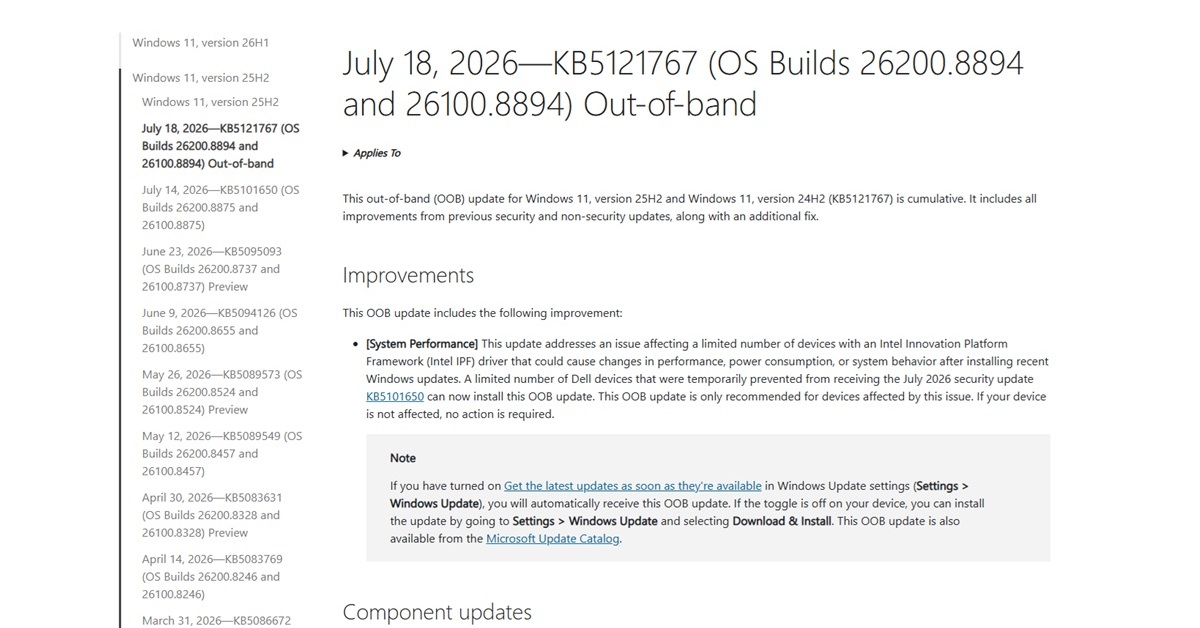
A recent preview update for Windows 11 versions 24H2 and 25H2 has been found to potentially degrade performance on certain Dell Technologies PCs. Microsoft has initiated an out-of-band update to address these issues, which include reduced system performance and increased battery consumption. This situation is significant as it highlights compatibility challenges between specific Intel drivers and Windows 11 components, which can affect user experience. The out-of-band update, released on July 18, aims to resolve these performance concerns for affected devices, ensuring smoother operation for users. Looking ahead, users should monitor their systems for the application of the out-of-band update, which can be obtained through Windows Update. No further timeline was disclosed at the time of publication.
Microsoft Releases Urgent Patch KB5121767 for Dell PCs Running Windows 11
On July 18, 2026, Microsoft released an urgent update, KB5121767, for Windows 11 versions 25H2 and 24H2. This patch addresses performance issues and update restrictions affecting Dell PCs equipped with Intel Innovation Platform Framework (Intel IPF) drivers. The update aims to resolve problems that arose after the recent Windows Update, including performance degradation and changes in power consumption. The significance of this update lies in its ability to lift the temporary block on the distribution of the July 2026 security update, KB5101650, for certain Dell PCs. By applying KB5121767, users can not only fix operational issues but also install previously withheld security updates, ensuring their systems remain secure and functional. Looking ahead, users of affected Dell PCs should ensure that their Windows Update settings are configured to automatically receive updates. If not, they can manually install the patch through various methods, including the Microsoft Update Catalog. No further timeline was disclosed at the time of publication.

Smarter Automation with Industrial PCs and HMIs
In a recent episode of the Automation World podcast, host Chris McNamara engaged with Chris Barber, product marketing manager at Phoenix Contact, to explore the evolving landscape of industrial automation. The discussion, which aired on June 24, 2026, delved into the transition towards web-based Human-Machine Interfaces (HMIs), industrial PCs, edge computing, and software-defined control systems. Barber highlighted Phoenix Contact’s innovative PLCnext approach, which integrates traditional operational technology (OT) programming with IT-friendly tools, aiming to simplify integration, enhance real-time processing, and bridge the gap between IT and OT. Barber provided a practical example from the water-wastewater sector, illustrating how edge PCs can significantly improve local alarm handling and data reliability. The conversation also touched on Phoenix Contact’s strengths in hardware and customer support, as well as emerging trends such as cloud-edge convergence and the development of smarter, connected systems that facilitate easier deployment. This insightful dialogue underscores the ongoing advancements in automation technology and its implications for various industries.
Sponsored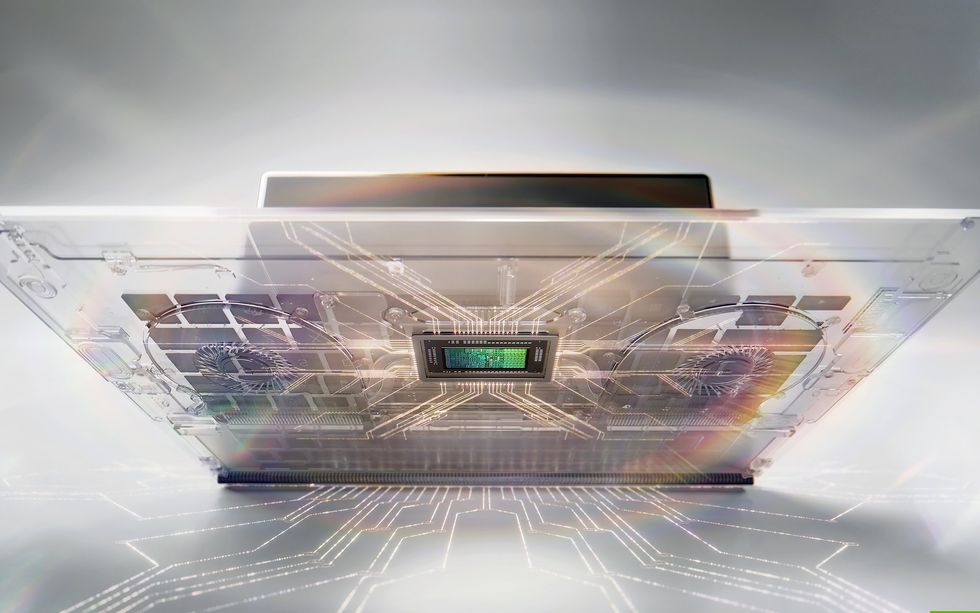
Nvidia’s AI Hardware Comes to Windows in RTX Spark PCs
At Computex 2026 in Taipei, Taiwan, Nvidia unveiled its highly anticipated RTX Spark superchip for Windows PCs, marking a significant development in the tech industry. This announcement, which comes a year later than initially expected, was made in collaboration with Microsoft, which introduced two new devices powered by the RTX Spark: the Surface Laptop Ultra and the Surface RTX Spark Dev Box. Major PC manufacturers, including Asus, Dell, Lenovo, HP, and MSI, also showcased their Windows PCs featuring the new chip. The RTX Spark is based on Nvidia's Blackwell GB10 architecture, boasting 20 Arm CPU cores, 6,144 GPU cores, and support for up to 128 gigabytes of LPDDR5X memory. While the chip is designed to consume less power than its predecessor, the DGX Spark, it is expected to maintain strong performance, particularly in gaming and professional applications. Analysts suggest that Nvidia's established presence in the GPU market, with over 90% share, will enhance the software ecosystem for RTX Spark, setting it apart from previous attempts by Qualcomm and Microsoft with their AI-focused Copilot+ PCs. As Nvidia and Microsoft aim to position RTX Spark as a viable alternative to traditional x86 chips from Intel and AMD, they face the challenge of proving its effectiveness as a general-purpose PC. The launch is seen as a strategic move to leverage AI capabilities while appealing to both creators and gamers, with Nvidia emphasizing the importance of robust software support alongside hardware advancements. RTX Spark desktop workstations are expected to be available in the third quarter of 2026, further expanding the potential applications of this new technology.
Nvidia Pcs Windows Arm Ai-hardware
Microsoft and NVIDIA unveil next-gen PCs capable of 1 petaflop performance.
Microsoft and NVIDIA have unveiled a next-generation PC equipped with the NVIDIA RTX Spark, boasting an impressive AI performance of up to 1 petaflop. This announcement was made recently as part of their ongoing collaboration to enhance computing power. The new system features significant optimizations for Windows, aiming to expand the ecosystem of local AI agents, applications, and games. This development reflects both companies' commitment to advancing AI technology and improving user experiences across various platforms.

Nvidia chases $200B CPU market with AI agent PCs from Microsoft, Dell, and HP
Nvidia is poised to revolutionize the accessibility of artificial intelligence by developing a method to deploy AI agents that are not only user-friendly but also safe and effective. This breakthrough could significantly impact various sectors, making advanced AI technology available to a broader audience. The initiative comes at a time when the demand for AI solutions is surging, with businesses and consumers alike seeking innovative tools to enhance productivity and efficiency. By leveraging its expertise in AI and machine learning, Nvidia aims to simplify the integration of these agents into everyday applications, potentially transforming how individuals and organizations interact with technology. If successful, this advancement could mark a pivotal moment in the evolution of AI, democratizing its benefits and fostering a new wave of innovation across industries.
AI Hardware TC AI PC cpus Microsoft
Enhancing Industrial Automation: Why Compact Mini PCs Are Quietly Becoming the Default Choice for Robotic Controllers
In recent years, the evolution of control cabinets in modern factories has significantly transformed, with a notable increase in the complexity of components housed within them. Engineers are now tasked with integrating advanced technologies such as vision systems, sensors, controllers, and networking equipment into increasingly confined spaces. This shift has prompted the adoption of compact industrial computers, which are designed to efficiently manage the growing demands of industrial automation. As manufacturers seek to optimize their operations and streamline processes, these compact solutions are becoming essential for maintaining productivity and enhancing system capabilities. The trend reflects a broader movement towards more sophisticated and space-efficient technologies in the manufacturing sector, driven by the need for innovation and efficiency in an ever-competitive landscape.
Automation Computing Factories Industry automation hardware automation news
Nvidia jumps into PCs with new Arm-based chip debuting in laptops from Microsoft, Dell, HP
Nvidia CEO Jensen Huang announced the launch of a new Arm-based PC chip, marking the company's entry into the personal computer market. This significant development was revealed during a recent event and will be featured in upcoming laptops from major manufacturers including Dell, Microsoft, HP, and ASUS. The introduction of this chip aims to enhance performance and efficiency in PCs, tapping into the growing demand for advanced computing solutions. By leveraging Arm architecture, Nvidia seeks to provide a competitive alternative in the rapidly evolving technology landscape, appealing to both consumers and businesses looking for innovative computing options.

NVIDIA Levels Up Local AI Agents Across RTX PCs and DGX Spark
Personal agents are gaining significant traction among AI developers, particularly through open-source projects such as OpenClaw and Hermes, which have experienced swift adoption on platforms like GitHub. These innovative tools are designed to tailor interactions to users' specific preferences and workflows, enhancing productivity and efficiency in various tasks. The surge in interest comes as developers seek more personalized solutions to streamline their work processes. As of October 2023, the trend reflects a broader shift towards customization in technology, with these agents offering adaptable features that cater to individual needs.

NVIDIA and Microsoft Reinvent Windows PCs for the Age of Personal AI
NVIDIA has introduced the NVIDIA RTX Spark™, a groundbreaking superchip designed to transform Windows PCs into advanced personal AI agents. This innovation marks a significant shift in computing, evolving traditional computers from mere tools to collaborative teammates. The announcement was made today, highlighting NVIDIA's commitment to enhancing user experience through cutting-edge technology. The RTX Spark™ aims to empower users by integrating AI capabilities directly into their personal computing environments, facilitating more intuitive and efficient interactions. This development is expected to redefine how individuals engage with technology, making it a pivotal moment in the evolution of personal computing.
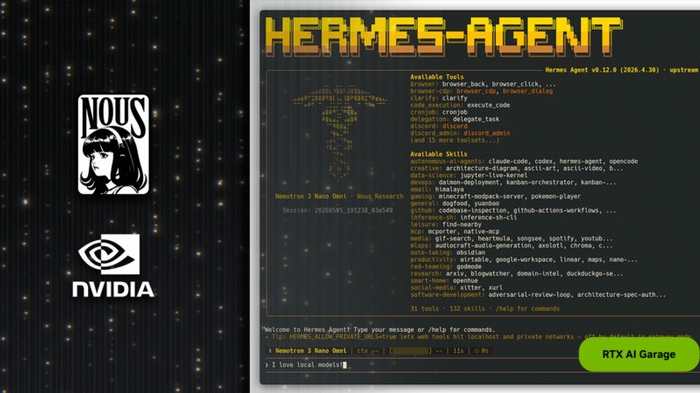
Hermes Unlocks Self-Improving AI Agents, Powered by NVIDIA RTX PCs and DGX Spark
The rise of agentic AI is transforming user productivity, with the community increasingly adopting innovative open-source frameworks. The latest development, Hermes Agent, has garnered significant attention, achieving over 140,000 stars on GitHub within just three months of its release. This rapid growth reflects a strong interest in tools that enhance work efficiency and collaboration, following the successful launch of OpenClaw. As organizations and individuals seek to streamline their workflows, the embrace of such technologies underscores a shift towards more autonomous and intelligent systems in the workplace.
GTC Spotlights NVIDIA RTX PCs and DGX Sparks Running Latest Open Models and AI Agents Locally
The landscape of consumer computing is evolving with the introduction of agent computers, a new category driven by generative AI technologies such as OpenClaw. Traditionally, personal devices like PCs, smartphones, and tablets have dominated the market, but this shift marks a significant transformation in how users interact with technology. The emergence of agent computers aims to enhance user experience by providing more intuitive and responsive interactions. As of October 2023, this innovation is set to redefine the role of computing devices, making them not just tools but intelligent companions that can assist users in various tasks. The development of these devices reflects a growing demand for more sophisticated and personalized technology solutions in everyday life.
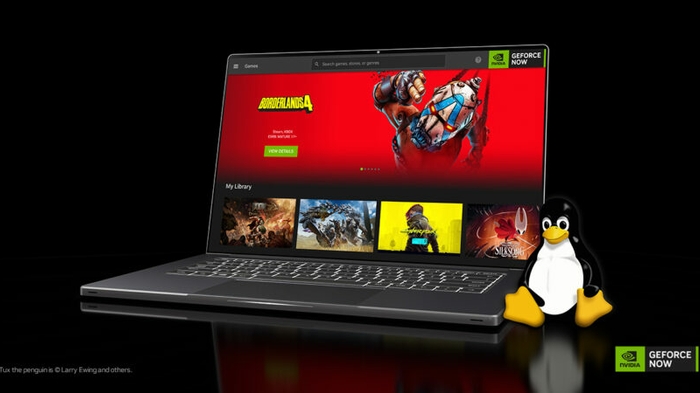
GeForce NOW Brings GeForce RTX Gaming to Linux PCs
NVIDIA has launched a beta version of its native GeForce NOW app for Linux PCs, enabling users to access GeForce RTX cloud gaming capabilities directly from their Linux desktops. This release, aimed at enhancing the gaming experience for Linux users, coincides with the addition of ten new games to the platform, including titles such as The Bard’s Tale IV. The initiative reflects NVIDIA's commitment to expanding its cloud gaming services and catering to a broader audience in the gaming community.
How to Get Started With Visual Generative AI on NVIDIA RTX PCs
AI-powered content generation has become an integral part of daily tools such as Adobe and Canva, as numerous agencies and studios increasingly adopt this technology into their workflows. This shift, which has gained momentum over recent months, allows for the creation of photorealistic images and videos, enhancing the quality and efficiency of digital content production. The integration of AI into these platforms is driven by the need for faster turnaround times and improved creative capabilities, enabling users to produce high-quality visuals with ease. As the technology continues to evolve, it is reshaping the landscape of content creation, making advanced tools accessible to a broader range of users.
Robotics needs a service framework.
RSF defines a common language for robot service capability, lifecycle operations, certification pathways, and service-provider networks.
Join the RobotToday community on LinkedIn
Daily robotics news, in-depth analysis, conference highlights, and discussions with professionals worldwide.