
A single destination for timely, editor-curated robotics news from around the world.
Engineers from MIT and EPFL have created a flapping-wing aerial-aquatic vehicle (FAAV) inspired by puffins. Weighing under 300 grams, the robot features a central fuselage, flexible wings, and a steerable tail. Field tests in Lake Geneva demonstrated its ability to swim and then take flight, showcasing its dual-medium capabilities. This innovation is significant for oceanography and marine biology, as it allows for cost-effective data collection from both air and water. The FAAV can fly at speeds of 6 meters per second and swim at 1 meter per second, providing a versatile tool for researchers. The design mimics the natural mechanics of birds, which maintain similar physical dynamics in both environments by adjusting their speed. Looking ahead, the team aims to refine the robot's ability to breach the water's surface, a challenging transition requiring a precise 70-degree pitch. No further timeline was disclosed at the time of publication, but the potential applications for environmental monitoring and research are substantial.
InterestingEngineering.com By Mrigakshi Dixit Jul 09, 2026 AI and Robotics
University of Florida researchers are advancing underwater communication technology by deploying robots in various aquatic environments, from the shallow shores of Lake Wahlberg to the depths of the ocean. This initiative aims to enhance the robots' ability to communicate effectively in challenging, murky conditions. The project, which began recently, leverages innovative techniques to improve data transmission and interaction among robots operating in diverse water conditions. By refining these communication methods, the researchers hope to facilitate more efficient underwater exploration and data collection, potentially benefiting fields such as marine biology, environmental monitoring, and search and rescue operations.
TechXplore:Robotics May 29, 2026 Robotics
Researchers have developed a PAM-controlled glider system designed to track sperm whales, enhancing the ability to monitor these marine mammals over extended periods. This innovative system employs real-time acoustic processing, allowing for effective data collection and analysis. The study, which showcases the technology's capabilities, aims to improve understanding of sperm whale behavior and distribution in their natural habitats. By utilizing this advanced monitoring technique, scientists hope to contribute valuable insights into the conservation efforts for these endangered species. The research underscores the importance of integrating technology in marine biology to address challenges in wildlife monitoring and protection.
AZOrobotics.com May 06, 2026
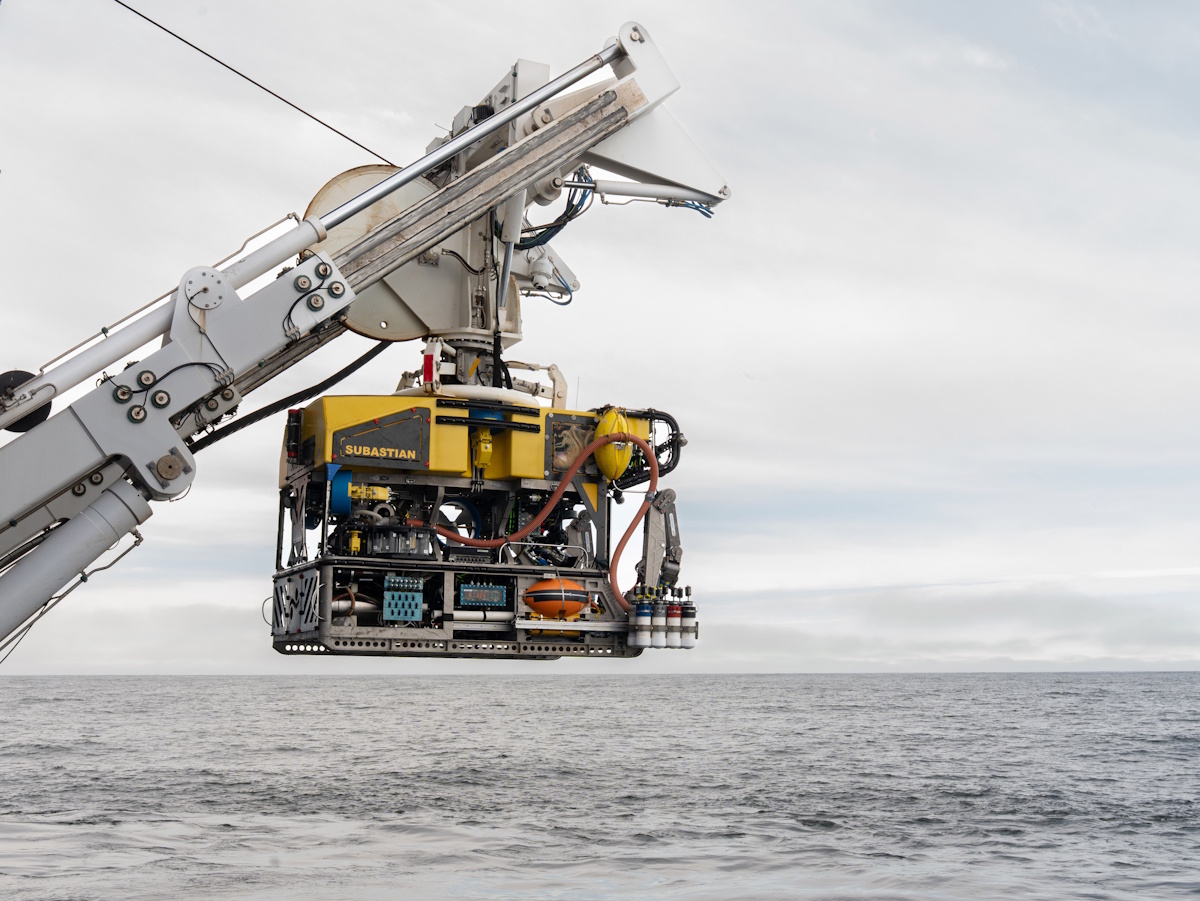
An international team of scientists aboard the Schmidt Ocean Institute’s research vessel Falkor (too) made a groundbreaking discovery by filming a juvenile colossal squid (Mesonychoteuthis hamiltoni) in its natural habitat for the first time. The 30-centimeter squid was recorded at a depth of 600 meters (1,968 feet) using the Institute’s remotely operated vehicle, SuBastian. This significant sighting took place on March 9 during an expedition near the South Sandwich Islands in the South Atlantic Ocean. The event coincides with the 100th anniversary of the colossal squid's identification and formal naming, marking a milestone in marine biology and deep-sea exploration.
ROVplanet.com By ROV Planet Apr 15, 2025
A groundbreaking development in marine ecology has emerged with the introduction of the CUREE underwater robot, which autonomously identifies marine life hotspots in the Caribbean. Utilizing advanced auditory and visual sensors, this innovative technology significantly enhances ecological monitoring and contributes to a deeper understanding of coral reef ecosystems. The findings and capabilities of the CUREE robot were detailed in the latest issue of Science Robotics, showcasing its potential to revolutionize the way researchers study and protect marine environments. By providing precise data on marine biodiversity, the CUREE robot aims to support conservation efforts and promote sustainable practices in the region.
leaderobot.com By Leaderobot May 20, 2026 Underwater Robotics Marine Biology Ecological Monitoring AI Technology
An Argentinian-led scientific expedition aboard the Schmidt Ocean Institute’s R/V Falkor (too) has successfully deployed advanced technologies to gather comprehensive data on the Malvinas ocean current and its interaction with submarine canyons. This initiative aims to enhance understanding of the region's plankton blooms, which are crucial for sustaining Argentina’s rich marine biodiversity and fishing industry. Notably, these extensive plankton blooms are significant enough to be detected from space. The expedition underscores the importance of marine research in preserving the ecological balance and supporting local economies reliant on fishing.
ROVplanet.com By ROV Planet Nov 20, 2025 schmidt ocean institute r/v falkor (too) ocean science servicio de hidrografía naval conicetRSF defines a common language for robot service capability, lifecycle operations, certification pathways, and service-provider networks.







