Industry Briefing
A single destination for timely, editor-curated robotics news from around the world.

U.S. Army Awards $464.8 Million Contract for 30-kW LOCUST Laser Systems
The U.S. Army has awarded AeroVironment a $464.8 million contract for the production of LOCUST laser systems under the Enduring-High Energy Laser (E-HEL) program. This contract marks a significant milestone as it is the first production contract for a directed-energy weapon in U.S. history, indicating a shift from experimental systems to operational capabilities. The LOCUST X3, a 30-kilowatt laser weapon, is designed to counter Group 1–3 unmanned aircraft systems and can be integrated onto various platforms, including the Army's Joint Light Tactical Vehicle. The contract aims to provide a scalable and cost-effective air defense solution against drones, which have become increasingly prevalent on modern battlefields. Looking ahead, AeroVironment is expanding its production capacity with a $30 million investment in its Albuquerque facility to support the ramp-up of LOCUST systems. The E-HEL program is expected to enhance the Army's defenses against drone threats, marking a significant step towards the routine use of laser weapons in military operations. No further timeline was disclosed at the time of publication.
Military
U.S. Army Receives Advanced 20kW Laser Weapon Systems for Counter-Drone Operations
The U.S. Army has received two advanced high energy laser systems developed by AeroVironment, known as Laser Weapon Systems (LWS). These systems feature the 20kW-class LOCUST LWS integrated onto the General Motors Defense Infantry Squad Vehicle (ISV) platform, enhancing mobile counter-unmanned aircraft capabilities. This delivery is part of the Army Multi-Purpose High Energy Laser (AMP-HEL) prototyping effort, marking a significant advancement in directed energy capabilities. Mary Clum from AeroVironment emphasized the importance of these systems in providing reliable and operationally ready solutions for counter-unmanned aircraft operations, supporting the Army's modernization goals. Looking ahead, AeroVironment plans to deliver a second increment of the AMP-HEL program next month, which will include additional vehicles equipped with the LOCUST LWS. This ongoing development reflects the Army's commitment to rapidly fielding directed energy solutions to address evolving threats in dynamic environments.
Military
Boeing Develops Ultra Low-Cost Seeker Technology for Missile Systems
Boeing has announced the development of an Ultra Low-Cost Seeker (ULCS), a new radar seeker designed to enhance missile production efficiency. The ULCS has successfully demonstrated its ability to endure the harsh conditions of rocket flight while effectively detecting and tracking targets. Although a specific timeline for service entry has not been disclosed, Boeing plans multiple flight tests next year to align with operational requirements. This advancement is significant as it addresses the Pentagon's demand for increased weapon production at lower costs, particularly in light of ongoing military engagements that deplete existing munitions. The ULCS aims to support a variety of applications, including air and missile defense, direct attacks, and cruise missiles, thereby enhancing the affordability and scalability of military operations. Looking ahead, Boeing's rapid testing of the ULCS indicates a potential shift in how seeker affordability is approached across various programs. No further timeline was disclosed at the time of publication.
Air Warfare Land Warfare air defense Air Force Army Boeing
As AI Reshapes Global Energy Systems, Melbourne Leads Through Engineering Collaboration
As artificial intelligence (AI) rapidly expands, it is driving a significant increase in global electricity demand, presenting urgent challenges for energy systems. Melbourne, Australia, is positioning itself as a leader in addressing these issues, with a focus on the infrastructure necessary to support AI's growth. By 2035, data centers in Australia are expected to consume up to 11 percent of the nation's electricity, raising concerns about generation and system reliability. The University of Melbourne is at the forefront of this initiative, with interdisciplinary research aimed at developing energy systems that can meet the demands of AI. The Melbourne Energy Institute is exploring how various energy technologies interact, while facilities like the Smart Grid Lab allow for real-time simulations of power systems. This integrated approach is essential for designing resilient and efficient energy systems that can adapt to new patterns of demand. Victoria's advanced energy ecosystem, which includes renewable generation and battery storage, is crucial for balancing digital growth with sustainability. The collaboration between researchers, industry, and policymakers is vital for creating future energy systems that are affordable and resilient. Looking ahead, Melbourne will host the IEEE PES Generation Transmission and Distribution Asia 2027 Conference, bringing together global experts to address the evolving challenges in power systems. This event underscores Melbourne's commitment to fostering international collaboration and innovation in energy solutions, reinforcing its role as a key player in the global energy transition.
Artificial-intelligence Australia Energy-systems University-of-melbourne Ai-data-centers Power-grid
UMass Amherst Researchers Developing AI Architecture That Uses a Fraction of the Energy Required by Today’s AI Systems
Researchers at the University of Massachusetts Amherst have unveiled a groundbreaking artificial intelligence architecture aimed at significantly lowering the energy consumption of advanced AI systems while maintaining their learning capabilities. This innovative approach, inspired by brain function, was developed with funding from the U.S. National Science Foundation and the Air Force Office of Scientific Research. By mimicking the efficiency of the human brain, the new architecture seeks to address the growing energy demands associated with AI technologies, which have raised concerns regarding sustainability and environmental impact. The research, which highlights the potential for more eco-friendly AI solutions, could pave the way for advancements in various fields reliant on artificial intelligence, ultimately promoting a more sustainable future for technology.
AI AI Research & Advances Robotics architecture energy consumption Research
BM3D‐Based Optical Flow Tracking for Enhanced Visual Simultaneous Localization and Mapping Systems in Mobile Robotics
The Journal of Field Robotics has recently published an early view article highlighting advancements in robotic technology. This publication, released in October 2023, showcases innovative research that aims to enhance the capabilities of field robots in various applications, including agriculture, search and rescue, and environmental monitoring. The research is driven by the growing need for automation and efficiency in these sectors, as well as the increasing complexity of tasks that robots are expected to perform. The findings suggest that integrating advanced algorithms and machine learning techniques can significantly improve the performance and adaptability of robotic systems in real-world scenarios. This research not only contributes to the academic field but also has practical implications for industries looking to leverage robotics for improved operational efficiency and safety.
RESEARCH ARTICLE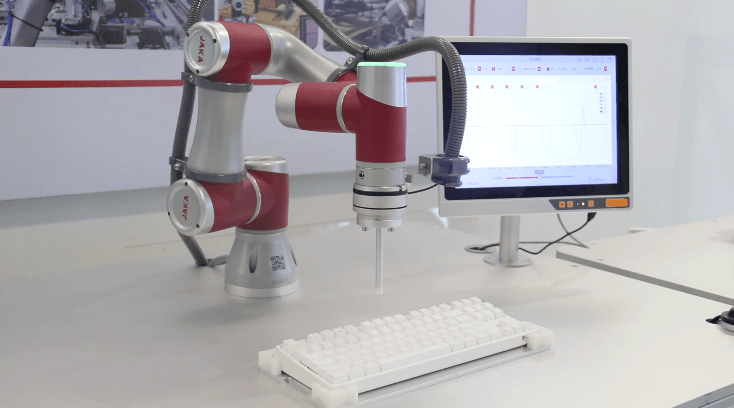
The Importance of Low Latency in Controllable Robot Communication Systems
In the evolving landscape of modern manufacturing, JAKA emphasizes the critical role of low-latency communication in enhancing the reliability of controllable robots. As production lines demand greater flexibility and responsiveness, the speed at which robots receive and execute commands directly influences their motion accuracy, coordination, and safety. This focus on efficient communication is particularly vital as collaborative robots increasingly work alongside human operators, necessitating predictable response times for seamless interaction. JAKA's approach integrates communication architecture into the core design of their systems, ensuring that control signals and sensor feedback travel with minimal delay. This real-time responsiveness is essential for adaptive assembly tasks, where precise timing is crucial to maintain smooth operations and prevent misalignment. The company’s JAKA Ai3 system exemplifies this philosophy, featuring lightweight design and capabilities for quick task transitions, which are essential in small-batch and multi-variety production environments. By prioritizing low latency, JAKA aims to support flexible workflows and enhance productivity, allowing robots to adapt swiftly to changing conditions without extensive recalibration. The strategic emphasis on communication speed not only aligns technical performance with real-world manufacturing demands but also positions JAKA's controllable robots as effective solutions for diverse applications in compact and dynamic workspaces. As the industry continues to evolve, JAKA remains committed to developing systems that leverage efficient communication to ensure reliable performance in modern production settings.
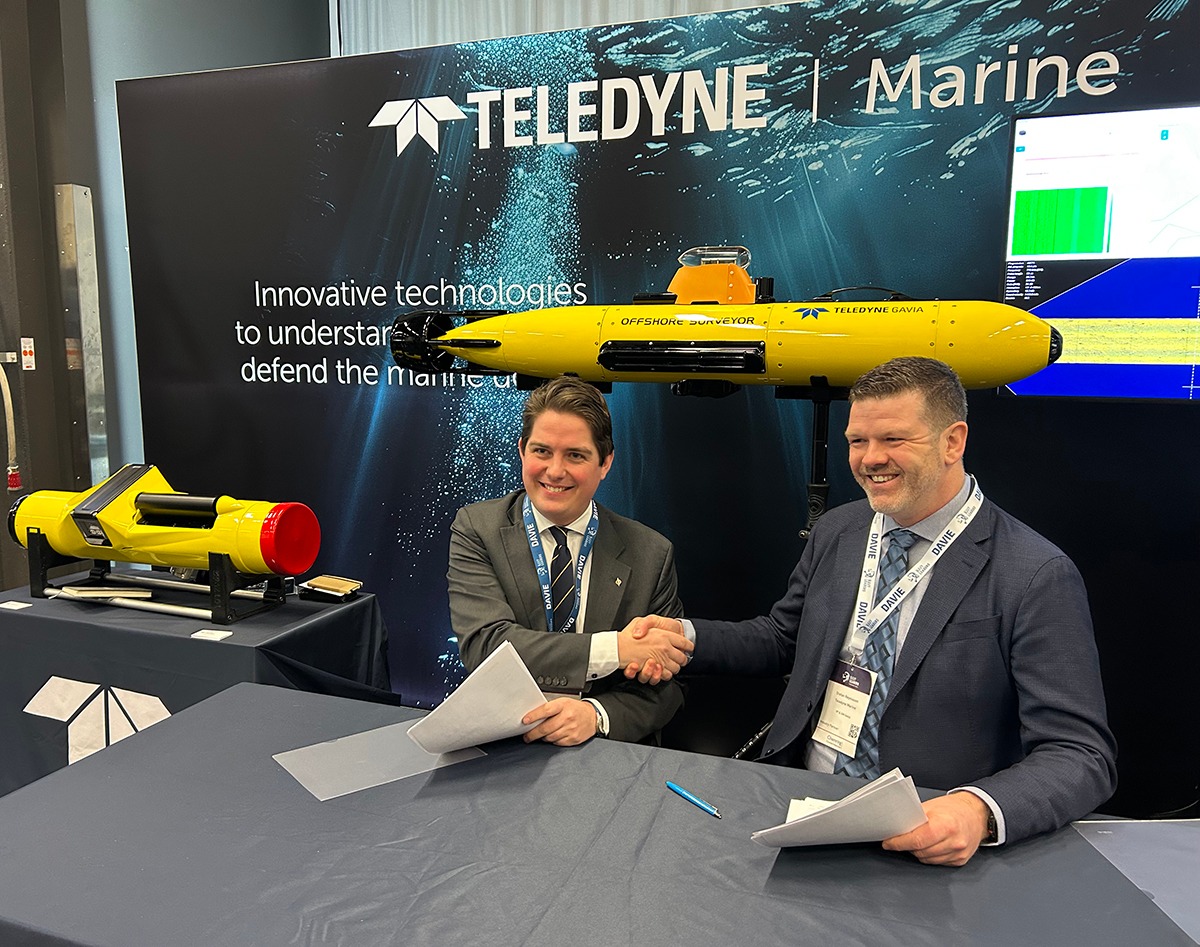
Swedish Defence Materiel Administration (FMV) Places Follow-On Order for Additional GAVIA AUV Systems
Teledyne Gavia, a prominent provider of modular autonomous underwater vehicle systems and a division of Teledyne Marine, has received a follow-on order from the Swedish Defence Materiel Administration (FMV) for additional GAVIA Autonomous Underwater Vehicles and associated payload modules. This latest order follows the successful delivery of initial GAVIA systems to the Swedish Armed Forces, which took place in 2025. The continued partnership underscores the Swedish military's commitment to enhancing its underwater capabilities through advanced technology.
swedish defence materiel administration (fmv) gavia auv systems teledyne gavia
Blowing Off Steam: How Power-Flexible AI Factories Can Stabilize the Global Energy Grid
During the half-time break of the UEFA EURO 2020 round of 16 match between England and Germany, a significant number of viewers in the U.K. paused their viewing to prepare tea, resulting in a notable spike in electricity demand. National Grid reported that this collective action led to an increase of 2,000 megawatts in electricity usage as millions turned on their kettles simultaneously. This phenomenon highlights the cultural significance of tea in British society, particularly during major sporting events. The surge in demand was swiftly managed by the National Grid, showcasing their ability to adapt to sudden changes in energy consumption patterns.
Robotics needs a service framework.
RSF defines a common language for robot service capability, lifecycle operations, certification pathways, and service-provider networks.
Join the RobotToday community on LinkedIn
Daily robotics news, in-depth analysis, conference highlights, and discussions with professionals worldwide.