Industry Briefing
A single destination for timely, editor-curated robotics news from around the world.
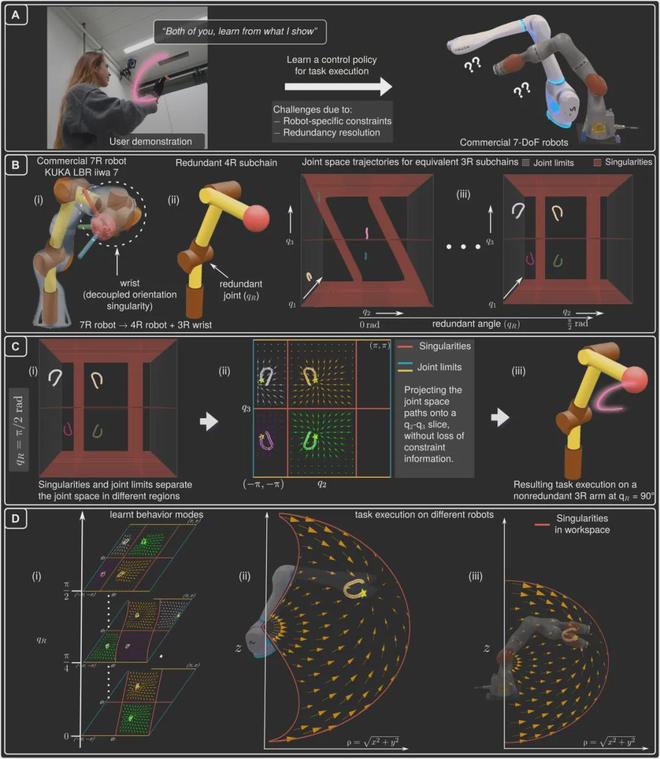
Why Switching Robots Requires Relearning Skills: A Breakthrough in Kinematic Intelligence
A recent study published in 'Science Robotics' has made significant strides in the field of robotics by tackling the challenge of skill transfer among different robotic systems. Researchers have introduced a concept known as 'kinematic intelligence,' which allows robots to comprehend their own physical structures. This advancement enables skills acquired by one robot to be effectively applied to others without the necessity for retraining. This breakthrough could revolutionize the way robots are programmed and utilized across various applications, enhancing their adaptability and efficiency in diverse environments.
Kinematic Intelligence Robot Skill Transfer Machine Learning Robotics Engineering
Kinematic intelligence lets three different robots learn the same task safely
In modern manufacturing settings, the process of upgrading a fleet of robots frequently requires a complete overhaul, involving both hardware replacement and extensive reprogramming of tasks. This challenge arises because even robots designed for similar functions can have varying joint configurations and movement constraints, rendering programmed tasks incompatible across different models. The inability to transfer skills directly between robots not only complicates upgrades but also raises sustainability and cost-efficiency concerns. Experts emphasize that developing systems that allow for seamless skill transfer could significantly enhance the operational efficiency of robotic fleets, ultimately benefiting manufacturers by reducing downtime and minimizing the need for extensive retraining.
Robotics
A Cascaded Strategy With Embodied Artificial Intelligence: Forward Kinematics Solutions for CCRobot‐S
A recent study published in the Journal of Field Robotics highlights advancements in robotic technology aimed at enhancing agricultural efficiency. Conducted by a team of researchers from various universities, the study was released in May 2026 and focuses on the integration of autonomous robots in farming practices. The research aims to address the growing challenges faced by the agricultural sector, such as labor shortages and the need for sustainable farming methods. By employing sophisticated algorithms and machine learning techniques, the robots are designed to perform tasks such as planting, monitoring crop health, and harvesting with minimal human intervention. The study was conducted in various agricultural settings, showcasing the robots' adaptability to different crops and environmental conditions. The findings suggest that these robotic systems can significantly increase productivity while reducing the environmental impact of traditional farming practices. This innovative approach not only promises to alleviate labor pressures but also aims to contribute to food security by optimizing resource use. As the agricultural industry continues to evolve, the integration of robotics may play a crucial role in shaping the future of food production.
RESEARCH ARTICLE
Chassis Pose Kinematic Model and Control for Terrestrial Mobile Robots With Active Flippers
The Journal of Field Robotics has published an EarlyView article highlighting recent advancements in robotic technology. Researchers from various institutions have collaborated to explore innovative applications of robotics in fields such as agriculture, search and rescue, and environmental monitoring. This study, released in October 2023, emphasizes the growing importance of autonomous systems in enhancing efficiency and safety across these sectors. The research team conducted extensive field tests to demonstrate how robots can perform complex tasks, such as crop monitoring and disaster response, with minimal human intervention. By integrating artificial intelligence and machine learning, the robots are designed to adapt to dynamic environments, showcasing their potential to revolutionize traditional practices. The motivation behind this research stems from the increasing demand for automation in response to labor shortages and the need for more effective solutions to global challenges. The findings underscore the necessity for continued investment in robotic technology to address pressing issues such as food security and disaster management. As the field of robotics continues to evolve, this publication serves as a critical resource for professionals and researchers aiming to leverage these advancements for practical applications. The collaborative effort reflects a commitment to pushing the boundaries of what is possible in robotics, paving the way for future innovations that could significantly impact various industries.
RESEARCH ARTICLE
AGIBOT Introduces ACoT-VLA, Selected for CVPR 2026 and Open-Sourced as AGIBOT WORLD CHALLENGE Baseline
AGIBOT's ACoT-VLA (Action Chain-of-Thought) architecture has been chosen as the official baseline for the AGIBOT WORLD CHALLENGE, set to take place during the Computer Vision and Pattern Recognition (CVPR) conference in 2026. This selection represents a significant leap forward in the field of embodied intelligence, as the ACoT-VLA model effectively bridges the semantic-kinematic gap present in current Vision-Language Alignment (VLA) systems. By making this innovative architecture open-source, AGIBOT aims to foster collaboration and advancement within the research community, encouraging further exploration and development in embodied intelligence technologies.
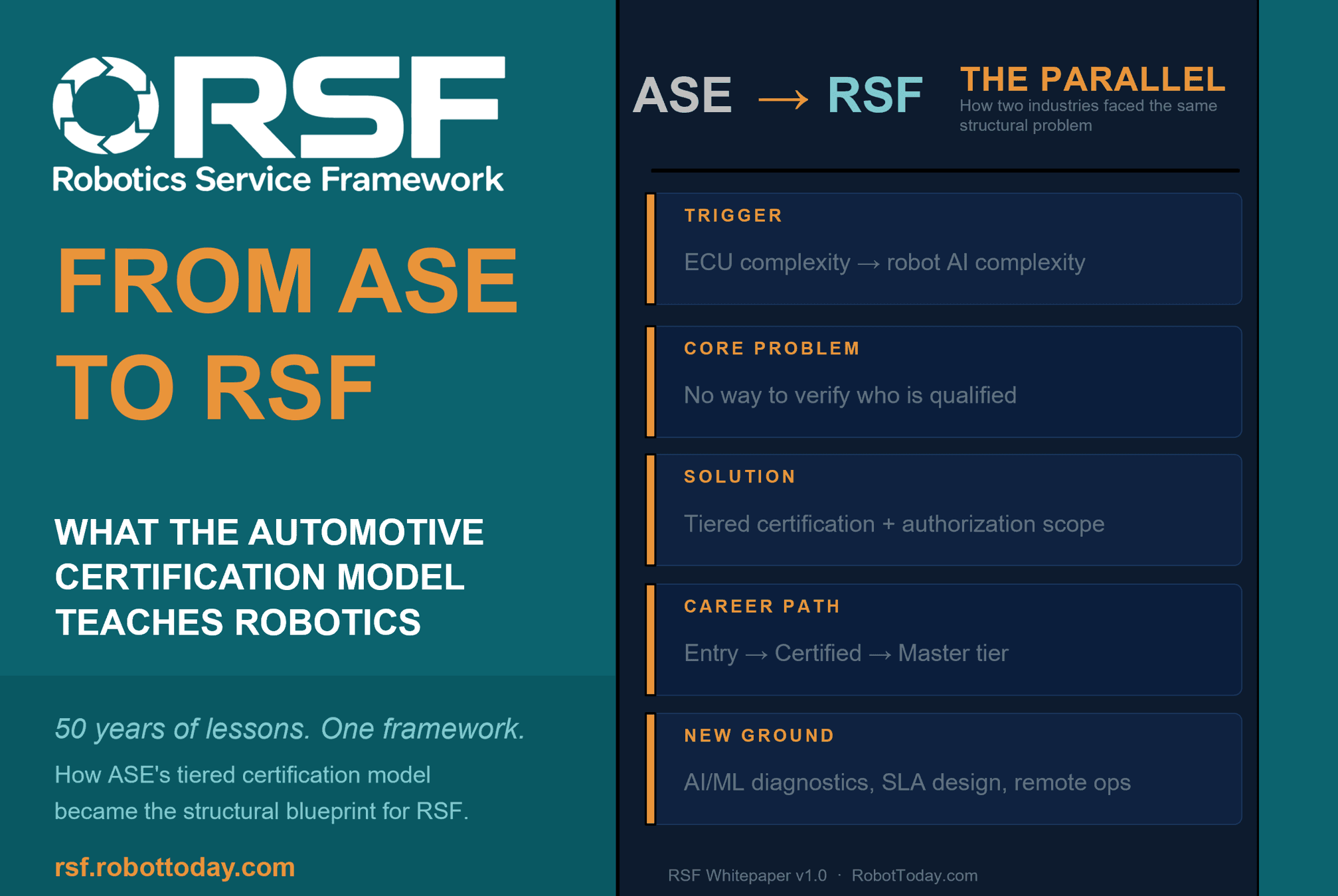
Embodied Intelligence Robotics Computer Vision AI Open SourceRobotics needs a service framework.
RSF defines a common language for robot service capability, lifecycle operations, certification pathways, and service-provider networks.