Industry Briefing

A single destination for timely, editor-curated robotics news from around the world.

Former DingTalk executive criticizes Alibaba culture in viral memo, Jack Ma responds

Former DingTalk executive criticizes Alibaba culture in viral memo, Jack Ma responds

A former senior product executive at DingTalk, Alibaba's enterprise messaging division, has raised significant concerns about the company's direction in a detailed internal letter following their departure. The letter criticizes the erosion of Alibaba's corporate culture, its unsuccessful mergers and acquisitions strategy, and a perceived stagnation in innovation. This candid assessment has garnered attention, prompting a rare public response from Alibaba founder Jack Ma. The memo has sparked widespread reflection both within the company and among the public, highlighting the challenges Alibaba faces in maintaining its competitive edge in the tech industry.

News Alibaba E-commerce and New Retail Highlight Jack Ma
Lei Jun and Jack Ma Join Forces: Qianxun Intelligent Secures 1 Billion Yuan in Financing, Totaling 3 Billion Yuan!

Lei Jun and Jack Ma Join Forces: Qianxun Intelligent Secures 1 Billion Yuan in Financing, Totaling 3 Billion Yuan!

On April 7, Qianxun Intelligent, a prominent player in the embodied intelligence sector, announced a major financing round totaling 1 billion yuan. This funding was spearheaded by Shunwei Capital and Yunfeng Fund, contributing to the company’s overall financing, which now stands at 3 billion yuan. The successful fundraising effort has solidified Qianxun Intelligent's status as a leading unicorn in its industry, with backing from renowned figures such as Lei Jun and Jack Ma. This investment marks a significant milestone for the company, reflecting growing confidence in its innovative technologies and market potential.

Embodied Intelligence Robotics AI Technology Investment
Another $1 Billion in Funding: Why Qianxun Intelligent Leads the Way in China's Embodied Intelligence with Support from Lei Jun and Jack Ma

Another $1 Billion in Funding: Why Qianxun Intelligent Leads the Way in China's Embodied Intelligence with Support from Lei Jun and Jack Ma

On April 7, Qianxun Intelligent revealed a substantial funding round of $1 billion, spearheaded by Shunwei Capital and Yunfeng Capital. This latest investment brings the company's total fundraising to an impressive $3 billion within a span of just over two months. Qianxun's pioneering work in embodied intelligence, coupled with strategic partnerships with industry leaders such as Lei Jun and Jack Ma, solidifies its status as a key player in the technology sector. The influx of capital is expected to bolster the company's innovative initiatives and enhance its competitive edge in the rapidly evolving market.

Embodied Intelligence Robotics AI Funding Technology Innovation
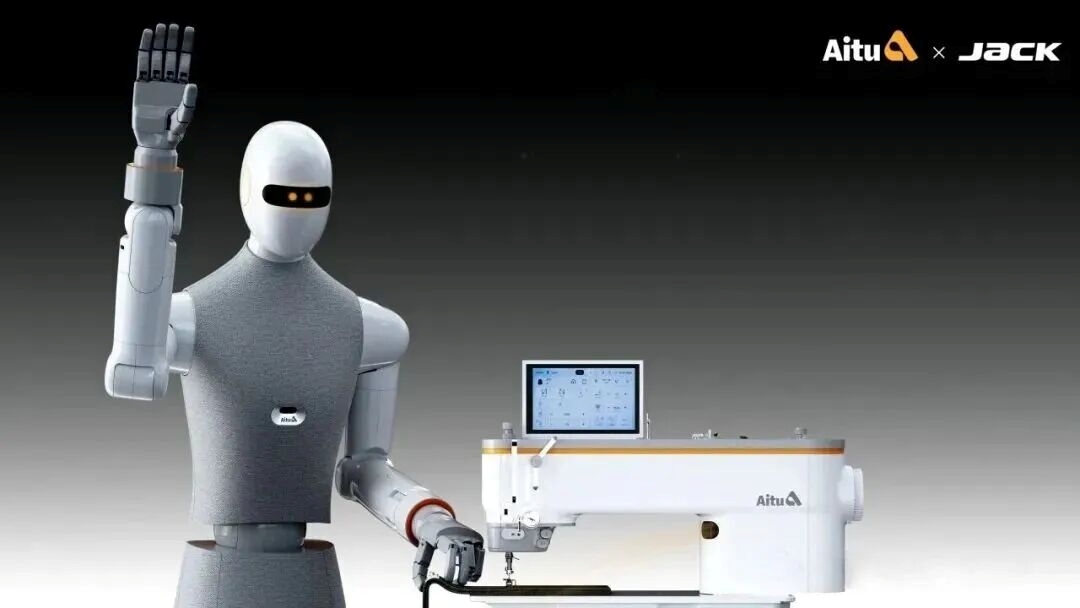
Jack Technology's Ambition in Humanoid Robots Unveiled with Strategic Partnerships

Jack Technology's Ambition in Humanoid Robots Unveiled with Strategic Partnerships

Jack Technology, a prominent player in the sewing equipment sector, has announced the formation of strategic alliances with the Zhejiang Humanoid Robot Innovation Center and Zhiyuan Robotics. This collaboration aims to create joint ventures focused on integrating artificial intelligence and humanoid robotics into the garment manufacturing industry. The initiative is designed to tackle ongoing labor shortages and improve production efficiency, reflecting Jack Technology's commitment to innovation and modernization in manufacturing processes. The partnerships signal a significant shift in how the industry may operate in the future, leveraging advanced technology to meet evolving market demands.

Humanoid Robots AI Garment Manufacturing Automation
Bill Gurley, Jack Altman back startup Pursuit, which helps companies sell to government

Bill Gurley, Jack Altman back startup Pursuit, which helps companies sell to government

Pursuit has successfully secured $22 million in a Series A funding round, which was announced on Wednesday. The investment was led by Mike Rosengarten, co-founder of OpenGov, and included participation from several prominent venture capital firms. This funding is aimed at accelerating Pursuit's growth and expanding its innovative solutions within its industry. The financial backing reflects strong confidence from investors in Pursuit's potential and strategic direction.

Startups Venture Bill Gurley government Jack Altman Pursuit
Japan Pioneered Humanoid Robots—Can It Now Catch China?

Japan Pioneered Humanoid Robots—Can It Now Catch China?

“In the future, the relationship between humans and robots will deepen, and the distinction between them will probably disappear.” This prediction, from one of the attendees at the recent Humanoids Summit in Tokyo, might have been unremarkable had it not come directly from an android that was first introduced to the world 20 years ago. Geminoid HI-6 is the sixth-generation of a robot originally designed in 2006. The mechanical twin of Osaka University professor Hiroshi Ishiguro, Geminoid HI-6 is now equipped with a large language model trained on Ishiguro’s own writings and interviews. It has advanced conversational skills and can even have a chat with its creator, an eerie spectacle. But at the Humanoids Summit, Geminoid was one of the few humanoid robots from Japan, the country that pioneered the form factor.While the event in Tokyo only had about 40 robots on display, Chinese systems outnumbered Japanese by roughly three to one. Some Japanese robotics firms were even using Chinese robots in their own technology demonstrations, something that would have been unthinkable in the recent past—one Japanese engineer described the situation as “sad.” The conference was a stark reminder of how Japan has ceded its early lead in humanoid robot development to overseas competitors, and the challenge it now faces to secure a place in an ecosystem increasingly dominated by general-purpose robots powered by AI. Twenty-five years ago, Japan was turning out groundbreaking humanoids that were showstopping in their abilities, but they were not commercialized as practical machines in any meaningful way. Heavily influenced by science fiction and lacking practical applications, they were mostly expensive technology demonstrations that were eventually mothballed. What Japan retains, however, is robotics design and know-how, which it must leverage to be a key player in the rapidly evolving humanoid ecosystem. Learning to Walk—Then Standing StillTo anyone who has seen recent videos of Chinese humanoids doing kung-fu and synchronized acrobatics, as well as half-marathon races, China’s remarkable progress in the field is nothing new. At the Humanoids Summit, Toyota showed a video of its latest basketball-playing robot, and Honda exhibited its latest robot hand, but the full-scale humanoids on the floor were mostly Chinese–the kid-size K1 machines from Booster Robotics of Beijing were dancing to Michael Jackson tunes. The full-scale G1 humanoid from Unitree Robotics of Hangzhou was also doing demos. “You cannot sell these bipedal systems in Japan for safety and compliance reasons,” says Shuichi Nagao, a frequent visitor to China as CTO of Omakase Robotics, a division of Zeals, a Japanese humanoid robot developer. Omakase was exhibiting a G1 modified with an external PC controller, a dextrous hand, a suction-cup manipulator and a sensor “hat” with an extra speaker, mic and camera. “In China, the government is pushing humanoid development. They didn’t have an industry 20 years ago. The people pushing it are young, in their 20s and 30s. It’s a really different mentality out there,” says Nagao. “Big players in Japan are still looking for use cases for humanoids. In China, they’re already doing mass production and reducing the cost, so other countries can’t compete with them anymore.”Another Japanese company showing off G1 bots was summit sponsor GMO AI & Robotics, a subsidiary of Japanese internet company GMO. It’s using the robots in partnership with Japan Airlines to load and unload cargo containers at Tokyo’s Haneda airport. The cargo project is a trial—like many other humanoid experiments—but the fact that Chinese machines have penetrated so far into Japan’s ecosystem upends a long history. In 1973, scientists at Waseda University in Tokyo built WABOT-1, considered the first full-scale humanoid robot and capable of slow bipedal locomotion, grasping objects and simple communication. It inspired Honda’s groundbreaking Asimo humanoid, but it was never commercialized. Asimo was eventually retired in 2022, the year ChatGPT was released. Two years later, Unitree’s G1 went on sale for US $16,000. China’s High Torque Technology Co. showed off its Mini Pi biped, customized with an anime-inspired head, at Humanoids Summit in Tokyo. The regular version is priced at $3,500. Tim HornyakSupply and DemandJapan’s development of humanoids happened before practical applications or widespread demand were in place, but bad timing is only part of the story—Japan also has a history of developing technologies that might appeal to domestic consumers but not necessarily those overseas. For example, decades after they first appeared, its highly engineered, multifunction toilets have only recently found a following abroad. Japan’s humanoid prowess was partly built on the back of its legendary industrial automation, yet even that stronghold has eroded. Ani Kelkar, a partner from McKinsey & Company in Boston who produces analytical reports about the robotics industry, told the summit audience that while Japan occupied the top spot in the world in manufacturing robot density (the number of multipurpose industrial robots in operation per 10,000 employees) from at least 1994 to 2009, it then slipped to second in 2014, third in 2019 and fifth in 2024. In that year, South Korea was at the top of the leaderboard with a robot density of 1,220 compared to Japan’s 446. The International Federation of Robotics estimates China now has the most operational industrial robots in the world, with around 2 million total units, approximately 4.5 times more than Japan. “The annual installation numbers are impressive too: 54 percent of all robots installed worldwide in 2024 were deployed in China,” the IFR said in a release in April 2026. “I think the loss of Japanese leadership is more to do with the rise of China as a manufacturing powerhouse including for sectors that Japan had high export levels,” Kelkar said in an email interview. “The recovery has not yet happened as Japan ‘missed’ the rapid acceleration in AI for robotics and is now playing catchup.”How Japan Can Adapt Kelkar believes Japan has a US $100 billion opportunity in general-purpose robotics, which are machines that can perform a wide variety of tasks, and it cannot rely on the slower-growing industrial robot market, which is centered on factory machines that do one simple and predictable task like welding car parts. He points to a McKinsey white paper suggesting that while Japan has much of the hardware and technology experience needed to support general purpose robot development, it must change its strategy to capture more share in AI, software, data collection and robotics platforms.Tetsuya Ogata is a professor of engineering and director of the Institute for AI and Robotics at Waseda University, the birthplace of humanoids in Japan. He briefed the summit on how a nonprofit he chairs, the AI Robot Association (AIRoA), is working with Toyota and other members to develop foundational technologies for collaborative use. For instance, AIRoA has collected some 80,000 hours of data on remote operation of mobile manipulators, and Ogata believes it’s the largest dataset of its kind. Using the data, it built and verified Vision-Language-Action (VLA) models, and it has also started data collection for dual-arm mobile manipulation. In an interview, Ogata acknowledged Japan’s struggle to find its place in the changing landscape. “The world of AI is inherently a game of scale,” says Ogata. “Therefore, Japan’s absolute prerequisite is to secure a competitive baseline of scale—in data, computing resources, and talent. Beyond that, what I consider most critical is a mindset shift: rather than trying to hoard scale within a single nation or company, we must grow stronger by collaborating with a diverse ecosystem of domestic and international players.” Specifically, this means creating a ‘collaborative domain’ to address data—the single biggest bottleneck—through industry-wide cooperation rather than data-siloing. By collectively nurturing a pre-competitive, shared data infrastructure and foundation model, individual companies can then compete on top of it with their own applications. “By offering this open ‘data ecosystem’ to the world, we can engage global players and establish a ‘third pole’ alongside the US and China,” says Ogata. “I believe this is how Japan can reclaim its global presence.”In 1999, Japan introduced the world’s first mobile internet services platform. But being first didn’t turn Japan into a smartphone manufacturing or design center—it’s now merely a supplier of parts to other countries who are leading the smartphone industry. If Japan can avoid a repeat of that experience and successfully deregulate, diversity, and commercialize its original humanoid dreams, it stands a better chance of influencing the direction of the industry and reaping billions in value. As automobiles and electronics were pillars of Japan’s industrial strategy in the last century, Japan could make humanoid robots one of its key value generators in the 21st century, an approach that would not only deliver economic benefits but give Japan greater clout in how the industry will evolve. Just like Japanese cars, electronics, and even toilets, Japanese humanoids could stand for craftsmanship and reliability. It’s a legacy that Japan can’t afford to give up.

Japan Robotics Humanoids Humanoid-robots
Danish robotics startup enters the industrial truck market already crowned a winner

Danish robotics startup enters the industrial truck market already crowned a winner

The Mobile Robot Company has been awarded the prestigious IFOY Industrial Truck of the Year Award for 2026, recognizing its innovative self-driving pallet jack. This advanced technology is designed to enhance operational efficiency in warehouses by automating repetitive transport tasks while allowing operators to maintain control over the process. The award highlights the company's commitment to improving logistics and warehouse management through automation. The recognition comes as the industry increasingly seeks solutions that balance automation with human oversight, addressing the growing demand for efficiency in supply chain operations.

Unitree Launches UniStore — the World's First Humanoid Robot App Store, 24 Motion Apps Available at Launch

Unitree Launches UniStore — the World's First Humanoid Robot App Store, 24 Motion Apps Available at Launch

Unitree Robotics has launched UniStore, a new app store designed for its range of robots, including the G1, H1, B2, and Go2 models. This innovative platform enables users to easily download and install intricate motion packages, featuring popular routines such as Jackson dance moves, Leeter Kune Do, and Charleston, directly from a mobile application. The launch of UniStore marks a significant advancement in enhancing the capabilities of robotic systems, allowing for greater customization and user engagement. This initiative reflects Unitree's commitment to making robotics more accessible and interactive for consumers, as it simplifies the process of programming complex movements into their robots.

Robotics
The Complicated Dance: Security Anxieties Meet the Chinese Humanoid Influx

The Complicated Dance: Security Anxieties Meet the Chinese Humanoid Influx

As affordable Chinese robotics, exemplified by the Unitree G1, increasingly enters American laboratories, security experts and domestic manufacturers are raising alarms about potential data privacy threats and the risk of remote hijacking. This influx of low-cost technology has sparked concerns over a "Trojan Horse" scenario, where seemingly benign devices could be exploited for malicious purposes. The situation has intensified as these products gain popularity, prompting calls for more stringent regulations and oversight to safeguard sensitive information and ensure the integrity of technological infrastructure. Experts emphasize the need for vigilance and proactive measures to mitigate risks associated with the integration of foreign hardware into critical systems.

Unitree Robotics US China Agility Robotics
Beyond the Backflip: Zachary Jackowski on Why Generalization is the Final Frontier for Atlas

Beyond the Backflip: Zachary Jackowski on Why Generalization is the Final Frontier for Atlas

In a recent interview, Zachary Jackowski, the lead engineer for Boston Dynamics' Atlas robot, announced the retirement of the research-grade R1 model. He explained that the company is shifting to a unified "Thor" compute module to streamline operations. Jackowski emphasized that despite advancements in technology, the Atlas robot remains too advanced for typical household use, indicating that its capabilities exceed what is necessary for everyday applications. This transition reflects Boston Dynamics' ongoing commitment to innovation while addressing practical considerations for consumer robotics.

hyundai US Atlas Boston Dynamics
Borg Robotics Reveals Modular Borg 01 Humanoid Focused on Industrial Work

Borg Robotics Reveals Modular Borg 01 Humanoid Focused on Industrial Work

Borg Robotics, a company based in Detroit, has introduced the Borg 01, a cutting-edge modular humanoid robot engineered for industrial applications. This innovative robot is capable of autonomously transitioning between wheeled and bipedal movement, allowing it to adapt to various tasks. Additionally, the Borg 01 features interchangeable end effectors, enhancing its versatility in the workplace. The robot is designed to integrate seamlessly into a broader ecosystem that includes pallet jacks and forklifts, aiming to improve operational efficiency in industrial settings. The company plans to launch the Borg 01 in the second quarter of 2025, responding to the growing demand for automation solutions in the industry.

borg-01 Borg Robotics
From $4 To $500? Eric Jackson's Bold Thesis Pitches Opendoor As Real Estate's Tesla Moment

From $4 To $500? Eric Jackson's Bold Thesis Pitches Opendoor As Real Estate's Tesla Moment

Eric Jackson, founder of EMJ Capital, has proposed a bold investment thesis suggesting that Opendoor Technologies Inc., currently trading at approximately $4.34, could evolve into a $500 stock within the next five to seven years. This prediction stands in stark contrast to Wall Street analysts, who have set price targets ranging from $1 to $8. Jackson's optimism stems from a fundamental shift in the housing market, specifically the tokenization of real estate, which he believes will significantly lower homeownership costs and attract institutional capital. During a recent meeting with Opendoor CEO Kaz Nejatian in Toronto, Jackson outlined a "three-layer tokenization build" that separates land ownership from physical structures. He argues that this innovative approach positions Opendoor uniquely in the market, akin to the transformative trajectories of companies like Tesla and Shopify. Despite a challenging year for Opendoor, with a 25.56% decline in stock value year-to-date, Jackson maintains that the company's asset-class control and extensive pricing data give it a competitive edge over rivals. Jackson's thesis highlights the potential for substantial returns, estimating a 25-35x increase from current prices, while emphasizing the importance of recognizing architectural transitions in the real estate sector. As the market evolves, he believes investors will come to appreciate Opendoor's strategy and the significant upside it offers.

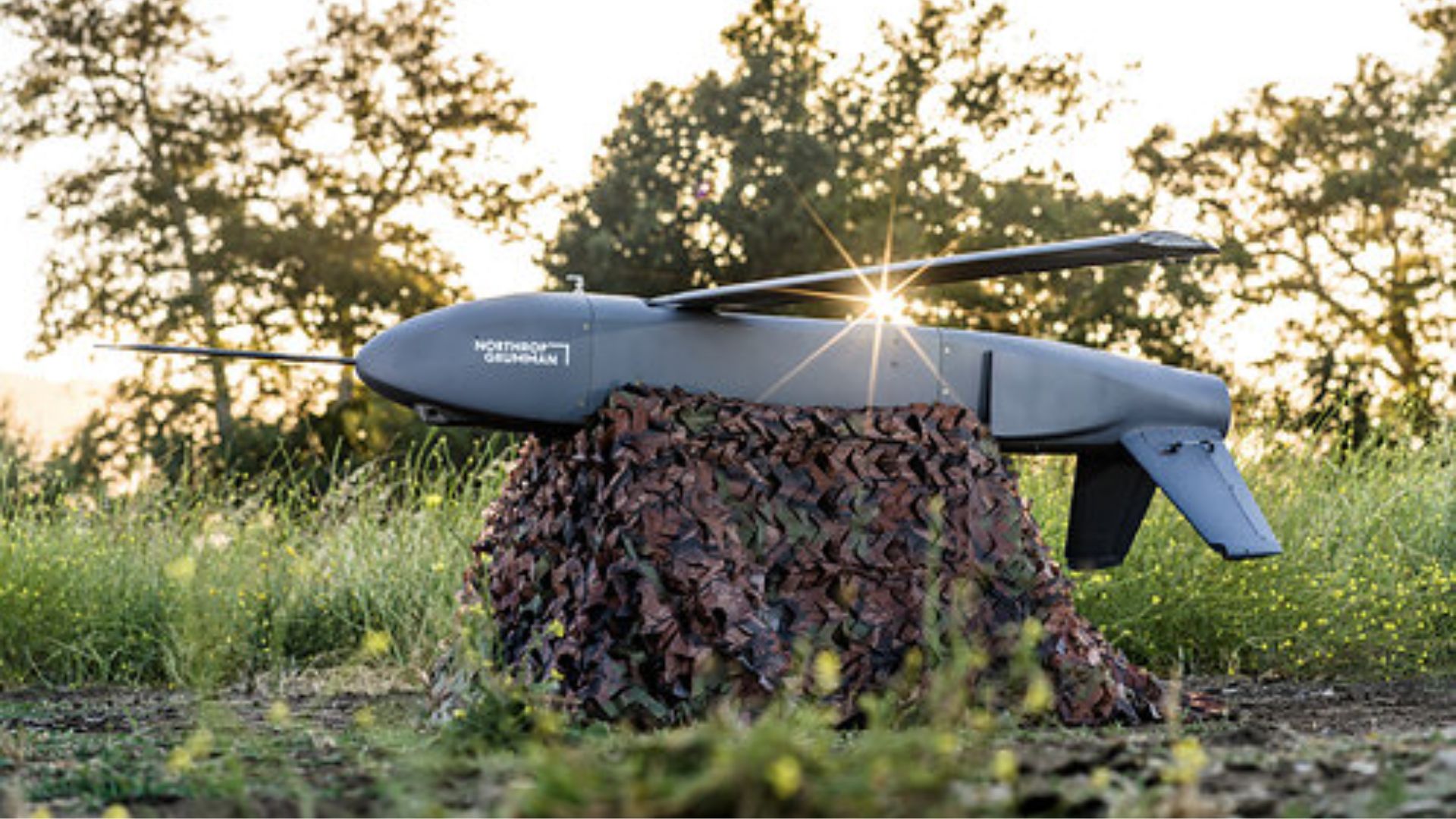
Autonomous drone can deliver life jackets to people that fall overboard

Autonomous drone can deliver life jackets to people that fall overboard

When a person falls overboard, the urgency of the situation escalates rapidly, as their chances of survival diminish significantly with each passing minute. Rescue operations face critical challenges, particularly due to the time required for a vessel to come to a complete stop and deploy a rescue boat. By the time the search begins, the individual may have drifted far from the ship, complicating recovery efforts. This race against time highlights the importance of swift action and efficient rescue protocols in maritime emergencies.

Robotics
Voice AI Systems Are Vulnerable to Hidden Audio Attacks

Voice AI Systems Are Vulnerable to Hidden Audio Attacks

Researchers are set to unveil alarming findings regarding AI-powered voice and audio tools at the IEEE Symposium on Security and Privacy in San Francisco next week. The study reveals that modified audio clips, imperceptible to human ears, can manipulate large audio-language models (LALMs) to execute unauthorized commands with a success rate between 79 and 96 percent. This vulnerability allows attackers to control devices, conduct sensitive web searches, and even send emails containing user data without the user's knowledge. The research, led by Meng Chen, a Ph.D. student at Zhejiang University in China, demonstrates that these attacks can be executed in real-time and do not require the attacker to have full control over the user's instructions. Instead, adversarial audio can be embedded in various media, such as online videos or voice notes, making it a pervasive threat. The technique, dubbed AudioHijack, exploits a critical flaw in LALM design, allowing malicious instructions to be hidden within manipulated audio clips. The researchers tested their method on 13 leading open models, including those from Microsoft and Mistral, and found that their attacks could be adapted to commercial models as well. While Microsoft acknowledged the importance of the research in enhancing model resilience, Mistral did not respond to inquiries. The study highlights the challenges in defending against such attacks, as common defenses have proven largely ineffective, underscoring the urgent need for improved security measures in AI audio technologies.

Hacking Digital-audio Adversarial-attacks Open-source-software Cybersecurity
Here is Yarbo’s promise to fix the robot mower that ran me over

Here is Yarbo’s promise to fix the robot mower that ran me over

A cybersecurity issue has emerged involving Yarbo, a manufacturer of robotic lawn mowers, as reports surfaced of a hacker gaining control of these devices. The incident, which occurred yesterday, highlighted the vulnerability of thousands of these Chinese-made robots, which can be easily hijacked. This breach potentially exposes sensitive information such as GPS coordinates, Wi-Fi passwords, and email addresses to malicious actors. In response to the alarming revelations, Yarbo has issued a statement addressing the security flaws and outlining steps to mitigate the risks associated with their products. The company aims to reassure customers and enhance the safety of their robotic lawn mowers in light of these findings.

News Tech
RobotToday Initiative

Robotics needs a service framework.

RSF defines a common language for robot service capability, lifecycle operations, certification pathways, and service-provider networks.