Industry Briefing
A single destination for timely, editor-curated robotics news from around the world.
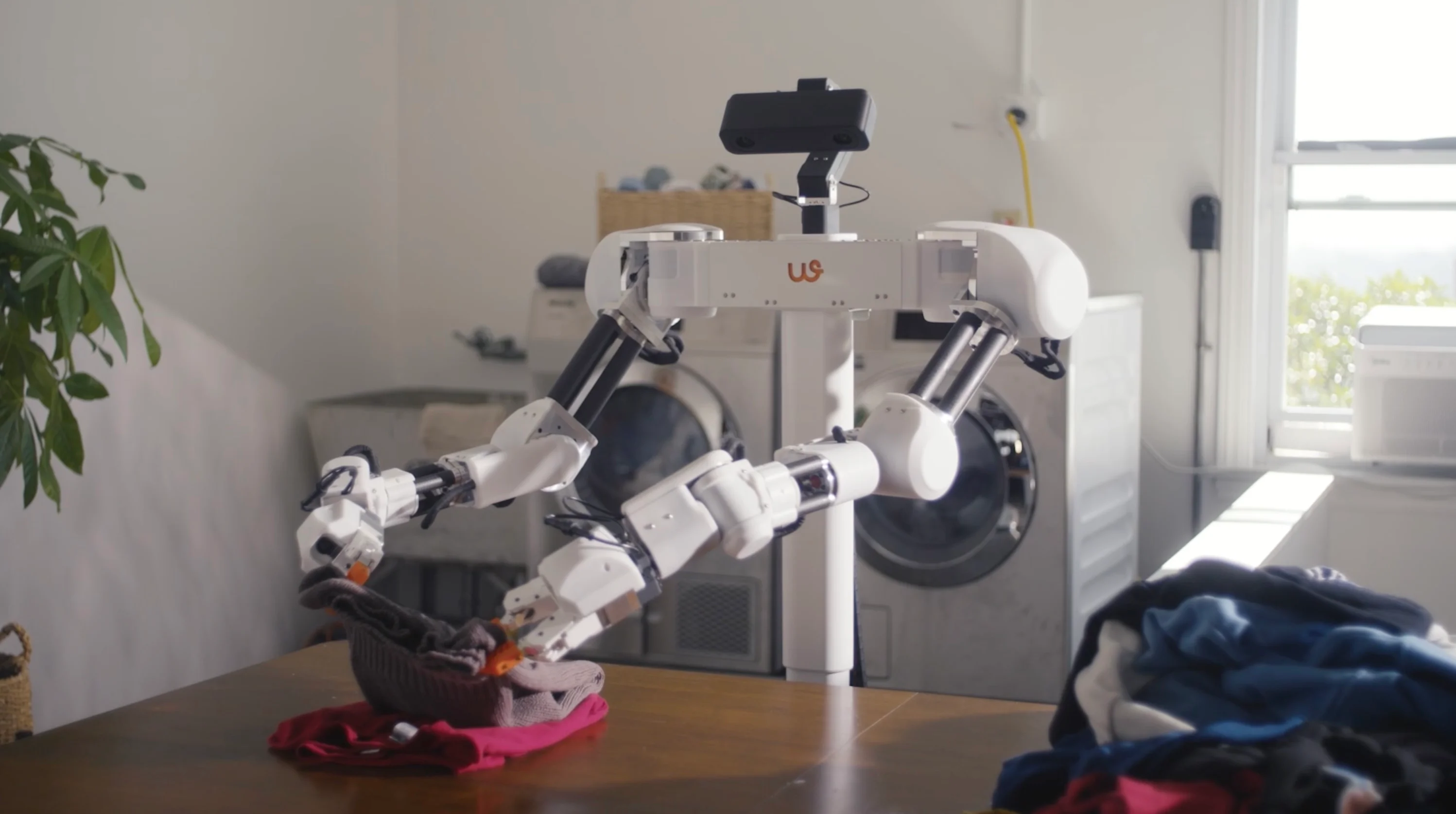
Weave Robotics Launches "Isaac 0": A $9,999 Stationary Bet on the Future of Laundry
Weave Robotics is working on a groundbreaking home laundry robot, aiming to deliver a functional prototype by February 2026. The company is differentiating itself from mobile competitors by eliminating traditional legs and wheels, focusing instead on a design that enhances usability in domestic environments. This innovative approach is intended to position Weave Robotics as a leader in the emerging market for household automation, targeting the growing demand for efficient home solutions. By streamlining the robot's design, the company hopes to create a more accessible and effective laundry assistant for consumers.
US Isaac 0 Weave Robotics product-launch
NVIDIA unveils its first open humanoid reference design, "Isaac GR00T."
NVIDIA has unveiled its first open-source humanoid robot reference design, named the NVIDIA Isaac GR00T Reference Humanoid Robot, aimed at advancing robotics research. This announcement was made recently, highlighting NVIDIA's commitment to fostering innovation in the field of robotics. The new design is expected to provide researchers and developers with a versatile platform to explore and develop robotic applications. By making the design open-source, NVIDIA aims to encourage collaboration and accelerate advancements in humanoid robotics, allowing a broader community to contribute to and benefit from this technology.
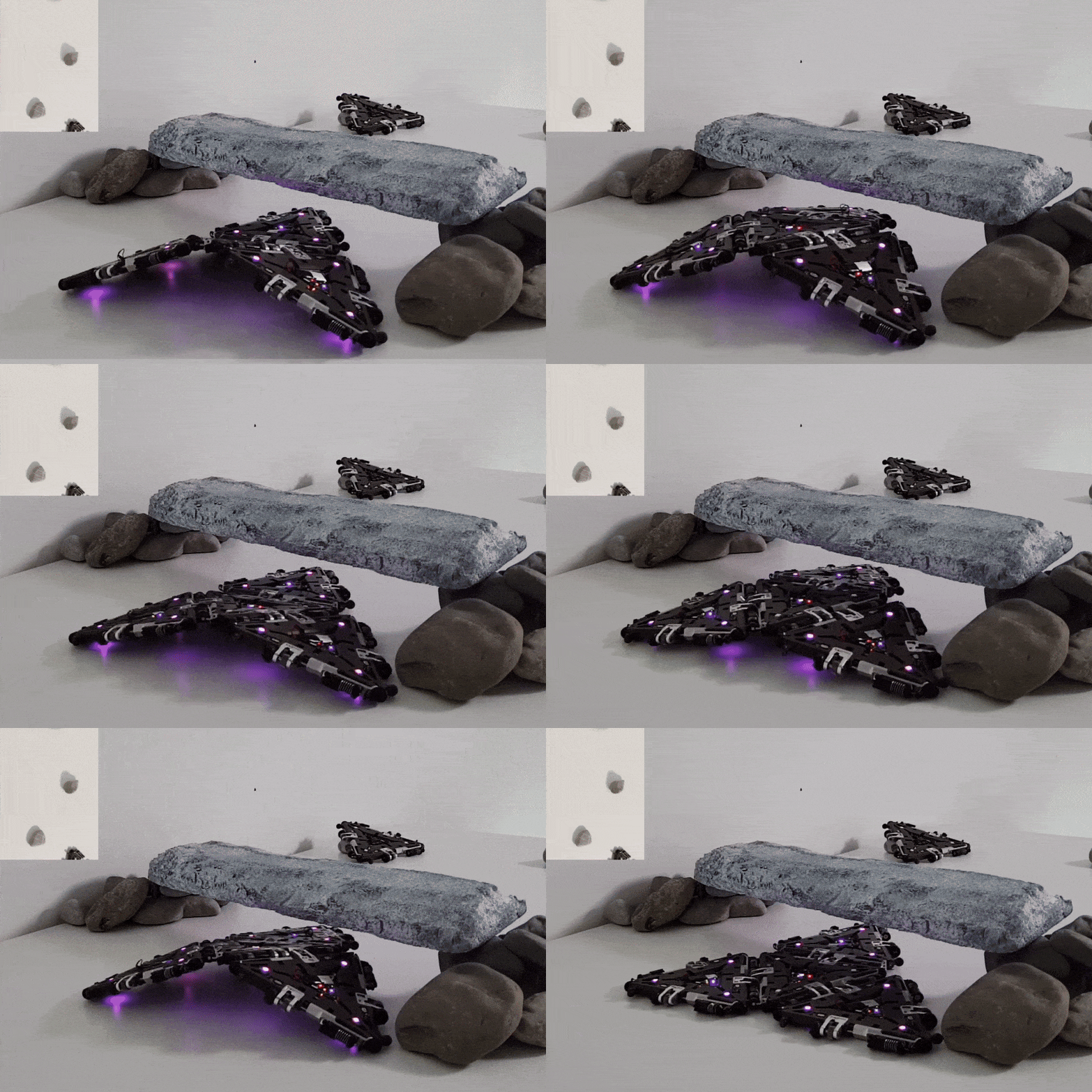
Video Friday: Robot Collective Stays Alive Even When Parts Die
IEEE Spectrum robotics has released its weekly roundup of notable robotics videos, along with a calendar of upcoming events, including the International Conference on Robotics and Automation (ICRA) scheduled for June 1-5, 2026, in Vienna. Among the highlights, researchers from the Max Planck Institute and other institutions have published a study revealing that elephants' unique whiskers contribute to their exceptional sense of touch, potentially inspiring advancements in robotic sensing technologies. In product news, Weave Robotics announced the launch of Isaac 0, a laundry-folding robot set to begin shipping to homes in the Bay Area in February 2026. Meanwhile, engineers at Boston Dynamics continue to test the Atlas platform's full-body control capabilities. Additionally, a team from the University of Waterloo has developed a system enabling collaborative art creation with robots, while Harvard scientists have introduced a new 3D-printing method for soft robotics that could enhance medical technology. Texas A&M University has unveiled a quiet all-electric unmanned rotorcraft, and Deep Robotics has showcased the Lynx M20 robot, designed for winter sports challenges. These developments reflect ongoing innovations in robotics, addressing both practical applications and advanced research, as the field continues to evolve.
Modular-robots Video-friday Autonomous-robots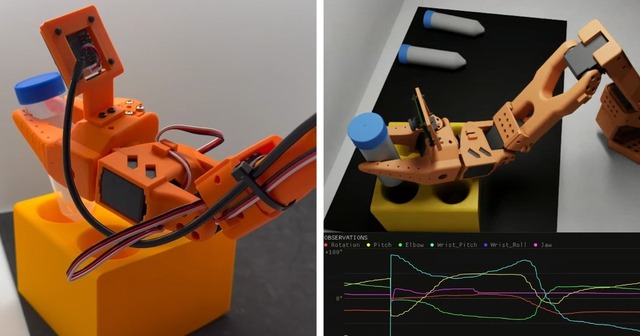
NVIDIA and Hugging Face integrate AI model "GR00T 1.7" into open-source robot development platform "LeRobot."
NVIDIA and Hugging Face have announced the integration of their cutting-edge technologies aimed at enhancing humanoid robots. The collaboration will see the incorporation of NVIDIA's visual language action (VLA) model, known as NVIDIA Isaac GR00T 1.7, along with the remote operation framework, NVIDIA Isaac Teleop, into Hugging Face's open-source robot development library, LeRobot. This initiative is set to advance the capabilities of humanoid robots, enabling more sophisticated interactions and functionalities. The announcement highlights a significant step in the ongoing evolution of robotics, reflecting both companies' commitment to fostering innovation in the field.

Unitree Announces H2 Plus, an NVIDIA Isaac GR00T Reference Humanoid Robot for Academic Research
Unitree Robotics has unveiled the H2 Plus, a groundbreaking humanoid robot designed for academic research, which integrates advanced technologies from NVIDIA. Announced on June 1, 2026, the H2 Plus combines the Unitree H2 chassis with Sharpa five-fingered hands and is powered by the NVIDIA Jetson Thor, utilizing the NVIDIA Isaac GR00T development platform. This innovative reference design aims to streamline humanoid robotics research by providing a comprehensive hardware and software solution that eliminates the need for proprietary systems. The H2 Plus stands nearly six feet tall and weighs 150 pounds, featuring 31 degrees of freedom in its body and 22 in its hands, allowing for sophisticated manipulation and interaction. Equipped with multi-view sensing capabilities, including a stereo camera and wrist cameras, the robot is designed for real-world applications, enhancing its utility in various industries. Unitree's CEO, Xingxing Wang, emphasized that the H2 Plus offers developers a validated starting point for creating robotic skills, while NVIDIA's CEO, Jensen Huang, highlighted the potential economic opportunities that humanoid robots could unlock. By unifying the development process, the H2 Plus aims to accelerate advancements in physical AI, enabling researchers to transition from initial setup to skill development and practical validation more efficiently.
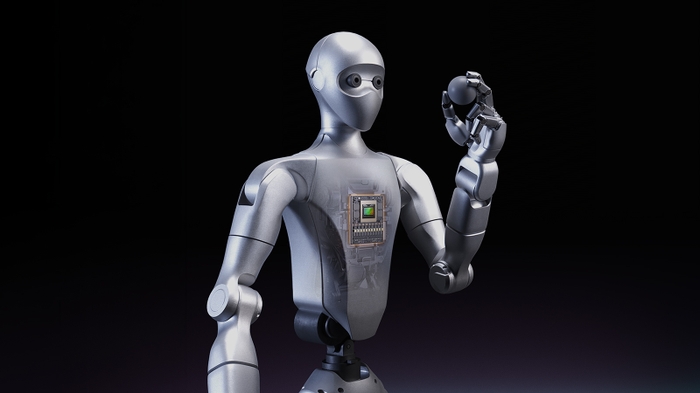
NVIDIA Announces NVIDIA Isaac GR00T Reference Humanoid Robot for Academic Research
NVIDIA has unveiled the NVIDIA Isaac™ GR00T Reference Humanoid Robot, marking a significant advancement in robotics technology. This innovative humanoid robot is the first of its kind to be built on the NVIDIA Jetson Thor™ platform and utilizes the NVIDIA Isaac GR00T open development framework. The announcement was made today, highlighting NVIDIA's commitment to pushing the boundaries of artificial intelligence and robotics. By providing an open reference design, NVIDIA aims to facilitate collaboration and innovation within the robotics community, enabling developers to create advanced applications for various industries. The introduction of the GR00T robot is expected to accelerate the development of humanoid robots capable of performing complex tasks, thereby enhancing automation and efficiency in multiple sectors.
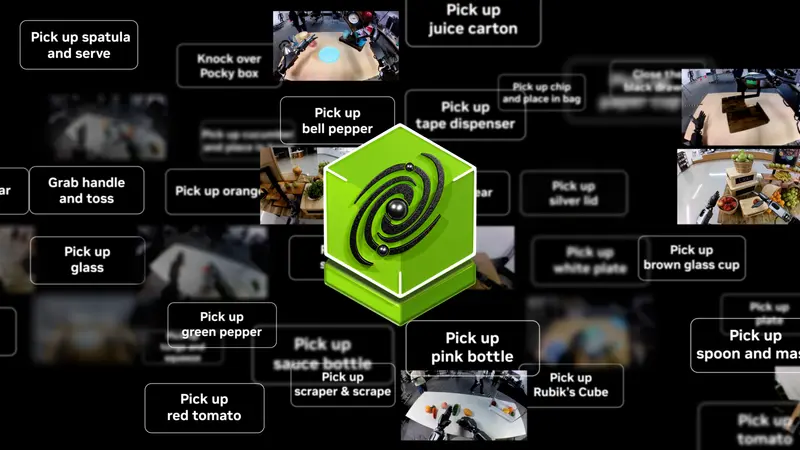
NVIDIA Advances Humanoid AI with GR00T N1.5, Eyeing a Future of Simulated Realities
NVIDIA has introduced its latest innovation, the Isaac GR00T N1.5, along with advanced simulation tools aimed at enhancing the learning capabilities of humanoid robots. This announcement, made during a recent tech conference, highlights the company's commitment to addressing the challenges associated with the 'Physical Turing Test' through the use of synthetic data generation. By leveraging these new tools, NVIDIA aims to improve the performance and adaptability of robots in real-world scenarios. The initiative reflects the growing demand for more sophisticated robotic systems that can seamlessly interact with their environments, ultimately pushing the boundaries of artificial intelligence and robotics.
NVIDIA GR00T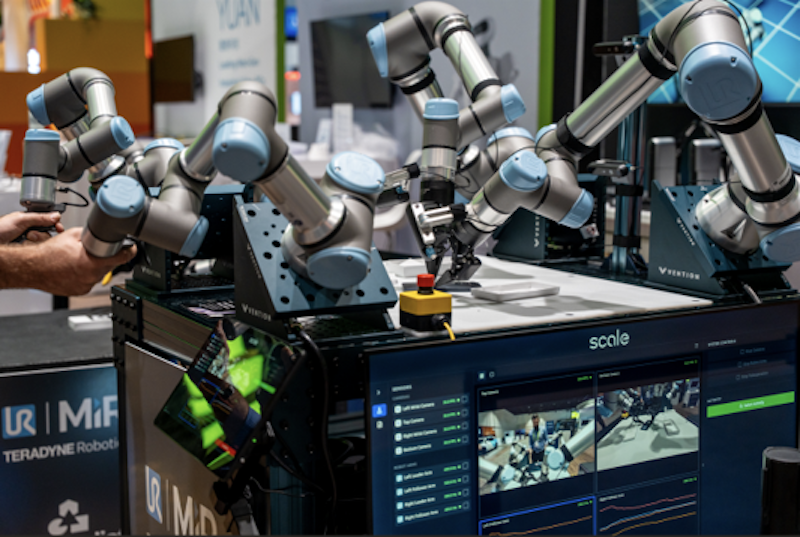
Teradyne Robotics unveils production-ready physical AI applications at Automate 2026
Teradyne Robotics, the parent company of Universal Robots and Mobile Industrial Robots, is set to showcase the impact of physical AI on industrial automation at the Automate 2026 trade show in Chicago from June 22 to 25. At booth #1250, attendees will witness demonstrations highlighting the capabilities of their robotic solutions. Jean-Pierre Hathout, President of the Teradyne Robotics Group, emphasized the significance of these innovations, stating that physical AI is prominently featured in their offerings. The event aims to illustrate how advancements in robotics are revolutionizing the industry and enhancing operational efficiency.
Events Features AI data centers ai robotics Automate 2026 autonomous mobile robots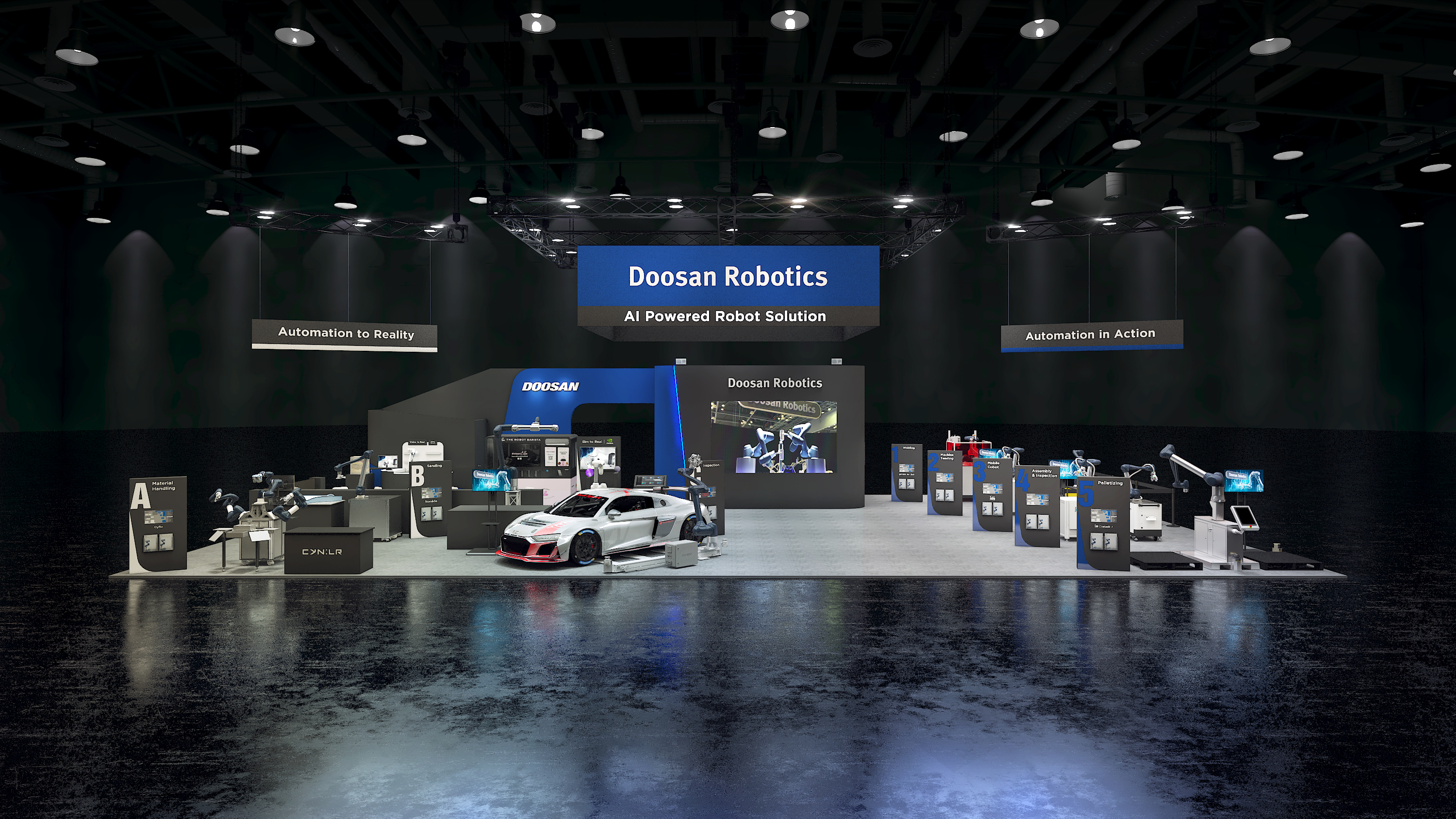
Doosan Robotics to Unveil 'AI Robot Solution' at Automatica 2025
Doosan Robotics has announced its participation in Automatica 2025, Europe’s leading automation exhibition, set to take place in Munich, Germany, starting June 24. The company will showcase its innovative 'AI Robot Solution' across two exhibition zones: 'Automation in Action' and 'Automation to Reality.' In the 'Automation to Reality' area, attendees will have the opportunity to explore a variety of AI-integrated robotic solutions, including technologies developed in collaboration with NVIDIA and AWS. Among the highlights is 'Voice to Real,' a voice-recognition solution co-developed with AWS, and an enhanced version of *Mixmaster Moodie*, which features a 3D vision camera to understand everyday language and execute tasks autonomously. The Material Handling Solution will demonstrate three collaborative robots capable of recognizing and manipulating objects without prior training, utilizing Doosan's Multi-Arm Dynamic Manipulation Engine for complex tasks. Additionally, the Sanding Solution will enable robots to autonomously polish intricate surfaces, while the Inspection Solution will conduct real-time vehicle inspections using a 3D scanning system. Another key feature is "Sim to Real," a motion control solution that leverages NVIDIA Isaac Sim for simulating AI-driven robots, allowing for rapid computation of robot trajectories and seamless transfer to physical robots. The 'Automation in Action' zone will exhibit practical applications of robotics in manufacturing processes such as welding, assembly, and quality inspection. These solutions, co-developed with European partners, are already in use by major companies like General Motors, Danone, Heineken, and Royal Mail, highlighting their commercial viability in the European market.
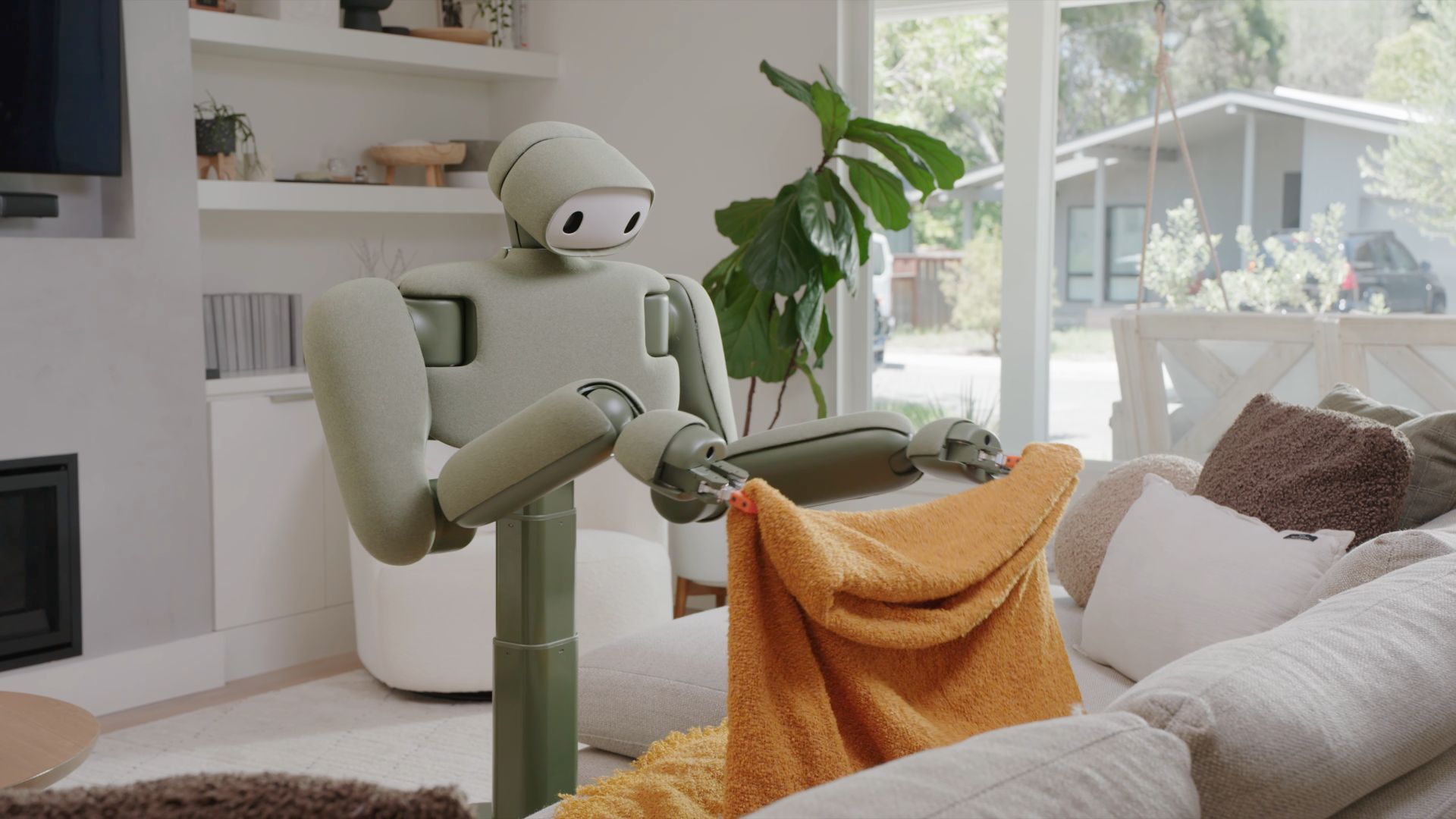
Watch: From laundry to making your bed, Isaac 1 humanoid robot is ready for house chores
Weave Robotics, a company based in the United States, has introduced Isaac 1, an innovative wheeled mobile home robot aimed at automating various household tasks. The unveiling took place recently, showcasing the robot's capabilities to enhance efficiency in daily chores. Designed with advanced technology, Isaac 1 is intended to assist homeowners by performing tasks that typically require manual effort, thereby allowing individuals to focus on more important activities. The launch reflects a growing trend in robotics aimed at improving quality of life through automation in domestic settings.
AI and Robotics
FANUC strengthens robot integration with NVIDIA Isaac Sim
FANUC is enhancing its robotics technology by integrating its robots and teach pendant with NVIDIA's simulation and artificial intelligence capabilities. This collaboration aims to improve the efficiency and intelligence of robotic operations, allowing for smoother and more adaptive actions in various applications. The integration leverages NVIDIA's Isaac Sim, a platform designed to facilitate advanced simulation and AI training for robots. This development marks a significant step forward in the robotics industry, as it combines FANUC's expertise in automation with NVIDIA's cutting-edge technology to create smarter, more responsive robotic systems.
6-Axis Arms / Manipulators Artificial Intelligence Artificial Intelligence / Cognition Cobot Arms Collaborative Robots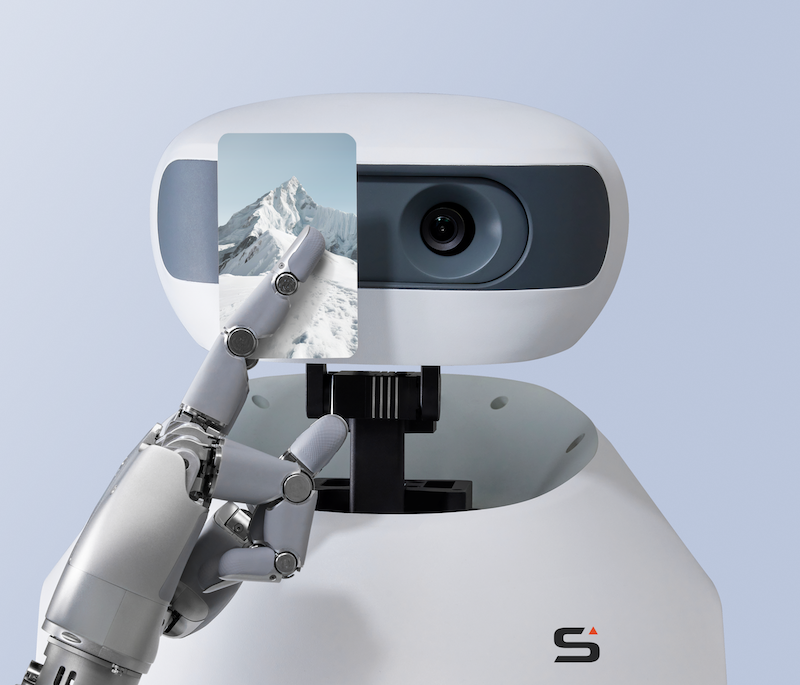
Sharpa brings dexterous robot hands to Nvidia and Unitree humanoid reference design
Sharpa has unveiled the integration of its Wave tactile robot hands into the Unitree H2 Plus humanoid robot reference design, marking a significant advancement in robotics technology. This collaboration makes the Unitree H2 Plus the first dexterous humanoid platform to utilize Sharpa's tactile manipulation technology within Nvidia’s Isaac GR00T development framework. The companies aim to enhance the capabilities of robotics developers and researchers by providing a sophisticated platform that combines advanced tactile feedback with humanoid robotics. This integration is expected to facilitate innovative developments in the field, enabling more nuanced and effective interactions between robots and their environments.
Humanoids News automation news dexterous manipulation humanoid robots nvidia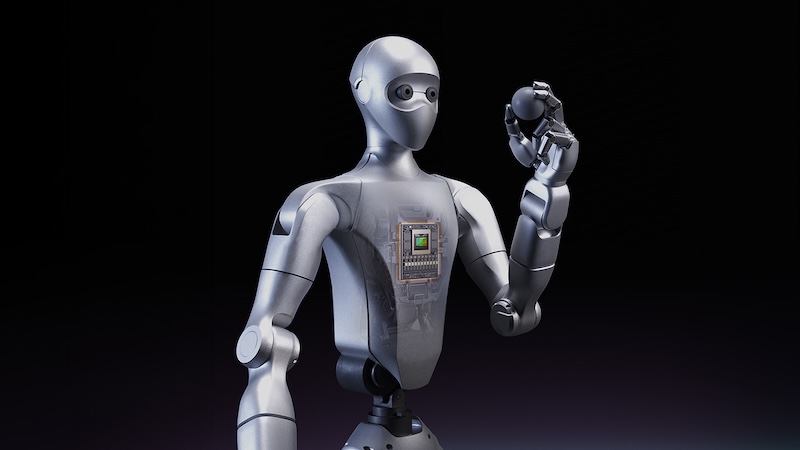
Nvidia unveils open humanoid robot platform for robotics research
Nvidia has introduced the Nvidia Isaac GR00T Reference Humanoid Robot, an innovative open platform aimed at advancing research and development in physical artificial intelligence and general-purpose robotics. The announcement was made during the Nvidia GTC event in Taipei. This new platform integrates several cutting-edge technologies, including the Unitree H2 Plus humanoid robot, Sharpa Wave tactile five-finger hands, and the Nvidia Jetson Thor onboard computing system. The initiative is part of Nvidia's broader strategy to enhance capabilities in robotics, providing researchers and developers with a versatile tool to explore and innovate in the field of robotics and AI.
Computing Humanoids News automation news embodied ai humanoid robots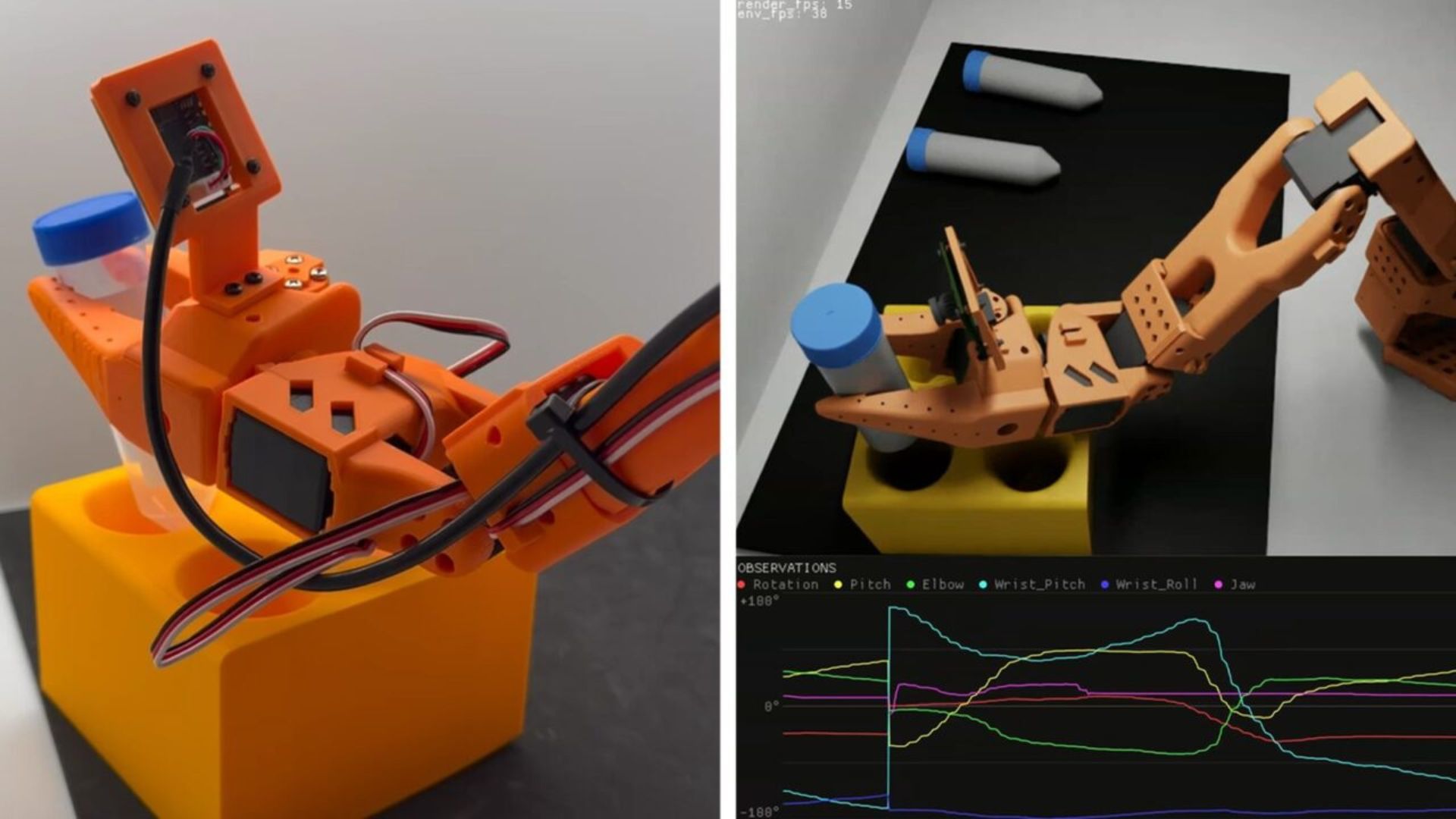
NVIDIA and Hugging Face Enhance LeRobot with New AI Models and Frameworks
NVIDIA has expanded its collaboration with Hugging Face to enhance the LeRobot open-source robotics platform with new AI models and frameworks. This integration includes the NVIDIA Isaac GR00T 1.7 vision-language-action model and the Isaac Teleop framework, aimed at streamlining robot development. The partnership seeks to make advanced robotics tools more accessible to developers and researchers, with plans to incorporate NVIDIA Cosmos 3 in the future. This collaboration is significant as it addresses the fragmented nature of robotics development by providing standardized workflows for data collection, model training, and robot deployment. The introduction of the Isaac Teleop framework allows for high-quality training data collection through human demonstrations, which can be shared within the LeRobot ecosystem. By lowering barriers to entry, NVIDIA and Hugging Face aim to foster broader collaboration in the robotics community. Looking ahead, NVIDIA plans to integrate the Cosmos 3 model into LeRobot, which will generate synthetic robotics data and assist in policy development. The collaboration builds on existing resources, including a dataset with over 350,000 robot trajectories and 57 million grasp examples. No further timeline was disclosed at the time of publication.
AI and Robotics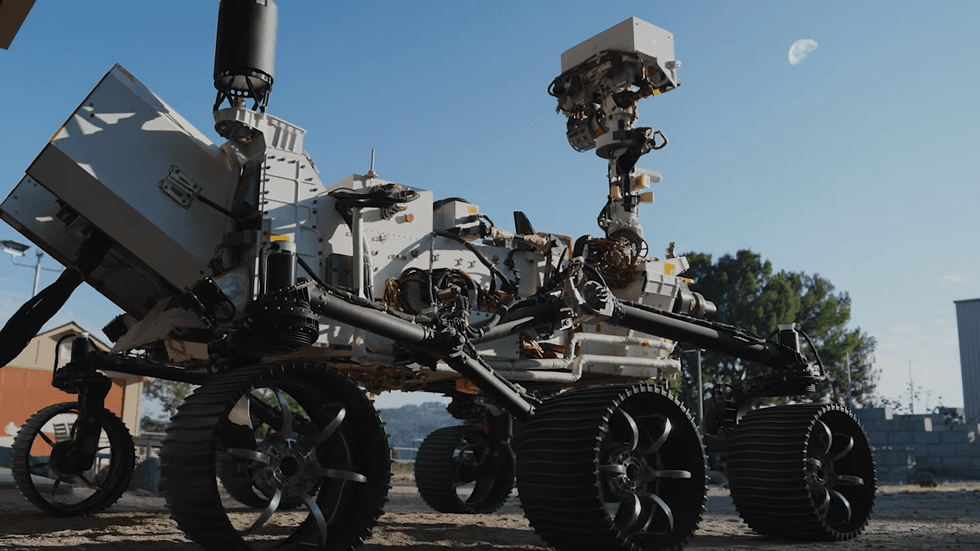
Video Friday: An Earthbound Mars Rover for the Moon
IEEE Spectrum robotics has released its latest edition of Video Friday, showcasing a variety of innovative robotics videos and announcing upcoming events in the field. Notable events include the RSS 2026 conference in Sydney from July 13-17, the Summer School on Multi-Robot Systems in Prague from July 29 to August 4, and IROS 2026 in Pittsburgh from September 27 to October 1. Among the featured projects is NASA's proposed PROMISE mission, which aims to send an advanced, nuclear-powered rover to the Moon's South Pole as part of its Moon Base initiative. This mission will utilize technology from the Curiosity and Perseverance Mars rovers, showcasing the adaptability of existing space exploration technology. In other developments, Weave Robotics is set to launch its home robot, Isaac 1, this fall, offering basic task autonomy for $500 per month. Meanwhile, UBTech Robotics has introduced a humanoid robot with lifelike features and emotional AI, reflecting a growing trend of integrating robots into domestic settings. Additionally, Carnegie Mellon’s Dr. Sebastian Scherer emphasizes the importance of developing robots capable of performing tasks in unpredictable environments, aiming to make them more functional and tool-like. The ongoing advancements in robotics, including soft, floating robots designed for social interaction and innovative applications like spatial audio technology from Georgia Tech, highlight the industry's commitment to enhancing human-robot collaboration and everyday life.
Video-friday Home-robots Rovers Humanoids
Vention and Teradyne Robotics Collaborate on Digital Twin Creation Platform Optimized for UR Robotic Cells
At Automate 2026, live demonstrations highlighted the innovative integration of Vention's Rapid Operator AI with NVIDIA's Isaac open robotics platform. The event showcased advanced welding applications facilitated by Universal Robots' UR12e and UR20 collaborative robot models. These demonstrations, taking place in a cutting-edge robotics environment, aimed to illustrate the potential of AI-driven automation in enhancing manufacturing processes. By combining these technologies, the event underscored the growing importance of robotics in streamlining operations and improving efficiency in various industrial applications.

NVIDIA Launches Open Humanoid Robot Reference Platform for Academic Research
NVIDIA has introduced the Isaac GR00T humanoid robot reference design, a sophisticated platform aimed at enhancing research in humanoid robotics. This innovative design combines cutting-edge hardware and software, facilitating a more efficient development process for academic institutions such as Stanford University and ETH Zurich. By concentrating on physical AI, the Isaac GR00T provides a holistic solution for data collection, simulation, and deployment, thereby supporting the advancement of robotics research. The unveiling of this platform marks a significant step in the evolution of humanoid robotics, offering researchers the tools necessary to push the boundaries of technology in this field.
Humanoid Robots AI Robotics Research Robot Development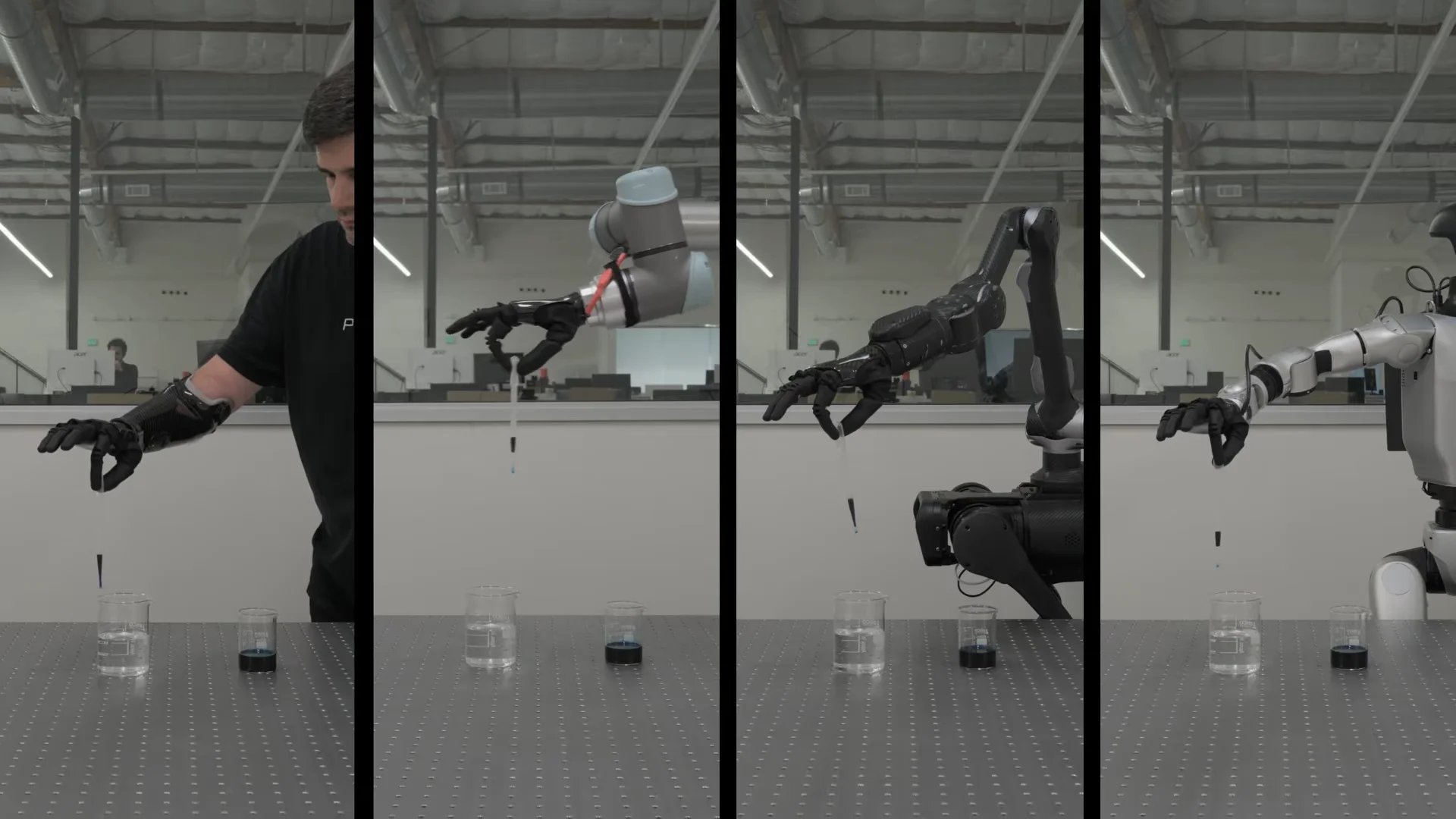
From Prosthetics to Pixels: PSYONIC and NVIDIA Bridge the Robotics "Data Gap" with Real-to-Real Transfer
PSYONIC has integrated its Ability Hand into NVIDIA's Isaac Lab, marking a significant advancement in robotic manipulation technology. This collaboration introduces a "real-to-real" transfer pipeline that leverages human-driven data to enhance the training of dexterous robots. By utilizing data collected up to October 2023, the initiative aims to improve the precision and effectiveness of robotic tasks, ultimately bridging the gap between human and robotic capabilities. This innovative approach is expected to accelerate the development of more sophisticated and adaptable robotic systems, paving the way for broader applications in various industries.
NVIDIA US hand PSYONIC Ability Hand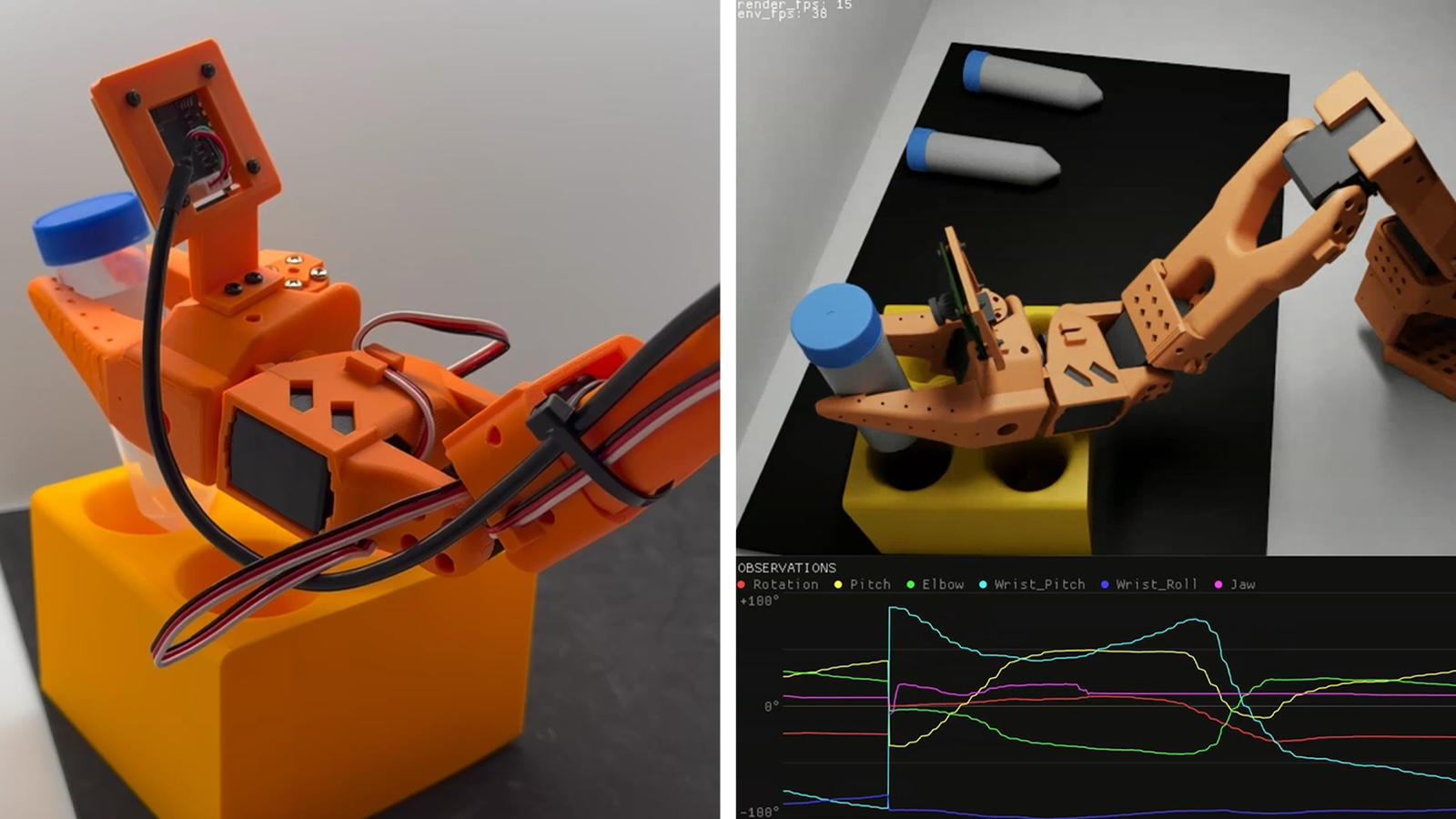
NVIDIA Open Sources Embodied Intelligence Toolchain to Enhance Robotics Development
On July 6, NVIDIA integrated three key components into Hugging Face's open-source robotics library, LeRobot: the GR00T N1.7 model, Isaac Teleop framework, and the upcoming Cosmos 3. This collaboration connects NVIDIA's 3 million robot developers with Hugging Face's 16 million AI builders, facilitating access to pre-trained models and data. This initiative is significant as it shifts NVIDIA's focus from merely creating models to building an ecosystem that addresses data bottlenecks in embodied intelligence development. The Isaac Teleop framework standardizes data collection, allowing for easier sharing and reuse within the community, which is crucial for advancing robotics. Looking ahead, the integration of GR00T N1.7 and Isaac Teleop into the LeRobot workflow marks a pivotal moment for robotics developers. No further timeline was disclosed at the time of publication.
Robotics Open Source AI Development Data Collection Machine Learning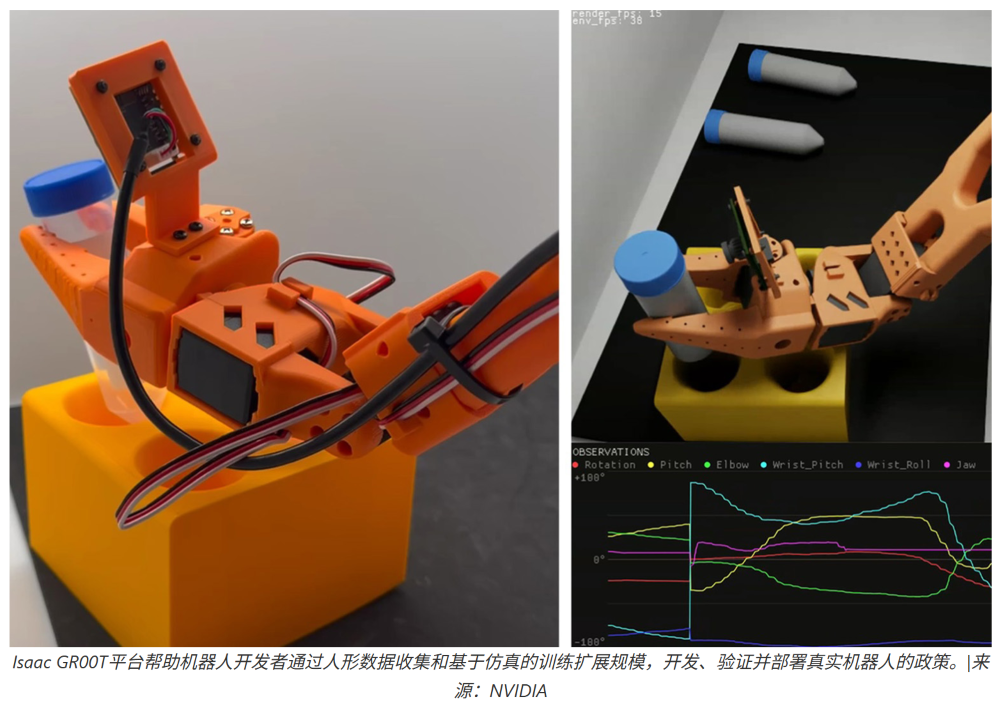
NVIDIA and Hugging Face Collaborate to Enhance LeRobot Open Source Community with Physical AI
NVIDIA and Hugging Face have joined forces to enhance the LeRobot open-source robotics library by integrating NVIDIA's Isaac GR00T 1.7 and Isaac Teleop frameworks. This partnership, announced recently, seeks to streamline the robot development process for developers by offering a comprehensive, standardized open-source pathway that encompasses everything from data collection to deployment. The initiative is designed to significantly reduce the barriers to entry for developers venturing into physical AI development, making it more accessible and efficient.
Robotics Open Source AI Machine Learning Simulation
NVIDIA and Hugging Face Bring New Models and Frameworks to LeRobot for the Open Robotics Community
New LeRobot integrations give developers open access to NVIDIA Isaac GR00T 1.7, Isaac Teleop, datasets and robotics workflows, with NVIDIA Cosmos 3 integration planned to bring frontier world models to open robotics development.
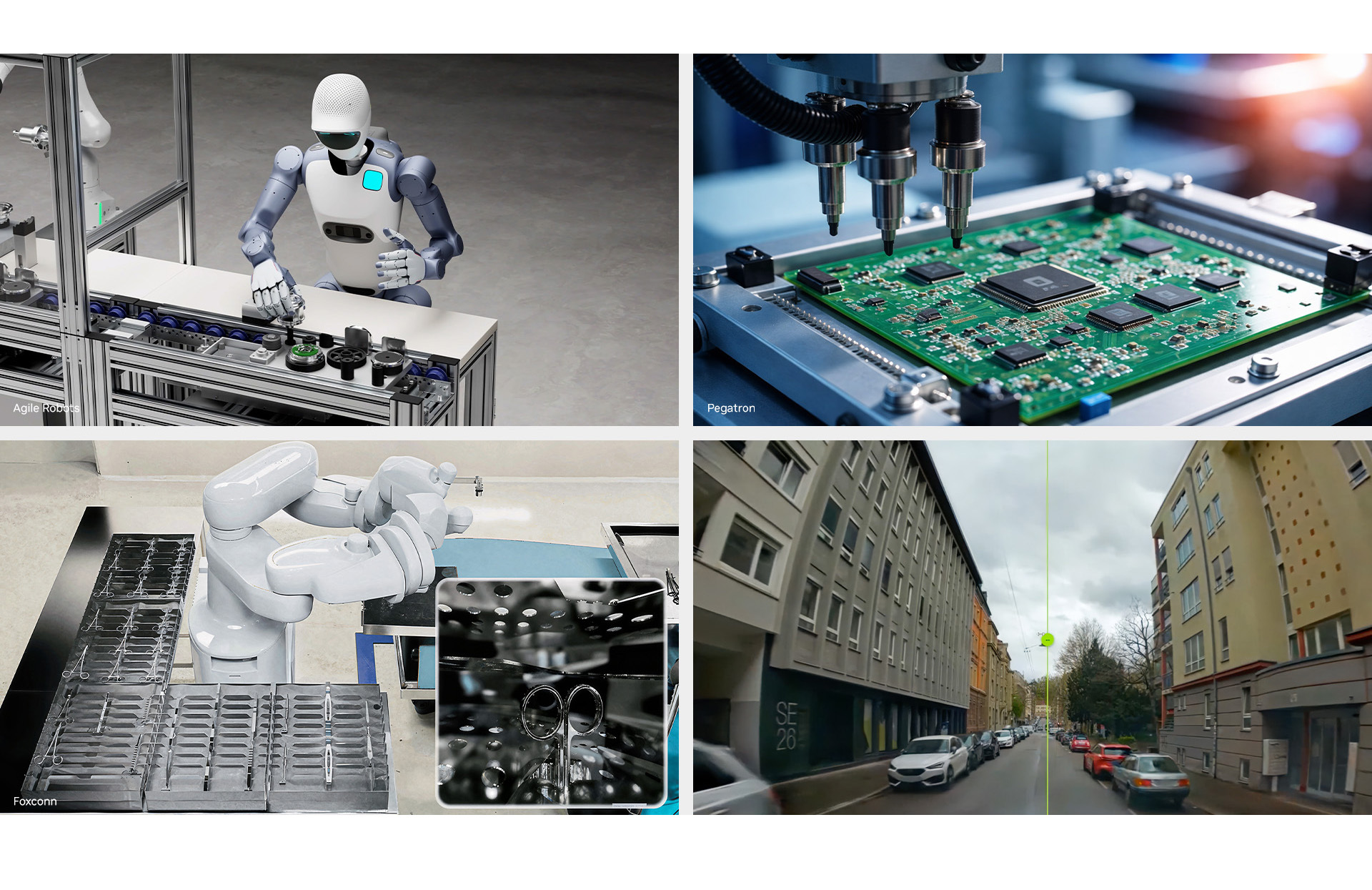
NVIDIA releases new and updated tools for physical AI developers
NVIDIA has unveiled a suite of open-source tools and skills designed for developers working with physical AI agents, alongside the introduction of the Isaac GR00T humanoid reference robot. This announcement, aimed at enhancing the capabilities of AI in real-world applications, reflects NVIDIA's commitment to advancing robotics and AI technology. The release is part of the company's ongoing efforts to foster innovation within the AI community, providing developers with the resources necessary to create more sophisticated and capable physical AI systems. The tools and the humanoid robot were made available recently, signaling a significant step forward in the integration of AI into practical robotics.
Artificial Intelligence Artificial Intelligence / Cognition Automotive Autonomous Mobile Robots (AMRs) Development Tools / SDKs / Libraries Healthcare Robotics
Nvidia, Unitree and Sharpa unite to design humanoid robot that can perform ‘real work’
Nvidia has announced a collaboration with Unitree Robotics, a leading Chinese robotics company, and Singapore-based Sharpa, a manufacturer of robotic hands, to introduce a new humanoid robot reference design aimed at fostering innovation in the global humanoid robotics sector. CEO Jensen Huang revealed the initiative on Monday, highlighting the design, named H2+ or Isaac GR00T, which is intended to enhance industry-wide research in humanoid robotics. This new reference design will facilitate a more efficient development process for developers by streamlining essential workflows, including data collection, policy training, and real-world application testing. The partnership underscores Nvidia's commitment to advancing robotics technology and supporting developers in creating more sophisticated humanoid robots.
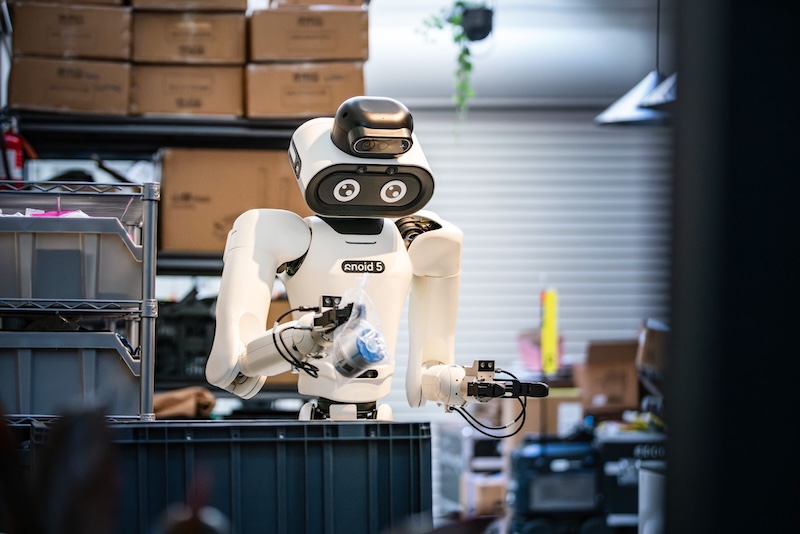
Robot.com Introduces R-noid Humanoid Robot for Challenging Labor Markets
Robot.com has officially launched R-noid, a humanoid robot designed to tackle repetitive and hard-to-fill jobs across various industries. Deployed under a Robot-as-a-Service model, R-noid can achieve autonomous operation within eight to twelve weeks, addressing significant staffing challenges in sectors like healthcare and food services. The introduction of R-noid is crucial as industries face high turnover rates, with quick-service restaurants experiencing over 130 percent staff turnover and hotel operators reporting critical staffing gaps. R-noid aims to alleviate these issues by taking on roles that are difficult to staff, allowing human workers to focus on more skilled tasks. Looking ahead, Robot.com is collaborating with FieldAI to integrate advanced AI capabilities into R-noid, enhancing its operational efficiency in dynamic environments. No further timeline was disclosed at the time of publication.
Humanoids News automation fieldai formic hospitality automation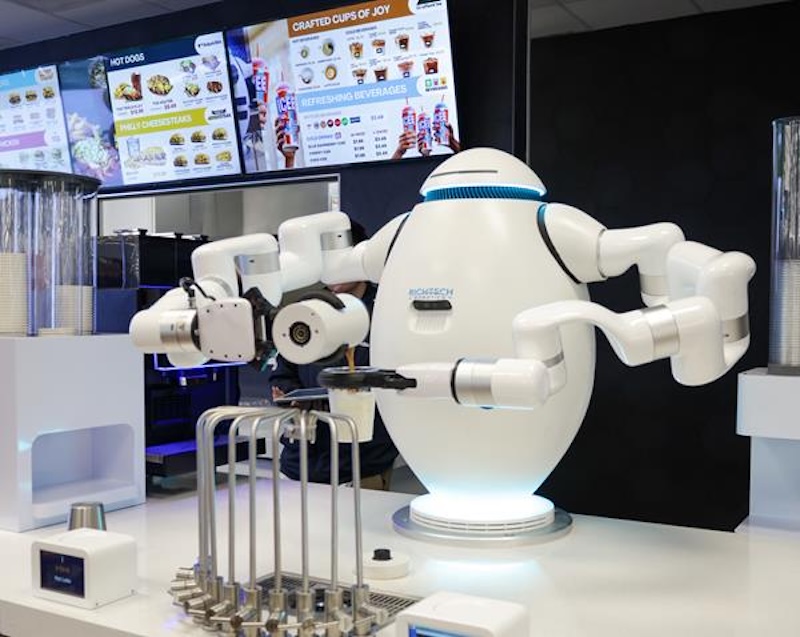
Richtech Robotics Introduces 24/7 Livestream with AI Robot ADAM for Global Interaction
Richtech Robotics, based in Nevada, has launched a 24/7 interactive livestream featuring its AI humanoid robot, ADAM. This initiative allows global audiences to engage with ADAM in real-time, asking questions and observing the robot's responses. The platform utilizes Nvidia Jetson Thor for onboard computing and the Nvidia Isaac open robotics platform, showcasing the capabilities of embodied AI. This livestream initiative is significant as it represents a shift in human-robot interaction, moving beyond traditional pre-recorded content to a dynamic, user-controlled experience. Richtech Robotics aims to demonstrate how AI-powered robots can effectively communicate in real-world settings, enhancing user engagement and showcasing their broader portfolio of automation solutions across various industries, including hospitality and manufacturing. Looking ahead, Richtech Robotics is positioned to lead advancements in intelligent automation and robotics. The company plans to continue evolving the interaction between humans and robots, with no further timeline disclosed for additional features or expansions of the ADAM livestream platform at the time of publication.
Humanoids adam AI-powered robots artificial intelligence automation conversational ai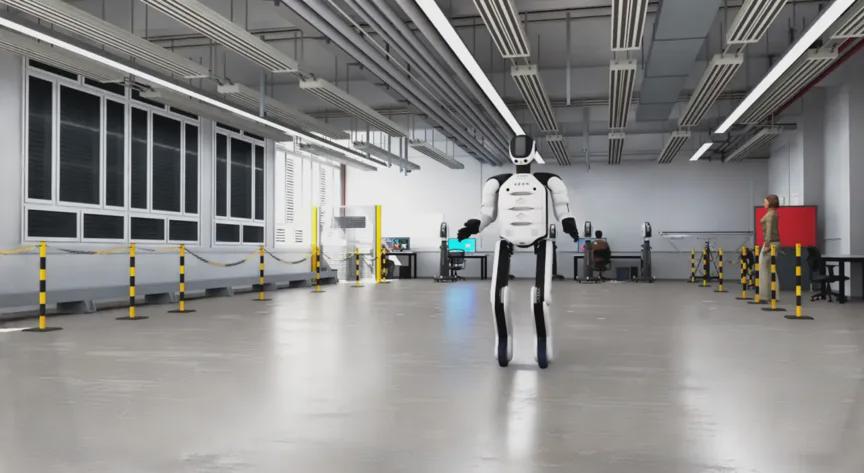
NVIDIA and DeepMind Lead Robotics Simulation Debate with New Industrial Applications
The field of embodied intelligence is witnessing a fierce debate over the best approach to training robots for industrial applications. One faction advocates for simulation-based training, leveraging structured environments to generate synthetic data, while the opposing view emphasizes the necessity of real-world data to handle complex physical interactions and unpredictable scenarios. Key players include NVIDIA, DeepMind, and Intrinsic, each with unique strategies and technologies. NVIDIA's Omniverse platform and Isaac Sim engine exemplify the simulation approach, enabling comprehensive digital twins of factories for training and optimization. Their collaboration with BMW on a digital twin project in Hungary showcases the potential of synthetic data in logistics and robotic movements. However, challenges remain in achieving the necessary fidelity for force control and physical interactions, prompting NVIDIA to seek partnerships with companies like Hexagon Robotics. Conversely, DeepMind's use of the MuJoCo physics engine has demonstrated that pure simulation can achieve industrial-grade precision in specific tasks, such as sorting with known rigid models. Yet, this method's effectiveness is limited to scenarios with minimal contact and force control. Intrinsic aims to transform simulation into a comprehensive development tool for industrial robots, focusing on lowering barriers for small manufacturers. The ongoing challenge of the SIM2REAL gap remains a critical factor in the success of these approaches.
Robotics Industrial Automation Simulation Technology AI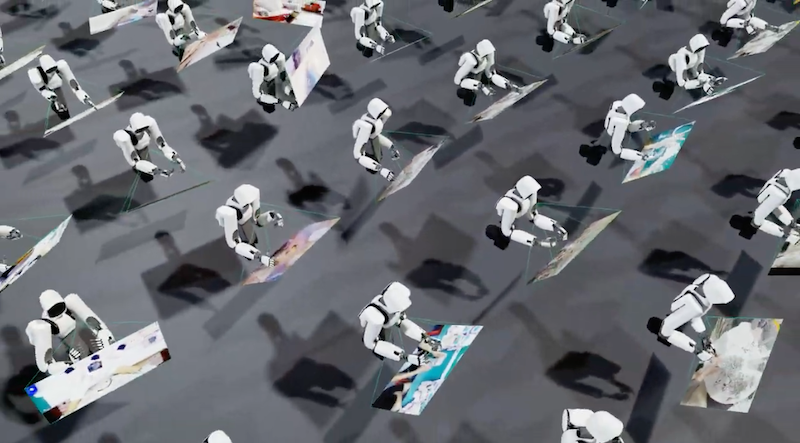
RLWRLD and Nvidia launch DexBench to standardize humanoid robot dexterity
RLWRLD, a company specializing in physical AI, has partnered with Nvidia to establish new industry standards for humanoid robot artificial intelligence. This initiative, announced recently, aims to enhance the capabilities of humanoid robots through three key components. The first is DexBench, a universal benchmark designed to assess dexterity performance in robotic systems. The second component focuses on creating a standardized data framework for training robots in dexterous manipulation. Lastly, the collaboration will ensure deep integration with Nvidia's open-source platforms, Isaac Lab and Isaac Lab-Arena, facilitating advanced development and testing of robotic technologies. This initiative is set to advance the field of robotics by providing essential tools and standards for evaluating and improving robot dexterity and functionality.
Computing Software automation news DexBench dexterous manipulation embodied ai
What will it take to make AI-enabled robots safer?
Researchers from Penn Engineering, Carnegie Mellon University, and the University of Oxford have raised concerns about the inadequacy of current efforts to align artificial intelligence with human values, particularly in robotic systems. Their findings, published in the journal Science Robotics, emphasize the urgent need for more comprehensive frameworks to ensure that AI-enabled robots adhere to fundamental ethical principles. This call to action echoes the famous dictum by science fiction writer Isaac Asimov, which states, "A robot may not injure a human being." The study highlights the potential risks associated with the integration of AI in robotics and advocates for a proactive approach to safeguard human welfare.
Robotics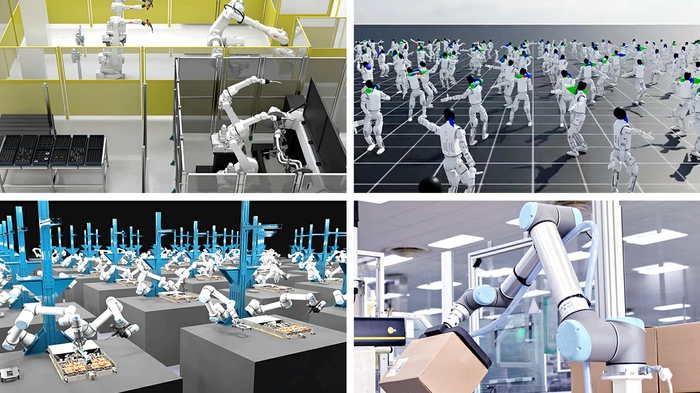
NVIDIA and Global Robotics Leaders Take Physical AI to the Real World
NVIDIA has announced a strategic partnership with key players in the global robotics ecosystem, which includes prominent developers of robot intelligence, major industrial robot manufacturers, and innovators in humanoid robotics. This collaboration aims to enhance the development of production-scale physical artificial intelligence. In conjunction with this initiative, NVIDIA introduced its latest Isaac™ simulation frameworks, designed to support the advancement of robotics technology. The partnership is part of NVIDIA's broader commitment to drive innovation in AI and robotics, addressing the growing demand for intelligent automation solutions across various industries.
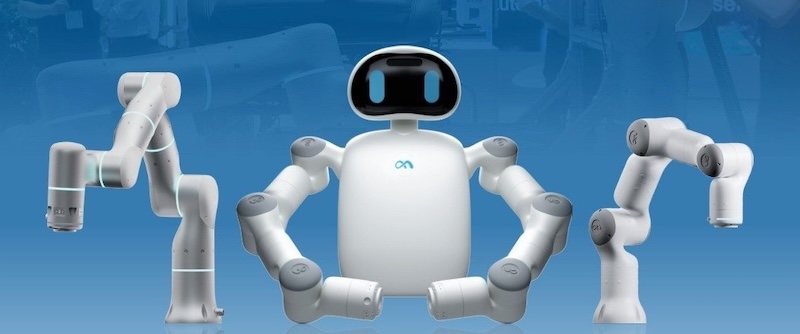
Flexiv launches new ‘adaptive robots’ for industrial automation
Flexiv has introduced two innovative adaptive robots aimed at enhancing tactile sensing and physical AI capabilities within the realm of industrial automation. The company unveiled its flagship Enlight robotic arm and the Mico dual-arm robotic platform, marking a notable advancement in force-controlled robotics and embodied intelligence. The Enlight arm features a seven-axis design, allowing for greater flexibility and precision in various applications. This launch, which took place recently, underscores Flexiv's commitment to pushing the boundaries of robotics technology to meet the evolving needs of the manufacturing sector. By integrating advanced sensing and control mechanisms, these robots are expected to improve operational efficiency and adaptability in complex industrial environments.
Industrial robots News adaptive robots cobots collaborative robots embodied ai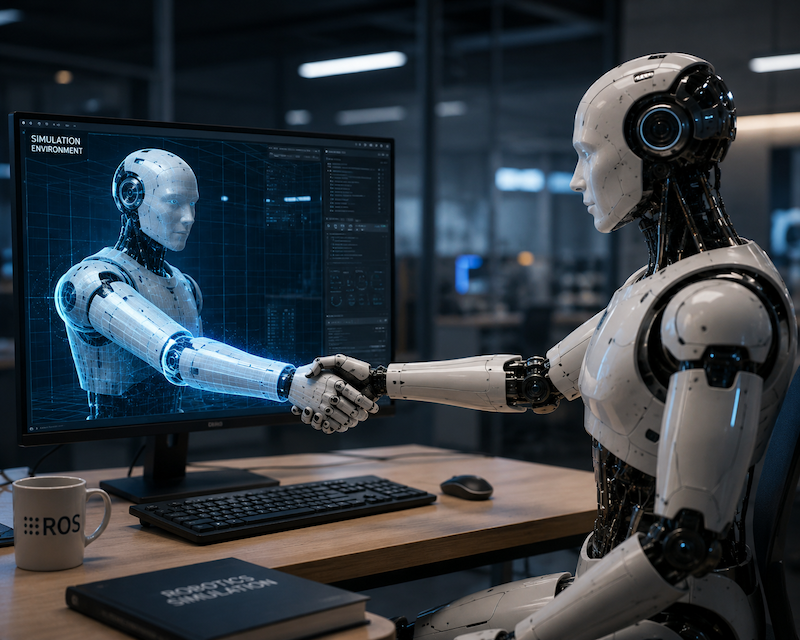
Simulation tools in the ROS ecosystem: Testing and validating robots virtually
In a significant advancement for robotics, researchers are increasingly relying on virtual environments to develop and refine robots before they are deployed in the real world. This trend allows robots, such as those used in warehouses, autonomous vehicles, and humanoid designs, to undergo extensive training and testing in simulated settings. By utilizing these virtual platforms, developers can enhance the robots' navigation and operational skills without the risks and costs associated with real-world trials. This approach not only accelerates the development process but also improves the overall safety and efficiency of robotic systems. As the technology evolves, the reliance on virtual training is expected to grow, paving the way for more sophisticated and capable robots in various industries.
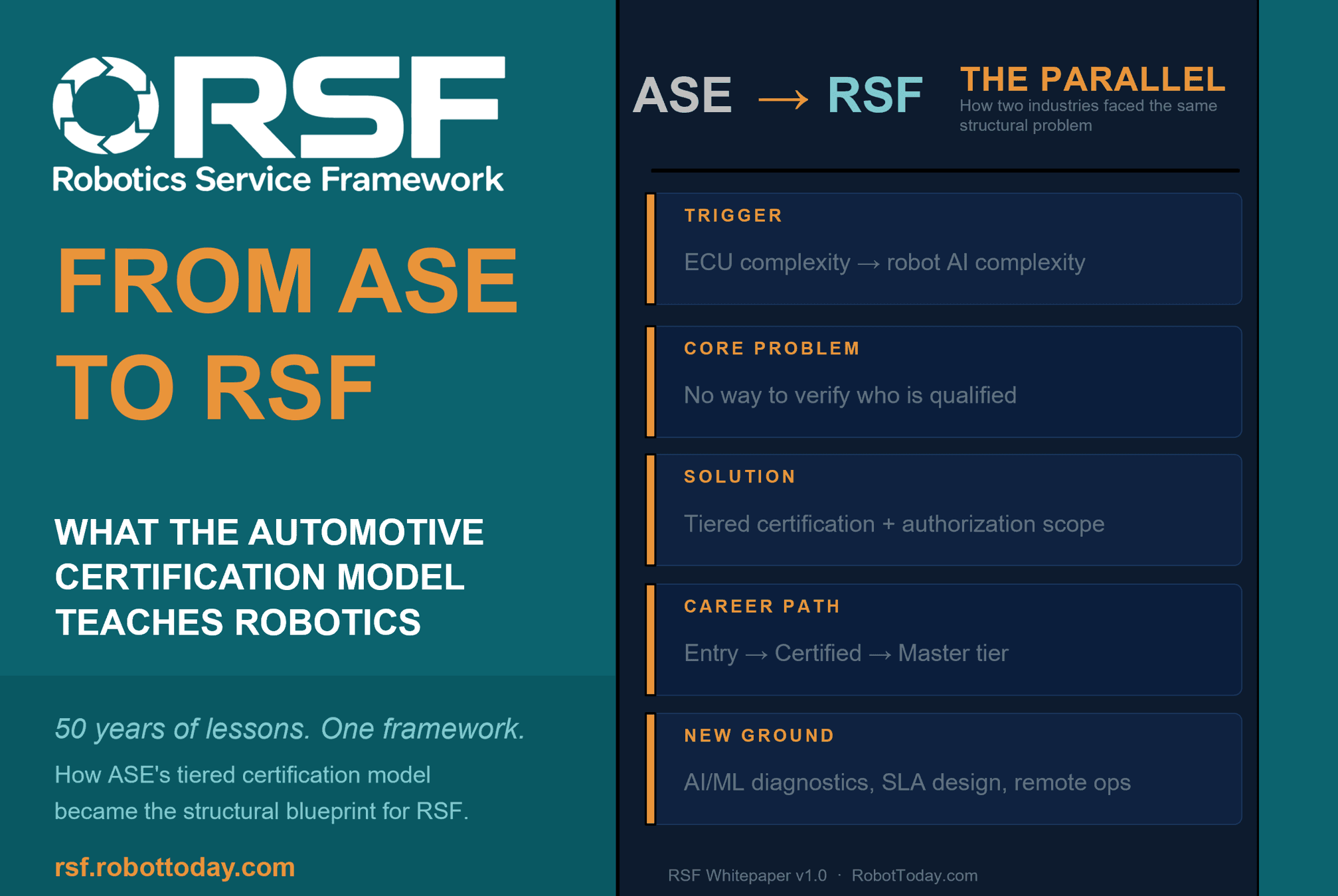
Computing Features Robot simulation Software automation news Autonomous robotsRobotics needs a service framework.
RSF defines a common language for robot service capability, lifecycle operations, certification pathways, and service-provider networks.