Industry Briefing
A single destination for timely, editor-curated robotics news from around the world.
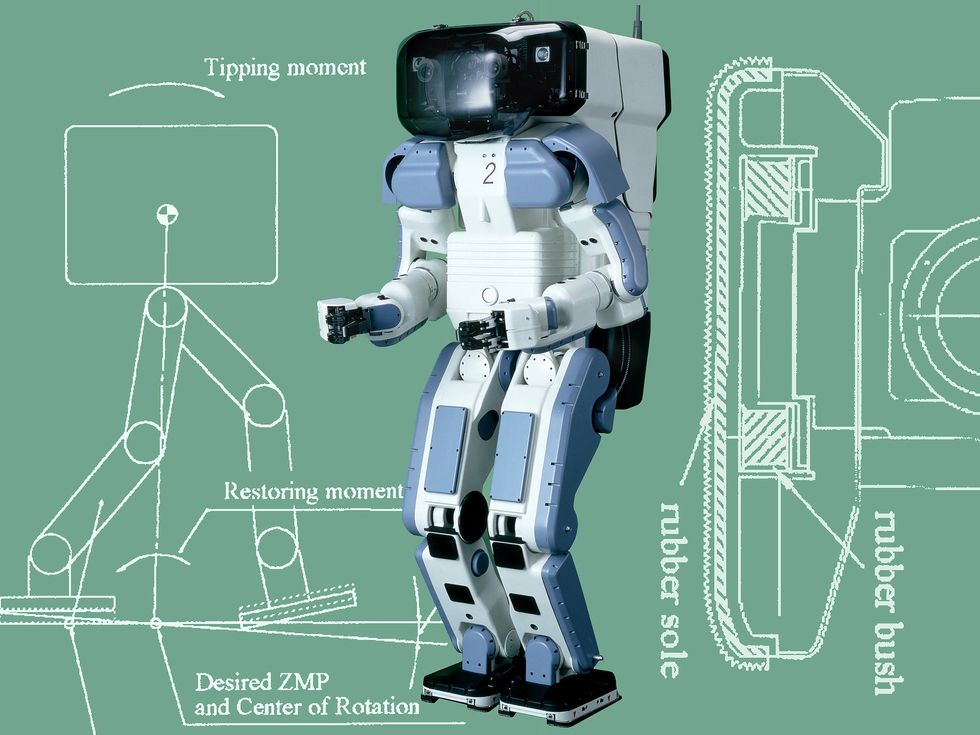
30 Years Ago, Robots Learned to Walk Without Falling
Honda's Prototype 2 (P2), a groundbreaking autonomous humanoid robot, will be honored as an IEEE Milestone during a dedication ceremony on April 28 at the Honda Collection Hall in Japan. Developed in 1996, P2 was the first robot capable of walking without falling, marking a significant advancement in robotics. The IEEE Nagoya Section highlighted that P2 demonstrated the feasibility of humanlike locomotion, setting new standards in the field. The journey to create P2 began in 1986 when Honda researchers aimed to develop a "domestic robot" that could assist with household tasks. Through extensive analysis of human movement and numerous prototypes, the team successfully engineered P2 to walk, climb stairs, and perform various tasks autonomously. This innovation shifted the focus of robotics from industrial applications to designs centered on human interaction. P2's influence extends beyond its initial release, inspiring advancements in humanoid robots and contributing to research in biomechanics and artificial intelligence. The recognition as an IEEE Milestone underscores P2's role in propelling the field of humanoid robotics forward, demonstrating the potential for robots to assist humans in meaningful ways. The plaque commemorating this achievement will be installed at the Honda Collection Hall, celebrating the technical benchmarks set by P2 in mobility, autonomy, and human-robot interaction.
Ieee-history Ieee-milestone Honda Robotics Asimo Type-ti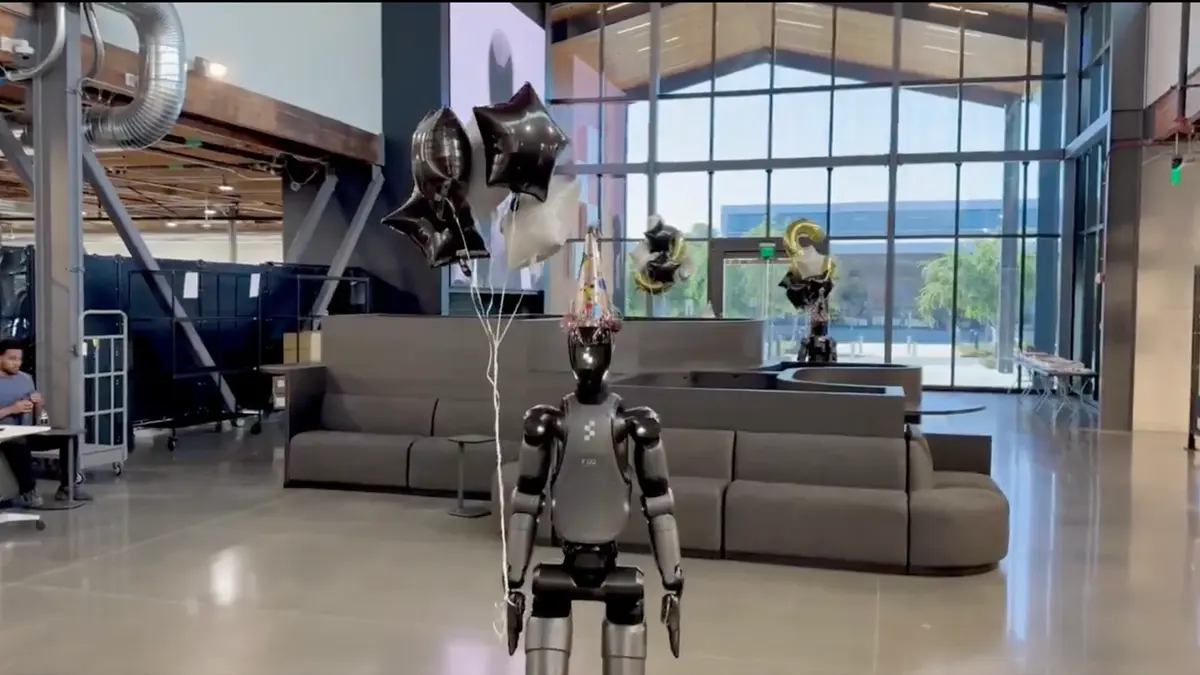
Humanoid Roundup: Figure AI's Milestone, Apptronik Award, and Foundation's Factory Focus
Figure AI recently marked its third anniversary by releasing a video featuring its advanced walking robot, highlighting the company's progress in humanoid robotics. Meanwhile, Apptronik's Apollo has been recognized with the prestigious 2025 IEEE RAS Award for Product Innovation, underscoring its significant contributions to the field. Additionally, Foundation Robotics demonstrated its Phantom robot's capabilities in automating consumer goods packing tasks, showcasing the practical applications of robotics in industry. These developments reflect the ongoing advancements in humanoid robotics, driven by a growing demand for automation and efficiency in various sectors.

TARS brings real-life embodied AI to ICRA 2026 robotics conference
TARS made a significant impact at the IEEE International Conference on Robotics and Automation (ICRA 2026) with the international launch of its DexHand platform, which garnered considerable interest from both industry leaders and academics. The event took place during the conference, where Dr. Ding, TARS’ chief scientist and co-founder, delivered a keynote address in the plenary session. The demonstration of DexHand highlighted its ability to perform all 26 sign-language gestures of the English alphabet, showcasing the platform's innovative capabilities and potential applications in enhancing communication. This debut not only marks a milestone for TARS but also emphasizes the growing intersection of robotics and accessibility technology.
Artificial Intelligence Components automation news DexHand dexterous manipulation embodied ai
Video Friday: Watch This Running Robot Not Fall Down Stairs
IEEE Spectrum robotics has released its latest edition of "Video Friday," showcasing a selection of impressive robotics videos and announcing upcoming robotics events scheduled for 2026. Notable events include RSS 2026 in Sydney from July 13-17, the Summer School on Multi-Robot Systems in Prague from July 29 to August 4, and Actuate 2026 in San Francisco on August 18-19. Among the featured videos, a humanoid robot from DEEP Robotics demonstrated remarkable recovery skills, raising questions about the role of luck in robotics. The DARoS Lab shared insights on their MPC-based balance controller, while Generative Bionics revealed their new robot, GENE01, designed and produced in just three months. A significant milestone was achieved by IHMC Robotics with their humanoid robot, Alex, which successfully took its first steps outdoors in preparation for a demonstration in Maryland. Flexiv Robotics introduced the Flexiv MICO, a compact dual-arm system designed for safe collaboration in various workspaces. Additionally, ICRA 2026 showcased CCRobot-S, a team of cable-climbing robots capable of collaboratively inspecting and maintaining bridge cables. Boston Dynamics provided a behind-the-scenes look at how their Atlas robot learned to play football, exploring the possibilities of robotics in sports without biological constraints. These developments highlight the rapid advancements in robotics technology and the ongoing exploration of their capabilities across diverse applications.
Humanoid-robots Video-friday Robot-arms Robot-videos Bipedal-robots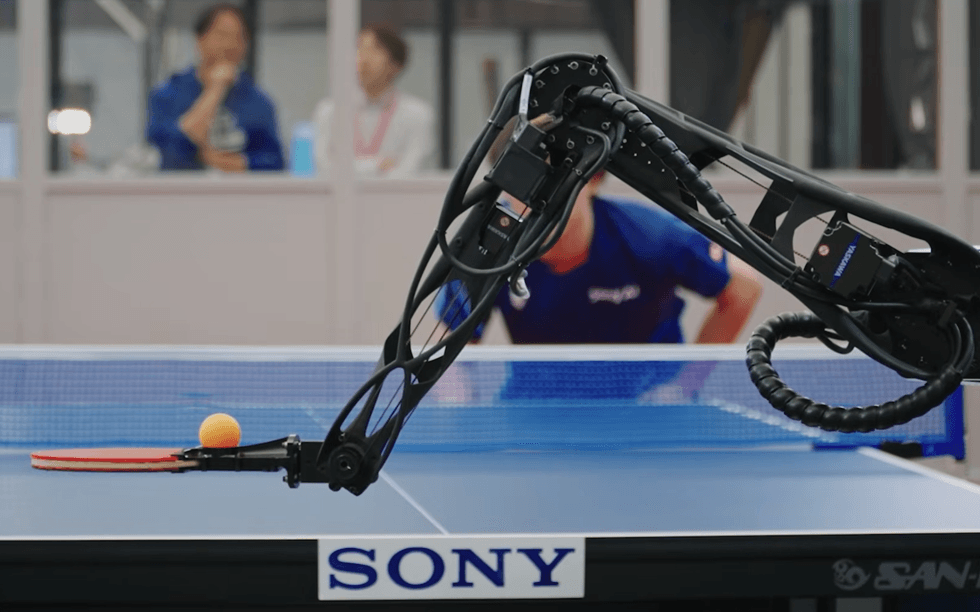
Video Friday: Who Wins in Robot Versus Pro Ping-Pong Player?
In a recent showcase of advancements in robotics, IEEE Spectrum highlighted several innovative developments and upcoming events in the field. Notably, Sony AI's latest research, featured on the cover of Nature, explores the potential of high-speed autonomous systems to master complex perception and dynamic control, aiming to compete with professional athletes. Among the exciting projects is the Ringbot Quad, a unique monocycle robot that integrates wheeled and legged locomotion, allowing it to navigate diverse terrains by switching between driving and walking modes. Meanwhile, in a significant milestone for China's robotics industry, humanoid robots outpaced human runners in a half-marathon in Beijing, with three robots finishing ahead of 12,000 participants. Other highlights include AthenaZero, a robot capable of juggling using only on-board sensory feedback, and advancements from the Max Planck Institute for Intelligent Systems, which reported a method to enhance the efficiency of soft electrostatic actuators, achieving conversion rates of up to 63.6%. As the field continues to evolve, discussions at Carnegie Mellon University emphasize the implications of Artificial General Intelligence (AGI) for society, proposing a future where humans collaborate with robots in supervisory roles, potentially transforming essential services and labor dynamics. Upcoming robotics events include ICRA 2026 in Vienna and the Summer School on Multi-Robot Systems in Prague, offering platforms for further exploration and innovation in robotics.
Robotics Humanoid-robots Video-friday Quadruped-robots Robot-videos Industrial-robots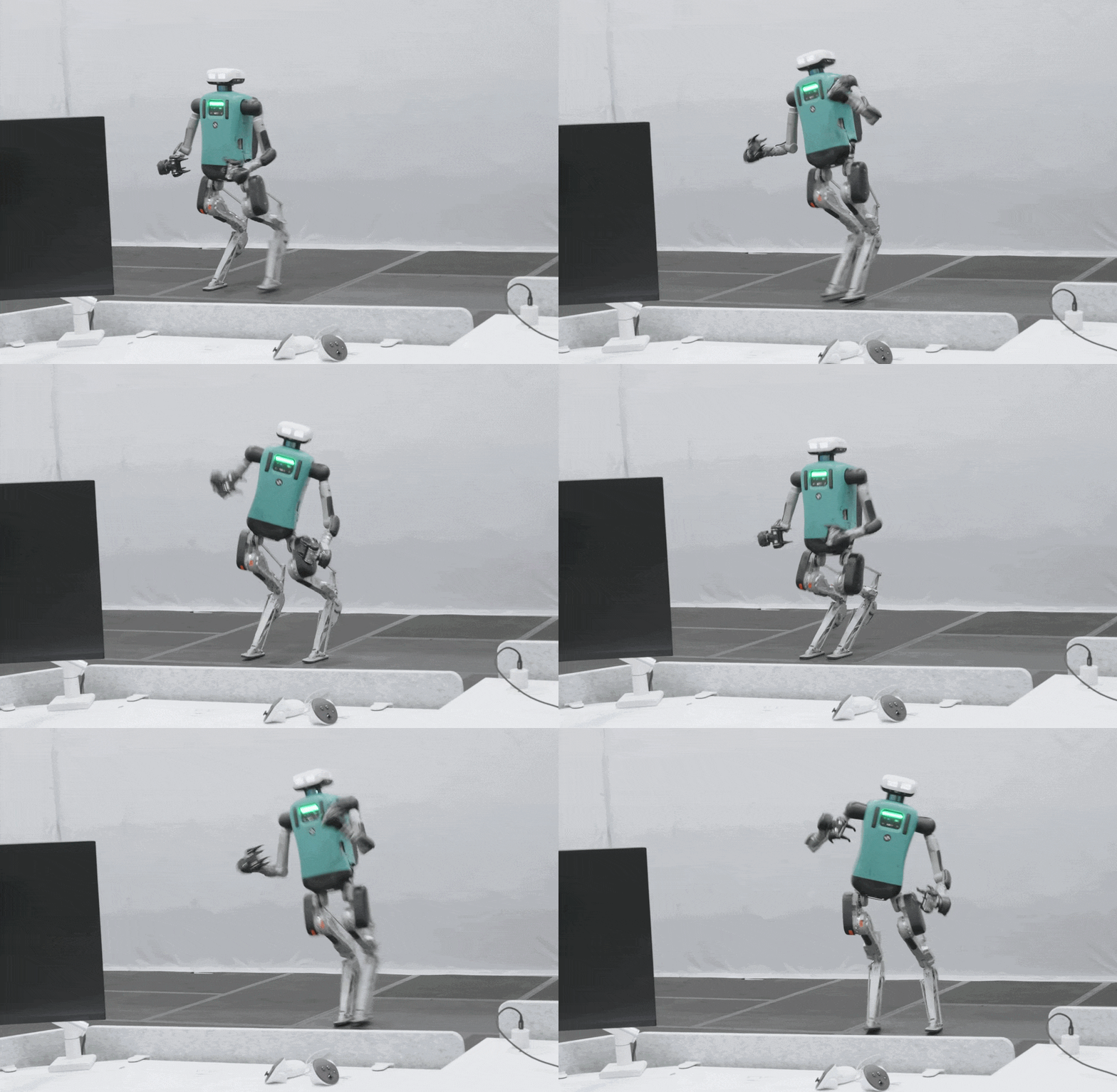
Video Friday: Digit Learns to Dance—Virtually Overnight
In a recent roundup of advancements in robotics, IEEE Spectrum highlighted several notable developments and upcoming events in the field. Among the key innovations is Digit, a humanoid robot that can learn new whole-body control capabilities overnight through sim-to-real reinforcement training, enhancing its performance in various tasks. Additionally, the introduction of GEN-1 marks a significant milestone in robot learning, achieving a 99% success rate in simple physical tasks and drastically reducing task completion time. Unitree has made strides by open-sourcing the UnifoLM-WBT-Dataset, a comprehensive dataset for humanoid robot teleoperation, which has been available since March 5, 2026. Meanwhile, researchers presented MRReP, a Mixed Reality interface that allows users to guide autonomous mobile robots in human-shared environments through hand gestures. In other developments, Sanctuary AI showcased its advanced hydraulic hands capable of dexterous manipulation, while China’s Yuxing 3-06 satellite successfully completed an in-orbit refueling test, paving the way for future satellite servicing. Furthermore, Japan Railway West collaborated with Serendix to utilize 3D printing technology for rapid construction at Hatsushima station, demonstrating innovative solutions to infrastructure challenges. Upcoming robotics events include ICRA 2026 in Vienna from June 1-5, and the Summer School on Multi-Robot Systems in Prague from July 29 to August 4, 2026, providing platforms for further exploration and collaboration in the robotics sector.
Humanoid-robots Video-friday Robot-ai Human-robot-interaction Teleoperation Industrial-robots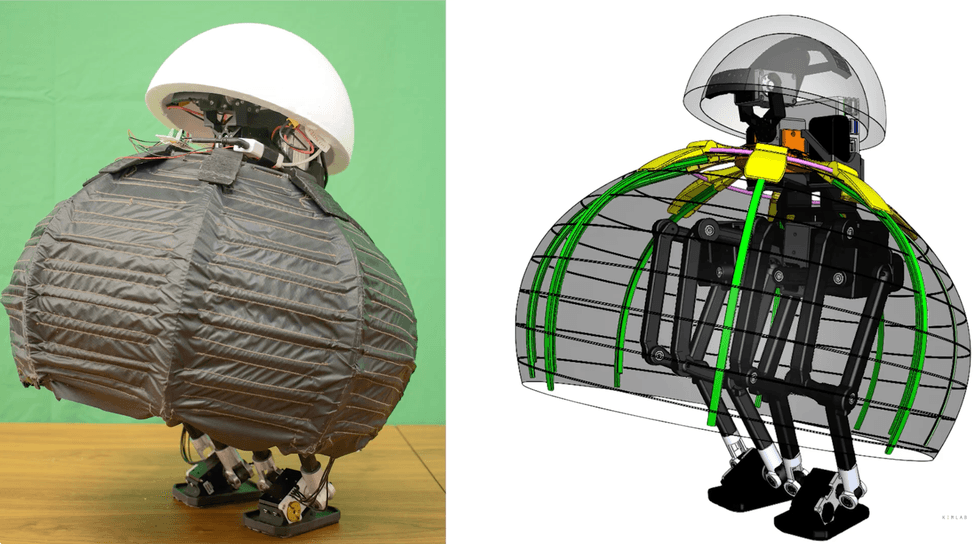
Video Friday: Bipedal Robot Stops Itself From Falling
IEEE Spectrum robotics has released its latest edition of Video Friday, showcasing a variety of innovative robotics videos and announcing upcoming events in the field. Among the highlights is the Robotic Autonomy in Complex Environments with Resiliency (RACER) program, which is nearing completion after extensive collaboration with the U.S. Army and Marine Corps. This program is expected to leave a lasting impact on military operations and stimulate private-sector investment in autonomous technologies. Notable advancements include the introduction of COSA, a cognitive operating system that enhances humanoid robots' capabilities for high-level cognition and motion control. Meanwhile, the 1X World Model has made significant strides in robot learning, allowing its NEO model to perform tasks autonomously based on voice or text prompts, even for unfamiliar objects. In assistive technology, the GuideData Dataset has been launched to improve interactions between guide dog trainers and visually impaired individuals, aiming to enhance mobility and safety. Additionally, Fourier's Care-Bot prototype is gaining attention for its interactive features at CES 2026. In environmental monitoring, ETH Zurich has developed an autonomous quadruped robot for volcanic gas measurements, successfully tested on Mount Etna. Humanoid robots have also made progress in industrial logistics, completing proof-of-concept testing at Siemens's factory in Erlangen. Columbia Engineers have created a robot capable of learning facial lip motions for speech and singing through observational learning, marking a significant milestone in robotics. Lastly, DEEP Robotics showcased its quadruped robots' capabilities in complex firefighting scenarios, while Synapticon introduced its POSITRON platform to enhance safety in humanoid robots for real-world applications.
Robotics Video-friday Bipedal-robots Humanoid-robots Quadruped-robots Industrial-robotsRobotics needs a service framework.
RSF defines a common language for robot service capability, lifecycle operations, certification pathways, and service-provider networks.