Industry Briefing

A single destination for timely, editor-curated robotics news from around the world.
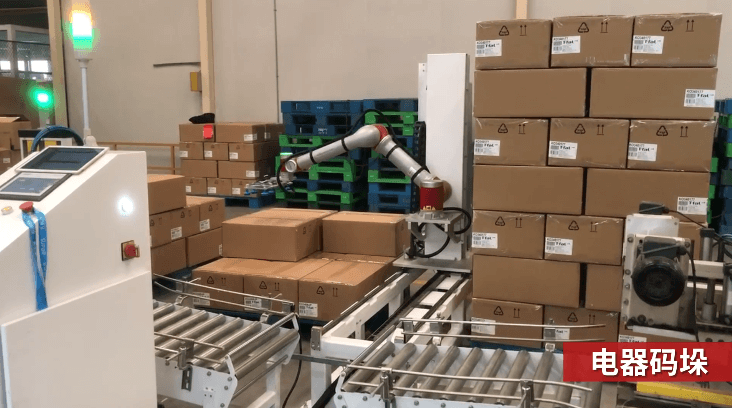
Robotic Packaging Solutions for Perishables: Meeting Strict Hygiene Standards

Robotic Packaging Solutions for Perishables: Meeting Strict Hygiene Standards

JAKA has introduced advanced industrial welding robots and robotic packaging solutions aimed at enhancing the safety and quality of perishable goods. As manufacturers grapple with the challenges of maintaining hygiene standards during high-volume production, JAKA's automation technology offers a solution. The JAKA Zu30 palletizing robot, designed for compact spaces, can operate across multiple production lines, significantly reducing operational costs while minimizing human contact to lower contamination risks. These robotic systems automate repetitive tasks such as palletizing and product sorting, thereby eliminating potential human errors and ensuring sanitary packaging operations. They are easy to clean and maintain, aligning with the strict hygiene requirements of the food, pharmaceutical, and sensitive product industries. By providing flexible integration capabilities, the JAKA Zu30 can adapt to various packaging formats and load sizes, making it suitable for a wide range of perishable goods. JAKA's commitment to automation not only improves production efficiency but also creates a cleaner and safer workspace for operators. By leveraging these innovative solutions, companies can achieve reliable packaging performance while adhering to stringent industry standards, ultimately safeguarding product quality and worker safety.

10Beauty Launches First Robot Nail Salon in New York with Automated Services

10Beauty Launches First Robot Nail Salon in New York with Automated Services

In July, 10Beauty opened its first store in New York's Yonkers ULTA Beauty, introducing robotic nail services to the East Coast. The company's automated nail system performs a complete five-step process, including nail polish removal, shaping, cuticle care, coloring, and drying, all guided by computer vision and robotic arms. The use of single-use capsule systems for nail polish eliminates cross-contamination, ensuring a hygienic experience for customers. This innovative approach to nail care matters as it offers a standardized, repeatable service akin to a coffee machine using capsules, according to co-founder Alex Shashou. Customers can choose from 16 allergen-free natural nail polish colors, with prices ranging from $30 to $35 per service, comparable to traditional nail salons. The design prioritizes safety, with no blades used inside the machine and thorough disinfection after each use, garnering positive feedback for precision and cleanliness. Looking ahead, 10Beauty anticipates that by the end of this decade, 90% of people will interact with AI robots daily, with nail services being just the beginning. The company is preparing to offer more customization options, new colors, and faster services, betting that most customers prioritize cleanliness and precision over personal interaction during their nail care experience. No further timeline was disclosed at the time of publication.

Automated Nail Services Robotics AI Technology Hygiene Solutions
PUDU Robotics releases video showcasing new cleaning robot feature that instantly updates maps, eliminating task resets.

PUDU Robotics releases video showcasing new cleaning robot feature that instantly updates maps, eliminating task resets.

PUDU Robotics has released a video showcasing its cleaning robot's capabilities in a segment titled "Quick On-site Tes" on its official YouTube channel. The video was published on June 12, 2026, highlighting the robot's efficiency and effectiveness in real-time cleaning tasks. This initiative aims to demonstrate the advanced technology behind PUDU's cleaning solutions and their potential applications in various environments. By sharing this content, the company seeks to engage with its audience and promote the benefits of automation in maintaining cleanliness and hygiene.

Robot Arms for Food and Beverage Packaging: Three Functional Options

Robot Arms for Food and Beverage Packaging: Three Functional Options

In the food and beverage sector, the unique challenges of packaging automation demand specialized solutions, particularly in hygiene, speed, and gentle handling. JAKA, a provider of industrial robotic arms, emphasizes the importance of selecting the right technology to meet these specific needs. Their robotic arms are designed for precision in handling delicate items such as baked goods and chocolates, achieving accuracy within 0.2mm to minimize product waste and maintain production efficiency. Additionally, JAKA robots are built to withstand demanding environments, featuring an IP54 rating for waterproof and dustproof performance. This durability allows them to operate reliably in cold storage and humid conditions, while their compact design enables installation in tight spaces on busy packaging floors. Moreover, JAKA robotic arms excel in integration, functioning as intelligent nodes within packaging lines. They can communicate with vision systems and conveyors, allowing for real-time adjustments based on data received from cameras. This capability enhances overall equipment effectiveness by ensuring precise placement of products into moving cartons. By aligning their robotic technology with the specific challenges of food and beverage packaging, JAKA aims to enhance hygiene, consistency, and throughput in this fast-paced and regulated industry.

Cobots: Best Practices for Food and Beverage Packaging

Cobots: Best Practices for Food and Beverage Packaging

JAKA, a leader in robotics and manufacturing, is addressing the challenges of hygiene and flexibility in food and beverage packaging through innovative collaborative robot technology. As the demand for efficient and adaptable production processes grows, JAKA has developed robotic arms designed to withstand rigorous cleaning protocols, featuring an IP54 waterproof and dustproof rating. This design ensures that hygiene standards are met without compromising functionality. The company emphasizes user-friendly operation, allowing packaging line technicians to easily reprogram robots for quick adjustments between multiple product SKUs. JAKA’s intuitive graphical programming interface enables rapid mold changes and adaptations to various package sizes, significantly reducing downtime and making advanced robotics accessible to a wider range of team members. In high-speed production environments, precision is critical. JAKA’s robotic arms are equipped with high-precision hardware and adaptive control algorithms to maintain consistent accuracy throughout long production runs. This capability ensures that every package is handled correctly, preserving product quality and line efficiency. By focusing on hygiene, ease of use, and precision, JAKA aims to integrate collaborative robots seamlessly into packaging processes, enhancing both quality and flexibility on the production floor. The company’s commitment to addressing the unique demands of the food and beverage sector positions it as a key player in advancing robotics and manufacturing solutions.

RobotToday Initiative

Robotics needs a service framework.

RSF defines a common language for robot service capability, lifecycle operations, certification pathways, and service-provider networks.