Industry Briefing
A single destination for timely, editor-curated robotics news from around the world.

How neurons sense bacteria in the gut
A recent study has uncovered significant insights into how neurons interact with bacteria and their effects on animal brains. Researchers focused on nematodes to explore the mechanisms by which a specific neuron detects bacterial signals. This investigation sheds light on the intricate relationship between neural activity and microbial presence, highlighting the potential implications for understanding brain function in various organisms. The findings, which emerged from laboratory experiments conducted in October 2023, aim to deepen our comprehension of the sensory processes involved in neuronal responses to bacterial stimuli. This research could pave the way for future studies on the broader impacts of bacteria on neurological health and behavior.
Research Bacteria Neuroscience Microbiome Brain and cognitive sciences Picower Institute
With navigating nematodes, scientists map out how brains implement behaviors
Scientists at MIT have developed a comprehensive map detailing the neural processes in C. elegans worms as they navigate toward appealing odors or steer clear of unpleasant ones. This groundbreaking research, which sheds light on the decision-making mechanisms in these simple organisms, was conducted to better understand the fundamental principles of sensory processing and behavior. By employing advanced imaging techniques, the team was able to observe the specific neural pathways activated during these olfactory-driven behaviors. The findings, published recently, could have broader implications for understanding similar processes in more complex organisms, including humans, and may contribute to advancements in neuroscience and behavioral studies.
Research Neuroscience Animals Behavior Brain and cognitive sciences Picower Institute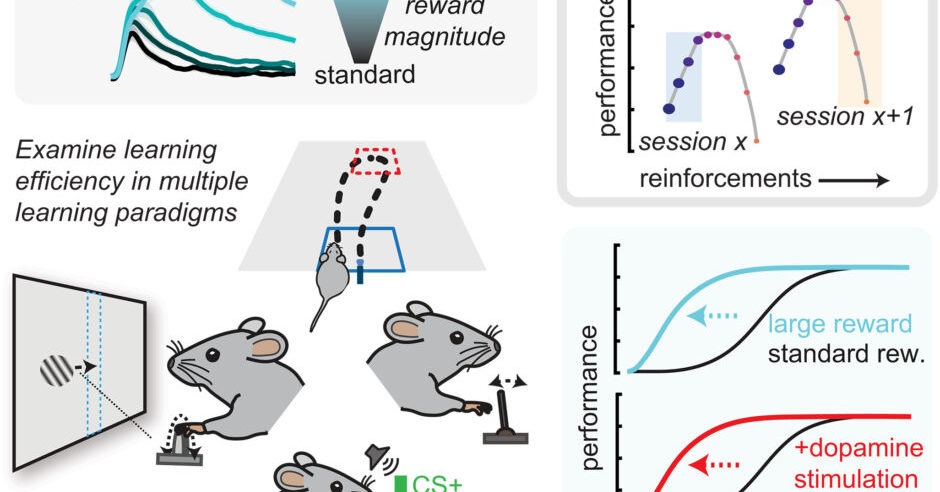
Research Reveals Reward Magnitude Enhances Learning Efficiency in Mice
A study published in Science by researchers from the Howard Hughes Medical Institute demonstrates that the magnitude of rewards significantly influences learning speed. Mice receiving larger rewards completed complex tasks, such as navigation and decision-making, in fewer trials compared to those receiving standard rewards. This finding is crucial as it suggests that learning efficiency is not solely dependent on practice quantity but rather on the size of the rewards. The study indicates that larger rewards lead to prolonged dopamine release in the brain, enhancing motivation and retention of learned tasks. Future research may focus on how these insights can be applied to improve learning strategies in various fields, including education and behavioral training. No further timeline was disclosed at the time of publication.
Robotics needs a service framework.
RSF defines a common language for robot service capability, lifecycle operations, certification pathways, and service-provider networks.