Industry Briefing
A single destination for timely, editor-curated robotics news from around the world.

AI Is Starting to Build Better AI
Recent advancements in artificial intelligence (AI) have reignited discussions about recursive self-improvement (RSI), a concept first proposed by mathematician I. J. Good in 1966. As AI systems like large language models (LLMs) and machine-learning algorithms evolve, researchers are exploring how these technologies can autonomously enhance their own capabilities. Notable developments include OpenAI's GPT-5.3-Codex, which reportedly assisted in its own creation, and Google DeepMind's AlphaEvolve, designed to optimize complex problems in scientific discovery. While some researchers view these advancements as steps toward fully autonomous AI, they acknowledge that current systems still depend on human oversight for goal-setting and evaluation. Experts like Jeff Clune from the University of British Columbia believe that the field is on the brink of achieving RSI, which could revolutionize science and technology. However, challenges remain, including the complexity of AI systems and the necessity of human involvement in the development process. Concerns about the potential risks of RSI have also emerged, with some experts advocating for a pause in AI development to prevent unintended consequences. The debate continues over whether AI could lead to an intelligence explosion, with many researchers emphasizing the importance of maintaining human oversight to ensure safe progress. As AI technologies evolve, the future landscape may see a collaborative relationship between humans and machines, reshaping roles in research and innovation.
Ai-safety Singularity Llms Evolutionary-algorithm
AI Models Map the Colorado River’s Hard Choices
As the Colorado River faces a critical water crisis, projections indicate that 2026 could be its worst year on record, with flows down 20% from 2000 levels. This alarming situation has prompted negotiations among seven U.S. states over water-sharing agreements to collapse twice, leading the federal government to consider imposing its own plan. The U.S. Bureau of Reclamation, responsible for managing the river's operations, is utilizing advanced machine learning tools and millions of simulations to forecast streamflow and assess reservoir strategies. These technologies are enhancing decision-making processes by providing clearer insights into the consequences of various water management strategies. In addition to Reclamation's efforts, researchers from institutions like Metropolitan State University of Denver and Utah State University are developing forecasting systems that leverage satellite data and deep learning to issue drought warnings and analyze the river's interdependencies. However, despite these advancements, the models are limited by historical data that may not accurately reflect the current and future conditions of the river, particularly during droughts. While improved forecasting tools are fostering discussions among stakeholders, the fundamental challenge remains: determining how to allocate the diminishing water resources fairly. Experts warn that the impending cuts will significantly impact agriculture and communities reliant on the river, underscoring the need for human judgment in navigating the complex moral and economic implications of the crisis. Despite the challenges, there is cautious optimism that these tools are facilitating dialogue among the parties involved.
Colorado-river Drought Environmental-policy Climate-change Simulations Evolutionary-algorithm
AI Models Overthink Problems—and It’s a Security Risk
Large language models (LLMs) that can think through problems step-by-step have significantly increased the scope of tasks that AI can tackle. But new research suggests these reasoning capabilities also introduce a critical vulnerability that could allow attackers to slow these systems to a crawl.While earlier generations of LLMs would immediately produce a response to a user’s request, today’s most advanced models generate an internal monologue where they break down the problem into steps and reason about the best way to tackle it before providing an answer. This has allowed AI to tackle increasingly complex problems, particularly in areas like coding and math.However, previous research has shown that these models are susceptible to sometimes producing excessively long streams of reasoning that do little to boost performance, a phenomenon known as “overthinking.” In research presented this week at the International Conference on Machine Learning 2026 in Seoul, researchers from Zhejiang University and e-commerce giant Alibaba in China demonstrate that they can deliberately induce overthinking by subjecting models to logically inconsistent prompts. The result is a form of denial-of-service attack on commercial AI models.Evolutionary Prompt Attack on LLMsThe team has developed an evolutionary algorithm that corrupts the logical structure of prompts, causing models to spiral into overthinking as they attempt to reason through fundamentally unsolvable problems. Generating longer responses costs more and increases the load on a model provider’s servers, so if done at scale, the researchers say, this could significantly degrade the experience of legitimate users. The attack was effective against reasoning models from leading AI companies including DeepSeek-R1, Alibaba’s Qwen3-Thinking, OpenAI’s GPT-o3, and Google’s Gemini 2.5 Flash and resulted in outputs up to 26 times as long as standard responses on a standard math benchmark.“Across multiple datasets and reasoning models, our method substantially amplifies the output length,” Wei Cao, a masters student at Zhejiang University, wrote in an email to IEEE Spectrum. “Our results suggest that overthinking is not an isolated phenomenon specific to individual models, but rather a shared vulnerability among modern reasoning models.”The team’s approach builds on previous research from another group of researchers that showed reasoning models tend to overthink when faced with a question in which a key premise has been removed—such as asking how far someone who walks ten miles a day covers in total without specifying how many days they walked for. Rather than identifying that the problem is unsolvable, models often engage in extended but ultimately fruitless reasoning loops in an attempt to answer the question.Taking the idea a step further, the authors took 940 problems from three math benchmark datasets and used an LLM to break down their logical structure into a set of premises and a final question. The genetic algorithm then jumbled these up using a variety of “mutations,” including swapping premises between problems, adding extra premises to problems, deleting existing premises from problems, and swapping the final questions between two sets of premises.After each round of mutations, the problems are scored on how many words they cause a target model to output and also whether they increase the frequency of specific linguistic markers of overthinking—words like “but,” “wait,” “maybe,” or “alternatively.” The problems that scored highest on both measures are retained and the remaining ones are jumbled up again, and this process is repeated for five generations. Crucially, the approach doesn’t require access to the internals of a model and can generate malicious prompts by simply querying the target, which makes it possible to attack closed-source commercial services, says Cao.Overthinking Vulnerability in AI ModelsThe researchers found that the approach consistently led to outputs several times longer than those generated by the unmodified questions for the reasoning models they tested it on. The biggest jump came from DeepSeek-R1 on the MATH dataset, which is made up of problems from high school math competitions, where the maximum output was 26.1 times as long as the longest response the model provided to unaltered questions. While the main thrust of the research was focused on math problems, the authors also tested it on coding, scientific reasoning, and dialogue challenges, and observed significant jumps in output length in all three.One challenge for the approach is that developing the malicious prompts requires repeated queries to expensive reasoning models, which Cao admitted could limit its cost-effectiveness. However, the researchers also demonstrated that when they used a smaller, cheaper model to generate the malicious prompts they were still able to induce the target models to produce outputs several times longer than normal. This ability to transfer malicious prompts between models significantly increases the attack’s feasibility, Cao wrote.However, he pointed out that the goal of the research is not to develop a practical DoS attack on reasoning models. Factors like the providers’ pricing model, rate limiting policies, context window size, and existing defenses could all impact how effective the approach is. The intention is instead to highlight these models’ vulnerability to logically inconsistent prompts so that providers can attempt to mitigate the problem.“Our objective is not to demonstrate that large-scale attacks can be launched at negligible cost, but rather to establish that this attack surface exists,” he wrote. “Our results indicate that the vulnerability represents a realistic security concern.”
Llms Artificial-intelligence Denial-of-service Cybersecurity
‘What a joke’: Github Copilot’s new token-based billing spurs consternation among devs
Microsoft's GitHub Copilot, once heralded as a revolutionary tool for software development, is now facing a decline in its prominence. As of October 2023, the platform, which utilizes artificial intelligence to assist programmers by suggesting code snippets and improving productivity, is experiencing a shift in user engagement and perception. The waning interest can be attributed to a combination of factors, including the emergence of competing AI coding assistants that offer similar or enhanced functionalities. Developers are increasingly exploring alternative tools that may better meet their evolving needs in a rapidly changing technological landscape. This transition marks a significant moment for GitHub Copilot, which had previously been celebrated for its innovative approach to coding assistance. As the market becomes more saturated with AI solutions, Microsoft will need to reassess its strategies to maintain relevance and user satisfaction in the competitive field of software development tools.
AI Microsoft
Itera raises $12 million for fluid circuit board that rewires itself in under a minute
Deep tech startup Itera has unveiled its groundbreaking prototype of the world's first fluid circuit board, a technology that enables engineers to rewire and retest physical electronic circuits in under a minute. This significant advancement aims to streamline the design and testing processes in electronics, potentially transforming how engineers approach circuit development. The announcement was made as Itera emerged from stealth mode, highlighting its innovative capabilities. To support its launch and further development, the company secured $12 million in seed funding from notable investors including Upfront Ventures, Costanoa Ventures, and Colle Capital. This funding will facilitate Itera's efforts to bring its revolutionary technology to market, marking a pivotal moment in the evolution of electronic circuit design.
Electronics News automation news deep tech startups electronic design automation electronics design
Breakthrough in Shape Memory Alloys: Korean Team Achieves 140° Reversible Deformation in 1 Second
A research team at the Korea Advanced Institute of Science and Technology (KAIST) has unveiled a revolutionary bi-directional shape memory alloy/polymer composite actuator. This new actuator boasts an impressive 82% recovery rate and a deformation range of 140 degrees, significantly improving the functionality of actuators used in robotics and aerospace. The development, which promises to enable rapid and reversible movements, was driven by the need for more efficient and versatile components in advanced technological applications. Researchers achieved this breakthrough through innovative material engineering techniques, positioning the actuator as a potential game-changer in the fields of robotics and aerospace engineering.
Shape Memory Alloys Smart Actuators Robotics Aerospace Technology Material Science
Innovative Robot Tactile Sensing: A Team from USTC Uses Liquid Metal to Replace Dense Sensor Arrays
A research team at the University of Science and Technology of China has unveiled a revolutionary tactile sensing platform named CLiMETS. This innovative technology employs a single piece of liquid metal to effectively detect touch and pressure, streamlining the sensing process by removing the necessity for intricate sensor arrays. The development, announced recently, promises to significantly enhance sensitivity and durability in tactile sensing applications. This advancement is expected to facilitate the integration of more sophisticated robotic systems, marking a notable step forward in the field of robotics and sensory technology.
Tactile Sensing Liquid Metal Technology Robotics Soft Robotics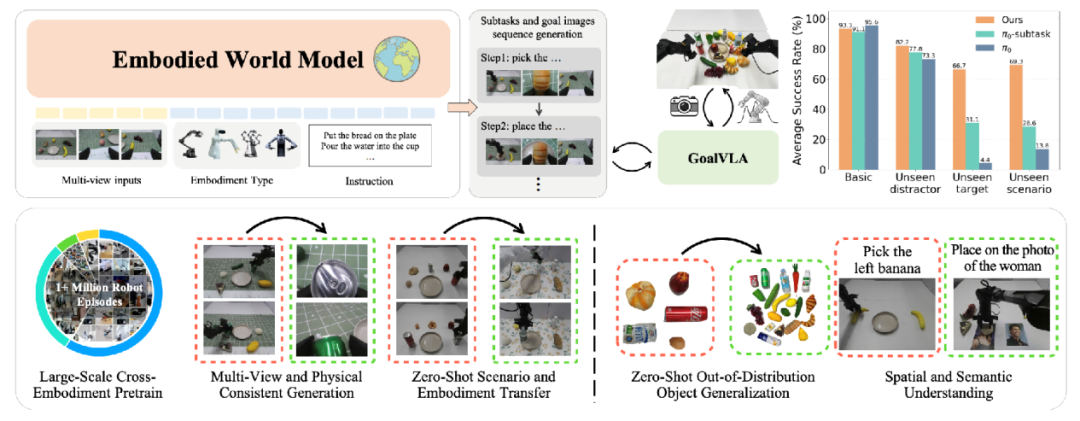
ZhiYuan VISTA: The Industry's First Open Source World Model + VLA Framework
The ZhiYuan VISTA framework has unveiled a revolutionary solution aimed at addressing the challenges of robotic generalization. By integrating a world model with Vision-Language-Action (VLA) capabilities, this innovative framework significantly improves performance in real-world applications. Achieving a success rate of 69% in out-of-distribution tasks, the ZhiYuan VISTA framework demonstrates its effectiveness even with limited data. This advancement marks a significant step forward in the field of robotics, potentially transforming how robots interact with and adapt to diverse environments.
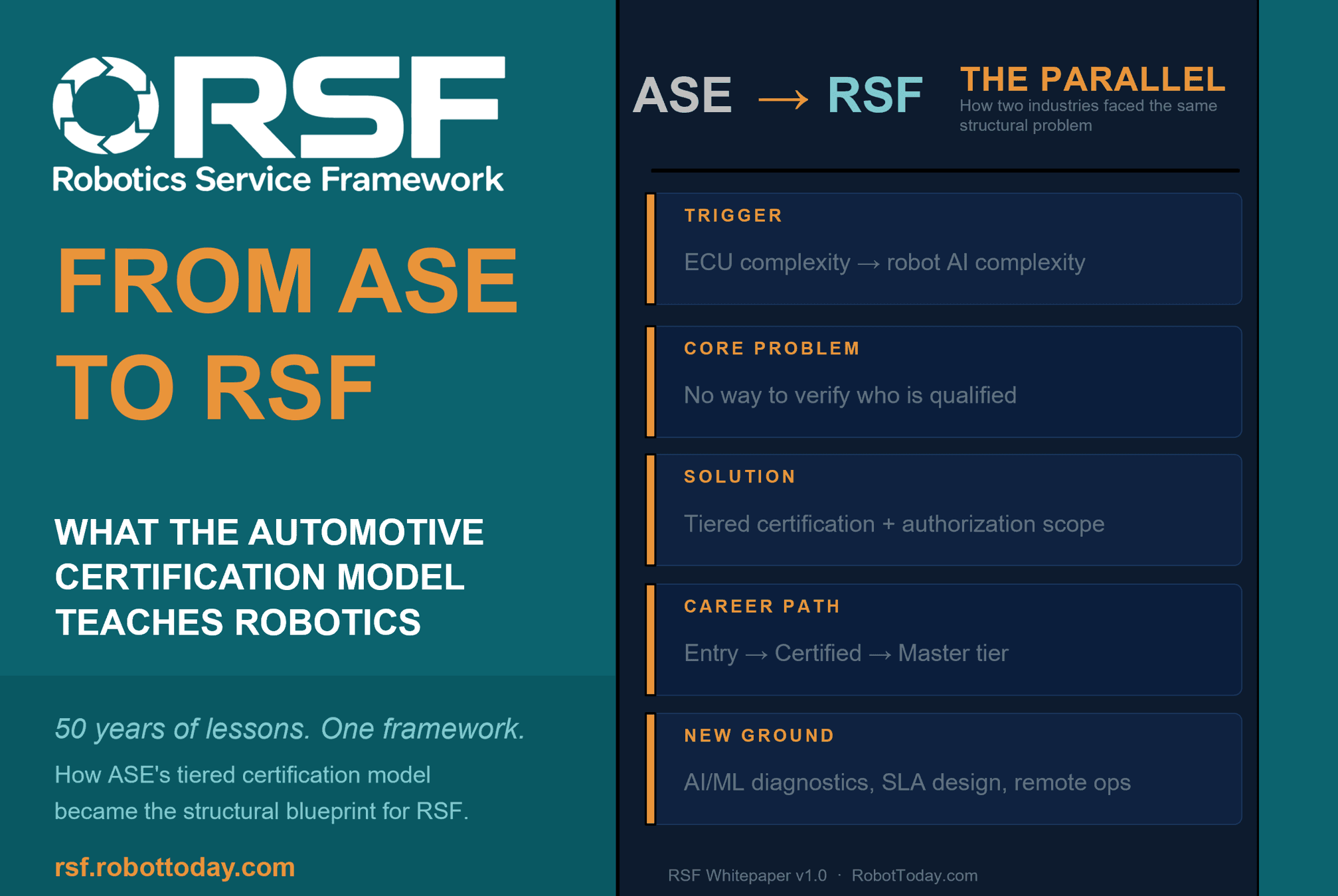
Robotics AI Machine Learning Computer VisionRobotics needs a service framework.
RSF defines a common language for robot service capability, lifecycle operations, certification pathways, and service-provider networks.