Industry Briefing
A single destination for timely, editor-curated robotics news from around the world.
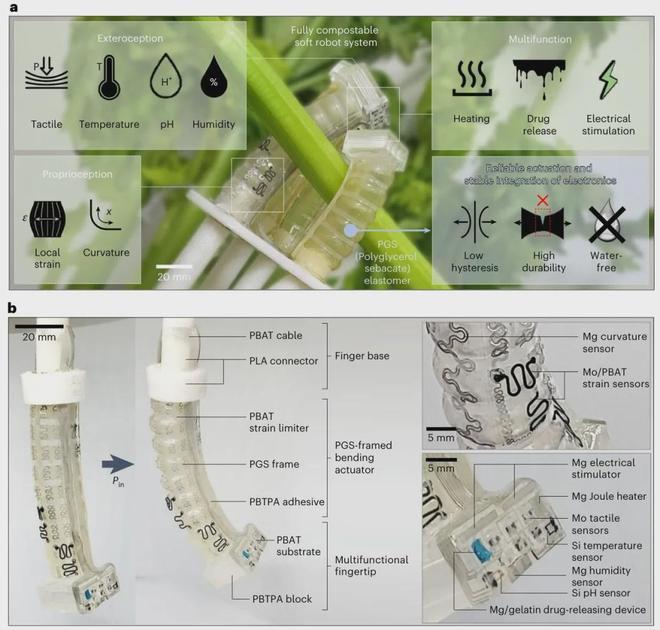
Top Journal Nature: A Robot Finger That Withstands One Million Bends and Can Be Used as Fertilizer After Its Life Ends!
A team of researchers from prominent institutions has unveiled a groundbreaking biodegradable robotic finger capable of withstanding over one million bends. This innovative development aims to tackle the escalating problem of electronic waste by enabling robots to decompose naturally and enrich the soil after their operational lifespan. By combining high performance with sustainability, this advancement represents a significant step forward in the quest for environmentally friendly technology solutions.
Biodegradable Robots Sustainable Technology Robotics Electronic Waste Agricultural Robotics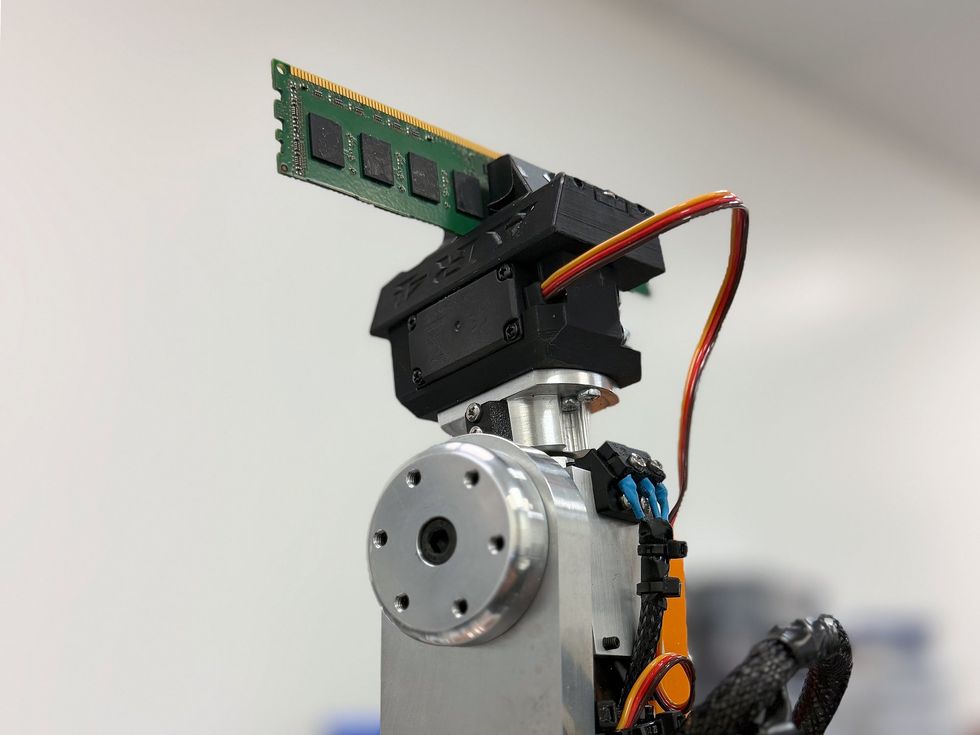
Robots Could Turn E-Waste Into a Source of Legacy Chips
In response to increasing regulatory pressures regarding electronic waste, Tuurny, a San Francisco-based startup, is developing an innovative automated system aimed at enhancing e-waste recycling. With global e-waste projected to reach 82 million tonnes annually by 2030, current recycling methods capture less than one-third of the recoverable metal value from discarded electronics. Tuurny’s robotic system, named Nantul, is designed to identify and extract reusable components, particularly RAM integrated circuits, from circuit boards before they are shredded. The company plans to deploy dozens of these machines in early 2027 through a partnership with Areera, a UK-based television recycler that processes 1,500 tonnes of televisions monthly. Tuurny’s approach contrasts with traditional recycling methods, which often destroy valuable components by mixing them into bulk streams. Instead, Nantul employs advanced robotics and computer vision to carefully remove and sort components, aiming to create a new supply chain from recycled materials. Sina Ghashghaei, Tuurny’s founder, emphasizes the importance of recovering components from legacy systems, where sourcing replacements can be challenging. The technology, which combines suction, controlled heat, and robotic controls, is designed to minimize damage during extraction. While experts acknowledge the technical feasibility of Tuurny’s approach, challenges remain in ensuring the robots can adapt to the variability of e-waste and operate cost-effectively. The success of this initiative could significantly impact the recycling industry and address supply chain concerns for critical components in various sectors.
E-waste Robotics Electronics-recycling Computer-vision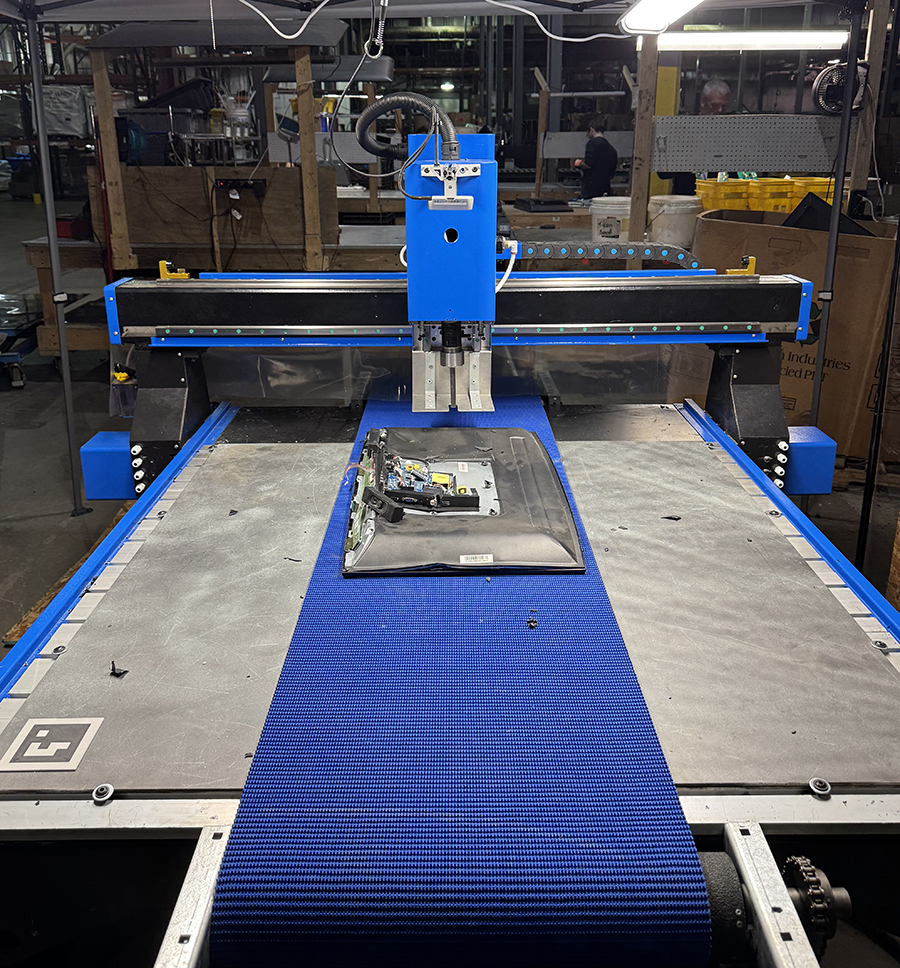
CMU Robot Works Inside E-Waste Recycling Facility
A researcher from Carnegie Mellon University's School of Computer Science is leveraging robotics to enhance the efficiency of e-waste recycling, particularly for flat-screen displays. This initiative comes in response to the alarming growth of e-waste, which reached an estimated 62 million tons globally in 2022, making it one of the fastest-growing waste categories. By integrating robotic technology within e-waste recycling facilities, the researcher aims to streamline the recycling process, ultimately addressing the increasing environmental challenges posed by electronic waste. This innovative approach not only seeks to improve recycling rates but also to mitigate the negative impact of e-waste on the environment.
Research
Huawei, vivo, and OPPO help establish first global fast-charging standard under ITU
The International Telecommunication Union (ITU) has officially approved a new universal fast-charging standard, designated L.1004, aimed at mobile terminals. This standard, co-authored by China's China Academy of Information and Communications Technology (CAICT) along with major tech companies Huawei, vivo, and OPPO, facilitates fast charging across various brands and devices. The initiative, announced recently, seeks to address the growing concern of charger duplication and electronic waste, promoting a more sustainable approach to mobile technology. By standardizing fast-charging protocols, the ITU aims to streamline user experiences and reduce the environmental impact associated with multiple chargers.
News Feed
Small Industrial Robots Pros and Cons: An Honest Review for Lean Automation
In a bid to enhance manufacturing efficiency through "Lean Automation," many producers are turning to small industrial robots, such as the JAKA MiniCobo, which offers a compact solution to traditional bulky systems. These mini robot arms, designed to fit in tight spaces, provide a low-risk entry into automation, allowing manufacturers to maximize productivity while minimizing waste. The JAKA MiniCobo, weighing just 9.4 kg and featuring a 580 mm reach with a 1 kg payload, is particularly suited for delicate tasks in sectors like electronics and medical services. Its integrated intelligent drive module simplifies installation, eliminating the need for bulky control cabinets and enabling a plug-and-play experience. While small robots offer advantages such as energy efficiency, lower total cost of ownership, and safer operation near human workers, they also face limitations. Most can handle payloads under 2 kg and may struggle with high-torque tasks due to their lightweight construction. Additionally, they require careful management in high-temperature environments to prevent overheating. The JAKA MiniCobo exemplifies the principles of Lean Automation by reducing space and complexity while maintaining precision, making it an attractive option for manufacturers looking to streamline operations.
What Do Industrial Robot Arms Do? Functions in Modern Manufacturing
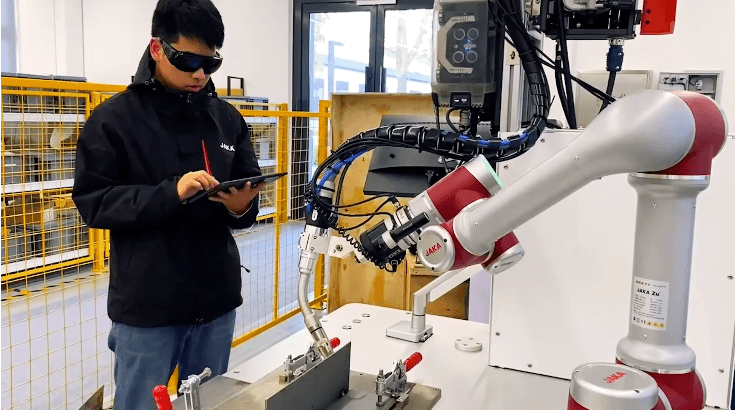
In the evolving landscape of modern manufacturing, industrial robot arms have emerged as essential components, revolutionizing production processes across various sectors, including automotive and pharmaceuticals. These advanced mechanical systems, designed to replicate human dexterity, offer unmatched precision, endurance, and payload capacity, enabling manufacturers to achieve unprecedented efficiency. Equipped with versatile "End-of-Arm Tooling" (EOAT), these robots perform a range of tasks, from picking and placing delicate electronic components to executing precise welding and material removal. Their ability to maintain consistent quality and reduce waste makes them invaluable in heavy industry. Furthermore, advancements in automation have led to the integration of 2D and 3D vision systems, allowing robots to adapt to their environment, detect defects, and handle unsorted parts, transforming them from simple tools into intelligent collaborators. Leading the charge in this industrial revolution is JAKA, a company that has developed the JAKA Zu and Pro series of robot arms. These models exemplify flexibility and ease of deployment, designed for seamless transitions between tasks such as screw driving and inspection. With user-friendly wireless control and graphical programming via the JAKA App, manufacturers can optimize their production lines without requiring extensive coding knowledge. JAKA's innovative solutions provide a compact and efficient alternative to traditional automation, empowering businesses to enhance their operational capabilities and reach their full potential.

How Lean Manufacturing Principles Drive Efficiency at a Robotic Arm Factory
At JAKA, a leading manufacturer of collaborative robots, the implementation of lean manufacturing principles is transforming their robot arm production process. By focusing on waste reduction and streamlined workflows, the company aims to enhance efficiency without adding complexity. This approach is integral to their long-term development strategy, which spans design, assembly, testing, and delivery. The factory employs lean practices to optimize material flow and workstation layouts, minimizing unnecessary movements and wait times. This meticulous refinement not only ensures consistent build quality but also shortens internal production cycles, which is crucial for meeting the diverse needs of industries such as electronics and automotive. Flexibility is a key aspect of modern automation, and JAKA's modular production planning allows for adjustments in configurations without disrupting overall workflow. This adaptability is essential for producing robots that cater to various payloads and installation environments. By balancing customization with production consistency, JAKA can efficiently respond to specific project requirements. Moreover, integrating quality checks at each production stage enhances system reliability and reduces the need for rework, ensuring that the robotic arms meet stringent functional and safety standards. This commitment to lean manufacturing supports JAKA's goal of fostering safe human-robot collaboration and delivering reliable performance in demanding industrial settings. Overall, JAKA views lean manufacturing as a continuous discipline that underpins their commitment to sustainable efficiency, enabling them to meet evolving automation demands while maintaining transparent and effective manufacturing operations.
The Ultimate Guide to Understanding 6 Axis Robot Arms (Definition, Types, Uses)
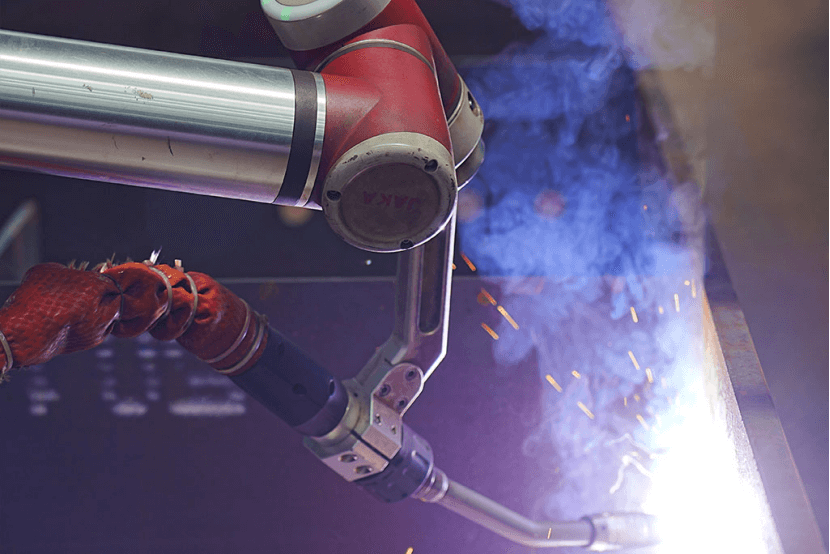
JAKA, a leader in industrial automation, is advancing manufacturing technology with its innovative 6-axis robot arms, designed to mimic the dexterity of human arms. These jointed arm robots feature six independent axes of motion, allowing for intricate maneuvers essential for complex tasks. The robots are engineered to optimize movement synergy, resulting in smooth and repeatable actions that enhance efficiency on the production floor. Available in various configurations, JAKA's 6-axis robots cater to different operational needs, including payload capacity and reach. Lighter models are ideal for precise assembly and sensitive handling, while heavier versions are suited for tasks like palletizing. This versatility makes them applicable across multiple industries, from welding and electronics assembly to material removal processes such as polishing and grinding. The deployment of these robotic arms offers significant benefits, including improved product quality, reduced waste, and enhanced process consistency. JAKA emphasizes the importance of integrating these advanced tools into production lines, addressing complex automation challenges and positioning businesses for success in an evolving industrial landscape.
Robotics needs a service framework.
RSF defines a common language for robot service capability, lifecycle operations, certification pathways, and service-provider networks.