Industry Briefing
A single destination for timely, editor-curated robotics news from around the world.

Breaking the Data Drought in Physical AI: Can Maniformer Define the Era of Embodied Intelligence as a 'Data Infrastructure Provider'?
On April 16, 2026, Maniformer unveiled a groundbreaking one-stop physical AI data service platform in Shanghai, marking a significant advancement in the field of embodied intelligence. This innovative platform aims to tackle the pressing issue of data scarcity that has hindered the development of intelligent robotics. Central to this initiative is the MEgo series hardware, designed to facilitate efficient data collection processes. By enabling robots to seamlessly transition from simulated environments to real-world applications, Maniformer's launch is poised to enhance the capabilities and deployment of AI-driven technologies across various industries.
Physical AI Data Infrastructure Robotics Data Collection Embodied Intelligence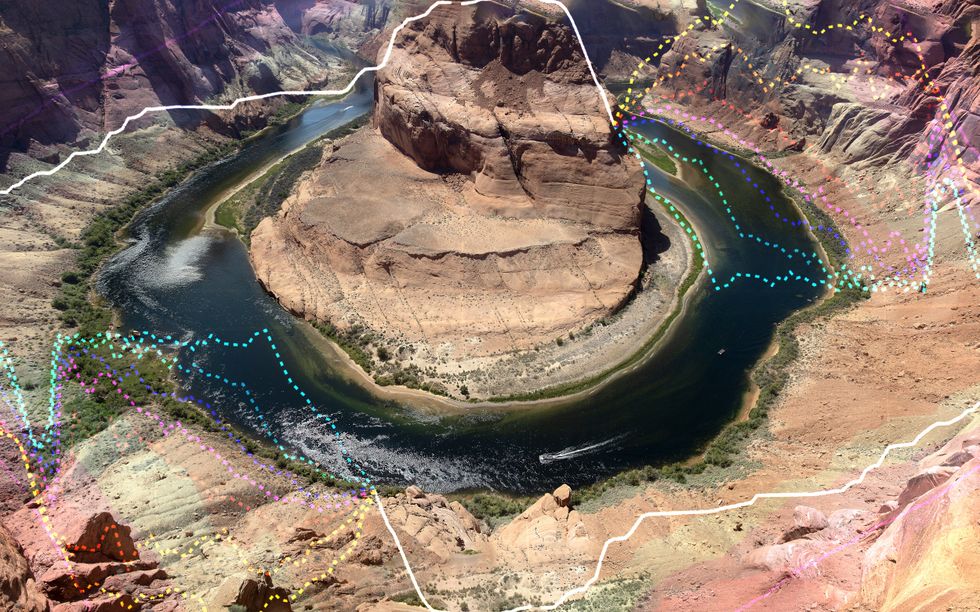
AI Models Map the Colorado River’s Hard Choices
As the Colorado River faces a critical water crisis, projections indicate that 2026 could be its worst year on record, with flows down 20% from 2000 levels. This alarming situation has prompted negotiations among seven U.S. states over water-sharing agreements to collapse twice, leading the federal government to consider imposing its own plan. The U.S. Bureau of Reclamation, responsible for managing the river's operations, is utilizing advanced machine learning tools and millions of simulations to forecast streamflow and assess reservoir strategies. These technologies are enhancing decision-making processes by providing clearer insights into the consequences of various water management strategies. In addition to Reclamation's efforts, researchers from institutions like Metropolitan State University of Denver and Utah State University are developing forecasting systems that leverage satellite data and deep learning to issue drought warnings and analyze the river's interdependencies. However, despite these advancements, the models are limited by historical data that may not accurately reflect the current and future conditions of the river, particularly during droughts. While improved forecasting tools are fostering discussions among stakeholders, the fundamental challenge remains: determining how to allocate the diminishing water resources fairly. Experts warn that the impending cuts will significantly impact agriculture and communities reliant on the river, underscoring the need for human judgment in navigating the complex moral and economic implications of the crisis. Despite the challenges, there is cautious optimism that these tools are facilitating dialogue among the parties involved.
Colorado-river Drought Environmental-policy Climate-change Simulations Evolutionary-algorithm
Graphene “Tattoos” for Plants Could Form Neural Networks
Researchers at the University of Texas at Austin have developed an innovative graphene "tattoo" that adheres directly to plant leaves, enabling real-time monitoring of leaf hydration. This breakthrough, published in the journal Nano Letters in February, addresses the limitations of traditional methods that require cutting leaves for moisture assessment. The sensor, which functions like a three-terminal transistor, sends electric pulses into the leaf, allowing it to measure moisture levels without disrupting photosynthesis. Led by associate professor Jean Anne Incorvia and graduate student Utkarsh Misra, the team envisions a future where these sensors could form a neural network across forests, providing critical data on drought and fire risks. The flexible and nearly transparent graphene material allows the tattoo to adapt to the leaf's movements, while its unique properties enable it to act as an artificial synapse, potentially enhancing plant-based computing. The concept emerged from a collaboration with geologist Ashley Matheny, highlighting the practical applications of the technology in agriculture and environmental monitoring. The researchers successfully trained a neural network to classify leaf hydration states, paving the way for more sophisticated plant monitoring systems that could help farmers and forest rangers respond to climate change challenges.
Graphene Agriculture Wildfires Neural-networksRobotics needs a service framework.
RSF defines a common language for robot service capability, lifecycle operations, certification pathways, and service-provider networks.