Industry Briefing
A single destination for timely, editor-curated robotics news from around the world.
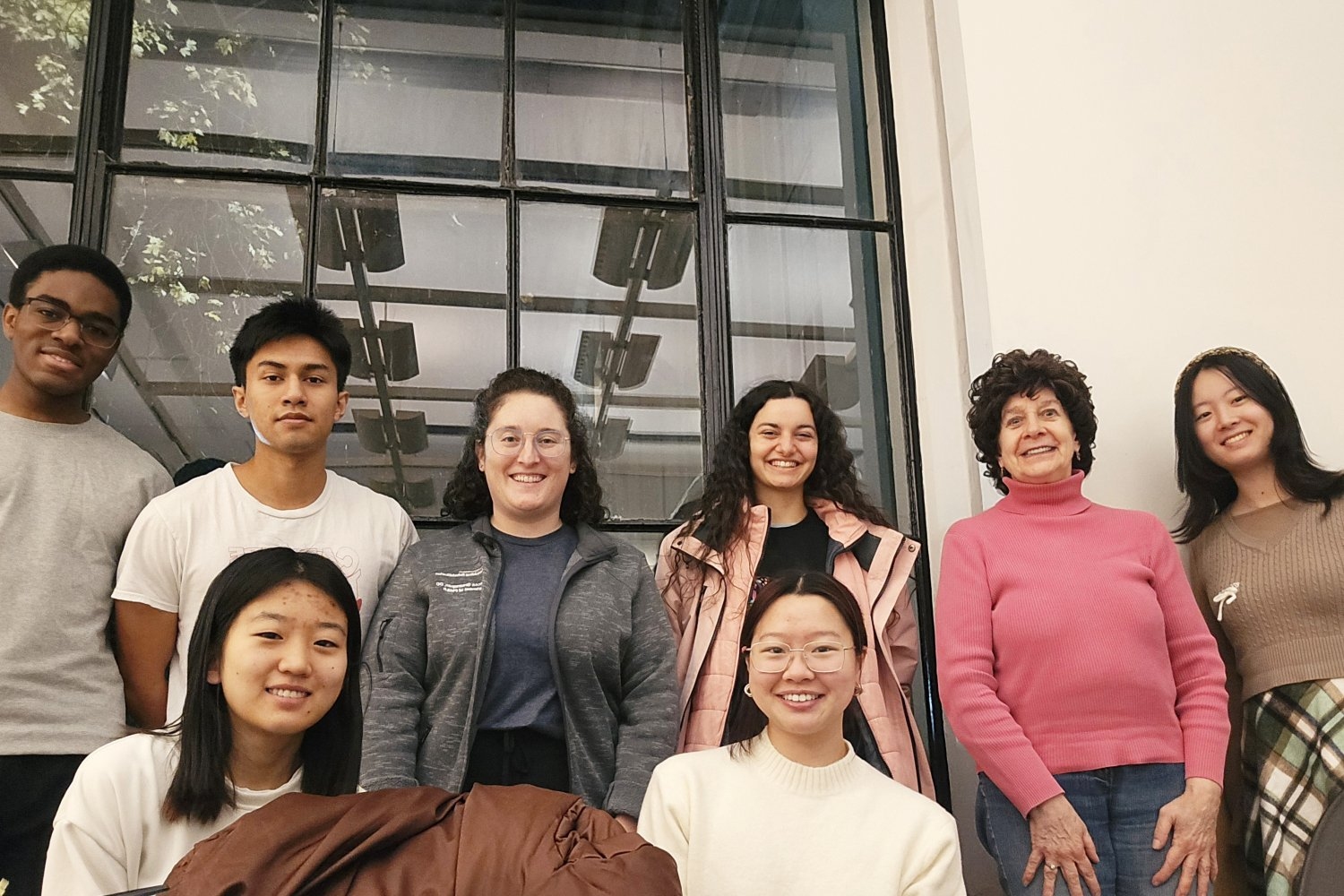
MIT BrainTrust supports neighbors living with brain injuries
Nearly 100 students from the Massachusetts Institute of Technology (MIT) are actively engaged in a buddy program designed to support residents in the Boston area. This initiative, which fosters community connections, aims to provide assistance and companionship to local individuals in need. The program has gained traction as students seek to make a positive impact on their surrounding community while also gaining valuable experiences. Through this collaborative effort, participants are not only helping others but also enhancing their own understanding of the diverse challenges faced by residents in the area. The program reflects MIT's commitment to community service and social responsibility, encouraging students to apply their skills and knowledge in real-world settings.
Clubs and activities Students Alumni/ae Biology Community Student life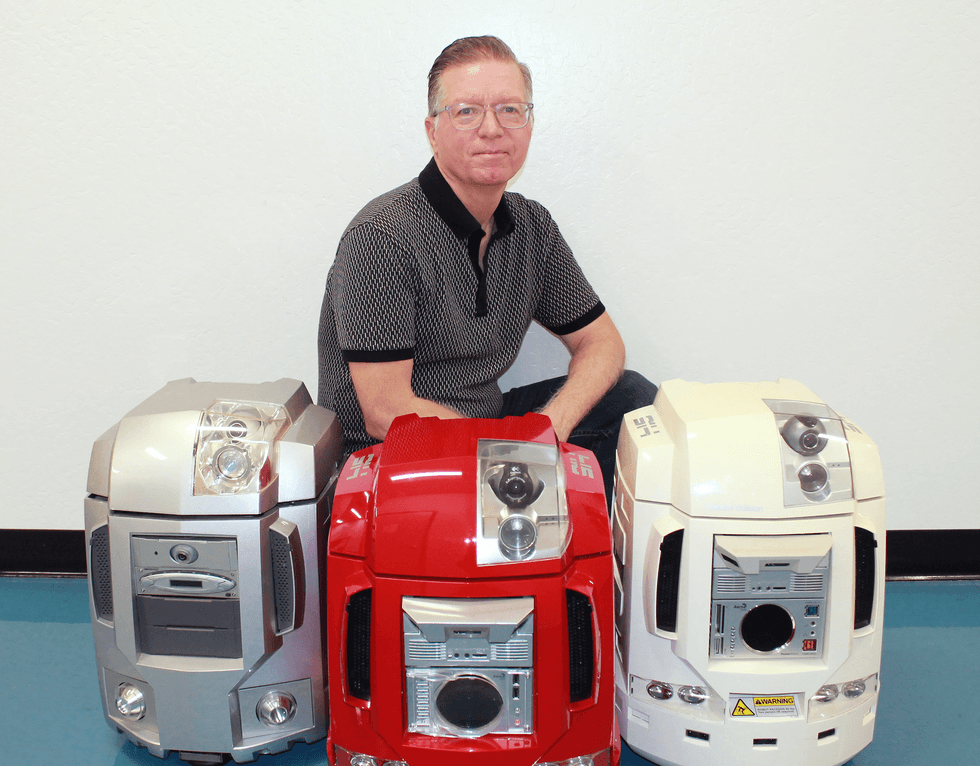
This Roboticist-Turned-Teacher Built a Life-Size Replica of ENIAC
Tom Burick, a technology instructor at PS Academy in Gilbert, Arizona, has spearheaded a project with his students to construct a full-scale replica of the Electronic Numerical Integrator and Computer (ENIAC) to commemorate the 80th anniversary of its creation. This initiative began at the start of the 2025-26 school year at the school, which caters to students with autism and other specialized learning needs. Burick, who has a background in robotics and a personal connection to neurodiversity, aims to inspire his students by leveraging their unique strengths through hands-on projects. The ENIAC, one of the first programmable electronic computers, was originally built in the 1940s and dismantled in the 1950s. Burick and his students embarked on this ambitious project to provide a tangible experience of the historic machine, which involved constructing 40 large panels and installing 18,000 simulated vacuum tubes. The project utilized nearly 300 square meters of cardboard and extensive glue and paint, showcasing the students' dedication and teamwork. Burick, who transitioned to teaching after closing his robotics company during the 2008 financial crisis, emphasizes the importance of mentorship and aims to pay forward the support he received as a young person. Through projects like the ENIAC replica, he fosters an environment where students can thrive and explore their interests in technology and robotics, reinforcing the notion that their neurodivergent traits can be powerful assets in problem-solving and creativity.
Robotics Eniac Teaching Neurodivergent Computer-history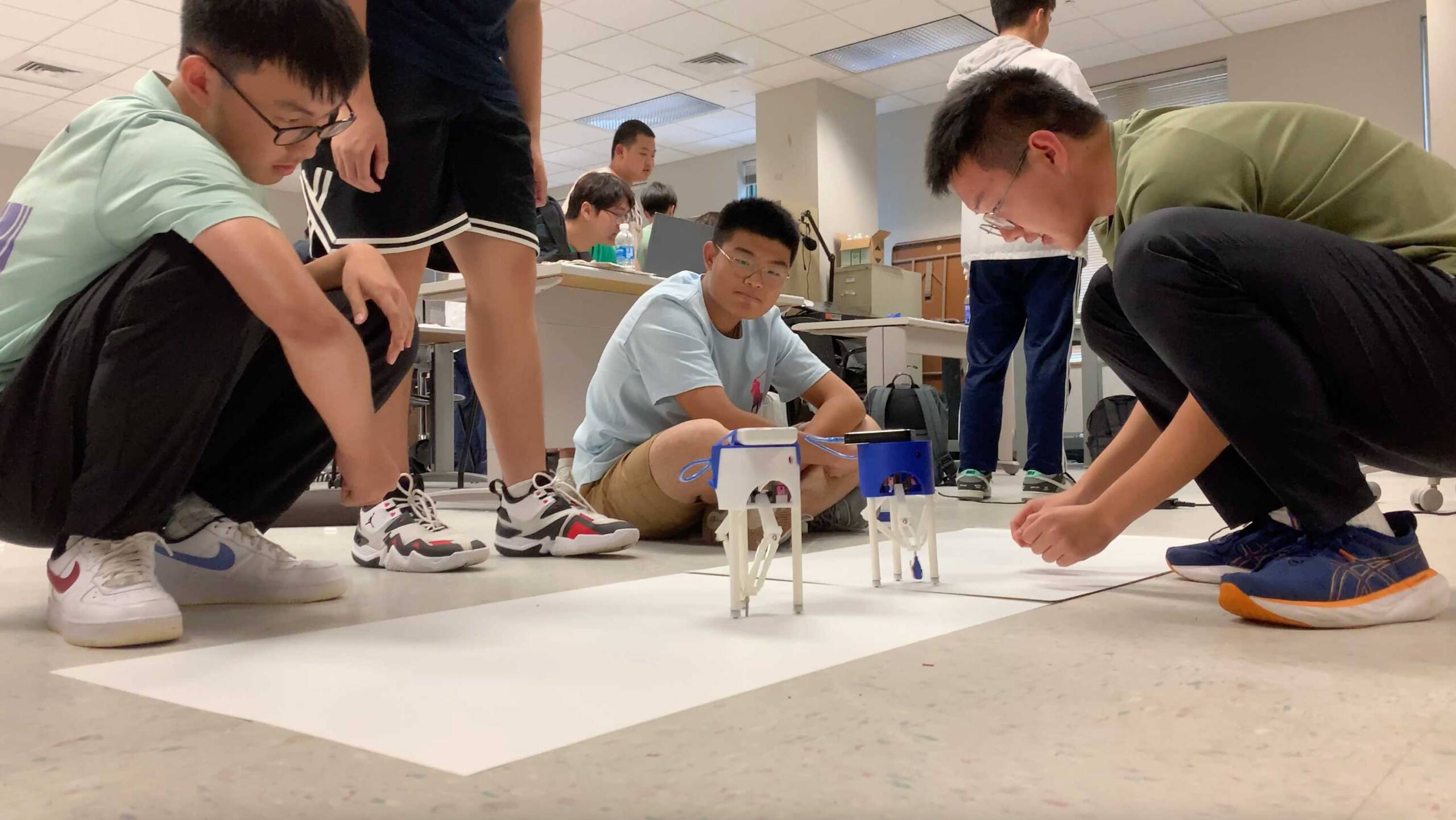
High Schoolers Bring Robots to Life at CMU Feiyue Program
Twenty high school students engaged in hands-on robotics activities in a classroom at Carnegie Mellon University, where they were preparing for the upcoming Feiyue Robotics Program showcase. As they worked in small groups, students experimented with tri-legged robots, attempting to make them walk. Laughter filled the room as some robots toppled over after their initial steps, highlighting the challenges and excitement of the learning process. This event aims to foster interest in robotics and provide students with practical experience in programming and engineering, showcasing their efforts and creativity at the upcoming showcase.
Uncategorized
Ondas Acquires DZYNE Technologies for $875.8M
The Ondas DZYNE acquisition combines long-endurance ISR, counter-UAS, and autonomous effects under a new operating division for U.S. defense customers. Ondas Inc. (Nasdaq: ONDS) has announced the acquisition of DZYNE Technologies, LLC in a cash and stock transaction valued at $875.8 million. According to Ondas, the Ondas DZYNE acquisition establishes a multi-domain autonomous defense platform […] The post Ondas Acquires DZYNE Technologies for $875.8M appeared first on DRONELIFE.
Defense defense Drone News Drone News Feeds News affordable mass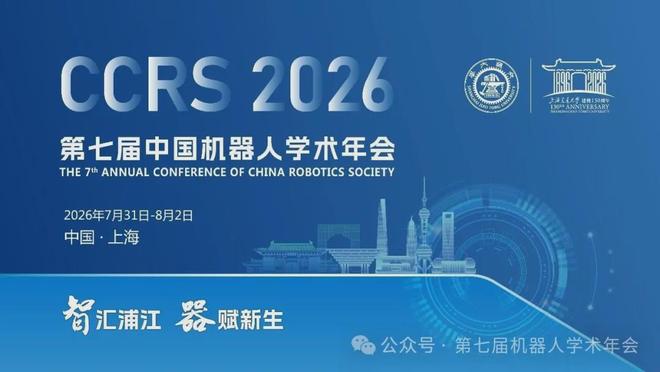
7th China Robotics Academic Annual Conference Scheduled for July 2026 in Shanghai
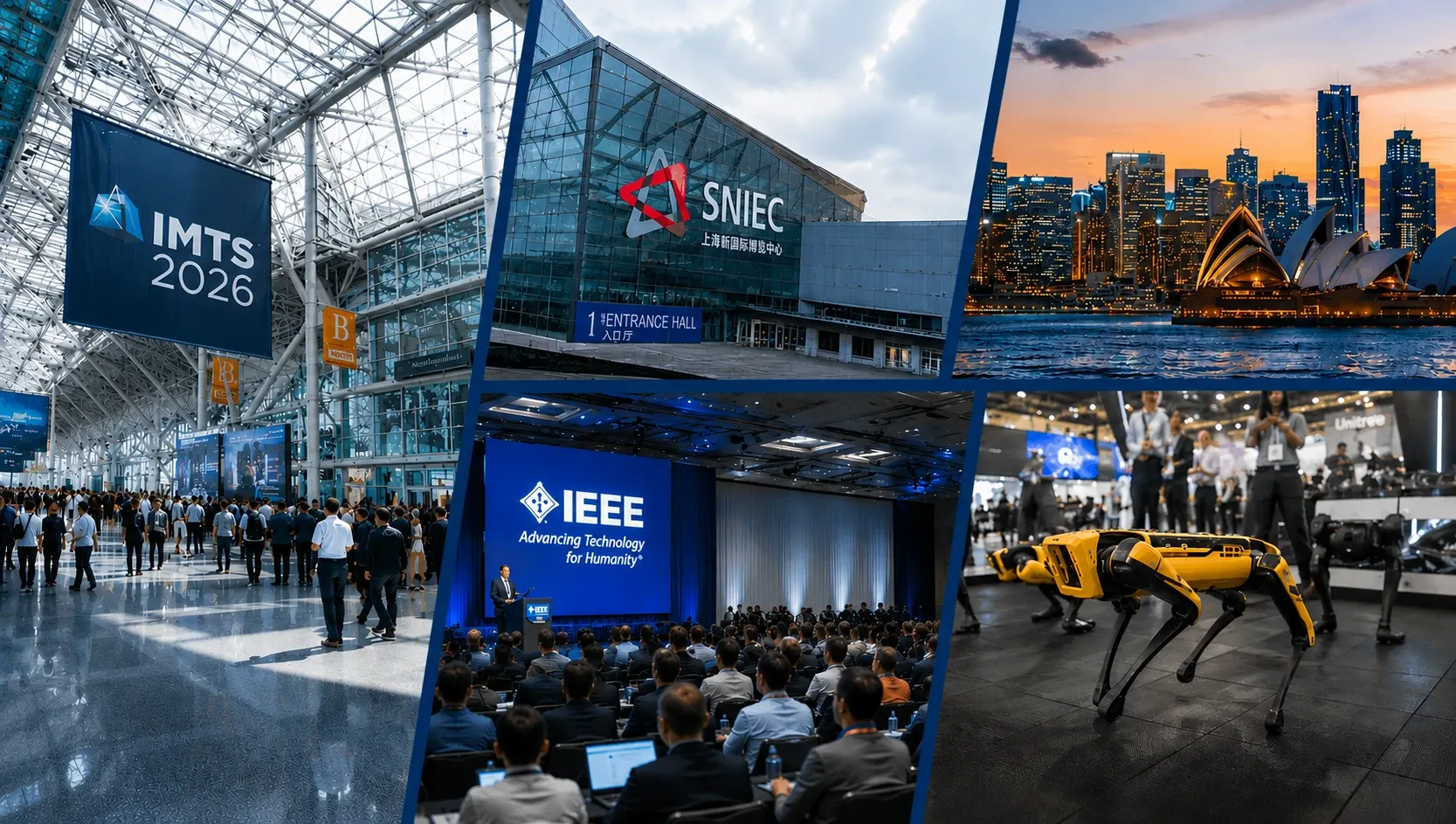
The 7th China Robotics Academic Annual Conference (CCRS 2026) is set to take place from July 31 to August 2, 2026, at the National Exhibition and Convention Center in Shanghai. The event is co-hosted by several prominent organizations, including the Robotics Branch of the Chinese Mechanical Engineering Society and the Robotics Professional Committee of the Chinese Automation Society, with Shanghai Jiao Tong University and the Shanghai Robotics Society as the local organizers. This year's conference theme is 'Intelligent Integration at the Huangpu River, New Life for Robotics.' It will feature discussions on various topics such as industrial robots, medical robots, service robots, and AI+ robotics. The event aims to attract over 200 renowned experts and scholars in the robotics field, facilitating in-depth academic exchanges through keynote speeches and specialized forums, with an expected attendance of over 3,000 participants. Attendees are reminded to register before payment and to provide proof of student status if applicable. The conference will also serve as a platform for showcasing technologies and products from leading companies in robotics and artificial intelligence. No further timeline was disclosed at the time of publication.
Robotics AI Industrial Robots Medical Robots Conference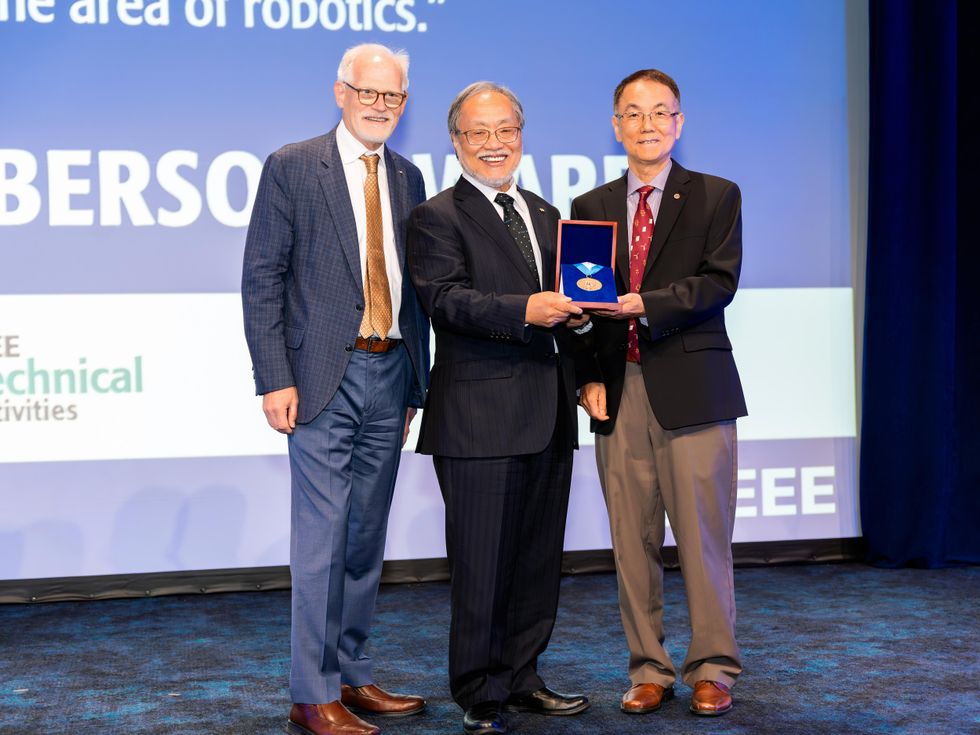
IEEE Honors Robotics Pioneer Toshio Fukuda
Toshio Fukuda has been blazing trails for most of his career. He is considered to be one of the most prolific scholars in robotics, writing more than 2,000 research papers and authoring several books on the field. He’s an influential figure thanks to his pioneering work developing biomedical robotic systems, industrial robots, micro-nano robotics, mechatronics, and AI-driven automation.Fukuda launched one of the first robotics conferences, the IEEE/RSJ International Conference on Intelligent Robots and Systems (IROS). It is still popular almost 40 years later.Toshio FukudaEmployerEgypt-Japan University of Science and Technology, in Alexandria TitleProfessor and vice president of research Member gradeLife Fellow Alma matersWaseda University, in Tokyo; University of Tokyo An IEEE Life Fellow, he is a professor emeritus in the department of micro-nano systems engineering and a visiting professor at Nagoya University, in Japan, where he taught for nearly 25 years. Currently, he is a vice president of research at the Egypt-Japan University of Science and Technology, in Alexandria, Egypt.Within IEEE, Fukuda has held top volunteer positions including the organization’s highest office: He served as IEEE president in 2020, becoming the first person of Asian descent to hold the role.He’s a former program director of Japan’s Moonshot program, which by 2050 intends to develop advanced AI robots.Born in Japan, Fukuda has been recognized by the country for his contributions to science with two of its highest awards: the Medal of Honor with a purple ribbon in 2015 and the Order of the Sacred Treasure in 2022.IEEE honored him with this year’s Richard M. Emberson Award for “distinguished service advancing the technical objectives of IEEE, especially in the area of robotics.” The IEEE Board-level award is sponsored by the IEEE Technical Activities Board. Fukuda received the award on 24 April at a ceremony in New York City.As a former IEEE president who has served as a master of ceremonies at several of the organization’s major award events, Fukuda noted that he is more accustomed to bestowing awards than receiving them.“It’s very interesting to be on the receiving end,” he says.The journey into robotics researchAs a teenager, Fukuda spent his summer breaks teaching himself how to build things including transistor radios and steam engines.“It was very nice to have a hands-on hobby and make these kinds of things myself,” he says. His experimentation led him to study engineering.He earned a bachelor’s degree in engineering in 1971 from Waseda University, in Tokyo. He says one of his professors there—Ichiro Kato, regarded as the father of Japanese robotics research—was a good mentor who made a positive impact.Fukuda’s research interests were robotics and mechatronics, a field that combines robotics, electronics, computer science, and control systems.He went on to earn a master’s degree and a doctorate in science from the University of Tokyo, in 1971 and 1977. During those years, he also attended Yale, where he conducted research on advanced control theory in 1973.He reflects fondly on his time at Yale: “It was a very nice environment and a kind of free-thinking atmosphere. It motivated me to study more.”“IEEE doesn’t care who you are, what you do, what country you are from, or whether you are male or female. IEEE accepts people who have energy and passion.”While at Yale, Fukuda served as an assistant to his advisor—which led him to consider a career in academia, he says, because he enjoyed the freedom that research work afforded him.But he realized that such freedom comes with a price. University researchers are expected to raise the money that funds their work. He compares researchers to small-business owners who have to bring in money to keep their enterprise afloat.That realization led him to select robotics as his field because he intended to develop technologies useful to industry, he says.After earning his doctorate, he returned to Japan in 1977 to work as a research scientist at the government’s Mechanical Engineering Laboratory, later renamed the National Institute of Advanced Industrial Science and Technology, in Tsukuba.“There was a lot of research going on at the lab, including practical robotics and theory,” he says.He left Japan in 1979 to become a visiting research fellow at the University of Stuttgart, in Germany. During his year there, he studied systems, software problems, and related topics.He returned to Japan and was hired as an associate professor of mechanical engineering at the Tokyo University of Science. He conducted research into practical uses for robots by visiting industrial plants. He decided to develop robots that inspect industrial equipment such as those used in assembly plants, oil refineries, and power stations—places that “can be hostile environments for humans,” he says.His work drew interest from chemical, oil, and utility companies.“I got a lot of money from them for this very practical application, which funded my research,” he says, laughing.Developing popular robotic systemsFukuda grew tired of making those robots, he says, so he switched to creating ones for scientific applications. He developed many techniques, but he probably is best known for his modular, cellular robotic systems (CEBOTs), which he introduced in 1985.He has described how CEBOTs work in numerous papers published in the IEEE Xplore Digital Library.The CEBOT system is composed of a number of autonomous robotic cells that stick together like interlocking Lego plastic bricks, he says.Each cell is a fundamental modular unit that has a function. When a simple task is given, the system can analyze it and generate the structure of the cellular manipulator. The cells connect to and detach from each other through connection mechanisms and cooperate mutually, creating complex structures and configurations.“You start developing from the component-wise to the cell-wise to a small functional unit—and then you come up with clusters that make bigger systems. We can make a society of robot beings like that,” he explained in his oral history published on the Engineering and Technology History Wiki. “It’s a distributed robotic system, a self-organized robotic system, and also an evolutionary robotic system.“It’s also a fault-tolerant robot system because if something is wrong, you just remove those things and make a new one. You keep the system working. That’s a great thing.”Today CEBOTs are used for a variety of tasks such as delivering medication in hospitals, assisting with planting crops, and transporting products in distribution centers. Check out IEEE Spectrum’s Robots Guide for news from the world of robotics.In 1989 Fukuda joined Nagoya University as a professor of mechanical engineering and micro-nano systems engineering. During his 24-year career there, he was director of the university’s Center for Micro-Nano Mechatronics. He developed a long list of technologies at the university, including many for medical applications. He also conducted groundbreaking research into intelligent robotic systems and micro- and nano-robotics.Another technology he is known for is brachiation robots, which he helped develop in 1988. He calls them monkey robots because they’re based on the pendulum-like movement of monkeys swinging from tree to tree. The gravity-based locomotion enables continuous movement.Brachiation robots now are inspecting high-voltage transmission towers and bridges, searching damaged buildings for survivors, and performing maintenance on pipelines and cables.Fukuda retired from the university in 2013 and was named professor emeritus.He didn’t stay retired for long, though. He next held a teaching appointment at Meijo University, in Nagoya, until he left in 2022 to join the Egypt-Japan University.A prominent volunteerHe joined IEEE in 1980 at the encouragement of one of his research advisors, Professor Fumio Harashima, now an IEEE Life Fellow. After attending conferences and reading the organization’s publications, Fukuda says, he looked forward to becoming more involved.“I wanted to know how to organize a conference and how to edit a paper for one of its Transactions,” he says. “I wanted to know what was going on from inside the organization, not just the outside.”In 1988 he was the founding chair and organizer of IROS, in Tokyo. The conference had 330 attendees that year, and was supported by Harashima. Today it is one of the largest and most prestigious conferences on the topic, attracting more than 9,000 people annually. Out of 120,000 conferences, it was the only conference in the Nature Index database for this year, Fukuda says.In 1996 he and other members launched IEEE Transactions on Mechatronics.He was the founding president of the IEEE Nanotechnology Council, which was established in 2002. He is considered a pioneer in nanotechnology research, particularly regarding how it relates to robotics.Over the years, he has held numerous volunteer positions on IEEE editorial boards and committees.He was the 1998–1999 president of the IEEE Robotics and Automation Society, becoming the first non-U.S. member to hold the title.He was director of IEEE Division X (2001–2002 and 2017–2018), which covers intelligent systems, biological engineering, robotics, control systems, and photonic technologies. He served as the 2013–2014 director of IEEE Region 10 (Asia-Pacific).As the 2020 IEEE president, Fukuda saw the organization through the early part of the COVID-19 pandemic. Because of travel restrictions, he realized IEEE should change how it offered its in-person services, specifically educational programs. He encouraged IEEE Educational Activities to develop an online learning platform. The IEEE Learning Network started with just three courses and now offers nearly 2,000 courses, webinars, and learning materials.An award-winning memberThe Emberson Award joins a slew of other recognitions Fukuda has received from IEEE. They include several from the IEEE Robotics and Automation Society: a 2004 Pioneer Award, a 2009 Saridis Leadership Award, and the 2011 Harashima Award for Innovative Technologies. He is also a recipient of the Board-level 2010 IEEE Robotics and Automation Technical Field Award.He says he feels strongly that IEEE should be a diverse organization that is welcoming to all. As IEEE president, he led efforts to devise a diversity, equity, and inclusion program. Several policies, procedures, and bylaws were revised to give members a safe, inclusive place for discourse.“It’s important for IEEE to make everyone feel comfortable,” he says. “DEI programs are important. All people should be equal. IEEE doesn’t care who you are, what you do, what country you are from, or whether you are male or female. IEEE accepts people who have energy and passion.“It accepted me, from the Far East. That’s why I like it.”You can learn more about Fukuda and his career from the oral history conducted by the IEEE History Center.
Robotics Robots Ieee-member-news Type-ti Ieee-awards Toshio-fukuda
Software is ‘the biggest bottleneck to robotics innovation’, says BlackBerry QNX report
QNX, a division of BlackBerry, has unveiled its latest research study, the Inside the Robot: Architecture Benchmark Report, which explores the evolving landscape of robotics development. The report highlights the shift towards software-driven and AI-enabled systems that are increasingly integrated into workplaces and everyday life. Conducted through a survey of 1,000 developers globally, the research aims to shed light on the current trends and challenges faced in the robotics sector. This initiative reflects QNX's commitment to understanding and advancing the role of robotics in modern society, emphasizing the importance of collaboration between humans and machines. The findings are expected to inform future developments in the field and guide industry stakeholders in adapting to these transformative changes.
Features Robotics Software ai robotics automation news Autonomous robots
Humanoid robots show off their language and boxing skills in Hong Kong
In Hong Kong, a humanoid robot resembling a primary school student captivated audiences by singing songs and engaging in conversation in both Mandarin and English. The robot interacted with attendees, responding to their questions and providing an entertaining experience. This demonstration showcased advancements in robotics and artificial intelligence, highlighting the growing integration of technology in everyday life. The event aimed to promote interest in robotics and its potential applications, illustrating how such innovations can enhance communication and learning.
Robotics
Do you trust me? A framework for making networks of robots and vehicles safer
In an era where technology is increasingly interwoven into daily life, the importance of trust and coordination among interconnected systems has come to the forefront. This principle is evident in various domains, from the natural world, where birds fly in formation, to educational settings, where students collaborate on projects. The rise of networks of connected machines, such as self-driving rideshare fleets and smart power grids, underscores the necessity for these systems to operate seamlessly. As these technologies continue to evolve, ensuring that each component can rely on the others is crucial for their effective functioning and overall success. This growing reliance on interconnected systems highlights the need for robust communication and trust mechanisms to facilitate their development and integration into society.
Robotics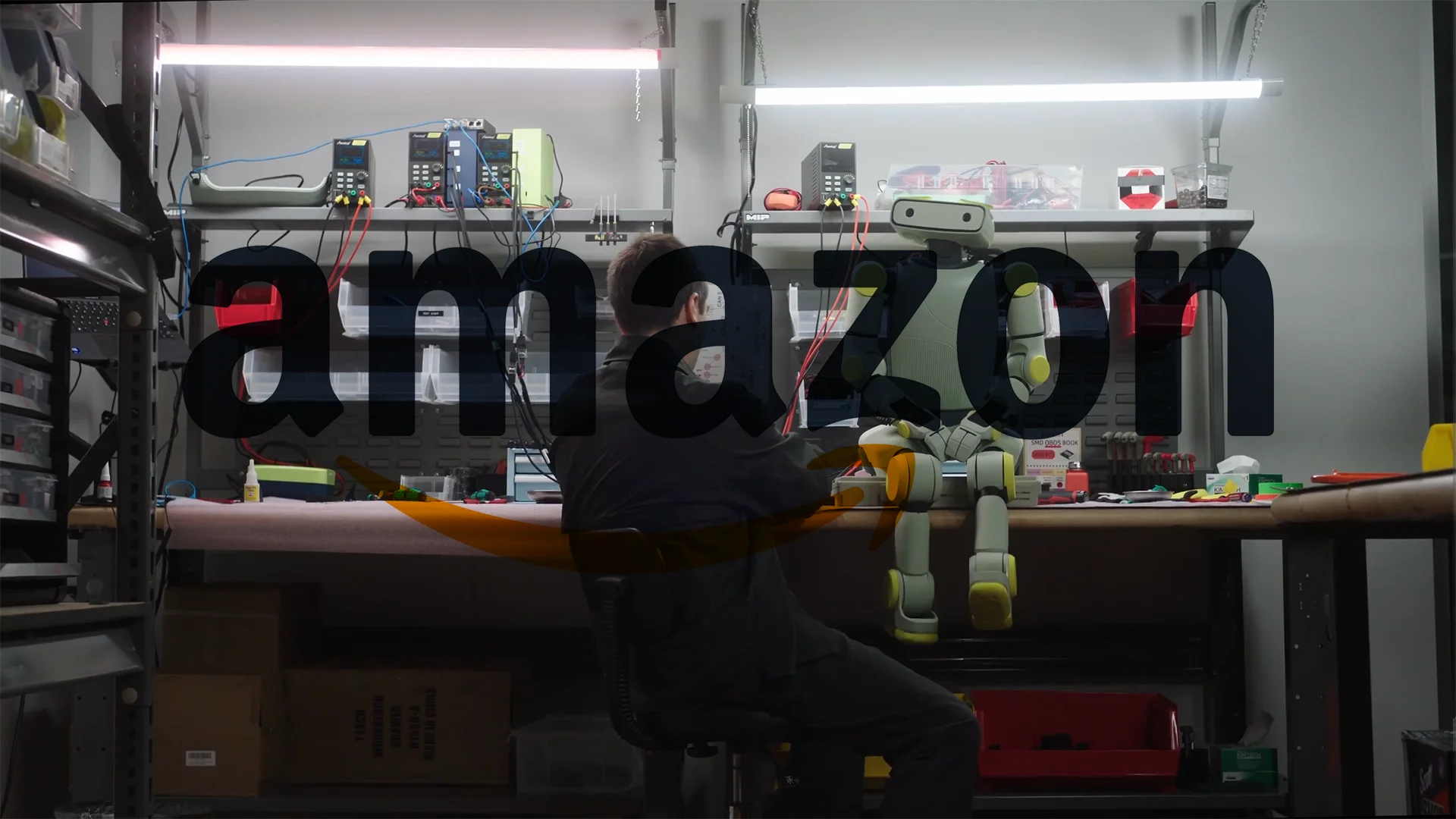
Amazon Acquires Soft-Bodied Humanoid Maker Fauna Robotics
A New York-based startup, known for developing the Sprout humanoid robot, has announced its acquisition by Amazon’s Personal Robotics Group. This move, occurring less than two months after the startup emerged from stealth mode, marks a significant advancement in the competitive landscape of home robotics. The integration into Amazon’s established robotics division is expected to enhance the capabilities and reach of both entities, as they aim to innovate and expand the market for personal robotic assistants. The acquisition reflects Amazon's commitment to advancing technology in everyday life and underscores the growing interest in robotics for home use.
US Fauna Robotics AmazonRobotics needs a service framework.
RSF defines a common language for robot service capability, lifecycle operations, certification pathways, and service-provider networks.