Industry Briefing
A single destination for timely, editor-curated robotics news from around the world.

Voice AI Systems Are Vulnerable to Hidden Audio Attacks
Researchers are set to unveil alarming findings regarding AI-powered voice and audio tools at the IEEE Symposium on Security and Privacy in San Francisco next week. The study reveals that modified audio clips, imperceptible to human ears, can manipulate large audio-language models (LALMs) to execute unauthorized commands with a success rate between 79 and 96 percent. This vulnerability allows attackers to control devices, conduct sensitive web searches, and even send emails containing user data without the user's knowledge. The research, led by Meng Chen, a Ph.D. student at Zhejiang University in China, demonstrates that these attacks can be executed in real-time and do not require the attacker to have full control over the user's instructions. Instead, adversarial audio can be embedded in various media, such as online videos or voice notes, making it a pervasive threat. The technique, dubbed AudioHijack, exploits a critical flaw in LALM design, allowing malicious instructions to be hidden within manipulated audio clips. The researchers tested their method on 13 leading open models, including those from Microsoft and Mistral, and found that their attacks could be adapted to commercial models as well. While Microsoft acknowledged the importance of the research in enhancing model resilience, Mistral did not respond to inquiries. The study highlights the challenges in defending against such attacks, as common defenses have proven largely ineffective, underscoring the urgent need for improved security measures in AI audio technologies.
Hacking Digital-audio Adversarial-attacks Open-source-software Cybersecurity
5 Best Audio to Video AI Generators for Modern Content Workflows
The audio to video AI generator sector has become an essential component of contemporary content production, facilitating the conversion of spoken audio, voiceovers, and scripts into cohesive visual narratives. This innovative technology streamlines the content creation process by automating scene generation, timing alignment, and visual selection, thereby eliminating the need for traditional editing methods. As a result, users can produce high-quality content at scale, significantly enhancing efficiency and creativity in various media projects. The advancements in this field reflect the growing demand for automated solutions in content creation, driven by the need for faster turnaround times and increased output in an ever-evolving digital landscape.
Business Design Software ai avatars AI content tools AI storytelling
The Growing Importance of Media Asset Management in Modern Digital Workflows
In an era where the digital landscape is rapidly evolving, companies across various industries are increasingly relying on extensive collections of digital assets, including videos, images, audio files, graphics, and documents, to enhance their marketing, communication, training, and customer engagement efforts. As these content libraries expand, organizations face the growing challenge of managing these assets efficiently. The need for effective content management solutions has become paramount, prompting businesses to seek innovative strategies and technologies to streamline the organization and distribution of their digital resources. This shift underscores the importance of adapting to the complexities of content management in a digital-first world, ensuring that companies can leverage their assets to meet the demands of modern consumers and maintain a competitive edge.
Business Internet ai automation AI tagging automation news cloud computing
Google’s Gemini Omni turns images, audio, and text into video — and that’s just the start
Google has unveiled its latest innovation, Gemini Omni, a multimodal model designed to enhance user interaction by reasoning across various formats, including text, images, audio, and video. This cutting-edge technology allows users to generate and edit videos through straightforward conversational prompts, with the initial feature being Omni Flash. The launch of Gemini Omni marks a significant advancement in artificial intelligence, aiming to simplify content creation and editing processes for users. The model is trained on data available up to October 2023, ensuring it incorporates the most recent developments in AI capabilities. This initiative reflects Google's commitment to pushing the boundaries of technology and improving user experiences in digital content creation.
Media & Entertainment AI Google Veo google io 2026 google gemini omniRobotics needs a service framework.
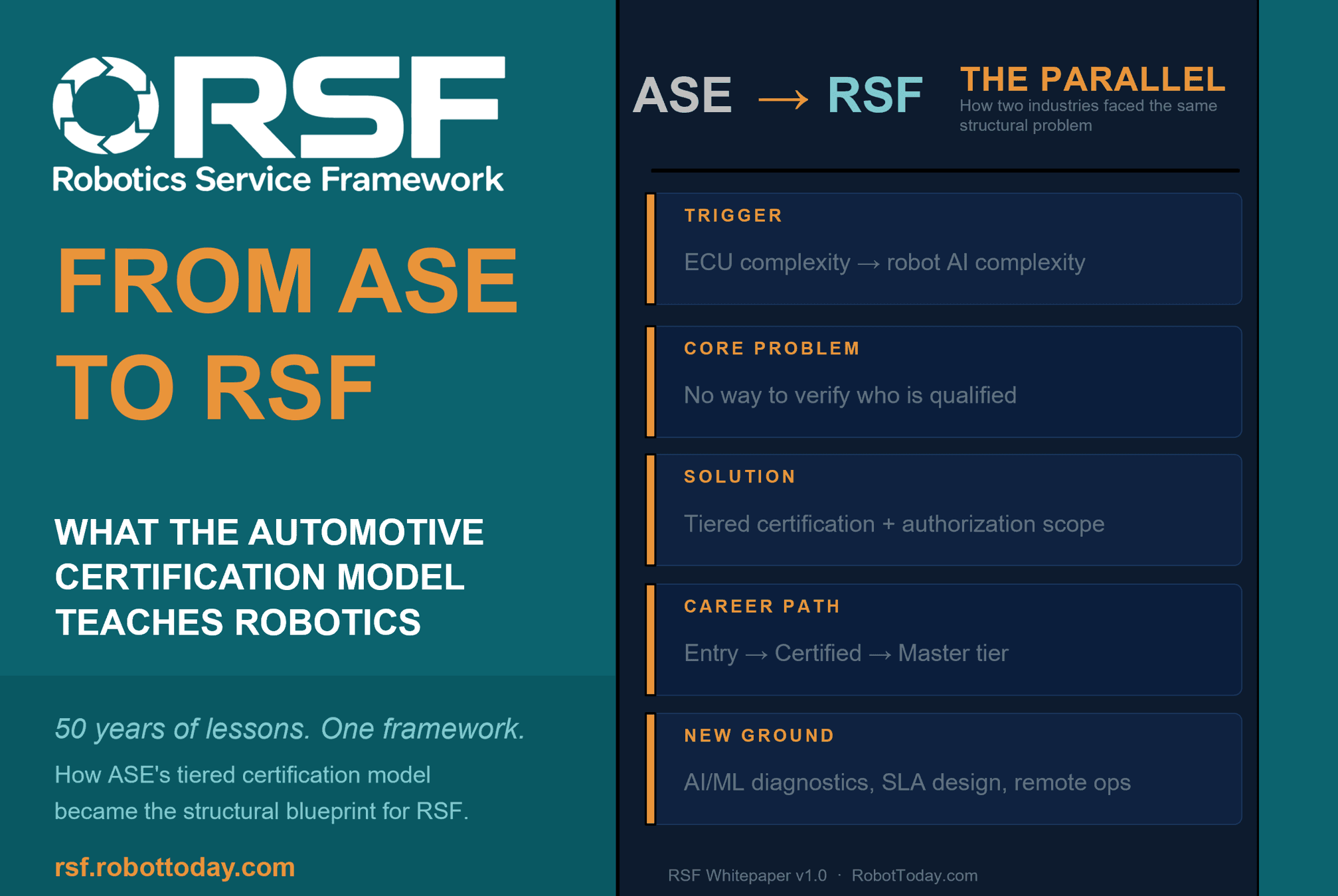
RSF defines a common language for robot service capability, lifecycle operations, certification pathways, and service-provider networks.