Industry Briefing
A single destination for timely, editor-curated robotics news from around the world.
Agile Robots and Google DeepMind Partner to Bring Gemini to the Factory Floor
Agile Robots, based in Munich, has entered into a strategic research partnership with Google DeepMind to enhance industrial robotics. This collaboration seeks to integrate Gemini Robotics foundation models with advanced industrial hardware, addressing the prevalent issue of data bottlenecks in the field. By leveraging a scalable AI flywheel, the partnership aims to improve the efficiency and effectiveness of robotic systems in various industries. The initiative highlights the growing intersection of artificial intelligence and robotics, as both companies work together to push the boundaries of technology and innovation.
DeepMind US Agile ONE Europe Google google-deepmind
Google DeepMind Opens the Portal: Project Genie and the Quest for the "Infinite Training Loop"
Google DeepMind has introduced Project Genie, an innovative experimental tool that utilizes the Genie 3 world model to generate interactive 3D environments from textual descriptions and images. Launched recently, this project aims to address the challenges of data limitations in robotics, which is a critical step towards achieving artificial general intelligence (AGI). By moving beyond traditional gaming applications, Project Genie represents a significant advancement in DeepMind's overarching strategy to enhance the capabilities of AI in real-world scenarios. The initiative underscores the company's commitment to pioneering technologies that can bridge the gap between virtual and physical environments, ultimately paving the way for more sophisticated robotic systems.
DeepMind Google Gemini embodied-ai
DeepMind CEO Demis Hassabis: World Models and 'Infinite Training Loops' are the Keys to AGI
In the season finale of the Google DeepMind podcast, Demis Hassabis discussed the limitations of language models in advancing robotics. He emphasized that while language models play a crucial role, they are insufficient on their own for the development of physical AI. Hassabis highlighted the importance of integrating world-generators, such as Genie, with agents like SIMA to create a more effective synergy that can enhance robotic capabilities. This collaboration aims to address the challenges faced in the field of AI, particularly in bridging the gap between virtual understanding and real-world application. The insights shared during this episode reflect ongoing efforts to innovate and improve the functionality of AI in practical settings.
DeepMind Google embodied-ai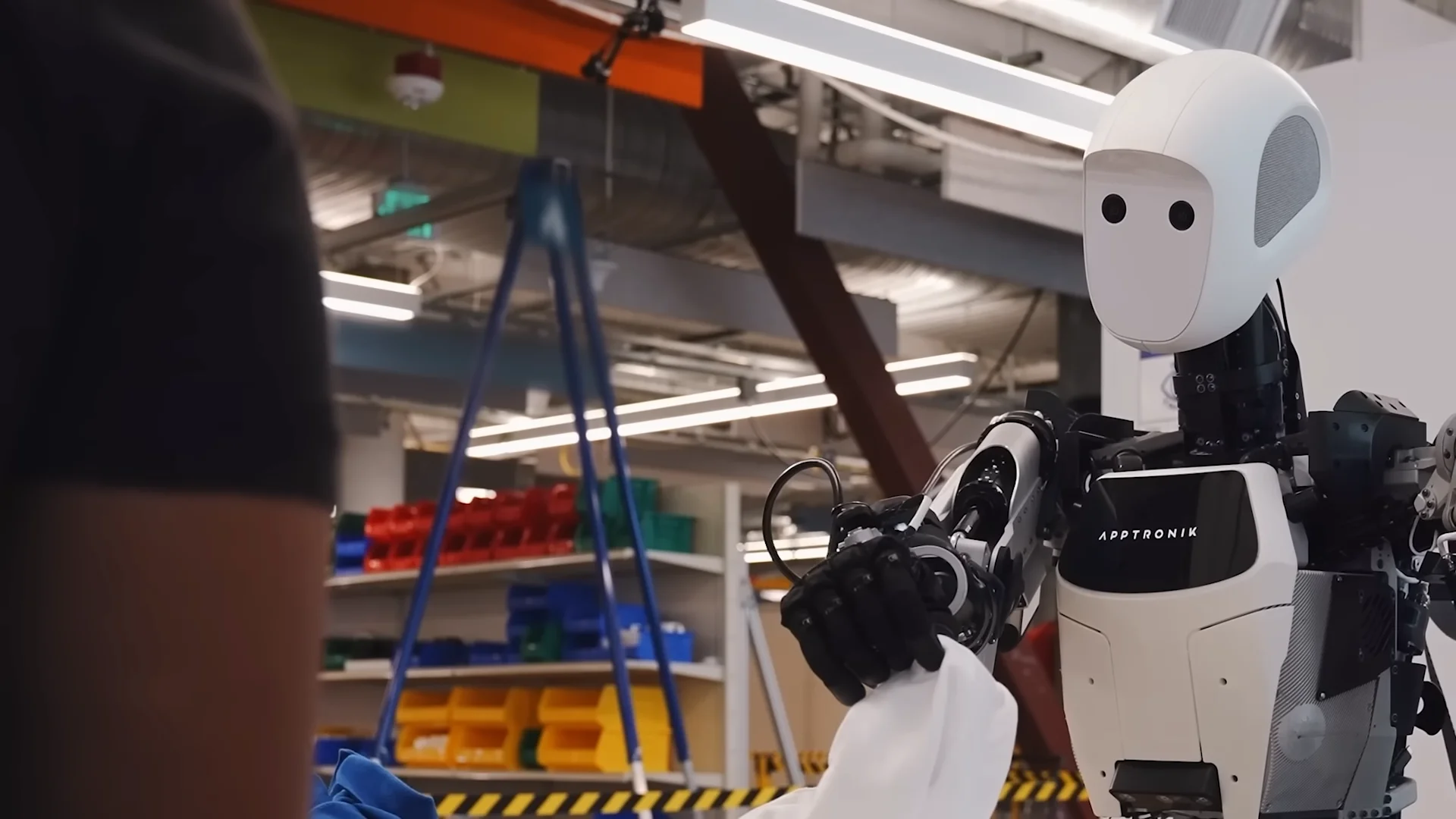
Google DeepMind Robotics Director: We Need "One More Big Breakthrough" to Solve General Purpose Robots
DeepMind's robotics lab recently provided an exclusive behind-the-scenes glimpse into its innovative work, highlighting the development of advanced "thinking" robots capable of long-term planning. This showcase aimed to illustrate the potential of these technologies in real-world applications. However, lab leadership acknowledged that achieving data efficiency is a significant challenge that must be overcome before these robots can be deployed effectively outside of controlled environments. The insights were shared as part of an ongoing effort to advance robotics and artificial intelligence, with the team emphasizing the importance of refining their systems to ensure practical usability in everyday scenarios.
DeepMind Apollo embodied-ai Apptronik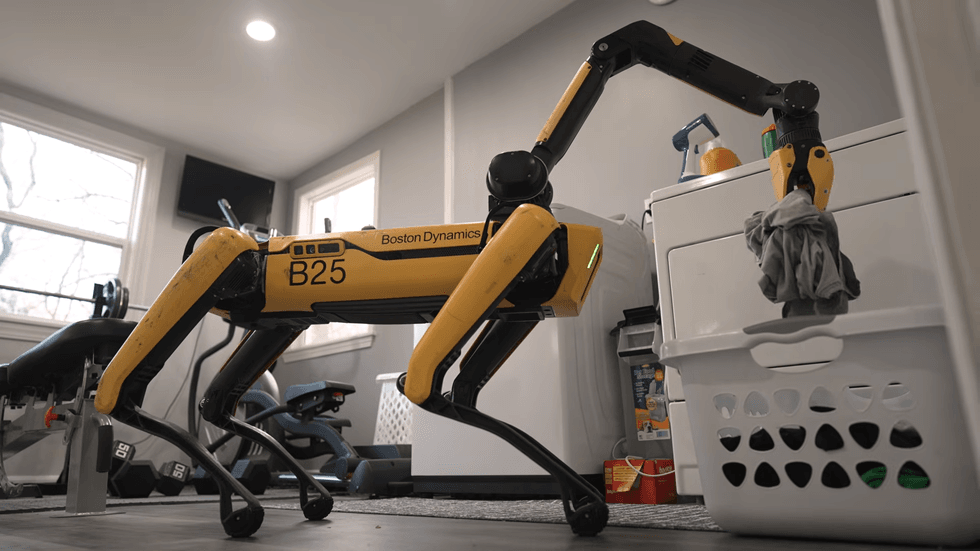
Boston Dynamics and Google DeepMind Teach Spot to Reason
Boston Dynamics has announced that its quadruped robot, Spot, is now equipped with Google DeepMind’s Gemini Robotics-ER 1.6, a high-level embodied reasoning model designed to enhance the robot's usability and intelligence for complex tasks. This development, revealed today, marks a significant advancement in the commercial deployment of legged robots, particularly in industrial inspections, where Spot will autonomously identify hazardous debris, read gauges, and utilize vision-language-action models for better environmental understanding. The collaboration aims to improve how robots interpret and interact with their surroundings, addressing the challenges of ensuring that robotic actions align with human reasoning. Marco da Silva, vice president of Spot at Boston Dynamics, emphasized that the new capabilities will allow Spot to autonomously navigate real-world challenges more effectively. Despite the progress, experts acknowledge ongoing challenges in achieving seamless human-robot interaction. Carolina Parada from Google DeepMind noted that while the Gemini model enhances visual recognition, it currently lacks integration with other sensory data, such as touch, which is crucial for reliable object manipulation. As part of the deployment, customers using Spot for inspections will need to share operational data with Boston Dynamics to further refine the technology. The introduction of Gemini Robotics-ER 1.6 is seen as a step toward creating safer and more reliable robots capable of performing everyday tasks, with the potential to apply these advancements to other robotic platforms in the future.
Boston-dynamics Spot-robot Google-deepmind Inspection-robots Quadruped-robots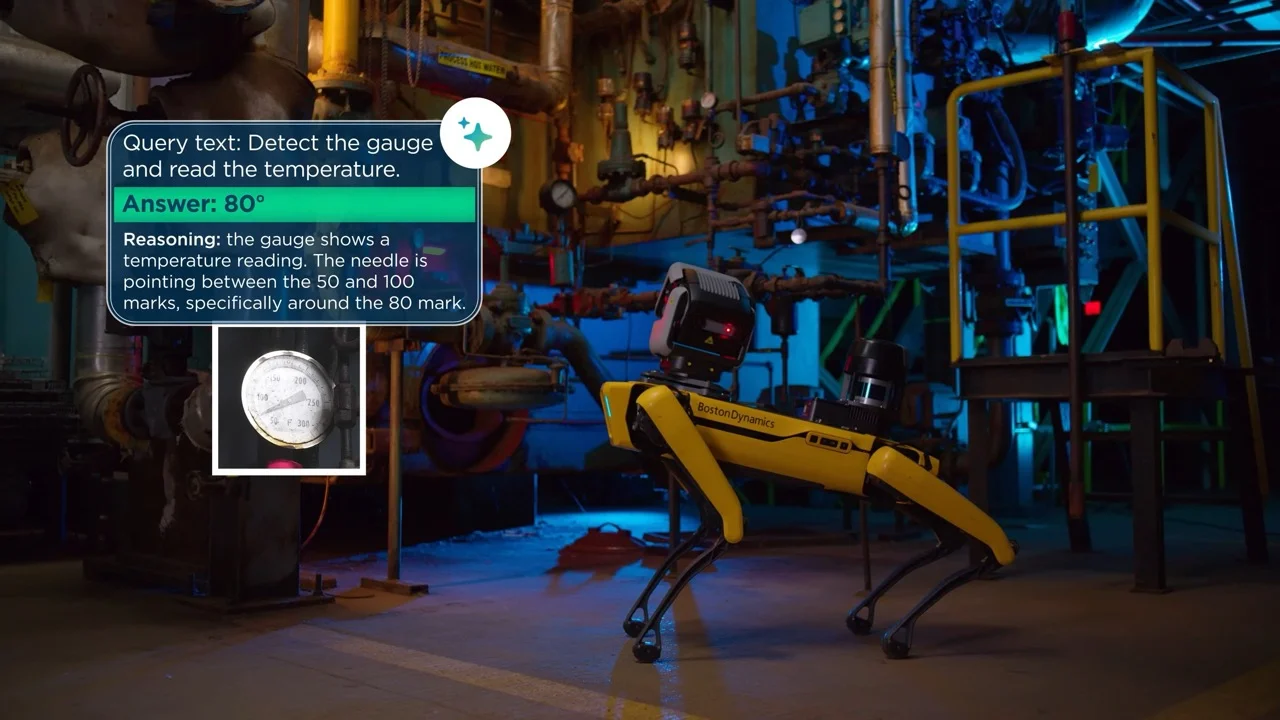
Google DeepMind Unveils Gemini Robotics-ER 1.6: A Leap in Spatial Reasoning and Industrial Utility
DeepMind has unveiled its latest and most sophisticated embodied reasoning model, which incorporates a cutting-edge "agentic vision" system designed specifically for industrial inspections. This new technology aims to improve the accuracy and efficiency of multi-view success detection in various industrial applications. The launch, which took place recently, marks a significant advancement in artificial intelligence capabilities, reflecting DeepMind's commitment to enhancing operational processes across industries. By leveraging advanced machine learning techniques, the model is expected to streamline inspection workflows and reduce the likelihood of errors, ultimately driving productivity and safety in industrial environments.
Google Gemini Gemini Robotics-ER 1.6 google-deepmind Boston Dynamics
Google DeepMind Robotics Head Details 'Surprising' Cross-Embodiment AI, Calls Home 'The Hardest Environment'
In a recent interview, Carolina Parada from Google DeepMind highlighted the innovative features of Gemini Robotics 1.5, particularly its unique 'agentic' two-part brain. Parada emphasized the robot's impressive capability to transfer skills across different robotic platforms, showcasing a significant advancement in robotics technology. She also expressed her belief that the home environment represents one of the final frontiers for the application of such technology, suggesting a future where robots could play an integral role in daily household tasks. This discussion sheds light on the ongoing developments in robotics and the potential for transformative impacts in personal living spaces.
vla World-Models AI Gemini google-deepmind Carolina-Parada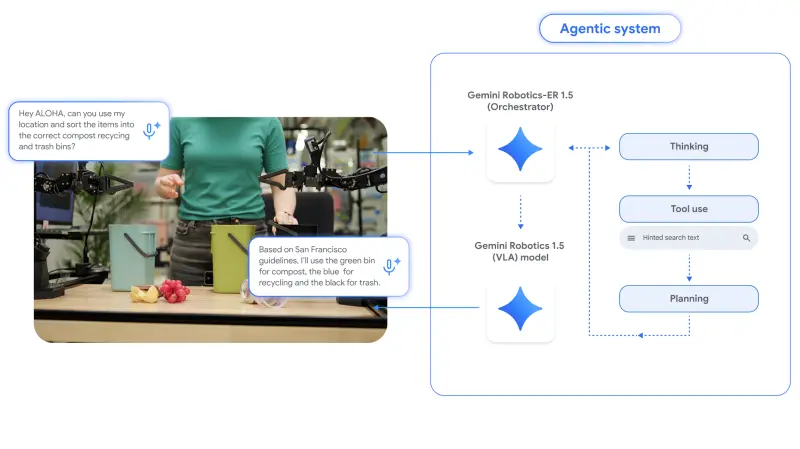
Google DeepMind Gives Robots a 'Thinking' Brain with Agentic Gemini 1.5 Models
Google DeepMind has introduced Gemini Robotics 1.5, an advanced AI framework aimed at enhancing the capabilities of robots. This new system allows robots to evolve from merely following commands to becoming 'physical agents' capable of reasoning, planning, and acquiring skills across various hardware platforms, including Apptronik's Apollo humanoid robot. The announcement marks a significant step in the development of intelligent robotics, reflecting the company's commitment to pushing the boundaries of artificial intelligence. By enabling robots to learn and adapt, DeepMind seeks to revolutionize the way machines interact with their environments and perform complex tasks. The unveiling of this framework comes as part of a broader trend in the tech industry to create more autonomous and versatile robotic systems.
ai-agents vla Gemini Apptronik google-deepmind robotics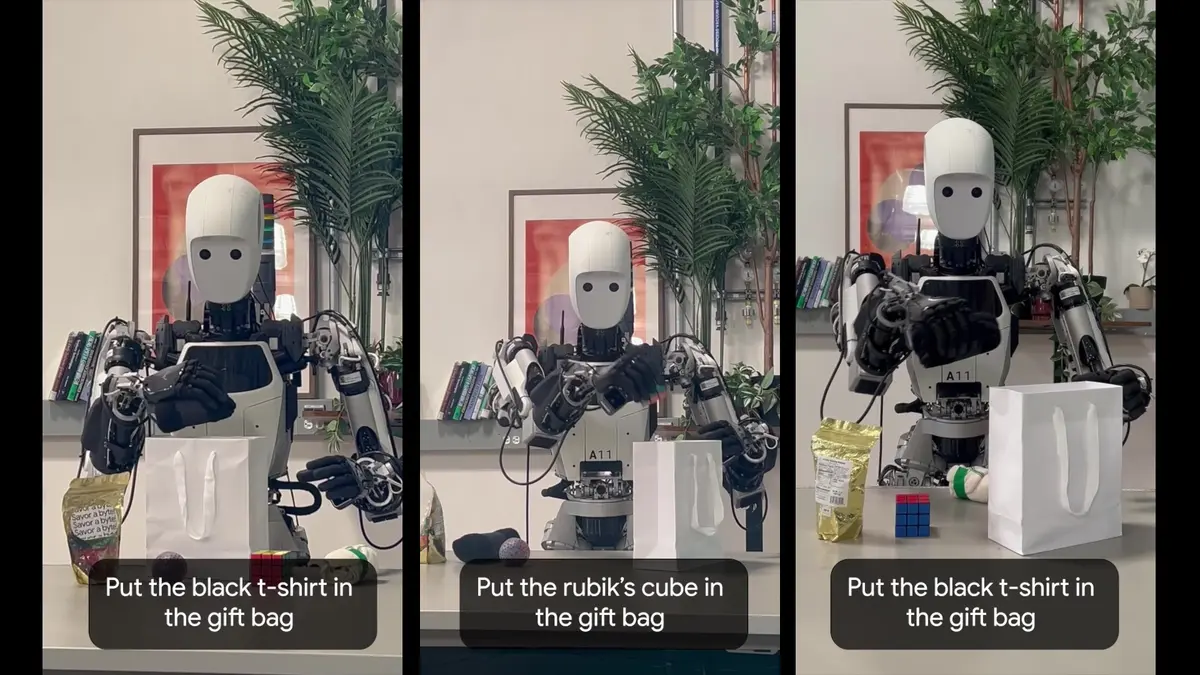
Google DeepMind Unveils On-Device Gemini Robotics, Pushing AI Closer to Autonomous Dexterity
Google DeepMind has introduced Gemini Robotics On-Device, a cutting-edge vision-language-action model that operates directly on robotic hardware. This innovative technology is designed to enhance the performance of autonomous robots by minimizing latency and increasing robustness across diverse environments. By enabling advanced dexterous manipulation, Gemini Robotics On-Device aims to equip a new generation of robots with the ability to quickly adapt to various tasks. The launch marks a significant step forward in the development of more efficient and capable robotic systems, reflecting DeepMind's commitment to pushing the boundaries of artificial intelligence in practical applications.
vla Apollo AI Humanoids Apptronik google-deepmind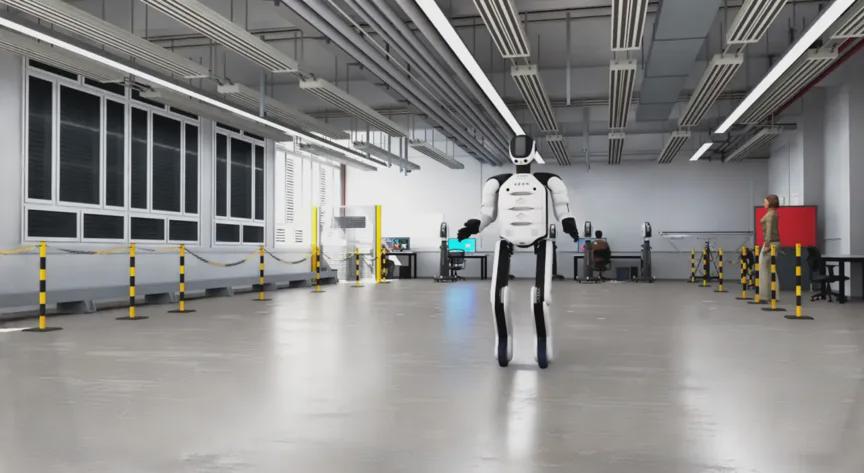
NVIDIA and DeepMind Lead Robotics Simulation Debate with New Industrial Applications
The field of embodied intelligence is witnessing a fierce debate over the best approach to training robots for industrial applications. One faction advocates for simulation-based training, leveraging structured environments to generate synthetic data, while the opposing view emphasizes the necessity of real-world data to handle complex physical interactions and unpredictable scenarios. Key players include NVIDIA, DeepMind, and Intrinsic, each with unique strategies and technologies. NVIDIA's Omniverse platform and Isaac Sim engine exemplify the simulation approach, enabling comprehensive digital twins of factories for training and optimization. Their collaboration with BMW on a digital twin project in Hungary showcases the potential of synthetic data in logistics and robotic movements. However, challenges remain in achieving the necessary fidelity for force control and physical interactions, prompting NVIDIA to seek partnerships with companies like Hexagon Robotics. Conversely, DeepMind's use of the MuJoCo physics engine has demonstrated that pure simulation can achieve industrial-grade precision in specific tasks, such as sorting with known rigid models. Yet, this method's effectiveness is limited to scenarios with minimal contact and force control. Intrinsic aims to transform simulation into a comprehensive development tool for industrial robots, focusing on lowering barriers for small manufacturers. The ongoing challenge of the SIM2REAL gap remains a critical factor in the success of these approaches.
Robotics Industrial Automation Simulation Technology AI
NVIDIA Accelerates Google DeepMind’s DiffusionGemma for Local AI
Google DeepMind has unveiled DiffusionGemma, an experimental open model designed for rapid text generation. This innovative model is optimized by NVIDIA to achieve enhanced performance on NVIDIA GeForce RTX GPUs and the NVIDIA RTX PRO platform. The release, which took place today, aims to push the boundaries of text generation technology, providing users with a tool that can produce content at unprecedented speeds. By leveraging advanced GPU capabilities, DiffusionGemma seeks to meet the growing demand for efficient and high-quality text generation solutions in various applications.

Google DeepMind and Agile Robotics Combine Robotics Platforms
Google DeepMind has announced a new partnership aimed at enhancing its artificial intelligence models and advancing the field of industrial robotics. The collaboration will center on gathering data from real-world robotic operations, which is expected to provide valuable insights for improving the performance and capabilities of robotic systems. This initiative comes as part of DeepMind's ongoing efforts to leverage practical applications of AI technology in various sectors. The partnership is set to play a crucial role in driving innovation and efficiency within the robotics industry, ultimately contributing to the development of more sophisticated and effective robotic solutions.
Factory / Robotics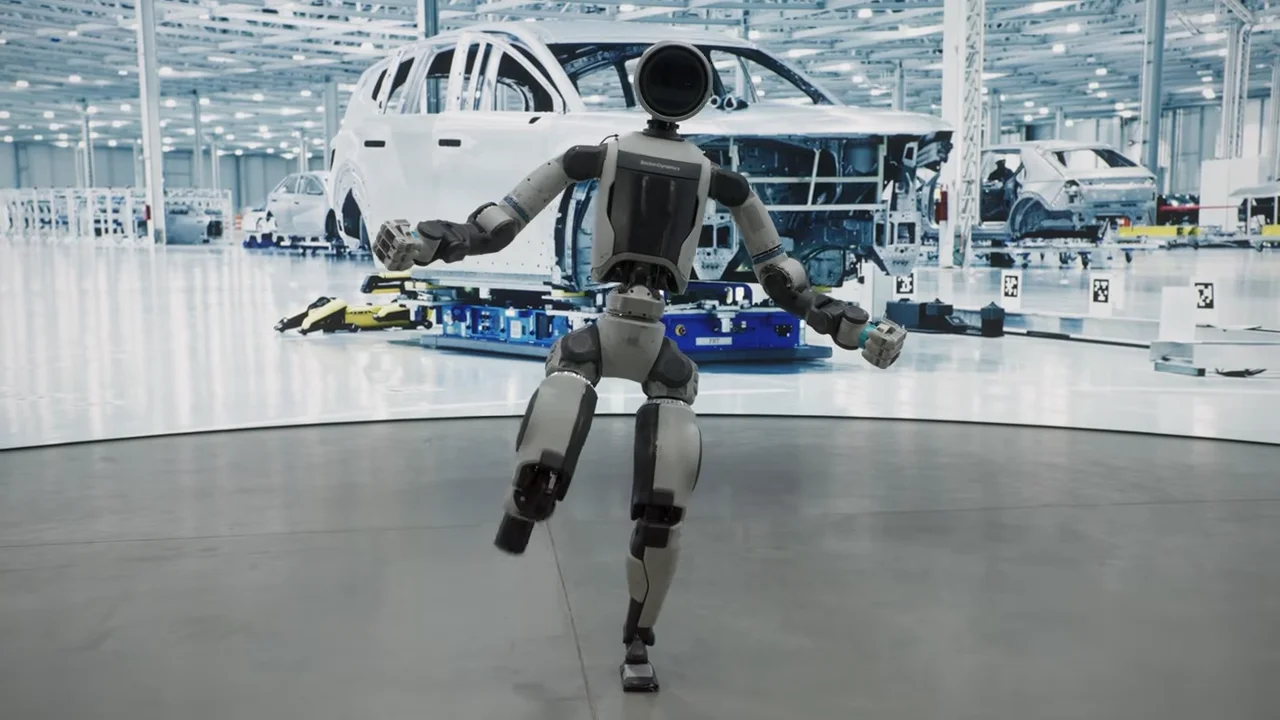
DeepMind Hires Former Boston Dynamics CTO to Build the ‘Android of Robotics’
Google DeepMind has announced the appointment of Aaron Saunders as Vice President of Hardware Engineering, a significant move aimed at advancing its Gemini project into a comprehensive operating system for physical artificial intelligence. Saunders, who brings over 23 years of experience from Boston Dynamics, is expected to leverage his expertise to enhance the integration of hardware and AI technologies. This strategic decision underscores DeepMind's commitment to expanding its capabilities in the rapidly evolving field of AI, particularly in creating systems that can interact seamlessly with the physical world. The announcement comes as the company seeks to solidify its position at the forefront of AI innovation.
Google Gemini Boston Dynamics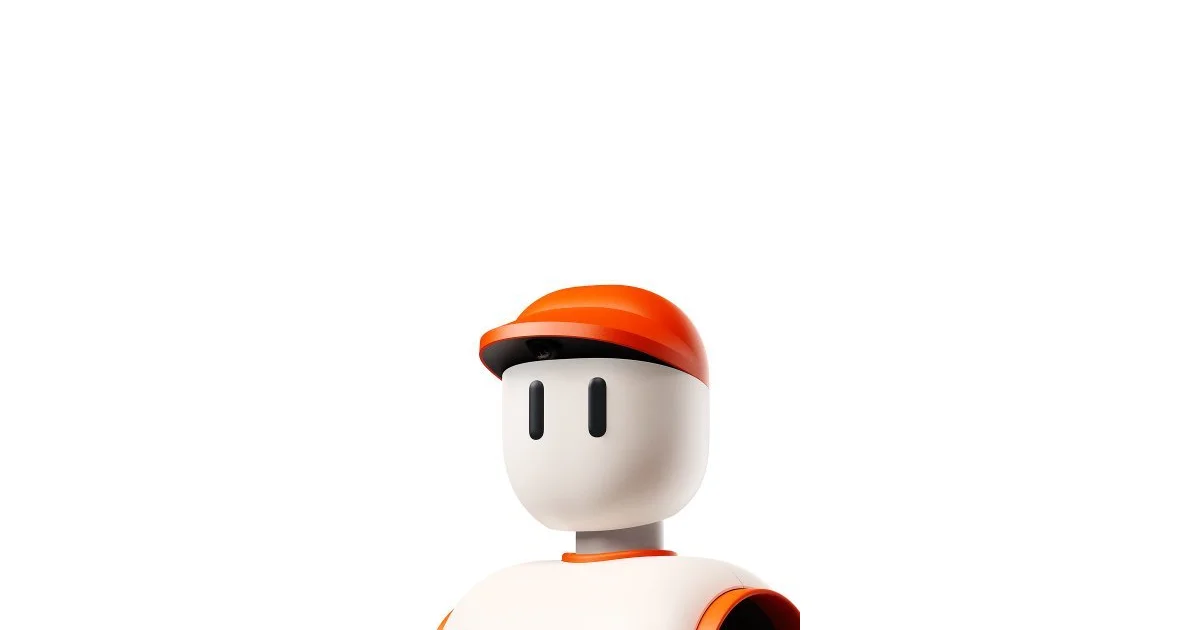
DeepMind, Tesla Vets Emerge From Stealth With ''Sunday Robotics,'' Backed by Conviction
Sunday Robotics, a startup based in Mountain View, is set to unveil its highly anticipated product on November 19. Founded by Tony Zhao, a former engineer at DeepMind and Tesla, the company has been operating in stealth mode for the past 1.5 years. Backed by the venture capital firm Conviction, Sunday Robotics aims to make a significant impact in the tech industry, drawing comparisons to the groundbreaking launch of the iPhone. The upcoming reveal has generated considerable excitement, as the startup prepares to showcase its innovative technology to the public.
Sunday Robotics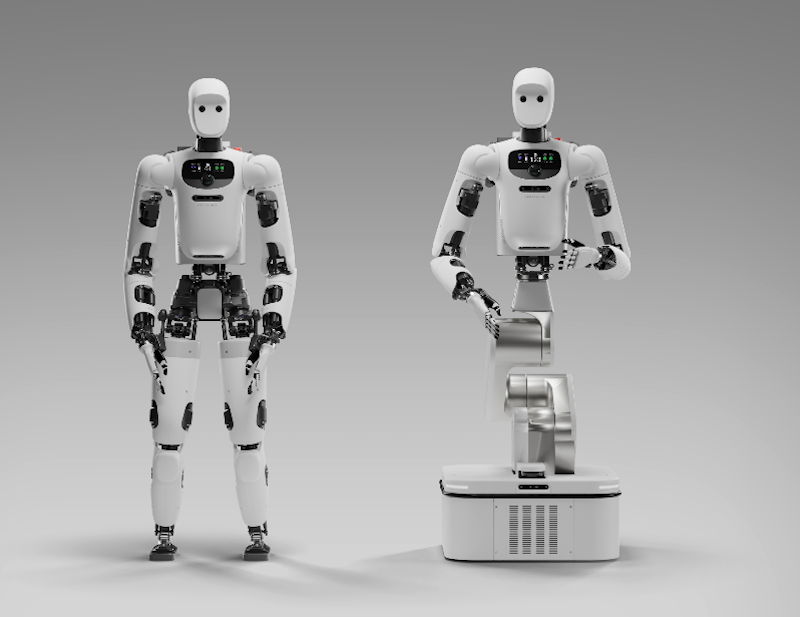
Apptronik launches Robot Park to train Apollo humanoid robots with Google DeepMind
AI-powered robotics company Apptronik has announced the opening of the newly expanded Robot Park, its flagship data collection and training facility for humanoid robots in Austin, Texas. The facility in Austin anchors a growing global network of Robot Parks at customer and partner sites around the world, and the company plans to open new Robot […]
Features Humanoids News apollo Apollo 2 apptronik
Cartwheel Robotics Founder Scott LaValley Joins Google DeepMind
After the closure of his startup, a former Disney Imagineer and veteran of Boston Dynamics has partnered with Aaron Saunders to promote advancements in Physical AI. This collaboration aims to leverage their combined expertise in robotics and artificial intelligence to develop innovative solutions that enhance physical interactions between humans and machines. The initiative reflects a growing interest in the integration of AI into everyday physical tasks, driven by the increasing demand for automation and intelligent systems. The partnership is set to explore new frontiers in technology, potentially transforming industries that rely on physical labor and interaction.
Cartwheel Robotics US Market Google google-deepmind
Actuate 26 Robotics Developer Conference Reveals Speaker Lineup with Industry Leaders
Foxglove has announced the speaker lineup for Actuate 26, its annual robotics developer conference, featuring leaders from Wayve, Aurora, Physical Intelligence, and more. The event will take place on August 18-19, 2026, at Fort Mason in San Francisco, showcasing technical talks, keynotes, and hands-on programming. This conference is significant as it aims to gather over 1,000 attendees from various sectors deploying robots, including autonomous vehicles, drones, and industrial automation. The participation of industry leaders highlights the growing interest and advancements in robotics and AI technologies. As the event approaches, attendees should look forward to insights from top experts in the field and opportunities for networking and collaboration. No further timeline was disclosed at the time of publication.

Waymo Leverages Genie 3 to Launch "Waymo World Model" for Hyper-Realistic Simulation
Waymo has introduced its latest innovation, the World Model, which utilizes Google DeepMind’s advanced Genie 3 technology. This new model is designed to simulate rare and complex driving scenarios, often referred to as "long-tail" cases, marking a significant advancement in the development of generative world models within the field of physical AI. The announcement highlights Waymo's commitment to enhancing the safety and reliability of autonomous driving systems by addressing edge cases that traditional models may overlook. This development comes as the company seeks to maintain its competitive edge in the rapidly evolving landscape of artificial intelligence and self-driving technology.
DeepMind World-Models Google Waymo google-deepmind
Understanding Technological Singularity and Its Impact on Robotics and AI
For decades, technological singularity was more a concept of science fiction than engineering reality. Today, it is a topic of discussion among AI laboratories, industrial giants, investment funds, and robotics companies worldwide. The rapid advancement of generative AI, autonomous robots, foundation models, and AI agents raises a fundamental question: what will happen when machines can enhance their own intelligence faster than humans? The origins of the technological singularity date back to 1965 when British mathematician I.J. Good proposed that an 'ultra-intelligent machine' could trigger an intelligence explosion. In the 1990s, mathematician Vernor Vinge expanded on this idea, suggesting that once a certain level of AI is reached, technological evolution would become unpredictable for humans. Ray Kurzweil later popularized the concept, predicting that artificial general intelligence (AGI) could emerge in the coming decades, leading to continuous self-improvement of systems. Currently, the landscape is shifting rapidly, with large language models, vision-language-action models, and autonomous agents enabling robots to understand natural language instructions, interpret their environment, and learn new tasks without specific programming. Companies like NVIDIA, Google DeepMind, and Tesla are investing billions in developing this new generation of intelligent robots.
À la une IA Industrie Robotique agents autonomes agents IA
Small-AI Models Gain Traction Around the World
One morning in 2019, Adebayo Alonge was in a Cape Town hotel room, preparing to demonstrate his startup’s AI answer to a serious problem in African health care: counterfeit medication, which kills thousands of people across the continent every year.The RxScanner is a handheld spectrometer that scans a pill with infrared light, then sends the item’s molecular profile to an AI model equipped with a pharmaceutical database. In seconds, the AI identifies the medication from its molecular profile—or reports that it’s phony.Pharmacies were using the system in more than a dozen countries, including Ghana, Kenya, Myanmar, and Alonge’s native Nigeria. But that morning in South Africa, it didn’t work. “I was shocked,” Alonge says.The spectrometer connected to the AI model—but the data center was 14,000 kilometers away and bandwidth was limited. “Our server was in the United States, and just to get the result of a single scan was taking me over 5 minutes.”So Alonge immediately asked his engineers to shrink the AI model down to a smaller, low-power, unconnected version that could run entirely on his Android phone. They produced it 2 hours later, and that saved the demo.More importantly, the work birthed a new version of his device, which can authenticate a pill in places without broadband, computers, or even reliable electricity. It also turned Alonge into an advocate for this kind of “small AI.”Small AI for Global Health Care AccessSmall AI is a far cry from wealthy nations’ colossal large language models (LLMs), hyperscale data centers, multibillion-dollar investments, and debates about AI consciousness. But for millions of people around the world, the only AI that matters, and often the only kind available, is small. (According to a World Bank Report issued in November, only 0.7 percent of internet users in the world’s poorest countries have used ChatGPT, compared to a quarter of all internet users in the most developed nations.)“Most people are discussing AI from the LLM/generative side. But that needs a lot of computing power, electricity, massive data, and skilled people to manage it,” Ajay Banga, president of the World Bank, said last January at the World Economic Forum, in Davos. “Outside the developed world, other than maybe India and China, very few countries have that combination.”By contrast, small AI can deliver useful, even life-saving services to people in areas that have none of those things, Banga said. In India, where the government’s AI plans call for more development of small AI, many such systems are working for farmers.For example, a drone-based system developed by Bala Murugan and colleagues at the Vellore Institute of Technology, in India, takes photos of cashew plants and quickly identifies those with splotches that indicate disease. All the processing takes place on the drone itself, so there’s no need for a computer on-site, nor for a connection to a central server.Using small language models trained for a specific problem, and sometimes running on cheap, low-power devices, other small-AI implementations have been developed to identify ant infestations in a Uruguayan vineyard, detect the presence of malaria-carrying mosquitoes in a number of nations, and run electrocardiograms from an Arduino device in parts of Brazil that lack access to more complex equipment.“This is the most important area in AI nowadays,” says Marcelo José Rovai, a professor at the Institute of Engineering and Information Systems at the Federal University of Itajubá, in Brazil, who was involved in all three projects. “It’s growing very fast.”Low-Power, Small-AI Models on Devices Small AI models can run on a variety of low-power devices, including [from left to right] an Arduino Nano 33 BLE Sense, a Seeed Wio Terminal, and an Arduino Portenta.Moez AltayebFor Alonge, Rovai, and other advocates, small AI is not just “a promising trend,” as that November World Bank report calls it. It may be, in the long term, the form of AI that will touch the most lives and remain sustainable after some of the giant models become too costly for most users.“I think the future of AI is not like one giant model, at a center. I think it’s millions of small, precise models deployed at the edge, each one solving like a specific problem, a specific context,” Alonge says. This is partly because much of humanity—including people in parts of rich countries as well as the developing world—lives without access to cutting-edge frontier models. But, he says, it’s also because those models are not sustainable.“If someone is not subsidizing it, most people will not be able to afford those models. So those of us who are said to be small-AI developers are the ones who will have to build for the majority of the world,” Alonge says.There is no strict definition of “small AI,” but people often use the term for language models with at most a few billion parameters. (Compare that to cutting-edge models, which can include more than a trillion.) That’s small enough to run directly on a phone or a Raspberry Pi. That’s what allows these applications to run on devices without a connection to a data center and use only a few watts of power, often supplied by a battery or a solar panel.Despite their small footprint, these models aren’t fundamentally different technology from that of gigantic AI models, Rovai says. Many instances of small language models were created the same way the phone-based version of Alonge’s pharmaceuticals scanner was—by “pruning” large models, or removing the parameters that weren’t involved in the task. The result is a system that’s less capable generally but still very good at the specific job it was pruned for, Rovai says. A lighter version of RxAll’s RxScanner spectrometer sends its results to an AI model run locally on a phone to check that a drug’s molecular signature is genuine.RxAllOther small models are created by “distillation.” They are trained to mimic a large model, until their performance approaches that of their “teacher,” Rovai says. In other cases, a larger model’s precision is reduced, for example, so that a model run on 32-bit architecture can run on 8-bit designs. In situations where the machine learning application is being used to classify data or predict patterns (like an ant infestation), it’s trained from the beginning on a small device, not derived from a larger model at all. Running all these small, specialized systems is becoming easier, Rovai says, for two reasons.The first reason is that hardware is getting better and more capable while using less power, he says. This means more and more phones can run small AI—especially those equipped with neural processing units, which are specialized chips that handle AI tasks like facial recognition and changing the brightness, shadows, or contrast in a photo.In 2025, slightly more than a third of all smartphones shipped worldwide were capable of running generative AI, and that figure will reach 45 percent by the end of this year, according to the technology research firm Counterpoint. By the end of next year, slightly more than half of all smartphones will be able to run a small AI model.The second reason Rovai cites is the shrinking footprint of language models. Both Google DeepMind’s Gemma 4 (released in April) and Alibaba’s Qwen 3.5 are “fantastic” for small AI, Rovai says. Both models are “open weight,” meaning users can adjust the connections between parameters to suit their needs. This makes it easy, for example, “to take a lot of data from, say, the milk industry and retrain the model specifically on that,” Rovai says.Rovai illustrated these reasons on a Zoom call, using one of his most recent experiments. Holding up a device, he says, “This is the new Arduino UNO Q—a US $50 device with a Qualcomm chipset. I’m running a language model here, which collects data from sensors and analyzes that data to detect tiny pools of water where mosquitoes might be breeding. It takes 3 watts to run it.”Support for Small-AI DevelopmentConvinced that millions of people are already benefiting from these kinds of applications, the World Bank now actively promotes small AI with grants, mentorship programs, financing, technical advice, and models of government policies that are friendly for small-AI development. For example, in Rwanda, the World Bank is backing a government program to help low-income households get devices that can run AI.All that said, no one claims that large language models are going away entirely. To create a generative AI that can run on a phone or other small device requires the architectural insights, data processing, and results of a larger model, Rovai says. “We need the big models to create these smaller models.” And for all that small AI can benefit people without access to big AI, the technology can’t solve the larger problems of development and digital inequality, Alonge says. Implementing small AI won’t allow nations to escape the challenge of creating an ecosystem to support AI: reliable power, a supply chain that works, and an educational system that develops the talents needed to create AI tools.Though his drug-scanning system can run for days on a phone with no connection, “you still want to be able to enable periodic syncing for updates with new signatures for the medications and analytics,” Alonge says. “And even when you are using batteries, reliable power is important. That phone battery is not going to last forever.”In many parts of the world, the future of small AI isn’t assured, he says. “It works, and many places will eventually need to use it. The question is whether or not the political actors are wise enough to invest in infrastructure to support it long term.”
Small-language-models Artificial-intelligence Llms
Interview with Luo Jianlan: The true scaling law of robots occurs in real deployment loops.
In the past six months, the focus of the domestic embodied intelligence sector has shifted from hardware competition to the deeper challenges that define the intelligence limits of robots. Luo Jianlan, an associate professor at Shanghai Chuangzhi Academy and chief scientist at Zhiyuan Robotics, argues against the prevailing notion that robots can replicate large language models through sheer data accumulation. He emphasizes that the core issue in embodied intelligence is not about breakthroughs in isolated components but rather the ability to create a closed-loop system in real-world deployments. Luo, who has a background in both academia and industry, including roles at Google X and DeepMind, believes that many teams in the sector are not genuinely pre-training models but are instead engaged in mid-training or fine-tuning due to the scarcity of high-quality interaction data. He asserts that true embodied intelligence requires a scalable closed-loop system, where deployment leads to data collection, which in turn enhances model capabilities. His current focus includes developing scalable online post-training infrastructure, enabling robots to learn continuously in real-world environments, and creating a world model that predicts the consequences of actions rather than merely generating video. Luo suggests that the future of embodied intelligence hinges on successfully integrating these elements into a cohesive system, with significant advancements expected in the next 12 to 18 months. He believes that the first team to effectively implement a "deployment-data-iteration" cycle in semi-structured environments like convenience stores will gain a substantial competitive edge.

Generalist AI Secures $400 Million Funding, Valuation Exceeds $2 Billion
Generalist AI, a US-based company focused on embodied intelligence, has successfully raised $400 million in funding, elevating its valuation to over $2 billion. The company, which boasts a founding team with experience from Google DeepMind and Boston Dynamics, aims to transform the field of robot training. By utilizing large-scale general data, Generalist AI seeks to minimize the dependency on costly real-world data, thereby reducing training expenses. This innovative approach is expected to expedite the deployment of robots in industrial environments, potentially revolutionizing the industry.
Embodied Intelligence Robot Training AI Funding Industrial Automation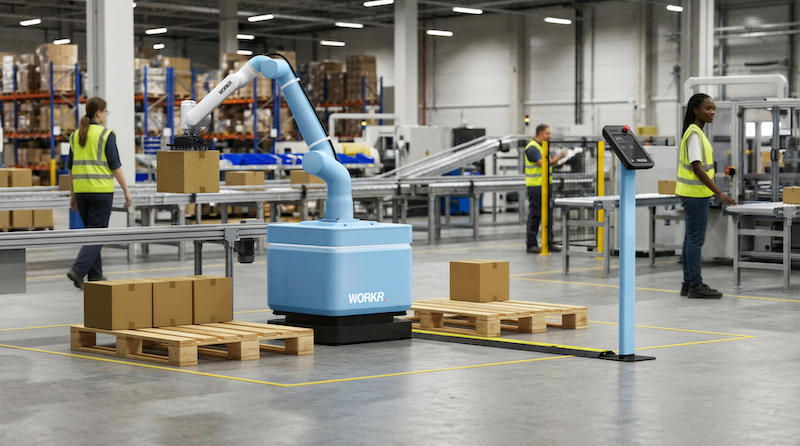
Interview with Workr Robotics CEO Ken Macken: ‘Paying for automation by the hour’
Industrial robotics is undergoing a significant transformation, driven by advancements in artificial intelligence, large language models, and embodied AI. This evolution has generated renewed interest in the development of robots capable of understanding, reasoning, and interacting with their physical environments. Notable partnerships, including collaborations between Google DeepMind and Boston Dynamics, have intensified discussions surrounding the potential for more sophisticated general-purpose robots. As these technologies continue to evolve, the industry anticipates a future where robots can perform a wider array of tasks, enhancing their utility across various sectors. The ongoing innovations suggest a promising trajectory for the integration of robotics into everyday life, potentially reshaping industries and improving operational efficiencies.
Features Industrial robots Robotics Software automation news automation roi
Google’s Genie world model can now simulate real streets with Street View
Google DeepMind is set to enhance its Project Genie by integrating it with Street View, aiming to develop immersive and interactive world simulations. This innovative initiative will enable users to explore diverse environments, experience dynamic weather changes, and encounter rare scenarios. The integration is part of DeepMind's broader effort to advance applications in robotics, gaming, and travel, providing a more engaging and realistic experience for users. The project is expected to leverage the extensive data from Street View to create detailed and responsive virtual landscapes, making it easier for developers and users alike to engage with these simulations in meaningful ways.
AI Robotics genie 3 Google Google I/O google io 2026
AI Is Starting to Build Better AI
Recent advancements in artificial intelligence (AI) have reignited discussions about recursive self-improvement (RSI), a concept first proposed by mathematician I. J. Good in 1966. As AI systems like large language models (LLMs) and machine-learning algorithms evolve, researchers are exploring how these technologies can autonomously enhance their own capabilities. Notable developments include OpenAI's GPT-5.3-Codex, which reportedly assisted in its own creation, and Google DeepMind's AlphaEvolve, designed to optimize complex problems in scientific discovery. While some researchers view these advancements as steps toward fully autonomous AI, they acknowledge that current systems still depend on human oversight for goal-setting and evaluation. Experts like Jeff Clune from the University of British Columbia believe that the field is on the brink of achieving RSI, which could revolutionize science and technology. However, challenges remain, including the complexity of AI systems and the necessity of human involvement in the development process. Concerns about the potential risks of RSI have also emerged, with some experts advocating for a pause in AI development to prevent unintended consequences. The debate continues over whether AI could lead to an intelligence explosion, with many researchers emphasizing the importance of maintaining human oversight to ensure safe progress. As AI technologies evolve, the future landscape may see a collaborative relationship between humans and machines, reshaping roles in research and innovation.
Ai-safety Singularity Llms Evolutionary-algorithm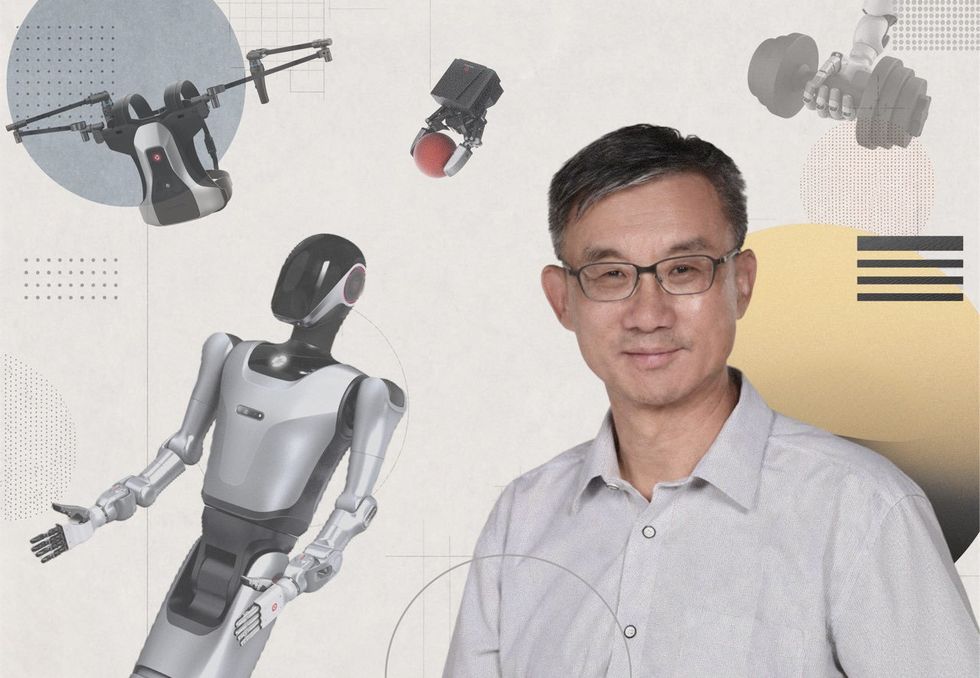
DAIMON Robotics Wants to Give Robot Hands a Sense of Touch
In April 2023, DAIMON Robotics, a Hong Kong-based company, launched Daimon-Infinity, touted as the world's largest omni-modal robotic dataset for physical AI. This extensive dataset, which includes high-resolution tactile sensing data from over 80 real-world scenarios and 2,000 human skills, aims to enhance robot manipulation capabilities across various tasks, from household chores to industrial assembly lines. The initiative is backed by collaborations with prominent partners, including Google DeepMind, Northwestern University, and the National University of Singapore. Prof. Michael Yu Wang, co-founder and chief scientist of DAIMON, emphasized the importance of tactile feedback in improving robotic dexterity, advocating for a shift from the traditional Vision-Language-Action (VLA) model to a more integrated Vision-Tactile-Language-Action (VTLA) framework. This transition is crucial for enabling robots to perform complex manipulation tasks effectively, especially in environments where visual data alone is insufficient. Recognizing a significant data gap in the robotics industry, DAIMON has committed to open-sourcing 10,000 hours of its dataset to support broader research and development efforts. The company aims to accelerate the deployment of embodied AI by providing high-quality tactile data, which is essential for training robots to interact with their surroundings more naturally and effectively. As the robotics landscape evolves, DAIMON's innovative approach positions it as a key player in advancing the capabilities of humanoid robots in real-world applications.
Type-sponsored Factory-robots Tactile-sensing Ai-models Embodied-intelligence
The Era of Eka: New Startup Unveils Vision-Force-Action Model to Crack Dexterity
A team of former researchers from MIT and DeepMind has established Eka Robotics, unveiling a groundbreaking "Vision-Force-Action" (VFA) foundation model. This innovative technology harnesses the power of simulation and tactile sensing to enable robots to perform tasks with superhuman speed and remarkable physical intelligence. The launch marks a significant advancement in robotics, aiming to enhance the capabilities of machines in various applications. By integrating advanced sensory data with real-time decision-making, Eka Robotics seeks to revolutionize how robots interact with their environments. The initiative reflects a growing trend in the tech industry to develop more sophisticated and responsive robotic systems, addressing the increasing demand for automation across multiple sectors.
US Eka Robotics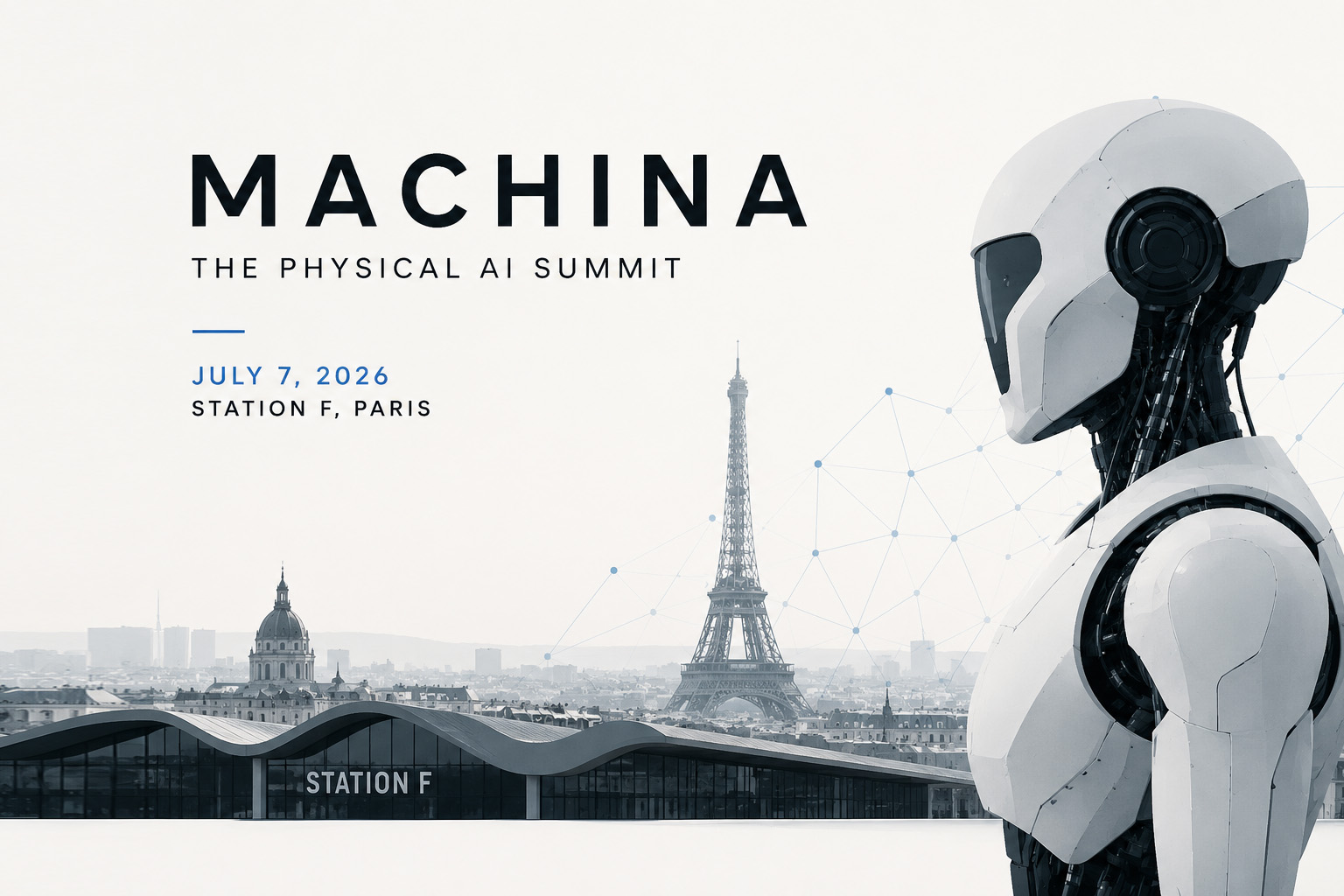
Paris aims to become the European capital of Physical AI by 2026.
A new era of artificial intelligence is emerging, transitioning from the digital realm of generative AI to the physical world with the development of robots that can perceive, reason, and act in real environments. On July 7, Paris will host the inaugural edition of MACHINA 2026, an event aimed at establishing the city as the European capital of Physical AI. This initiative reflects a growing interest in integrating advanced AI technologies into everyday life, highlighting the potential for robots to enhance various sectors by interacting with their surroundings in meaningful ways. The event is expected to showcase innovations and foster discussions on the future of robotics and AI in society.
À la une IA Industrie Robotique 1X Robotics Agility Robotics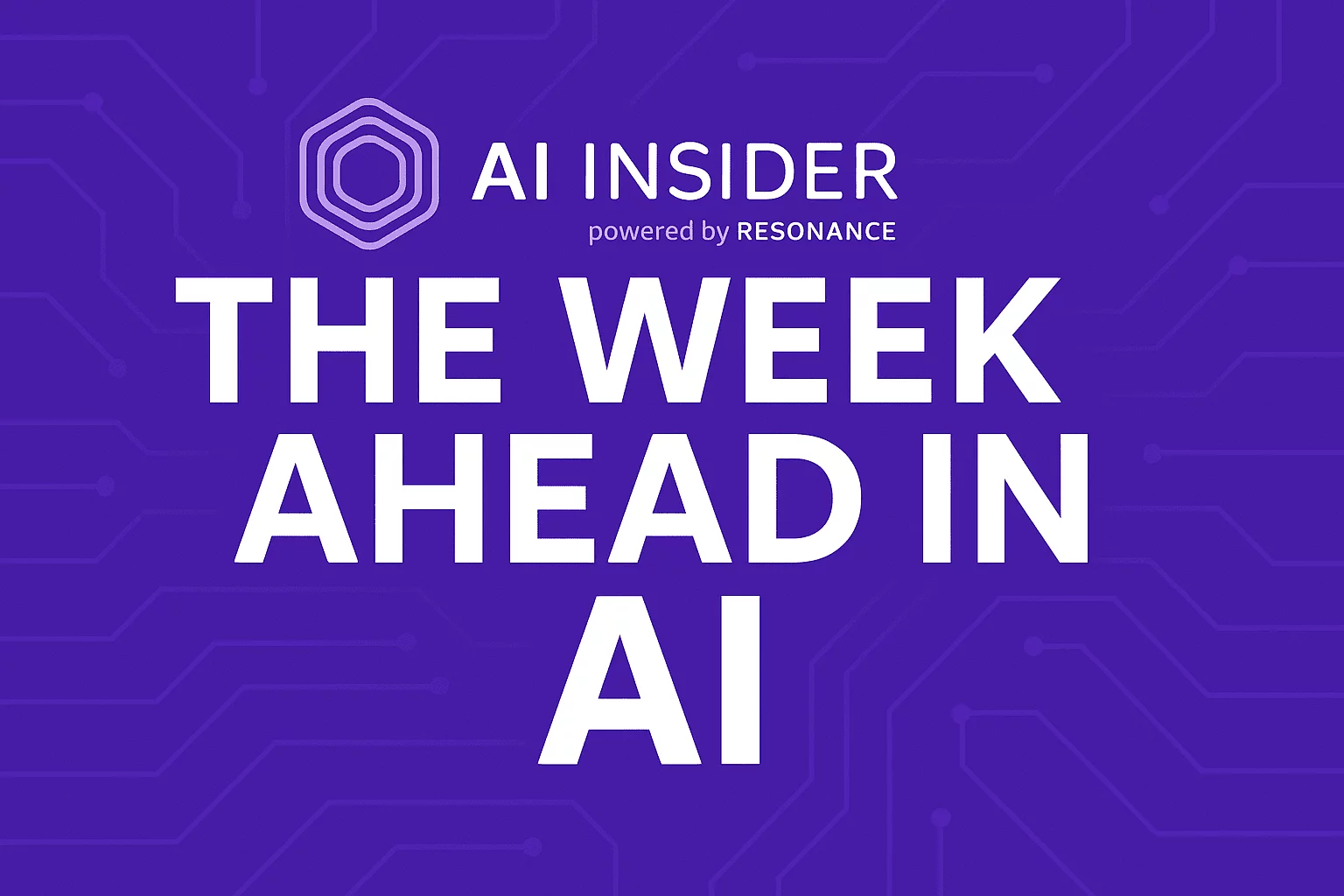
The Week Ahead in AI: Anthropic’s Models Suspended, Meta’s AI Model Monetizing Question, Deepfake Challenges, Plus Upcoming Earnings & Events
Anthropic, a prominent AI company, announced that it has received a directive from the U.S. government requiring the suspension of access to its AI models, Fable 5 and Mythos 5. This development comes as part of ongoing regulatory scrutiny surrounding artificial intelligence technologies. The suspension is set to take effect during the week of June 14-20, 2023, raising concerns about the implications for AI research and development. The government's decision aims to address potential risks associated with these advanced AI systems, reflecting a growing emphasis on safety and ethical considerations in the rapidly evolving tech landscape. As the situation unfolds, industry experts and stakeholders are closely monitoring the impact of this directive on both Anthropic and the broader AI sector.
AI Exclusives Robotics Accenture AI Summit Anthropic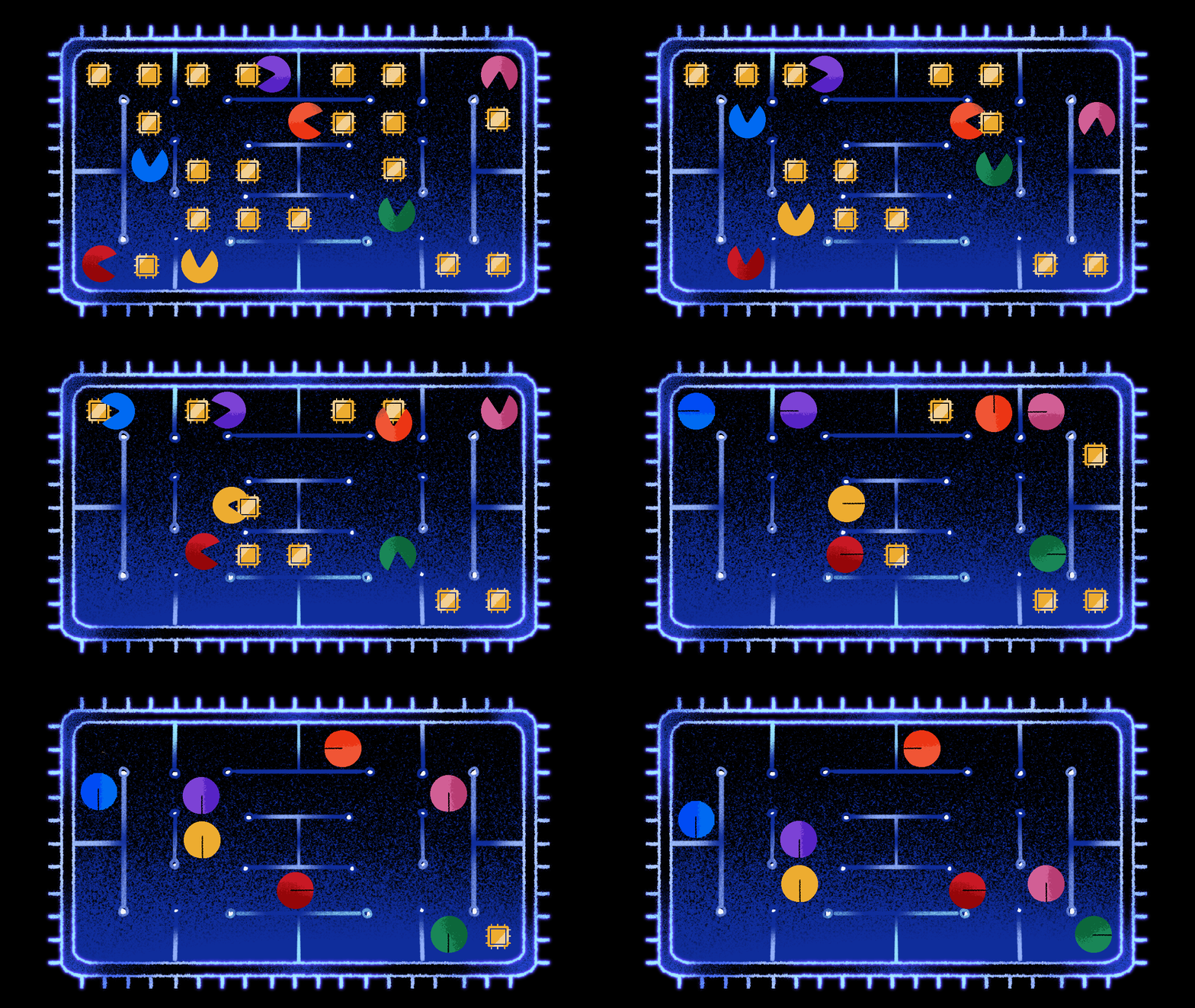
AI’s endless chip appetite
In a recent discussion on the evolving landscape of artificial intelligence, industry leaders highlighted the intense competition for AI computing resources and the challenges that come with it. Mark Zuckerberg, co-founder of Meta, has returned to coding, signaling a renewed focus on technological innovation within his company. Meanwhile, Yat Siu, CEO of Animoca, offered insights into the future of blockchain technology and its potential to revolutionize digital agents. This exchange of ideas took place during a tech conference held in San Francisco in October 2023, where experts gathered to explore the intersection of AI and blockchain. The motivation behind these discussions stems from the growing demand for advanced computing capabilities to support AI development and the need for innovative solutions in the rapidly changing tech environment. The event featured a series of panels and workshops, allowing participants to share their perspectives and strategies for navigating the complexities of AI and blockchain integration.
Artificial Intelligence Newsletters Allbirds artifical intelligence Claude Google DeepMind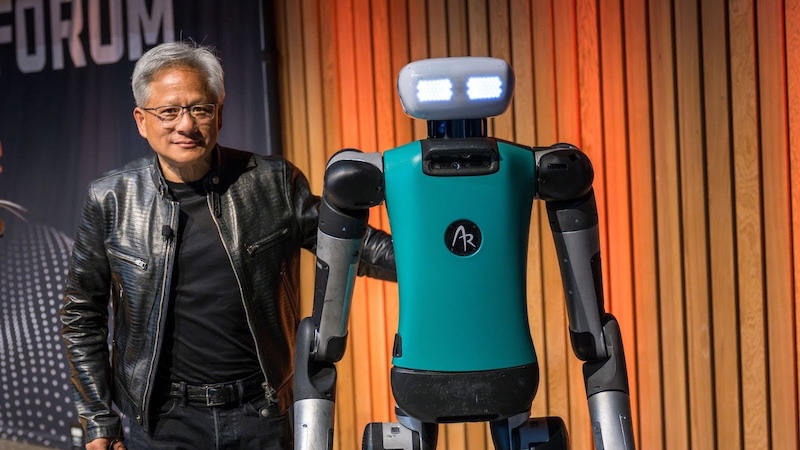
Agility Robotics to go public through $2.5 billion SPAC merger
Agility Robotics has agreed to go public through a merger with special purpose acquisition company Churchill Capital Corp XI, in a deal that values the humanoid robotics developer at a pre-money equity value of $2.5 billion. The transaction is expected to generate more than $620 million in gross proceeds, including approximately $200 million from a […]
Financials & Investments Humanoids News Agility Arc agility robotics Churchill Capital Corp XI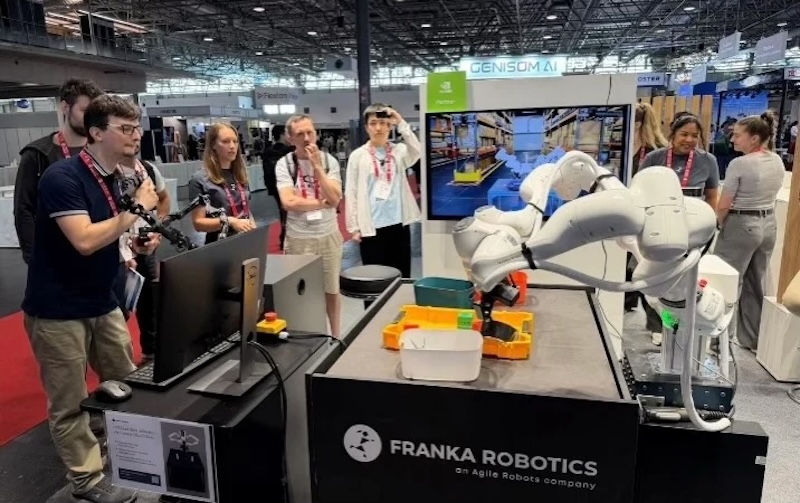
Agile Robots showcases force-control technology, humanoids, and physical AI at Robot Technology Japan event
Agile Robots is making a significant impact at Robot Technology Japan (RTJ) 2026, where the Munich-based company is showcasing its extensive range of industrial robotics, embodied AI, and humanoid technologies. The event, taking place in Nagoya, serves as a platform for Agile Robots to highlight its latest innovations, including advanced force-control systems, collaborative robots, and AI-driven automation solutions. This presentation underscores the company's commitment to expanding its presence in the global automation market, reflecting the growing demand for sophisticated robotic technologies in various industries.
Events Industrial robots News Agile ONE agile robots automation newsRobotics needs a service framework.
RSF defines a common language for robot service capability, lifecycle operations, certification pathways, and service-provider networks.