Industry Briefing
A single destination for timely, editor-curated robotics news from around the world.
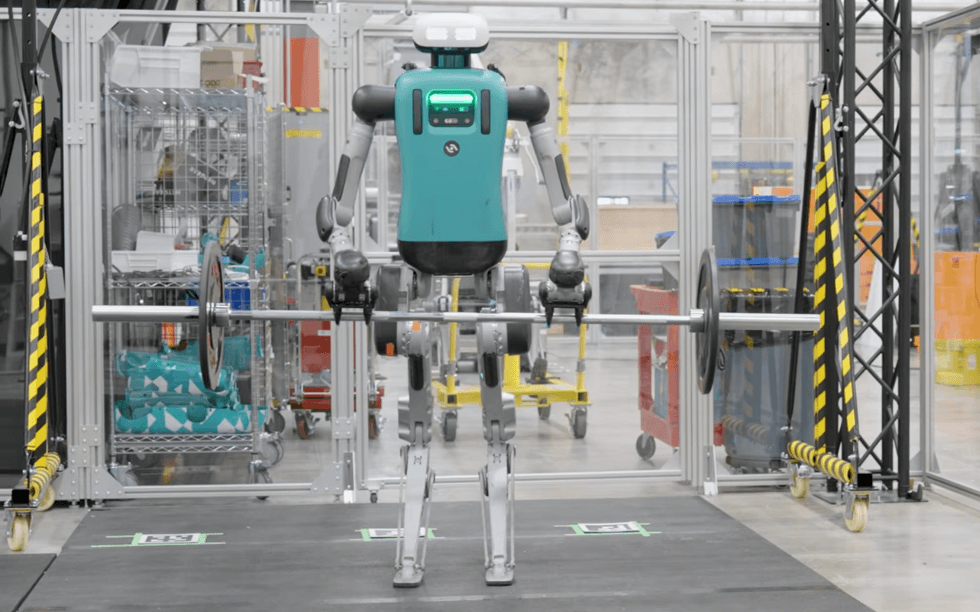
Video Friday: Digit Learns to Deadlift
IEEE Spectrum robotics has released its latest edition of "Video Friday," showcasing a selection of innovative robotics videos and announcing upcoming events in the field. The events include the International Conference on Robotics and Automation (ICRA) scheduled for June 1-5, 2026, in Vienna, the Robotics Science and Systems (RSS) conference from July 13-17, 2026, and a Summer School on Multi-Robot Systems taking place from July 29 to August 4, 2026, in Prague. Among the featured videos, researchers are training the robot Digit to perform a deadlift with a 65-pound object, emphasizing the importance of whole-body coordination and resilience in its actuators. This training allows for the development of a policy that enables Digit to execute a dynamically balanced lift in real-world scenarios. Additionally, Gatlin Robotics has introduced its first commercial showcasing robots in action as part of its Robot-as-a-Service (RaaS) contract. Dexterity highlights the expressive potential of motion intelligence in robotics, while Harvard researchers present a swarm of simple antlike robots capable of constructing and dismantling structures through adaptive group behavior. Lastly, a project from Michigan Robotics demonstrates a microcombustion actuator that rapidly inflates to launch colorful water droplets, challenging conventional notions about the capabilities of soft actuators. These advancements reflect the ongoing evolution and application of robotics technology across various domains.
Industrial-robots Humanoid-robots Video-friday Swarm-robotics Dancing-robot Bipedal-robots
‘Brilliant’: US public cheers dancing Unitree robots while Congress looks to ban them
A growing divide is noted between American public perception and lawmakers' views on Chinese robotics, particularly following the recent appearance of Unitree's humanoid robots on the popular television show "America's Got Talent." The performance, which showcased the G1 robots, garnered a standing ovation from the studio audience, highlighting a potential shift in mainstream acceptance of advanced robotics. This high-profile showcase occurred during the season premiere of the show, although official ratings figures have yet to be released. Analysts suggest that such visibility could influence public opinion positively, contrasting with the more cautious stance often taken by legislators regarding technology from China.
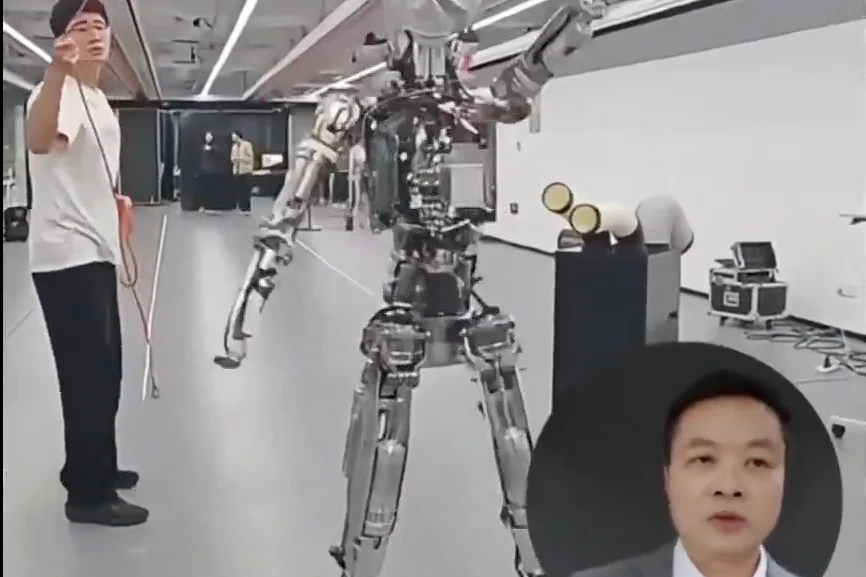
Xpeng Demos 'Iron' Robot Dancing, Credits 'Human-Like Spine' and New AI for Rapid Learning
Xpeng CEO He Xiaopeng recently unveiled a video showcasing a bare-metal 'Iron' robot performing a dance routine, a demonstration that has reignited discussions following the company's AI Day. He attributes the robot's fluid, human-like movements to an innovative 'human-like spine' design, coupled with an advanced AI model capable of learning intricate motions from human data in a mere two hours. This development highlights Xpeng's commitment to pushing the boundaries of robotics and artificial intelligence, aiming to enhance the capabilities of their robotic systems.
XPeng IRON
Japan Pioneered Humanoid Robots—Can It Now Catch China?
“In the future, the relationship between humans and robots will deepen, and the distinction between them will probably disappear.” This prediction, from one of the attendees at the recent Humanoids Summit in Tokyo, might have been unremarkable had it not come directly from an android that was first introduced to the world 20 years ago. Geminoid HI-6 is the sixth-generation of a robot originally designed in 2006. The mechanical twin of Osaka University professor Hiroshi Ishiguro, Geminoid HI-6 is now equipped with a large language model trained on Ishiguro’s own writings and interviews. It has advanced conversational skills and can even have a chat with its creator, an eerie spectacle. But at the Humanoids Summit, Geminoid was one of the few humanoid robots from Japan, the country that pioneered the form factor.While the event in Tokyo only had about 40 robots on display, Chinese systems outnumbered Japanese by roughly three to one. Some Japanese robotics firms were even using Chinese robots in their own technology demonstrations, something that would have been unthinkable in the recent past—one Japanese engineer described the situation as “sad.” The conference was a stark reminder of how Japan has ceded its early lead in humanoid robot development to overseas competitors, and the challenge it now faces to secure a place in an ecosystem increasingly dominated by general-purpose robots powered by AI. Twenty-five years ago, Japan was turning out groundbreaking humanoids that were showstopping in their abilities, but they were not commercialized as practical machines in any meaningful way. Heavily influenced by science fiction and lacking practical applications, they were mostly expensive technology demonstrations that were eventually mothballed. What Japan retains, however, is robotics design and know-how, which it must leverage to be a key player in the rapidly evolving humanoid ecosystem. Learning to Walk—Then Standing StillTo anyone who has seen recent videos of Chinese humanoids doing kung-fu and synchronized acrobatics, as well as half-marathon races, China’s remarkable progress in the field is nothing new. At the Humanoids Summit, Toyota showed a video of its latest basketball-playing robot, and Honda exhibited its latest robot hand, but the full-scale humanoids on the floor were mostly Chinese–the kid-size K1 machines from Booster Robotics of Beijing were dancing to Michael Jackson tunes. The full-scale G1 humanoid from Unitree Robotics of Hangzhou was also doing demos. “You cannot sell these bipedal systems in Japan for safety and compliance reasons,” says Shuichi Nagao, a frequent visitor to China as CTO of Omakase Robotics, a division of Zeals, a Japanese humanoid robot developer. Omakase was exhibiting a G1 modified with an external PC controller, a dextrous hand, a suction-cup manipulator and a sensor “hat” with an extra speaker, mic and camera. “In China, the government is pushing humanoid development. They didn’t have an industry 20 years ago. The people pushing it are young, in their 20s and 30s. It’s a really different mentality out there,” says Nagao. “Big players in Japan are still looking for use cases for humanoids. In China, they’re already doing mass production and reducing the cost, so other countries can’t compete with them anymore.”Another Japanese company showing off G1 bots was summit sponsor GMO AI & Robotics, a subsidiary of Japanese internet company GMO. It’s using the robots in partnership with Japan Airlines to load and unload cargo containers at Tokyo’s Haneda airport. The cargo project is a trial—like many other humanoid experiments—but the fact that Chinese machines have penetrated so far into Japan’s ecosystem upends a long history. In 1973, scientists at Waseda University in Tokyo built WABOT-1, considered the first full-scale humanoid robot and capable of slow bipedal locomotion, grasping objects and simple communication. It inspired Honda’s groundbreaking Asimo humanoid, but it was never commercialized. Asimo was eventually retired in 2022, the year ChatGPT was released. Two years later, Unitree’s G1 went on sale for US $16,000. China’s High Torque Technology Co. showed off its Mini Pi biped, customized with an anime-inspired head, at Humanoids Summit in Tokyo. The regular version is priced at $3,500. Tim HornyakSupply and DemandJapan’s development of humanoids happened before practical applications or widespread demand were in place, but bad timing is only part of the story—Japan also has a history of developing technologies that might appeal to domestic consumers but not necessarily those overseas. For example, decades after they first appeared, its highly engineered, multifunction toilets have only recently found a following abroad. Japan’s humanoid prowess was partly built on the back of its legendary industrial automation, yet even that stronghold has eroded. Ani Kelkar, a partner from McKinsey & Company in Boston who produces analytical reports about the robotics industry, told the summit audience that while Japan occupied the top spot in the world in manufacturing robot density (the number of multipurpose industrial robots in operation per 10,000 employees) from at least 1994 to 2009, it then slipped to second in 2014, third in 2019 and fifth in 2024. In that year, South Korea was at the top of the leaderboard with a robot density of 1,220 compared to Japan’s 446. The International Federation of Robotics estimates China now has the most operational industrial robots in the world, with around 2 million total units, approximately 4.5 times more than Japan. “The annual installation numbers are impressive too: 54 percent of all robots installed worldwide in 2024 were deployed in China,” the IFR said in a release in April 2026. “I think the loss of Japanese leadership is more to do with the rise of China as a manufacturing powerhouse including for sectors that Japan had high export levels,” Kelkar said in an email interview. “The recovery has not yet happened as Japan ‘missed’ the rapid acceleration in AI for robotics and is now playing catchup.”How Japan Can Adapt Kelkar believes Japan has a US $100 billion opportunity in general-purpose robotics, which are machines that can perform a wide variety of tasks, and it cannot rely on the slower-growing industrial robot market, which is centered on factory machines that do one simple and predictable task like welding car parts. He points to a McKinsey white paper suggesting that while Japan has much of the hardware and technology experience needed to support general purpose robot development, it must change its strategy to capture more share in AI, software, data collection and robotics platforms.Tetsuya Ogata is a professor of engineering and director of the Institute for AI and Robotics at Waseda University, the birthplace of humanoids in Japan. He briefed the summit on how a nonprofit he chairs, the AI Robot Association (AIRoA), is working with Toyota and other members to develop foundational technologies for collaborative use. For instance, AIRoA has collected some 80,000 hours of data on remote operation of mobile manipulators, and Ogata believes it’s the largest dataset of its kind. Using the data, it built and verified Vision-Language-Action (VLA) models, and it has also started data collection for dual-arm mobile manipulation. In an interview, Ogata acknowledged Japan’s struggle to find its place in the changing landscape. “The world of AI is inherently a game of scale,” says Ogata. “Therefore, Japan’s absolute prerequisite is to secure a competitive baseline of scale—in data, computing resources, and talent. Beyond that, what I consider most critical is a mindset shift: rather than trying to hoard scale within a single nation or company, we must grow stronger by collaborating with a diverse ecosystem of domestic and international players.” Specifically, this means creating a ‘collaborative domain’ to address data—the single biggest bottleneck—through industry-wide cooperation rather than data-siloing. By collectively nurturing a pre-competitive, shared data infrastructure and foundation model, individual companies can then compete on top of it with their own applications. “By offering this open ‘data ecosystem’ to the world, we can engage global players and establish a ‘third pole’ alongside the US and China,” says Ogata. “I believe this is how Japan can reclaim its global presence.”In 1999, Japan introduced the world’s first mobile internet services platform. But being first didn’t turn Japan into a smartphone manufacturing or design center—it’s now merely a supplier of parts to other countries who are leading the smartphone industry. If Japan can avoid a repeat of that experience and successfully deregulate, diversity, and commercialize its original humanoid dreams, it stands a better chance of influencing the direction of the industry and reaping billions in value. As automobiles and electronics were pillars of Japan’s industrial strategy in the last century, Japan could make humanoid robots one of its key value generators in the 21st century, an approach that would not only deliver economic benefits but give Japan greater clout in how the industry will evolve. Just like Japanese cars, electronics, and even toilets, Japanese humanoids could stand for craftsmanship and reliability. It’s a legacy that Japan can’t afford to give up.
Japan Robotics Humanoids Humanoid-robots
Humanoids dance and thread needles as Japanese robotics developers look to outdo Chinese
The Humanoids Summit Tokyo commenced on Thursday, showcasing a range of advanced robotics technology. Among the highlights were mechanical hands capable of threading a needle, alongside childlike dancing robots and larger models designed for delivery tasks. This event aims to demonstrate the latest innovations in humanoid robotics, reflecting the growing interest and investment in the field. The summit serves as a platform for researchers, developers, and industry leaders to share insights and advancements, highlighting the potential applications of these technologies in everyday life.
Robotics
Breaking! Robot Hugs Girl and Won't Let Go... A Trillion-Dollar New Business Emerges
At a recent sports event in Shaanxi, a dancing robot unexpectedly embraced a young girl, creating a surprising moment for attendees. This incident, which was reportedly caused by signal interference from nearby drones, underscores the increasing complexities and potential risks associated with robotics technology. As the integration of robots into various sectors expands, experts predict that the demand for robot insurance will grow significantly, potentially surpassing that of traditional car insurance in the near future. This evolving landscape highlights the need for comprehensive risk management strategies as robotics continue to advance and become more prevalent in everyday life.
Robot Insurance AI Safety Robotics Autonomous Systems Technology Risks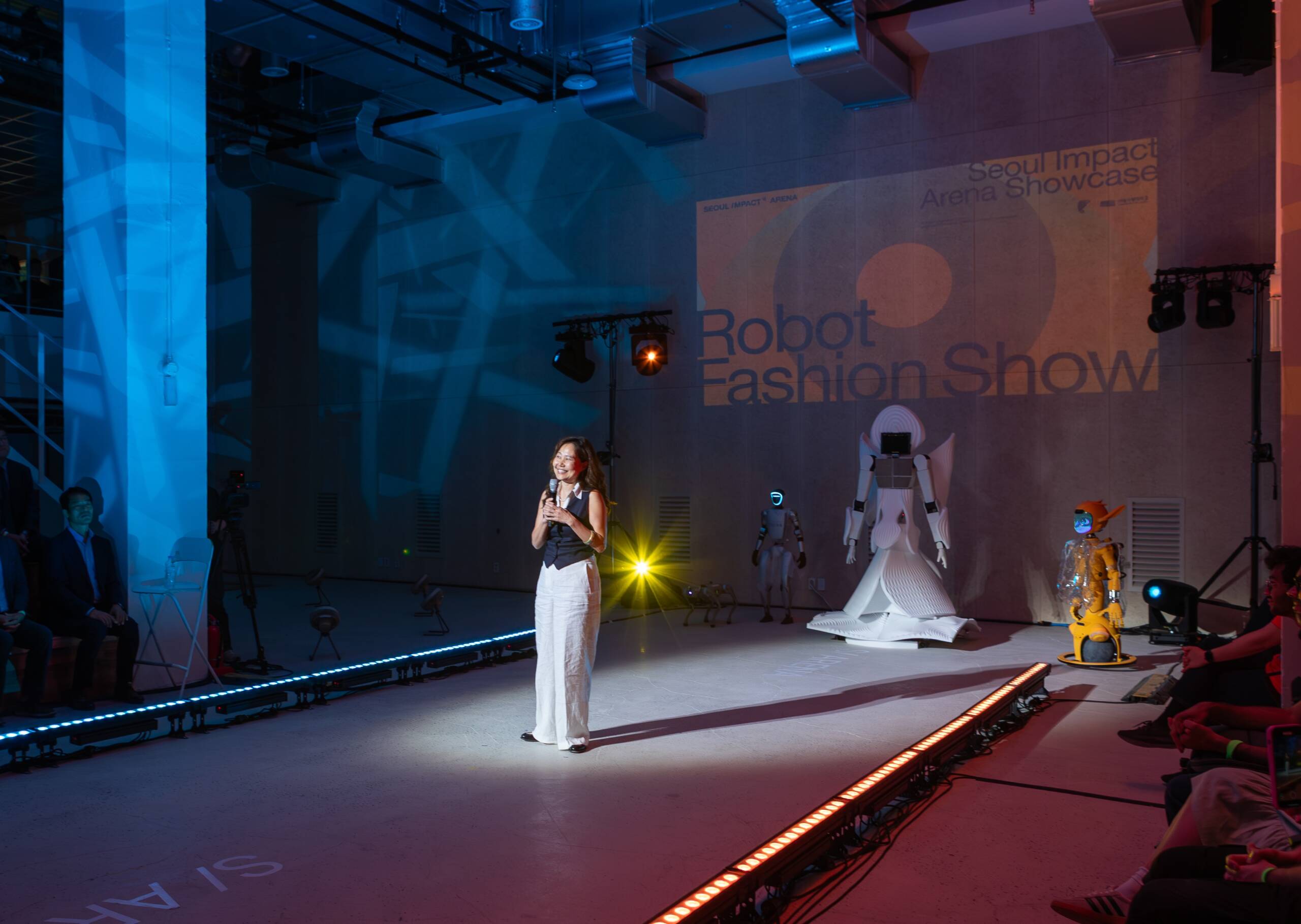
Robots on the Runway
In a groundbreaking fashion show, robots showcased their capabilities by strutting, spinning, and dancing alongside human models, merging the realms of art and engineering. This unique event aimed to explore the potential for coexistence between humans and machines, featuring robots adorned in metallic fabrics and sculptural garments. The performance, held at the Robotics Institute at Carnegie Mellon University, highlighted the innovative intersection of technology and artistic expression, prompting audiences to reconsider the future of collaboration between robotics and human creativity.
Announcements Research
China’s Noetix Robotics unveils $1,370 humanoid robot “Bumi”
Noetix Robotics, a Chinese startup, has unveiled Bumi, the world's first high-performance humanoid robot priced under ¥10,000 (approximately $1,370). Standing at 94 cm and weighing 12 kg, Bumi is capable of walking on two legs and executing complex movements such as dancing. This launch marks Noetix's entry into the consumer robotics market, targeting both educational and home applications. The lightweight design and advanced functionalities of Bumi aim to make robotics more accessible to consumers, reflecting the growing interest in personal robotics and automation technology.
News Feed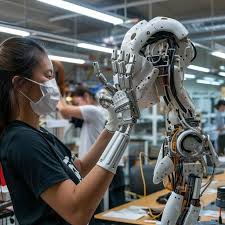
World’s first Humanoid Robot Games open in Beijing
The inaugural Humanoid Robot Games commenced on Thursday in Beijing, showcasing a groundbreaking event in robotics. Over the course of three days, more than 500 robots from 16 countries and regions will participate in over 400 competitions across four main categories: competition, performance, scenario-simulation, and various side events. The opening ceremony featured an impressive display, with robots dancing alongside humans and even performing traditional Chinese opera, highlighting the fusion of technology and culture. This event aims to promote innovation in robotics and foster international collaboration in the field.
News Feed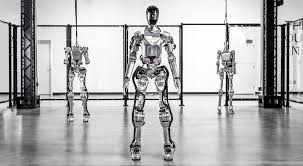
AgiBot unveils Lingxi X2, an advanced humanoid robot with multimodal intelligence
Peng Zhihui, the founder of AgiBot, unveiled a video today featuring the Lingxi X2, an advanced bipedal humanoid robot. This innovative robot is equipped with a sophisticated computing engine that enables it to perform a variety of tasks, including walking, running, dancing, riding a bicycle, balancing on a hoverboard, and even reading medication instructions. The Lingxi X2 was developed by AgiBot's X-Lab, highlighting the company's commitment to advancing robotics technology. This release marks a significant step in the integration of motion, interaction, and task execution intelligence in humanoid robots, showcasing the potential for practical applications in everyday life.
News Feed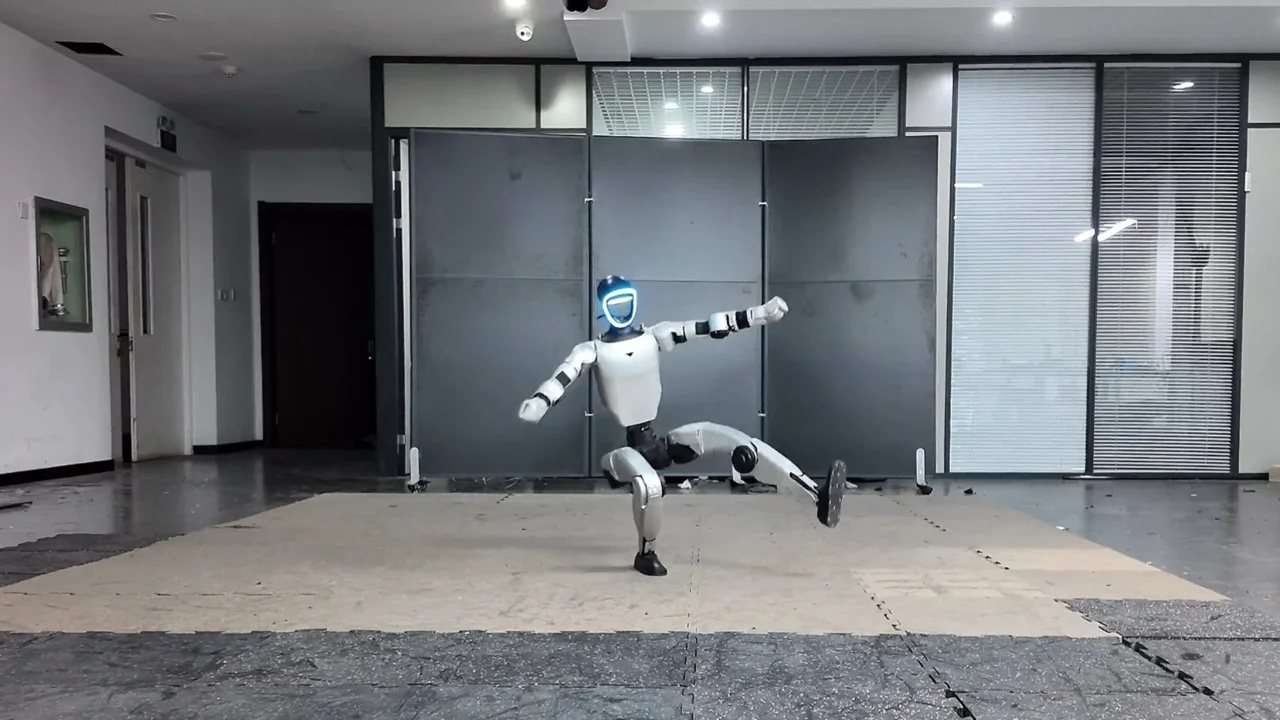
Beyond the Gala: OmniXtreme Breaks the Generality Barrier for Humanoid Agility
A collaborative effort between BIGAI and Unitree has led to the development of OmniXtreme, an innovative unified control policy designed for humanoid robots. This groundbreaking technology allows these robots to execute a wide range of extreme movements, including backflips and breakdancing, without requiring extensive task-specific adjustments. The unveiling of OmniXtreme marks a significant advancement in robotics, showcasing the potential for more versatile and adaptable robotic performances. The announcement comes as the field of robotics continues to evolve, pushing the boundaries of what machines can achieve in terms of agility and movement.
Unitree Robotics Research China embodied-ai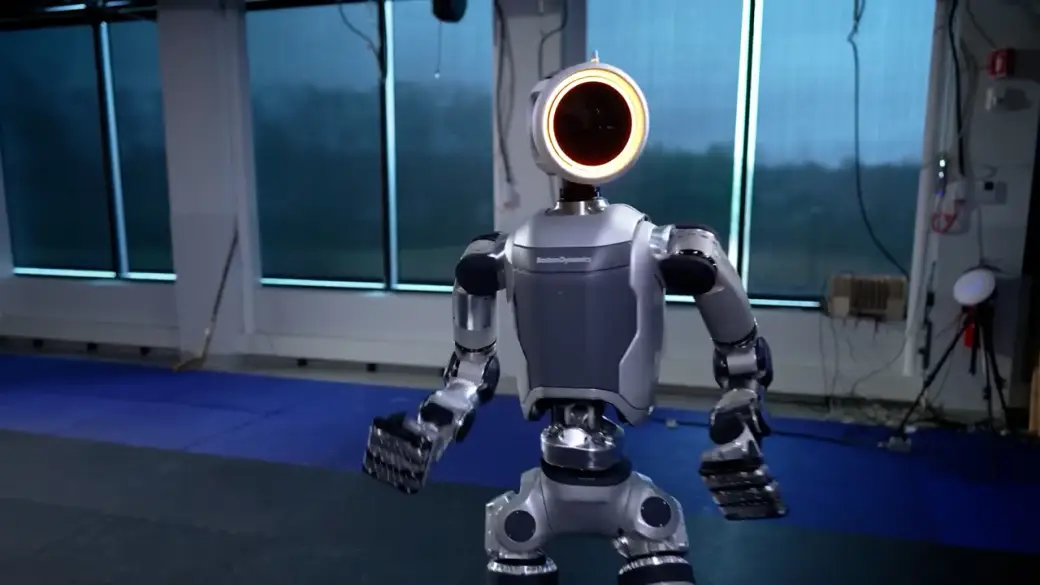
Boston Dynamics shows off a fascinating leap in humanoid mobility
Boston Dynamics continues to lead the robotics industry with its advanced Atlas robot, showcasing its capabilities in a series of recent videos. The footage highlights Atlas engaging in impressive physical feats, including running, executing cartwheels, and even breakdancing. These demonstrations not only emphasize the robot's agility and balance but also reflect the company's commitment to pushing the boundaries of robotic technology. The videos, released in October 2023, serve to inspire interest and excitement in the potential applications of robotics in various fields, from entertainment to practical uses in everyday life.
Unitree Robotics Atlas Boston DynamicsRobotics needs a service framework.
RSF defines a common language for robot service capability, lifecycle operations, certification pathways, and service-provider networks.