

Industry Briefing
A single destination for timely, editor-curated robotics news from around the world.
OpenAI Launches Jalapeño Chip, Leveraging LLMs for Accelerated Design Process
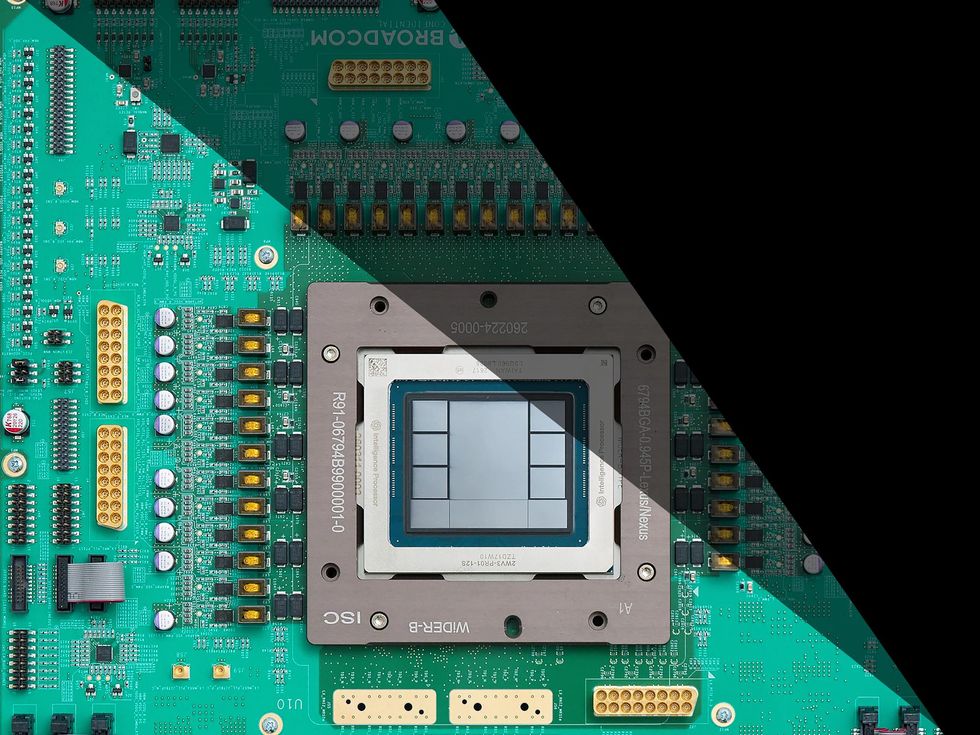
On August 25, OpenAI introduced Jalapeño, its first AI accelerator chip, achieving up to 13.4 petaflops of 4-bit compute and accessing 232 gigabytes of advanced memory at 15.4 terabytes per second. Jalapeño reportedly reduces end-to-end latency by up to 3.6 times compared to Nvidia's GB300 while consuming less power. The significance of Jalapeño lies not only in its performance metrics but also in the innovative design process, which was expedited using OpenAI's large language models (LLMs). The chip's development timeline spanned under 20 months, with only nine months from the first RTL code to tapeout, showcasing the potential of LLMs in chip design. Looking ahead, OpenAI's collaboration with Broadcom and the integration of LLMs into chip design tools could lead to even faster development timelines. As LLM capabilities improve, the industry may witness a transformation in how chips are designed and manufactured, with OpenAI at the forefront of this evolution.
Openai Llms Chip-design
NVIDIA Launches Autonomous AI Engineer to Transform Chip Design Efficiency
On July 29, NVIDIA unveiled its Autonomous AI Engineer at the 2026 Design Automation Conference (DAC), a groundbreaking solution that covers the entire chip design and verification process. This system integrates the enhanced NVIDIA Agent Toolkit with the AI physics library PhysicsNeMo and the updated CUDA-X library, enabling AI to not only create designs but also understand physics, run simulations, and perform validations like a real chip engineer. The core of this system is a comprehensive 'AI Engineer Skill Set.' PhysicsNeMo provides AI with 'physical intuition' to train and deploy physical models, predicting real-world physical behavior in complex designs. The updated CUDA-X library injects high-speed computing capabilities, featuring sparse solvers cuISS and cuDSS for accelerating electromagnetic and fluid dynamics simulations, while the cuEST quantum chemistry library focuses on time-consuming atomic-level material simulations crucial for semiconductor development. NVIDIA has open-sourced the 550 billion parameter Nemotron 3 Ultra MoE model for register-transfer level coding, achieving a 97.1% pass rate in nine RTL coding tasks with its hardware design agent ACE-RTL. Major companies like Samsung, TSMC, and Synopsys are fully engaged, indicating that the 'AI designing AI' revolution has begun, potentially extending Moore's Law through AI advancements.
Chip Design AI Engineering Semiconductor Technology Automation NVIDIA
New US Photonics Design Platform Accelerates 1.6T Chip Development for Data Centers
Researchers in the United States have introduced a novel photonics design platform aimed at expediting the creation of high-performance chips for data centers. OpenLight, a semiconductor company based in California, and Israeli chipmaker Tower Semiconductor have enhanced their PH18DA photonics ecosystem by launching OpenLight’s photonic Process Design Kit (PDK), now accessible through Cadence’s electronic design automation tools. This open-platform design kit offers engineers a comprehensive library of components for developing custom Photonic Application-Specific Integrated Circuits (PASICs) and simplifies the process of creating photonic integrated circuits (PICs). The technology supports 400G and 1.6T photonic circuits, potentially streamlining the transition from design to production on the PH18D platform, according to OpenLight CEO Adam Carter. The integration of this PDK into Cadence tools is expected to facilitate the design of photonic integrated circuits alongside conventional integrated circuits. The collaboration aims to enhance the development of advanced optical systems, with a focus on improving performance, power efficiency, and scalability for next-generation optics solutions. No further timeline was disclosed at the time of publication.
AI and Robotics
SpaceX's Starmind Project: Supplier Strategy and Chip Manufacturing Plans for 2026
SpaceX's Starmind project, aimed at deploying up to 1 million AI satellites, was filed with the FCC on January 30, 2026. The initiative is designed to minimize reliance on external suppliers, with CEO Elon Musk stating that current chip production capabilities only meet 2% of the projected needs. The first satellite, AI1, is set for prototype launches in early 2027, featuring a 70-meter wingspan and a modular payload system that allows for interchangeable chips from various suppliers. The significance of Starmind lies in its ambitious supply chain strategy, which seeks to transition from external hardware suppliers to a fully integrated Musk-owned facility by 2028. The Gigasat manufacturing site in Bastrop, Texas, is expected to be operational by the end of 2027, with plans for high-volume production of the D3 chip, specifically designed for space applications. This approach aims to consolidate chip manufacturing processes under the Terafab joint venture, which has an estimated initial investment of $55 billion. Looking ahead, the next milestone for Starmind is the launch of AI1 prototypes in early 2027, while the full-scale chip production at Terafab is projected to ramp up significantly thereafter. However, analysts express skepticism regarding the feasibility of achieving Musk's ambitious compute goals, which may require substantial investment and time to establish the necessary manufacturing capabilities.
Zhuhai Amicro Technology Advances Towards Over $100 Million IPO in Hong Kong
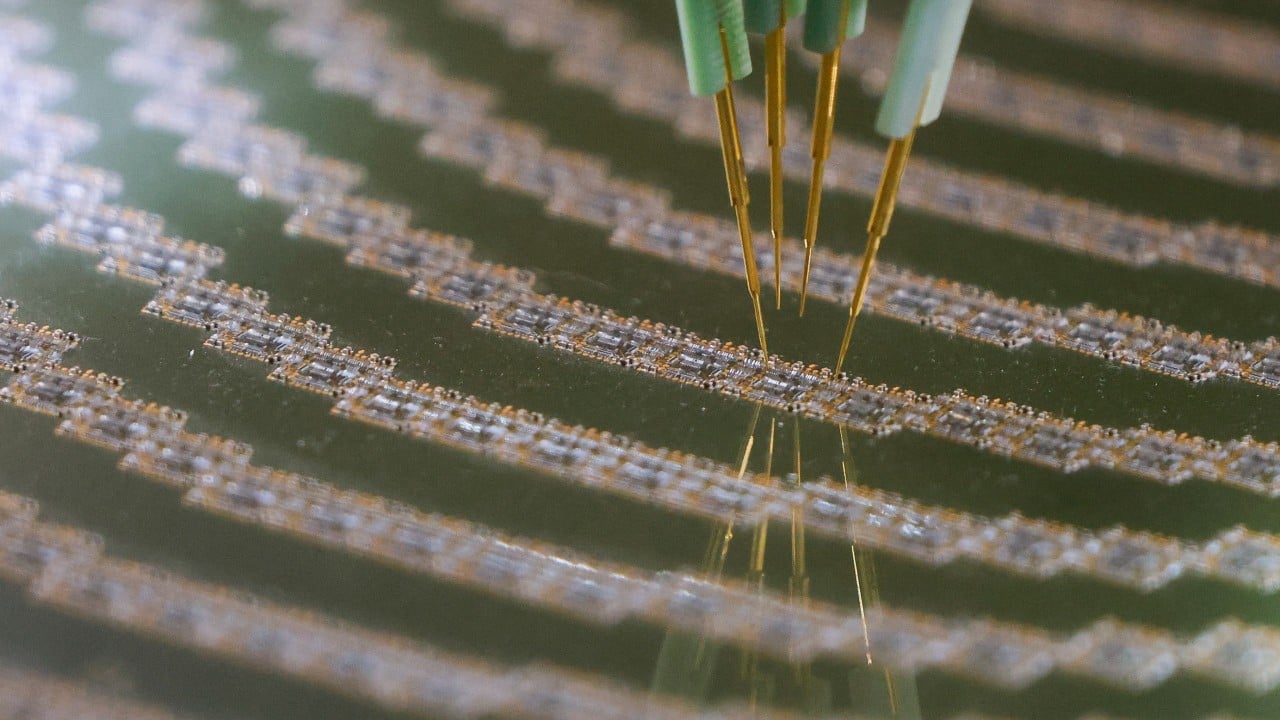
Zhuhai Amicro Technology, a chipmaker backed by Xiaomi, is set to start premarketing for an initial public offering (IPO) in Hong Kong, aiming to raise over $100 million. The company successfully passed its listing hearing with Hong Kong Exchanges and Clearing (HKEX), which is a significant regulatory milestone for the share sale. This IPO is crucial for Zhuhai Amicro Technology as it seeks to expand its operations and enhance its market presence in the competitive robotics chip sector. The backing from Xiaomi adds credibility and potential investor interest, which could facilitate a successful capital raise. Investors and industry watchers should keep an eye on the upcoming premarketing activities, as they will provide insights into investor sentiment and demand for the shares. No further timeline was disclosed at the time of publication.

Tesla's Optimus Robots to Support Starmind Satellite Production, Not Maintenance
Tesla's Optimus robots will not be used to repair Starmind satellites in orbit, as confirmed by recent statements from Elon Musk. Instead, these robots are intended to assist in the construction and operation of the Terafab chip manufacturing facility in Texas. The AI1 satellites, designed to disintegrate upon reentry, highlight the company's swap-and-replace strategy rather than traditional maintenance practices. This approach is significant as it reflects a broader trend in satellite management, where mass-produced satellites are replaced rather than repaired. The economics of servicing missions are prohibitive, with the cost of launching a replacement satellite being significantly lower than conducting a repair mission. This model aligns with SpaceX's operational history, where rapid replacement of satellites is more efficient than attempting to maintain them in orbit. Looking ahead, the focus will remain on the production capabilities of the Gigasat factory, which is expected to support the continuous replacement of satellites. No further timeline was disclosed at the time of publication, but the demand for rapid satellite turnover suggests a robust future for Optimus robots in terrestrial manufacturing rather than in-space servicing.

AI Is Designing Radio Chips That Humans Couldn’t Even Imagine
Researchers at Princeton University have made significant strides in the design of radio-frequency integrated circuits (RFICs), a critical component for advancing wireless technologies such as 5G, autonomous vehicles, and satellite communications. Utilizing reinforcement learning and inverse design techniques, the team has developed a method to create RFICs from scratch, drastically reducing design time and achieving record performance levels. This innovative approach leverages AI to navigate the complex design space of RFICs, traditionally seen as an art requiring years of expertise. By employing machine learning algorithms, the researchers can generate novel circuit layouts that outperform existing designs while minimizing the time taken for development. The project, which began after the success of AI in games like Go, aims to overcome the limitations of conventional RFIC design, which has remained largely artisanal. The researchers emphasize the need for large, shared datasets and open ecosystems to further enhance AI's capabilities in understanding electromagnetic and circuit behaviors. As the demand for advanced RFICs grows, the potential for AI-driven design to revolutionize the field is becoming increasingly apparent. The findings have attracted attention within the RF community, sparking discussions about the future of AI in circuit design and the importance of collaboration between AI researchers and chip designers to unlock new possibilities in technology.
Machine-learning Ic-design Chip-design Rf Rfic
AI chip designer Cambricon vaults to China’s costliest stock after profits soar 185%
Cambricon Technologies, often referred to as “China’s little Nvidia,” has emerged as the most valuable stock in mainland China's equity market following a significant surge in its share price on Thursday. The company’s stock soared by as much as 18 percent, reaching nearly 1,680 yuan (approximately US$245), surpassing the optical chipmaker Yuanjie Semiconductor Technology, which was trading at around 1,660 yuan. This remarkable increase comes in the wake of Cambricon's announcement on Wednesday of a staggering 160 percent growth in the first quarter, driven by the ongoing artificial intelligence boom and China's efforts to achieve technological self-sufficiency.

China unveils world’s first automated AI-based processor chip design system “Qi Meng”
The Chinese Academy of Sciences has unveiled “Qi Meng,” the world’s first fully automated AI-based processor chip design system. This groundbreaking technology facilitates end-to-end automation, covering everything from chip hardware to foundational software. According to the developers, the designs produced by Qi Meng meet or exceed the performance of human experts across various critical metrics. By utilizing advanced AI models, the system is engineered to automatically generate optimized chip designs, marking a significant advancement in the field of semiconductor technology.
News FeedRobotics needs a service framework.
RSF defines a common language for robot service capability, lifecycle operations, certification pathways, and service-provider networks.
Join the RobotToday community on LinkedIn
Daily robotics news, in-depth analysis, conference highlights, and discussions with professionals worldwide.







