Industry Briefing
A single destination for timely, editor-curated robotics news from around the world.

CVPR 2026 fields 16,000+ paper submissions on technical advances in AI
The program committee for the 2026 Conference on Computer Vision and Pattern Recognition (CVPR), a premier event in artificial intelligence and computer vision research, has unveiled the details of this year's technical program. Co-sponsored by the IEEE Computer Society and the Computer Vision Foundation, the conference has attracted a record number of submissions, reflecting the growing interest and advancements in the field. Scheduled to take place in 2026, CVPR will serve as a platform for researchers and industry professionals to share their latest findings and innovations. The committee's announcement highlights the importance of collaboration and knowledge exchange in advancing computer vision technologies.
Engineering Events Science agentic ai ai research artificial intelligence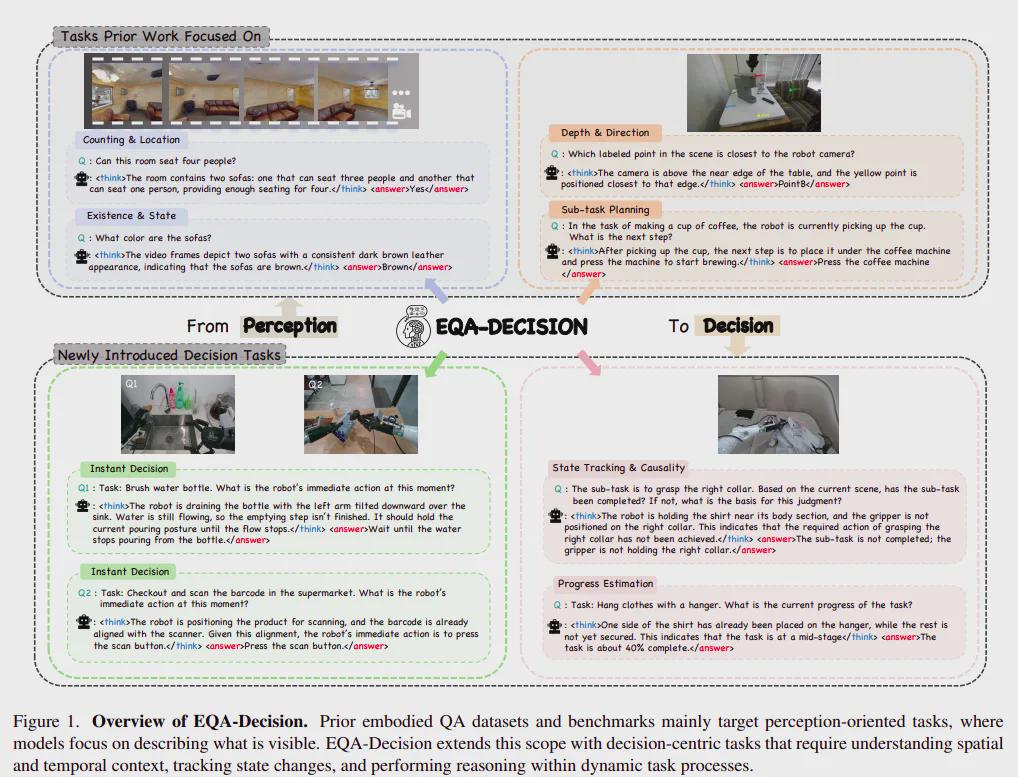
Innovative Framework for Embodied Question Answering Accepted at CVPR 2026
A research team at Peking University has made significant strides in the field of robotics by developing a novel approach to embodied question answering that combines perception with decision-making. Their innovative work, which has been accepted for presentation at the upcoming CVPR 2026 conference, introduces the EQA-Decision dataset along with the RoboDecision training framework. This advancement aims to improve robotic performance in dynamic environments by employing a comprehensive three-stage training method. The integration of these elements is expected to enhance the capabilities of robots, allowing them to better understand and respond to complex queries in real-world scenarios.
Embodied Intelligence Robotics AI Machine Learning Computer Vision
CVPR 2026 Showcases How AI Is Powering the Next Era of Robotics Innovation
The 2026 Conference on Computer Vision and Pattern Recognition (CVPR) is set to take place from June 3 to June 7 at the Colorado Convention Center in Denver, Colorado. This premier event, co-sponsored by the IEEE Computer Society and the Computer Vision Foundation, will showcase groundbreaking advancements in artificial intelligence (AI) and robotics, highlighting how these technologies are transforming real-world applications. With a focus on embodied AI, multi-modal AI, and robotic perception, CVPR 2026 will feature workshops, technical paper presentations, and competitions, including the ManipArena Competition, which challenges participants to demonstrate physical reasoning and decision-making in real-world tasks. The conference aims to illustrate the rapid innovation in robotics and automation, with over 75% of the expo dedicated to leading AI and robotics companies that have collectively invested heavily in the field. As the global robotics market is projected to reach $124.37 billion this year, industry leaders will gather to discuss the implications of AI advancements on productivity and human-machine interaction. Grace A. Lewis, President of IEEE CS, emphasized the conference's role in bringing AI's potential to life, showcasing how these technologies are poised to reshape various industries. Media registration for the event is currently open, inviting participants to explore the future of intelligent machines.
AGIBOT Introduces ACoT-VLA, Selected for CVPR 2026 and Open-Sourced as AGIBOT WORLD CHALLENGE Baseline
AGIBOT's ACoT-VLA (Action Chain-of-Thought) architecture has been chosen as the official baseline for the AGIBOT WORLD CHALLENGE, set to take place during the Computer Vision and Pattern Recognition (CVPR) conference in 2026. This selection represents a significant leap forward in the field of embodied intelligence, as the ACoT-VLA model effectively bridges the semantic-kinematic gap present in current Vision-Language Alignment (VLA) systems. By making this innovative architecture open-source, AGIBOT aims to foster collaboration and advancement within the research community, encouraging further exploration and development in embodied intelligence technologies.
Embodied Intelligence Robotics Computer Vision AI Open SourceRobotics needs a service framework.
RSF defines a common language for robot service capability, lifecycle operations, certification pathways, and service-provider networks.
Join the RobotToday community on LinkedIn
Daily robotics news, in-depth analysis, conference highlights, and discussions with professionals worldwide.