Industry Briefing
A single destination for timely, editor-curated robotics news from around the world.
Seoul University Introduces Single-Layer Artificial Skin for Enhanced Robotic Sensory Perception
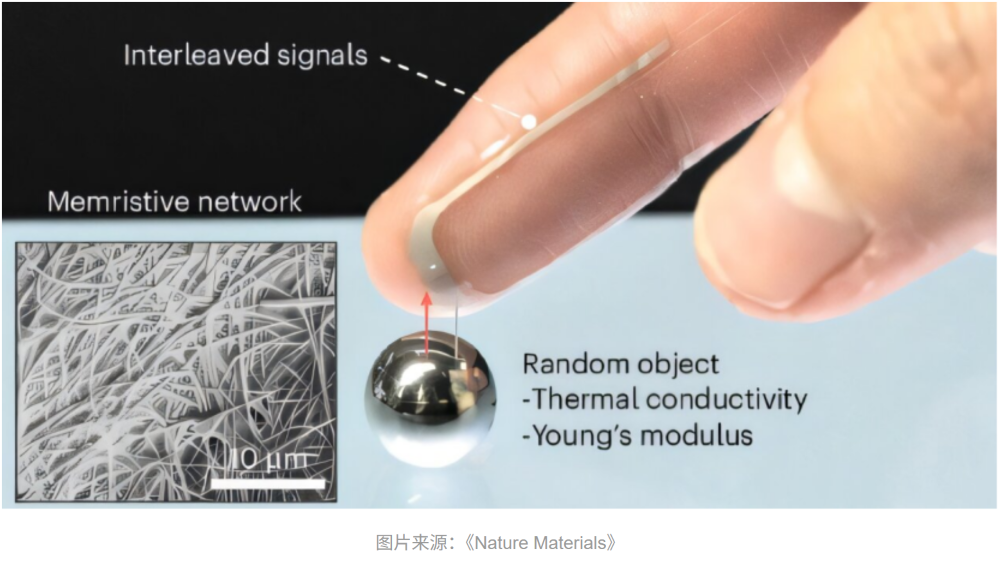
On July 10, a research team led by Professor Seung Hwan Ko at Seoul University published a significant study in Nature Materials, unveiling a novel single-layer artificial skin. This innovative material allows robots to simultaneously sense temperature and pressure, mimicking human sensory capabilities. The design utilizes a silver-core-copper oxide shell nanowire network, enabling rapid switching between temperature and mechanical sensing modes at a frequency of 16 Hz. The development is crucial as it addresses the limitations of existing artificial skin technologies, which typically rely on multiple stacked sensors, resulting in complex structures and slower response times. The new sensor demonstrates remarkable response speeds, with mechanical stimuli detected in microseconds and thermal stimuli in milliseconds. When combined with AI models, the sensor's accuracy in object recognition improved from 65% to 95% by integrating signals from both sensing modes, showcasing its potential for real-world applications. Looking ahead, the research team has created a multi-array platform that can measure temperature and pressure distribution with spatial resolution comparable to human skin. This technology not only serves as a fingertip sensor but also has the potential to evolve into a comprehensive artificial skin system for robots. The team emphasizes that this advancement is a key enabling technology for physical AI systems, allowing machines to perceive and interact with their environment more effectively. No further timeline was disclosed at the time of publication.
Artificial Skin Robotics Sensor Technology AI Human-Robot Interaction
Artificial skin enables robots to simultaneously sense temperature and pressure like humans
A research team from Seoul National University, headed by Professor Seung Hwan Ko, has made significant advancements in artificial skin technology that allows robots to detect both temperature and pressure simultaneously, mimicking the sensory capabilities of human skin. This breakthrough, announced recently, aims to enhance the interaction between robots and their environments, potentially leading to more sophisticated applications in fields such as healthcare, manufacturing, and service industries. By integrating advanced sensors and materials, the team has developed a system that not only improves robotic sensitivity but also paves the way for more intuitive human-robot interactions. The research highlights the ongoing efforts to bridge the gap between human and robotic capabilities, with the ultimate goal of creating machines that can operate safely and effectively alongside people.
RoboticsRobotics needs a service framework.
RSF defines a common language for robot service capability, lifecycle operations, certification pathways, and service-provider networks.
Join the RobotToday community on LinkedIn
Daily robotics news, in-depth analysis, conference highlights, and discussions with professionals worldwide.