Industry Briefing
A single destination for timely, editor-curated robotics news from around the world.

MIT Lincoln Laboratory Researchers Explore Arctic Under-Ice Sounds and Communication Technologies
Researchers from MIT Lincoln Laboratory have been analyzing under-ice sounds in the Arctic, utilizing commercial sensors deployed during the U.S. Navy's Operation Ice Camp (OIC). Their work aims to understand sound propagation through ice, which is crucial for monitoring environmental changes and military activities in the region. The significance of this research lies in its potential to enhance predictive capabilities regarding the acoustic signatures of fracturing ice. This understanding can inform geopolitical strategies and bolster resilience in coastal communities as Arctic sea ice continues to melt, opening new maritime routes. Looking ahead, the team plans to further develop low-cost sensors for continuous Arctic monitoring. The challenges faced during OIC 2026, including severe weather conditions, highlight the difficulties of conducting research in this inhospitable environment. No further timeline was disclosed at the time of publication.
Research Sensors Magnets Robotics Security and military studies International initiatives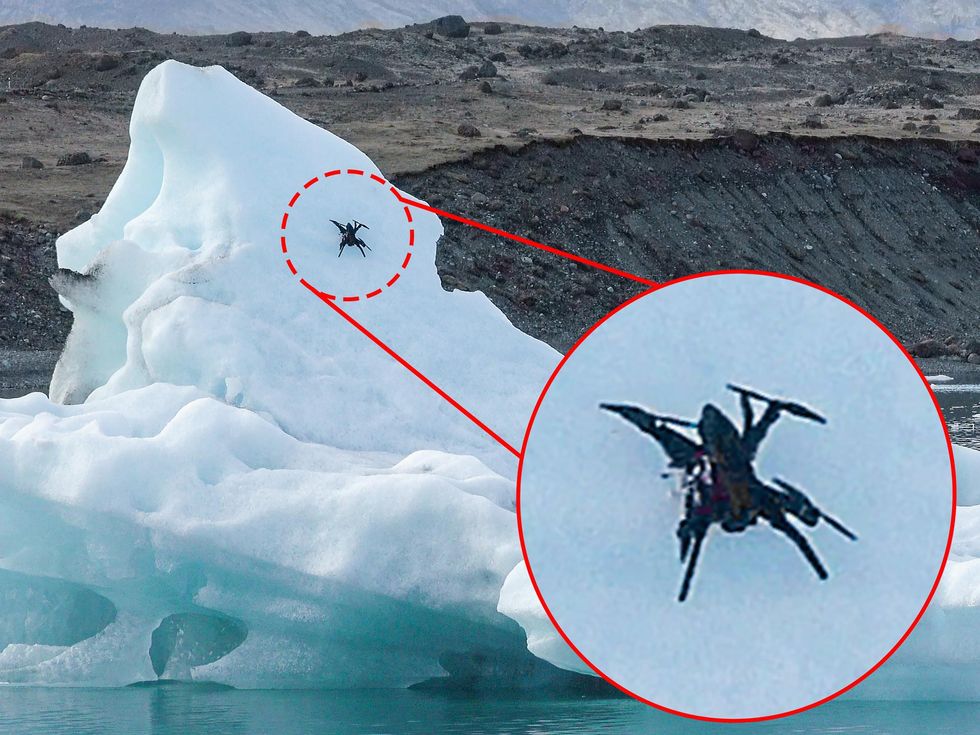
Canadian Researchers Develop Ice Dart Drone for Landing on Arctic Icebergs
Researchers in Canada have developed the Ice Dart drone, capable of landing on steep, slippery surfaces like icebergs. This drone can grip icy slopes of nearly 60 degrees, making it a valuable tool for monitoring Arctic environments. The Ice Dart's unique landing gear absorbs impact and utilizes retractable spines for grip, allowing it to perch successfully even in challenging conditions. The significance of the Ice Dart lies in its ability to land rather than hover, which can enhance drone utility in the field. Once landed, the drone consumes less energy, enabling longer observation periods while remaining silent. This capability allows for extended monitoring of icebergs, providing more detailed data than traditional aerial surveillance methods. Looking ahead, the researchers aim to further develop the Ice Dart for practical applications, including autonomous landing site selection and emergency takeoff features. The drone is set to be deployed in August during a Canadian Arctic mission to collect data and validate iceberg-detection systems.
Journal-watch Arctic Climbing-robots Robotics DronesRobotics needs a service framework.
RSF defines a common language for robot service capability, lifecycle operations, certification pathways, and service-provider networks.
Join the RobotToday community on LinkedIn
Daily robotics news, in-depth analysis, conference highlights, and discussions with professionals worldwide.