Industry Briefing
A single destination for timely, editor-curated robotics news from around the world.

12 Graphs That Explain the State of AI in 2026
As major AI companies like OpenAI and Anthropic prepare for initial public offerings later this year, the landscape of artificial intelligence continues to evolve rapidly. The 2026 AI Index report from Stanford University reveals that the U.S. remains the leader in AI model development, with 50 notable models released in 2025, although China's advancements in robotics are noteworthy, having installed 295,000 industrial robots in 2024. The report highlights a staggering growth in global AI compute capacity, which has tripled annually since 2022, largely driven by Nvidia's GPUs. However, the environmental impact of AI training is concerning, with estimates indicating that training large language models can generate over 72,000 tons of carbon emissions. Despite these challenges, AI investment surged to a record $581 billion in 2025, primarily in the U.S., reflecting a growing enthusiasm for AI technologies among software engineers and researchers. Public sentiment towards AI has slightly improved, with 59% of survey respondents believing the benefits outweigh the drawbacks. However, trust in government regulation of AI remains low in the U.S., with only 31% expressing confidence. This mixed perception underscores the ongoing debate about AI's societal impact, as advancements in technology continue to outpace regulatory frameworks.
Ai-index Artificial-intelligence Stanford-university
KION GROUP AG included in Dow Jones Best-in-Class Europe Index as one of Europe's top sustainability performers
KION GROUP AG has made its debut in the Dow Jones Best-in-Class Europe Index, marking a significant recognition of its sustainability efforts. This inclusion highlights the company's position as a leading performer in sustainability within Europe. Additionally, KION achieved its highest score to date in the S&P Global Corporate Sustainability Assessment, underscoring its dedication to excellence in environmental, social, and governance practices. This recognition reflects KION's ongoing commitment to integrating sustainable practices into its operations and strategy, reinforcing its reputation as a responsible corporate leader in the industry.
intralogistics supply chain solutions industrial trucks forklift trucks warehouse trucks automation technology
Retail Investors Shift Focus from Apple, Tesla, and Chip Stocks Amid Market Changes
Retail investors significantly increased their purchases of SK Hynix on Friday, according to VandaTrack data. However, by Monday, SK Hynix's stock had dropped nearly 9% as South Korea's KOSPI index also fell. This trend reflects a broader pattern where retail traders are moving away from established stocks like Apple, Tesla, and Nvidia, opting instead for newer investment opportunities. This shift is noteworthy as it indicates a rotation in retail trading behavior rather than a complete withdrawal from the market. Despite the selling of major stocks, the overall participation in the S&P 500 continues to grow, with the index's advance-decline line reaching a record high. This suggests that while retail investors are diversifying their portfolios, the broader market remains resilient, with the semiconductor sector facing ongoing challenges. Looking ahead, the upcoming earnings season will be crucial as analysts have raised their forecasts for many companies. This sets a higher expectation for performance, particularly for the tech sector, which has seen mixed results. The balance between retail trading patterns and overall market health will be key to watch in the coming weeks.
UBTECH Officially Joins the HKEX Tech 100 Index in Recent Announcement
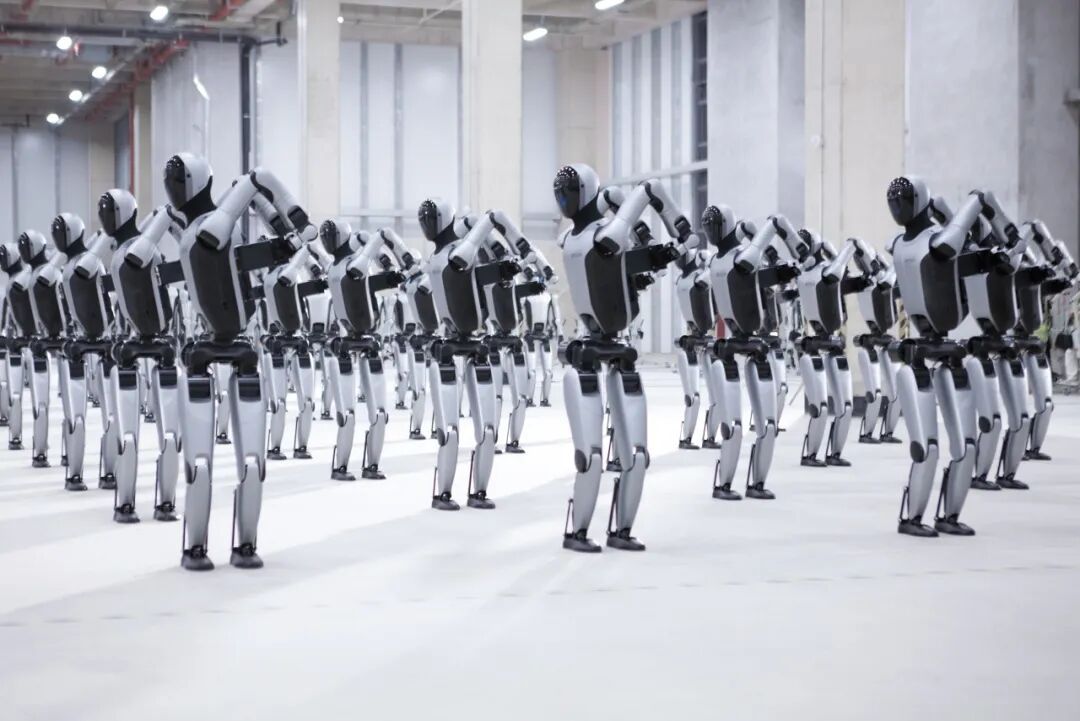
UBTECH has been officially included in the HKEX Tech 100 Index, marking a significant milestone for the robotics company. This inclusion highlights UBTECH's growing influence in the technology sector, particularly in robotics and AI, as it gains recognition among top tech firms listed on the Hong Kong Stock Exchange. The HKEX Tech 100 Index is designed to showcase leading technology companies, and UBTECH's addition underscores its commitment to innovation and market leadership. This recognition is expected to enhance UBTECH's visibility and attract potential investors, further solidifying its position in the competitive robotics landscape. Looking ahead, industry observers will be keen to see how UBTECH leverages this recognition to expand its market presence and drive future growth. No further timeline was disclosed at the time of publication.

Chasing rumors: Car CEO's departure untrue; WeChat tests native AI assistant; Apple, Tesla supplier data leaked.
On June 23, the ChiNext Index experienced its largest decline of the year, falling over 4% during trading and closing down 3.84%, dipping below the critical 4200-point mark. This downturn followed a record high set just a day prior. The trading volume for the day reached approximately 901.65 billion yuan, a decrease of 118.9 billion yuan from the previous day. All ten of the index's top-weighted stocks saw declines, particularly those in the AI computing sector. In a separate development, Tata Electronics confirmed a significant data breach, with over 630GB of sensitive information leaked, including design and specification documents for key clients like Apple and Tesla. The company stated that it had initiated a response plan and that operations remained unaffected. Apple is reportedly conducting a thorough investigation into the incident. Meanwhile, SpaceX has entered a multi-billion dollar agreement with AI startup Reflection AI to provide computing resources, with payments set to begin in July and continue through 2029. In the robotics sector, Nvidia unveiled its "Halos for Robotics" safety system aimed at enhancing the security of physical AI applications, while Faraday Future introduced its industrial-grade robotic arm series at a robotics expo in Chicago. Additionally, Meta has paused an internal AI training program that tracked employee mouse movements due to data security concerns, and Oracle announced a workforce reduction of approximately 21,000 employees, marking a 13% decrease in its total workforce as part of a business restructuring.

Euro credit default swap costs rise amid renewed concerns over AI.
Concerns over the valuation of AI companies have led to a deterioration in market sentiment, resulting in increased costs for credit default protection on euro-denominated bonds. A report from Deutsche Bank strategists highlights that worries about the technology sector have overshadowed investor optimism regarding progress in U.S.-Iran negotiations. According to data from S&P Global Market Intelligence, the iTraxx Europe Crossover index, which tracks euro high-yield credit default swaps, rose by 3 basis points to 250 basis points. Meanwhile, the iTraxx Europe Main index, which monitors euro investment-grade credit default swaps, increased by 1 basis point to 52 basis points.

SpaceX IPO Provides Indirect Investment Opportunity in Starmind Project
Starmind does not have a standalone stock or ticker; investors can gain exposure through SpaceX (ticker: SPCX), which began trading on Nasdaq after its IPO on June 12, 2026. Starmind is integrated within SpaceX, contributing to the company's AI and space initiatives, and its performance directly influences SPCX shares. The significance of Starmind lies in its role as a division of SpaceX, which encompasses other projects like Starlink and Starship. As of early July 2026, SPCX shares are trading between $149 and $150, significantly lower than their 52-week high of $225.64. The project’s milestones, such as AI1 prototype updates, can impact SpaceX's stock performance, making it essential for investors to monitor these developments closely. Looking ahead, the early 2027 launch of AI1 prototype satellites is a critical milestone that could provide verifiable data affecting Starmind's valuation and, consequently, SPCX stock. No further timeline was disclosed at the time of publication, but the upcoming events will be pivotal for investors tracking the relationship between Starmind and SpaceX's stock performance.
Seoul shares rally over 8% on tech gains after Samsung wage deal, Nvidia outlook; won rises
South Korean stocks experienced a significant surge on Thursday, rising over 8 percent, driven by gains in the technology sector. The rally was fueled by Samsung Electronics successfully averting a strike and strong earnings reported by Nvidia, which bolstered investor confidence. Additionally, optimism surrounding the future of the robotics industry contributed to the positive market sentiment. The benchmark Korea Composite Stock Price Index climbed 606.64 points, or 8.42 percent, closing at 7,815.59 after peaking at 7,819.23 during the trading session. The index opened sharply higher, reflecting favorable overnight trends from Wall Street. Concurrently, the South Korean won strengthened against the US dollar, further indicating a robust market response.
All News
AI finds a hidden stress signal inside routine CT scans
A team of researchers has developed a groundbreaking imaging-based biomarker for chronic stress, utilizing a deep learning AI model to analyze adrenal gland volume from routine CT scans. This innovative metric, known as the Adrenal Volume Index, demonstrates a strong correlation with key indicators of stress, including cortisol levels, allostatic load, and perceived stress. Furthermore, it has implications for long-term cardiovascular health, notably in assessing the risk of heart failure. The study highlights the potential of advanced AI technologies in enhancing diagnostic capabilities and understanding the physiological impacts of chronic stress on health.

Marvell Technology jumps almost 9% in premarket after news it will join the S&P 500 index
Marvell Technology experienced a surge in premarket trading following the announcement from S&P Global that the AI chipmaker will be added to the S&P 500 index. This significant inclusion is set to take effect on June 22, marking a pivotal moment for the company as it gains recognition among the top U.S. publicly traded companies. The decision reflects Marvell's growing influence in the semiconductor industry, particularly in the rapidly expanding field of artificial intelligence. Investors are responding positively to the news, anticipating that the company's stock will benefit from increased visibility and investment opportunities associated with being part of this prestigious index.

VETS Indexes Names Teradyne 2026 Recognized Employer
Teradyne, Inc., a prominent provider of automated test solutions and advanced robotics, announced significant advancements in its product offerings during a recent event held in North Reading, Massachusetts. The company showcased its latest technologies aimed at enhancing efficiency and performance in various industries, including electronics and manufacturing. This initiative comes as part of Teradyne's ongoing commitment to innovation and meeting the evolving needs of its clients. By integrating cutting-edge robotics with automated testing solutions, Teradyne aims to streamline operations and reduce costs for businesses. The event highlighted the company's strategic focus on leveraging technology to drive growth and maintain its competitive edge in the market.

VETS Indexes Names Teradyne 2025 Recognized Employer
Teradyne, a prominent provider of automated test solutions, has been recognized by VETS Indexes for its commitment to supporting veterans in the workforce. This accolade highlights the company's ongoing efforts to create an inclusive environment for veterans, reflecting its dedication to diversity and inclusion within its hiring practices. The award was announced recently in North Reading, Massachusetts, underscoring Teradyne's role as a leader in promoting veteran employment. The recognition comes as part of a broader initiative to honor companies that prioritize the recruitment and retention of veterans, emphasizing the importance of their contributions to the workforce.

"BioGeometry" secures hundreds of millions in strategic funding to create a "microscopic world model" in life sciences.
AI-native biotechnology company BaiAo Geometry has successfully secured several hundred million yuan in strategic financing, with investments led by the Shanghai Biomedical Innovation Transformation Fund, Guoke Investment, Dacheng Wisdom, and Xinglian Capital, alongside follow-on investments from GaoRong Capital and the Index AI Industry Innovation Fund. The funds will primarily support the ongoing development of their life sciences micro-world model, GeoFlow, and the advancement of their proprietary drug pipeline. Artificial intelligence is rapidly evolving along two main trajectories: digital AI, represented by large language and multimodal models, and physical AI, exemplified by autonomous vehicles and humanoid robots. Life AI is emerging as a promising frontier, a sentiment echoed by leading global investors and scientists. BaiAo Geometry's GeoFlow model, launched in 2024, aims to understand and design molecular interactions at an atomic level, enabling the creation of novel molecules that have never existed in nature. The company has iterated GeoFlow multiple times, achieving significant advancements in protein structure prediction and de novo design capabilities. By applying Test-Time Scaling technology, BaiAo Geometry enhances the success rate of protein designs without the need for extensive retraining. This innovation allows for the rapid generation and optimization of high-affinity binding molecules, significantly reducing the time and cost associated with traditional drug discovery processes. BaiAo Geometry has established over 20 business development collaborations with domestic and international pharmaceutical companies, focusing on high-specificity antibody design and vaccine development. The company is currently working on the next iteration of GeoFlow, which aims to expand modeling from individual molecules to entire molecular systems, further revolutionizing drug development in the biotechnology sector.

People are leaving a lot of weird stuff in their robotaxis
Uber's annual Lost and Found Index has revealed a quirky assortment of items left behind in its robotaxis over the past year, including a unicorn Beanie Baby, a 15-pound green bowling ball, and a pair of dentures. This year marks the first time the company has expanded its report to include items forgotten specifically in its autonomous vehicles. The index aims to highlight the unusual and often humorous items that riders inadvertently leave behind, reflecting the diverse experiences of passengers using Uber's services. The findings underscore the growing adoption of robotaxis and the unique challenges associated with them, as the company continues to innovate in the transportation sector.
Autonomous Cars News Ride-sharing Transportation Uber Waymo
US Consumer Inflation Hits Three-Year High Fueled by Iran War
In April, the U.S. Bureau of Labor Statistics reported a significant increase in the energy price index, which surged by 17.9% compared to the same month last year. This marked the largest price increase among all categories tracked by the agency. The rise in energy prices is attributed to various factors, including supply chain disruptions and heightened demand, which have been exacerbated by ongoing geopolitical tensions and economic recovery efforts. The sharp increase in energy costs is likely to impact consumers and businesses alike, raising concerns about inflation and its broader implications for the economy.
The Economy
University of Tokyo and Kubota Develop Drone Potato Yield Prediction Method
Researchers from the University of Tokyo, in collaboration with Kubota Corporation, have developed an innovative method to predict underground potato yields before harvest using drone imagery and machine learning techniques. This advancement was announced in a recent publication associated with the Japan UAS Industrial Development Association (JUIDA). By employing a growth curve model alongside aerial data collection, the team aims to enhance agricultural efficiency and support farmers in making informed decisions regarding their crops. This method represents a significant step forward in agricultural technology, potentially transforming how potato yields are assessed and managed.
Agriculture Drone News Drone News Feeds Ecology Japan Drone Industry Japan Drone News
The Growing Importance of Media Asset Management in Modern Digital Workflows
In an era where the digital landscape is rapidly evolving, companies across various industries are increasingly relying on extensive collections of digital assets, including videos, images, audio files, graphics, and documents, to enhance their marketing, communication, training, and customer engagement efforts. As these content libraries expand, organizations face the growing challenge of managing these assets efficiently. The need for effective content management solutions has become paramount, prompting businesses to seek innovative strategies and technologies to streamline the organization and distribution of their digital resources. This shift underscores the importance of adapting to the complexities of content management in a digital-first world, ensuring that companies can leverage their assets to meet the demands of modern consumers and maintain a competitive edge.
Business Internet ai automation AI tagging automation news cloud computing
Robotics Sector Shines as A-Shares Open Lower with Over 3100 Stocks Declining
On July 17, A-shares opened lower with the Shanghai Composite Index down by 0.44% and over 3100 stocks declining. Despite the market drop, the robotics sector emerged as a bright spot, particularly during the ongoing 2026 World Artificial Intelligence Conference (WAIC) in Shanghai, where 60 full-sized humanoid robots are performing public service tasks. This development is significant as it highlights the growing commercialization of humanoid robots, which are transitioning from mere exhibits to active participants in public service roles. According to Guolian Minsheng Securities, the humanoid robot industry is entering a phase characterized by accelerated large-scale manufacturing, continuous expansion of application scenarios, and upgrades in embodied intelligence. Looking ahead, the focus will be on whether the robotics sector can maintain its momentum amidst a generally declining market. The WAIC is expected to further stimulate interest in robotics, while NVIDIA's collaboration with major Japanese industrial automation firms to advance physical AI could also influence market dynamics. No further timeline was disclosed at the time of publication.
Robotics AI Industrial Automation Humanoid Robots
Subversive Capital Launches Ex-Elon ETFs Excluding Tesla and SpaceX from Major Indices
Subversive Capital has filed with the SEC for two new actively-managed ETFs, the Nasdaq-100 Ex-Elon Enterprises ETF (QQNE) and the S&P 500 Ex-Elon Enterprises ETF (SPNE). These funds aim to provide capital appreciation by excluding companies founded or led by Elon Musk, specifically targeting large-cap U.S. equities. The Nasdaq-100 ETF will notably exclude Tesla and SpaceX, which together account for approximately 8.4% of the index, while the S&P 500 ETF will reduce its total weight by about 2.2% by omitting Tesla. The introduction of these ETFs reflects a growing sentiment among investors who wish to avoid supporting Elon Musk's ventures due to personal or political reasons. According to Pew Research, 36% of Americans hold a very unfavorable opinion of Musk, indicating a significant market for investment products that align with these views. The launch comes shortly after SpaceX's inclusion in the Nasdaq-100, which was estimated to attract $4.3 billion from fund managers needing to adjust their portfolios. Looking ahead, the success of Subversive's Ex-Elon ETFs will depend on investor reception and market performance. No further timeline was disclosed at the time of publication regarding the launch date or initial performance metrics. Investors will be watching closely to see if these funds can attract significant capital and how they will perform against traditional indices that include Musk's companies.
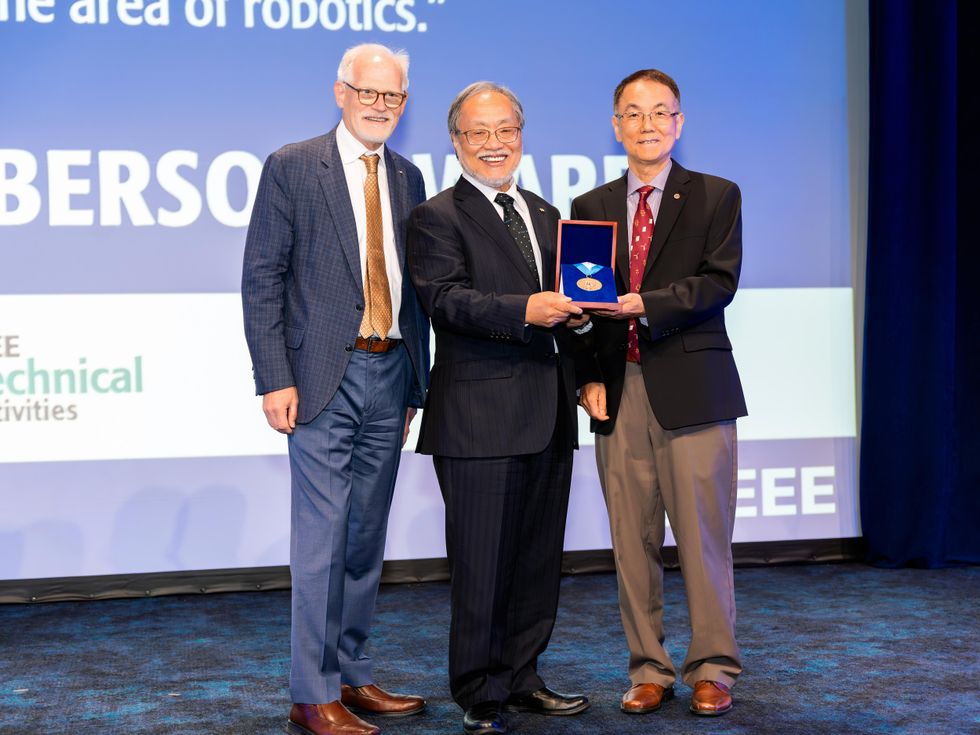
IEEE Honors Robotics Pioneer Toshio Fukuda
Toshio Fukuda has been blazing trails for most of his career. He is considered to be one of the most prolific scholars in robotics, writing more than 2,000 research papers and authoring several books on the field. He’s an influential figure thanks to his pioneering work developing biomedical robotic systems, industrial robots, micro-nano robotics, mechatronics, and AI-driven automation.Fukuda launched one of the first robotics conferences, the IEEE/RSJ International Conference on Intelligent Robots and Systems (IROS). It is still popular almost 40 years later.Toshio FukudaEmployerEgypt-Japan University of Science and Technology, in Alexandria TitleProfessor and vice president of research Member gradeLife Fellow Alma matersWaseda University, in Tokyo; University of Tokyo An IEEE Life Fellow, he is a professor emeritus in the department of micro-nano systems engineering and a visiting professor at Nagoya University, in Japan, where he taught for nearly 25 years. Currently, he is a vice president of research at the Egypt-Japan University of Science and Technology, in Alexandria, Egypt.Within IEEE, Fukuda has held top volunteer positions including the organization’s highest office: He served as IEEE president in 2020, becoming the first person of Asian descent to hold the role.He’s a former program director of Japan’s Moonshot program, which by 2050 intends to develop advanced AI robots.Born in Japan, Fukuda has been recognized by the country for his contributions to science with two of its highest awards: the Medal of Honor with a purple ribbon in 2015 and the Order of the Sacred Treasure in 2022.IEEE honored him with this year’s Richard M. Emberson Award for “distinguished service advancing the technical objectives of IEEE, especially in the area of robotics.” The IEEE Board-level award is sponsored by the IEEE Technical Activities Board. Fukuda received the award on 24 April at a ceremony in New York City.As a former IEEE president who has served as a master of ceremonies at several of the organization’s major award events, Fukuda noted that he is more accustomed to bestowing awards than receiving them.“It’s very interesting to be on the receiving end,” he says.The journey into robotics researchAs a teenager, Fukuda spent his summer breaks teaching himself how to build things including transistor radios and steam engines.“It was very nice to have a hands-on hobby and make these kinds of things myself,” he says. His experimentation led him to study engineering.He earned a bachelor’s degree in engineering in 1971 from Waseda University, in Tokyo. He says one of his professors there—Ichiro Kato, regarded as the father of Japanese robotics research—was a good mentor who made a positive impact.Fukuda’s research interests were robotics and mechatronics, a field that combines robotics, electronics, computer science, and control systems.He went on to earn a master’s degree and a doctorate in science from the University of Tokyo, in 1971 and 1977. During those years, he also attended Yale, where he conducted research on advanced control theory in 1973.He reflects fondly on his time at Yale: “It was a very nice environment and a kind of free-thinking atmosphere. It motivated me to study more.”“IEEE doesn’t care who you are, what you do, what country you are from, or whether you are male or female. IEEE accepts people who have energy and passion.”While at Yale, Fukuda served as an assistant to his advisor—which led him to consider a career in academia, he says, because he enjoyed the freedom that research work afforded him.But he realized that such freedom comes with a price. University researchers are expected to raise the money that funds their work. He compares researchers to small-business owners who have to bring in money to keep their enterprise afloat.That realization led him to select robotics as his field because he intended to develop technologies useful to industry, he says.After earning his doctorate, he returned to Japan in 1977 to work as a research scientist at the government’s Mechanical Engineering Laboratory, later renamed the National Institute of Advanced Industrial Science and Technology, in Tsukuba.“There was a lot of research going on at the lab, including practical robotics and theory,” he says.He left Japan in 1979 to become a visiting research fellow at the University of Stuttgart, in Germany. During his year there, he studied systems, software problems, and related topics.He returned to Japan and was hired as an associate professor of mechanical engineering at the Tokyo University of Science. He conducted research into practical uses for robots by visiting industrial plants. He decided to develop robots that inspect industrial equipment such as those used in assembly plants, oil refineries, and power stations—places that “can be hostile environments for humans,” he says.His work drew interest from chemical, oil, and utility companies.“I got a lot of money from them for this very practical application, which funded my research,” he says, laughing.Developing popular robotic systemsFukuda grew tired of making those robots, he says, so he switched to creating ones for scientific applications. He developed many techniques, but he probably is best known for his modular, cellular robotic systems (CEBOTs), which he introduced in 1985.He has described how CEBOTs work in numerous papers published in the IEEE Xplore Digital Library.The CEBOT system is composed of a number of autonomous robotic cells that stick together like interlocking Lego plastic bricks, he says.Each cell is a fundamental modular unit that has a function. When a simple task is given, the system can analyze it and generate the structure of the cellular manipulator. The cells connect to and detach from each other through connection mechanisms and cooperate mutually, creating complex structures and configurations.“You start developing from the component-wise to the cell-wise to a small functional unit—and then you come up with clusters that make bigger systems. We can make a society of robot beings like that,” he explained in his oral history published on the Engineering and Technology History Wiki. “It’s a distributed robotic system, a self-organized robotic system, and also an evolutionary robotic system.“It’s also a fault-tolerant robot system because if something is wrong, you just remove those things and make a new one. You keep the system working. That’s a great thing.”Today CEBOTs are used for a variety of tasks such as delivering medication in hospitals, assisting with planting crops, and transporting products in distribution centers. Check out IEEE Spectrum’s Robots Guide for news from the world of robotics.In 1989 Fukuda joined Nagoya University as a professor of mechanical engineering and micro-nano systems engineering. During his 24-year career there, he was director of the university’s Center for Micro-Nano Mechatronics. He developed a long list of technologies at the university, including many for medical applications. He also conducted groundbreaking research into intelligent robotic systems and micro- and nano-robotics.Another technology he is known for is brachiation robots, which he helped develop in 1988. He calls them monkey robots because they’re based on the pendulum-like movement of monkeys swinging from tree to tree. The gravity-based locomotion enables continuous movement.Brachiation robots now are inspecting high-voltage transmission towers and bridges, searching damaged buildings for survivors, and performing maintenance on pipelines and cables.Fukuda retired from the university in 2013 and was named professor emeritus.He didn’t stay retired for long, though. He next held a teaching appointment at Meijo University, in Nagoya, until he left in 2022 to join the Egypt-Japan University.A prominent volunteerHe joined IEEE in 1980 at the encouragement of one of his research advisors, Professor Fumio Harashima, now an IEEE Life Fellow. After attending conferences and reading the organization’s publications, Fukuda says, he looked forward to becoming more involved.“I wanted to know how to organize a conference and how to edit a paper for one of its Transactions,” he says. “I wanted to know what was going on from inside the organization, not just the outside.”In 1988 he was the founding chair and organizer of IROS, in Tokyo. The conference had 330 attendees that year, and was supported by Harashima. Today it is one of the largest and most prestigious conferences on the topic, attracting more than 9,000 people annually. Out of 120,000 conferences, it was the only conference in the Nature Index database for this year, Fukuda says.In 1996 he and other members launched IEEE Transactions on Mechatronics.He was the founding president of the IEEE Nanotechnology Council, which was established in 2002. He is considered a pioneer in nanotechnology research, particularly regarding how it relates to robotics.Over the years, he has held numerous volunteer positions on IEEE editorial boards and committees.He was the 1998–1999 president of the IEEE Robotics and Automation Society, becoming the first non-U.S. member to hold the title.He was director of IEEE Division X (2001–2002 and 2017–2018), which covers intelligent systems, biological engineering, robotics, control systems, and photonic technologies. He served as the 2013–2014 director of IEEE Region 10 (Asia-Pacific).As the 2020 IEEE president, Fukuda saw the organization through the early part of the COVID-19 pandemic. Because of travel restrictions, he realized IEEE should change how it offered its in-person services, specifically educational programs. He encouraged IEEE Educational Activities to develop an online learning platform. The IEEE Learning Network started with just three courses and now offers nearly 2,000 courses, webinars, and learning materials.An award-winning memberThe Emberson Award joins a slew of other recognitions Fukuda has received from IEEE. They include several from the IEEE Robotics and Automation Society: a 2004 Pioneer Award, a 2009 Saridis Leadership Award, and the 2011 Harashima Award for Innovative Technologies. He is also a recipient of the Board-level 2010 IEEE Robotics and Automation Technical Field Award.He says he feels strongly that IEEE should be a diverse organization that is welcoming to all. As IEEE president, he led efforts to devise a diversity, equity, and inclusion program. Several policies, procedures, and bylaws were revised to give members a safe, inclusive place for discourse.“It’s important for IEEE to make everyone feel comfortable,” he says. “DEI programs are important. All people should be equal. IEEE doesn’t care who you are, what you do, what country you are from, or whether you are male or female. IEEE accepts people who have energy and passion.“It accepted me, from the Far East. That’s why I like it.”You can learn more about Fukuda and his career from the oral history conducted by the IEEE History Center.
Robotics Robots Ieee-member-news Type-ti Ieee-awards Toshio-fukuda
Policy Support and Mass Production Drive Humanoid Robot ETF as the Sector Enters a Critical Phase
China's humanoid robotics sector is transitioning from policy development to mass production, marking a significant shift in the industry. In response to this evolution, the Guozheng Robot Industry Index ETF has been introduced, providing investors with targeted exposure to the core supply chain of this burgeoning market. This move comes as the demand for advanced robotics continues to grow, driven by technological advancements and increasing applications across various sectors. The ETF aims to capitalize on the momentum of the industry, allowing stakeholders to invest in the future of robotics as China positions itself as a leader in this field.
Industry Robotics
Stocks Rise With Nvidia Leading as Semiconductor Companies Surge
U.S. stocks experienced an upward trend on Thursday, driven by a continued surge in semiconductor shares following a strong performance the previous day. Nvidia Corp. emerged as the leading contributor to gains in the S&P 500 Index, significantly boosting investor sentiment. Additionally, the Philadelphia Semiconductor Index, commonly referred to as the SOX, soared over 6%, reaching a record high. This rally reflects growing optimism in the technology sector, particularly in semiconductor companies, as they benefit from increasing demand and advancements in technology.
NMS:NVDA
Invesco Income Fund Q1 2026 Commentary
Invesco Income Fund Class A shares reported a positive absolute return for the first quarter of 2026, despite underperforming against the Bloomberg U.S. Securitized MBS/ABS/CMBS Index. The yield curve experienced a notable shift, with increases in short- and intermediate-maturity Treasury yields driving the changes from the previous quarter. During this period, structured credit outperformed both Treasuries and investment-grade corporate bonds. Invesco adjusted its strategy by increasing the fund's allocation to Agency mortgage-backed securities (MBS) and adding non-Agency residential mortgage-backed securities (RMBS). The firm maintains that a neutral allocation to Agency MBS is suitable, as valuations have become more attractive while remaining sensitive to interest rate fluctuations.
AGOVX AGVSX AGVYX Invesco US Mutual Fund Commentaries
The End Of Overbought?
U.S. equities are experiencing a downturn as the S&P 500 is set to conclude a nine-week winning streak. On Friday, the index recorded a 2.25% decline, marking its largest single-day drop since October 10, 2025. The technology sector, which has been a significant driver of the recent market rally, is facing a sharp pullback, with projections indicating a 5% decline for the day. This downturn comes as the market corrects from overbought conditions that have persisted for several weeks. The shift in investor sentiment reflects broader concerns about market sustainability and potential economic factors influencing stock performance.
VO MDY IJH IWR BMVP FNX
Automated Online Investing: How Technology Helps You Build Wealth Passively
Automated online investing is revolutionizing wealth-building strategies for individuals by streamlining the investment process. This innovative approach alleviates the burdens of manual tracking, trade timing, and emotional decision-making, allowing investors to depend on sophisticated systems that manage the majority of the work. As a result, more people are gaining access to investment opportunities, fostering a more inclusive financial landscape. This transformation, driven by advancements in technology and data analytics, is reshaping traditional investment practices and empowering individuals to grow their wealth with greater ease and efficiency.
Business Financials & Investments AI investing algorithmic investing artificial intelligence automated online investingRobotics needs a service framework.
RSF defines a common language for robot service capability, lifecycle operations, certification pathways, and service-provider networks.