Industry Briefing
A single destination for timely, editor-curated robotics news from around the world.
SkyDrive Conducts Successful SD-05 Flights in Yamaguchi for 2028 Tourism Initiative
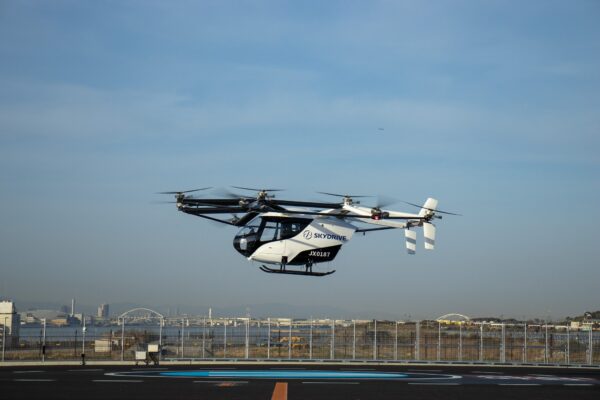
SkyDrive Inc. successfully conducted two demonstration flights of its SD-05 eVTOL aircraft in Yamaguchi Prefecture on July 13, 2026. These flights were part of a test aimed at showcasing the aircraft's potential for tourism, with a commercial launch planned for 2028. The flights simulated a scenic tour over the Seto Inland Sea, highlighting the seamless transition from ground transport to air travel. The significance of these flights lies in their demonstration of SkyDrive's commitment to urban air mobility and tourism integration. Witnessed by notable figures including Yamaguchi Prefecture's governor and the president of Suzuki Motor Corporation, the flights operated autonomously, emphasizing safety and efficiency. The successful execution of these flights marks a critical step toward the company's goal of launching commercial eVTOL services by 2028. Looking ahead, SkyDrive aims to enhance its eVTOL infrastructure further, with plans to collaborate with rail partners for integrated travel solutions. While tourism is a primary focus, the company envisions broader applications of eVTOL technology, including disaster relief and emergency medical services. No further timeline was disclosed at the time of publication.
Advanced Air Mobility Drone News Drone News Feeds Japan Drone Industry Japan Drone News News
SpaceX Unveils AI1 Satellite Specs for Starmind Constellation with Key Thermal Challenges
SpaceX has introduced the AI1 satellite, the inaugural component of its Starmind constellation, which stands 20 meters tall and has a wingspan of 70 meters. This orbital compute node is designed to deliver computing power equivalent to one NVIDIA GB300 server rack, utilizing a unique cooling system with deployable liquid radiators. The satellite's specifications were revealed during a presentation on June 8, 2026, ahead of SpaceX's IPO. The significance of the AI1 satellite lies in its role as a compute platform rather than a traditional satellite, focusing on running AI inference workloads. The satellite's cooling system, which is critical for its operation in the vacuum of space, is designed to reject heat through infrared radiation. However, independent engineers have raised concerns about the feasibility of the thermal and mass claims made by SpaceX, suggesting that the cooling requirements may exceed practical limits. Looking ahead, SpaceX plans to launch two AI1 prototypes in early 2027, with full-scale production expected to commence later that year at its Gigasat facility in Bastrop, Texas. The ongoing debate regarding the satellite's thermal management capabilities will be crucial to monitor as the project progresses, with no further timeline disclosed at the time of publication.
SpaceX's Starship V3 Plans for 1 Million Starmind Satellites by 2030
SpaceX's Starship V3 is set to revolutionize satellite deployment, aiming to launch 1 million Starmind satellites by 2030. The spacecraft can carry over 100 tonnes to low Earth orbit (LEO), significantly more than the Falcon 9's capacity. As of May 2026, Starship has completed 12 flights, with the next mission scheduled for late July 2026, focusing on operational payloads including AI1 prototypes in early 2027. This ambitious plan is crucial for expanding orbital compute capacity, targeting an annual addition of 100 GW through a million tonnes of satellite hardware. SpaceX's strategy hinges on achieving a launch cadence of approximately 12,000 flights, equating to about three launches per day. The company has invested over $15 billion in the Starship program, with expectations to begin payload deliveries in the second half of 2026, starting with Starlink V3 satellites. Looking ahead, the successful deployment of the Starmind constellation will depend on Starship's ability to meet its cost targets of $10–20 million per flight. If achieved, this would make launching satellites more economical than building ground data centers. The next significant milestone will be the launch of AI1 prototypes in early 2027, with full-scale deployments commencing in 2028 from the new Gigasat factory in Texas.

SpaceX's Starmind Project: Supplier Strategy and Chip Manufacturing Plans for 2026
SpaceX's Starmind project, aimed at deploying up to 1 million AI satellites, was filed with the FCC on January 30, 2026. The initiative is designed to minimize reliance on external suppliers, with CEO Elon Musk stating that current chip production capabilities only meet 2% of the projected needs. The first satellite, AI1, is set for prototype launches in early 2027, featuring a 70-meter wingspan and a modular payload system that allows for interchangeable chips from various suppliers. The significance of Starmind lies in its ambitious supply chain strategy, which seeks to transition from external hardware suppliers to a fully integrated Musk-owned facility by 2028. The Gigasat manufacturing site in Bastrop, Texas, is expected to be operational by the end of 2027, with plans for high-volume production of the D3 chip, specifically designed for space applications. This approach aims to consolidate chip manufacturing processes under the Terafab joint venture, which has an estimated initial investment of $55 billion. Looking ahead, the next milestone for Starmind is the launch of AI1 prototypes in early 2027, while the full-scale chip production at Terafab is projected to ramp up significantly thereafter. However, analysts express skepticism regarding the feasibility of achieving Musk's ambitious compute goals, which may require substantial investment and time to establish the necessary manufacturing capabilities.

SpaceX's $1.75 Trillion Valuation Driven by Starmind's Future Potential
Starmind is a pivotal element in SpaceX's estimated $1.75 trillion IPO valuation, despite currently generating no confirmed revenue. The stock price reflects optimistic projections regarding AI infrastructure growth, which Starmind has yet to substantiate. As of early July 2026, SpaceX's stock has decreased from its 52-week high of $225.64 to around $150, indicating market skepticism about future execution. The significance of Starmind lies in its potential to transform SpaceX's revenue model beyond traditional launch services. Goldman Sachs has shifted its focus from Starlink subscriber growth to the prospects of AI revenue, including orbital computing, as a cornerstone of SpaceX's long-term valuation. This marks a substantial change in how analysts view the company's growth trajectory, necessitating rates exceeding its historical 33% growth. Looking ahead, the credibility of Starmind as a growth narrative will be crucial for maintaining investor confidence. Analysts have noted a considerable divergence in price targets, reflecting uncertainty about the value of the Starmind and xAI initiatives. No further timeline was disclosed at the time of publication regarding specific milestones for these projects.

This DJI drone flies up to 93 minutes for under $300
In a surprising development for drone enthusiasts, a new offering promises an astonishing 93 minutes of flight time for under $300. This unprecedented duration sets it apart from typical drones, which often struggle to exceed 30 minutes of continuous use. The product, which targets both hobbyists and casual users, aims to enhance the flying experience by providing extended aerial capabilities without the need for frequent battery changes. The announcement comes amid growing interest in drone technology, as consumers seek more value and performance from their purchases. The innovative design and efficient battery management system are key factors contributing to this extended flight time, making it a compelling option for those looking to explore the skies without the limitations of shorter flights.
News
1,100 drones challenge FIFA World Cup security, 500 already seized
Authorities have reported the detection of 1,139 drones operating near World Cup stadiums and related sites throughout the United States. Of these, over 300 drones have been successfully mitigated without the use of force. Concurrently, the FBI has seized more than 500 drones as part of its ongoing investigations into unauthorized flights in proximity to tournament venues. This heightened surveillance and intervention are part of efforts to ensure safety and security during the high-profile event.
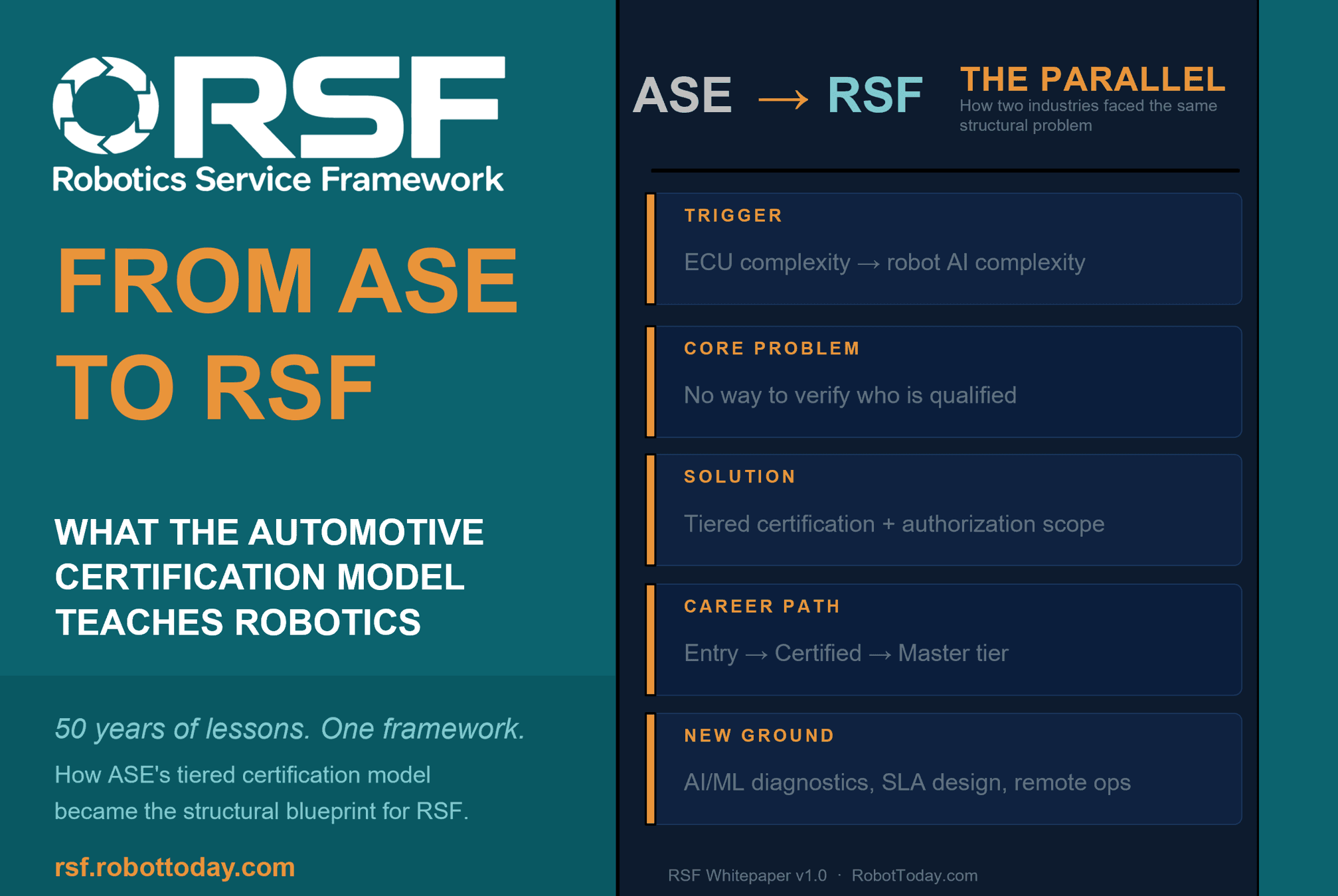
NewsRobotics needs a service framework.
RSF defines a common language for robot service capability, lifecycle operations, certification pathways, and service-provider networks.