

Video Friday: Multitasking Robots Smoothly Do the Things Together
- Published
- Source
- Spectrum.ieee.orgAutomaton
IEEE Spectrum robotics has released its weekly roundup of notable robotics videos and upcoming events, including the ICRA 2026 conference scheduled for June 1-5, 2026, in Vienna. Among the highlights, Westwood Robotics unveiled THEMIS Gen2.5, the first commercial full-size humanoid robot capable of walking and manipulating objects simultaneously. This advancement builds on Helix's previous work, which demonstrated a single neural network controlling a humanoid's upper body, now expanded to encompass the entire robot's functions.
In a demonstration of practical applications, Kimberly Elenberg from Carnegie Mellon University showcased how data from robotic responders can enhance life-saving efforts during mass casualty incidents. Meanwhile, Sphero continues to thrive in the competitive educational robotics market since its inception in 2011.
Innovative flight testing methods were discussed by Zipline, emphasizing the importance of testing drones in extreme conditions. Additionally, researchers from the University of Tokyo introduced a concept of 3D-printing both skin and skeleton, while LimX presented small bipedal robots capable of skiing and resembling dinosaurs.
The EPFL Reconfigurable Robotics Lab introduced a novel user-guided control system for modular robots, demonstrating its effectiveness through various tasks. Texas A&M University showcased its Quadrotor Biplane Tailsitter (QBiT) UAVs, which combine the agility of quadrotor drones with the efficiency of fixed-wing aircraft. Lastly, DARPA announced a new challenge aimed at developing drones capable of carrying payloads exceeding four times their weight, promising to transform drone usage across multiple sectors.
Original report
Video Friday: Multitasking Robots Smoothly Do the Things Together
Spectrum.ieee.orgAutomaton · Evan AckermanThis briefing is an independently written summary based on publicly available reporting and is provided for industry information and news discovery. The original report and source publication are credited and linked where applicable. RobotToday does not claim ownership of third-party source material.
Rights concerns? Contact [email protected] with the relevant URL and details. We will review the matter and take appropriate action where warranted.
More related news
- 1
- 2
- 3
- 4
- 5
- 6
- 7
- 8
- 9
- 10
- 11
- 12
Related Suppliers

Chengdu Humanoid Robot Innovation Center Co., Ltd. 成都人形机器人创新中心有限公司
China
Chengdu-registered humanoid robot R&D company behind the Gongga-1 humanoid, the open-source RW-02OP wheeled-biped platform and Raydiculous-1 planning software

GMO Humanoid Lab
Japan
Tokyo Physical AI lab opened April 2026 by GMO Internet Group, running whole-body humanoid control research and Japan's Humanoid Hack hackathons.
High Performance Humanoid Technologies Lab (H2T), Karlsruhe Institute of Technology
Germany
KIT research chair in Karlsruhe led by Prof. Tamim Asfour, developer of the ARMAR humanoid robot family from ARMAR-I (2000) to the household robot ARMAR-7.

BioRobotics Laboratory, Korea University of Technology and Education
Korea, Republic of (South)
South Korean university research laboratory focusing on haptics, exoskeletons, rehabilitation robotics, and autonomous ground vehicles.

McMaster Manufacturing Research Institute
Canada
Hamilton, Ontario applied manufacturing research center at McMaster University; runs a 21,000 sq ft facility with seven research labs.

Robotics Education & Competition Foundation
United States
The REC Foundation is a US nonprofit that runs VEX-based robotics and drone competitions reaching 1.1 million students across 70 countries.

Alkadur RobotSystems GmbH
Germany
German manufacturer of robotic doner kebab preparation systems, producing the automated 'der Geraet' commercial food service robot based in Aalen, Germany.
RobotLAB Inc.
United States
Southlake, Texas robotics dealer and integrator founded 2007, with a franchise network and 22 service-robot brands plus its own ServeSwift and RobotLAB lines.

ATOUN
Japan
ATOUN was a JPN Panasonic subsidiary that developed and commercialized power-assisted wearable exoskeletons for logistics, construction, and caregiving.

Drone Delivery Canada
Canada
Vaughan, Ontario drone logistics developer merged with Volatus Aerospace in August 2024; the combined company trades as FLT in Toronto.
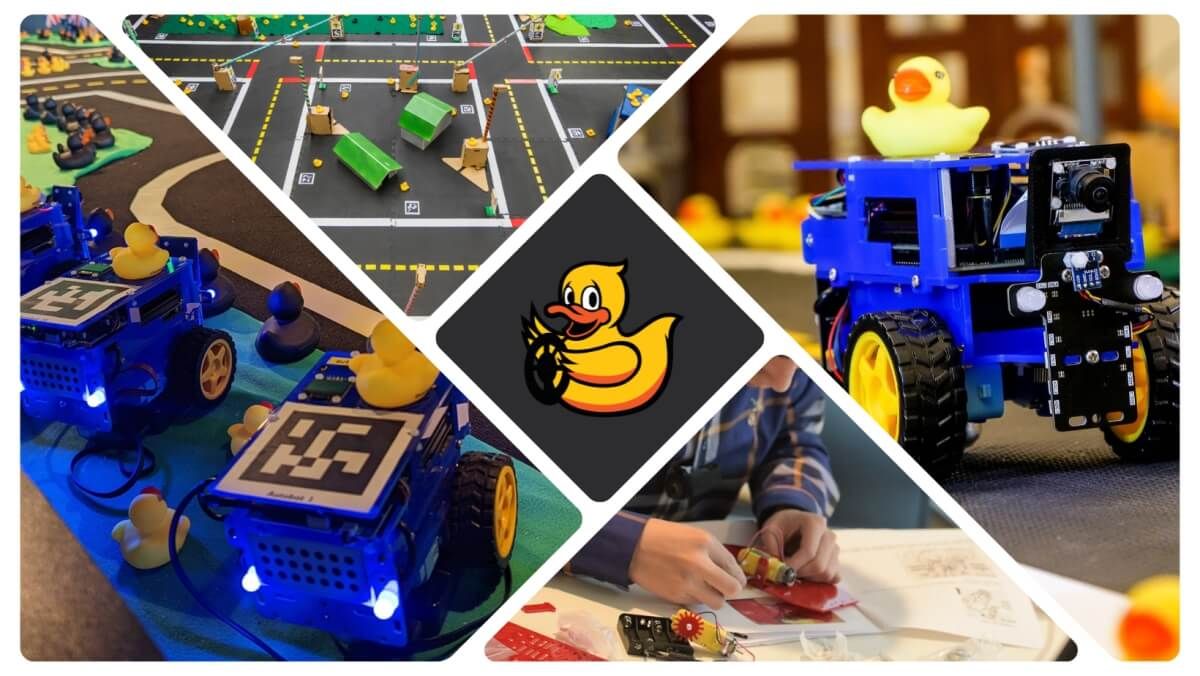
Duckietown Robotics
United States
Educational robotics platform provider offering autonomous vehicle kits and AI curricula used by 250+ universities worldwide.
EasyMile
France
Toulouse, France autonomous-vehicle software company founded 2014; EZTow and EZDolly systems automate industrial tow tractors and cargo movers at airports.
Robotics needs a service framework.
RSF defines a common language for robot service capability, lifecycle operations, certification pathways, and service-provider networks.
Join the RobotToday community on LinkedIn
Daily robotics news, in-depth analysis, conference highlights, and discussions with professionals worldwide.


