

The ROI of Deploying Small Industrial Robots in Lean Manufacturing Cells
- Published
- Source
- jaka.com
In a bid to enhance efficiency and cost-effectiveness in manufacturing, a company has successfully integrated small industrial robots, particularly the JAKA MiniCobo, into its lean manufacturing cells. This initiative, which began recently, aims to automate repetitive tasks such as material handling and machine tending, thereby alleviating labor bottlenecks and ensuring consistent production output.
The JAKA MiniCobo stands out due to its compact design and flexibility, allowing for deployment in previously unsuitable spaces. By utilizing intuitive programming, the robot reduces setup time, enabling workers to concentrate on higher-value tasks. This streamlined approach not only boosts productivity but also improves product quality by minimizing human error, essential in lean manufacturing where even minor enhancements can significantly impact return on investment (ROI).
Flexibility is a critical advantage of these small robots, which can be rapidly redeployed across various production line sections to meet changing demands without extensive reconfiguration. This adaptability leads to reduced downtime and more efficient scheduling, allowing manufacturing cells to respond dynamically to production needs while managing operational costs effectively.
Although initial investment is a consideration, the focus remains on understanding the broader factors that influence cost-effectiveness, including labor savings, improved product consistency, and faster cycle times. The implementation of the JAKA MiniCobo not only promises direct labor replacement savings but also offers low maintenance requirements, ensuring a sustainable positive ROI over time.
Overall, the deployment of small industrial robots represents a strategic move to maximize efficiency, enhance product quality, and optimize workforce allocation, demonstrating the tangible benefits of automation in modern manufacturing environments.
Original report
The ROI of Deploying Small Industrial Robots in Lean Manufacturing Cells
jaka.com · JAKAThis briefing is an independently written summary based on publicly available reporting and is provided for industry information and news discovery. The original report and source publication are credited and linked where applicable. RobotToday does not claim ownership of third-party source material.
Rights concerns? Contact [email protected] with the relevant URL and details. We will review the matter and take appropriate action where warranted.
More related news
-
1
RobotToday Weekly October 12 – 16, 2026 RobotToday · 2 days ago
- 2
- 3
- 4
- 5
- 6
- 7
-
8
Global Industrie 2027 – Lyon, Mar 15–18, 2027 RobotToday · 5 days ago
-
9
RoboDEX 2027 – Tokyo, Feb 17–19, 2027 RobotToday · 5 days ago
-
10
automatica 2027 – Munich, Jun 22–25, 2027 RobotToday · 5 days ago
-
11
Suzy Teele’s Mission at ARM Institute RobotToday · 6 days ago
- 12
Related Suppliers

Da Shiang Automation Industrial Co. Ltd. 達詳自動化工業股份有限公司
Taiwan
Taiwan-based robotic system integrator founded 2013; 1,000+ robot projects in automotive, aerospace, and metal manufacturing.

Janome Industrial Equipment Europe GmbH
Germany
German sales subsidiary of Janome Industrial Equipment (Japan), distributing servo presses and desktop/Cartesian robots in Europe since 1984.

Industrial Technology Research Institute (ITRI) 工業技術研究院
Taiwan
Hsinchu County, Taiwan applied-technology research institute founded 1973; over 6,500 staff developing autonomous mobile robots and AI perception systems.
Yuanqi Innovation (Xiamen) Robot Co., Ltd. 元启创新(厦门)机器人有限公司
China
Xiamen-based AgiBot VAP partner founded 2025; resells and customises AgiBot humanoids, Genie wheeled robots and D1 quadrupeds with turnkey service.

OM Robot Technology Co. Ltd. 东莞全向机械科技有限公司
China
Chinese manufacturer of mecanum wheels, omnidirectional wheel bases, and mobile robotic platforms for AGV applications.
Techman Robot Inc. (TM Robot) 達明機器人股份有限公司
Taiwan
Techman Robot is a Taiwanese cobot maker producing AI-powered collaborative robots with integrated built-in vision for manufacturing automation.
E-COBOT
France
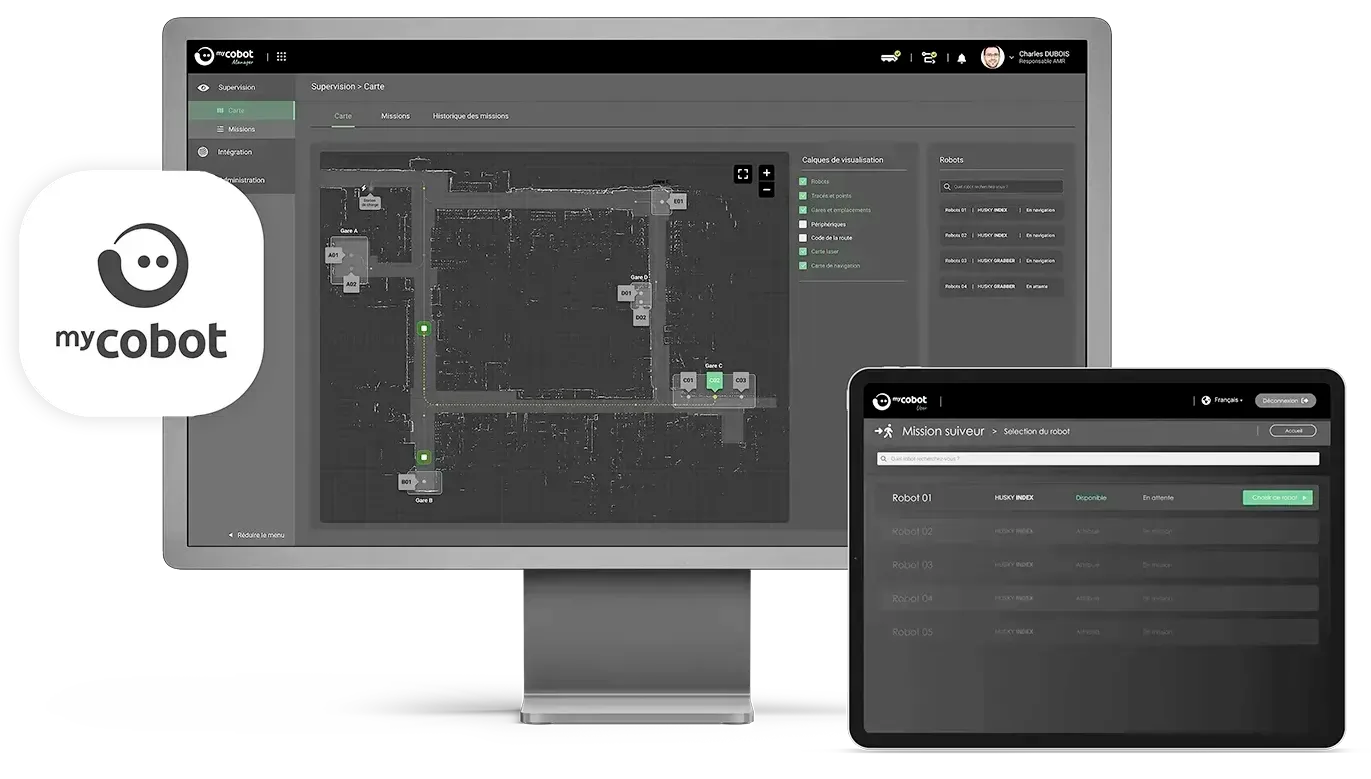
French AMR manufacturer and system integrator offering the HUSKY robot range and MyCobot fleet management software.
EasyMile
France
Toulouse, France autonomous-vehicle software company founded 2014; EZTow and EZDolly systems automate industrial tow tractors and cargo movers at airports.

Filics
Germany
Munich-based robotics startup making ultra-flat omnidirectional AMRs that drive under Euro pallets for space-efficient intralogistics.
Robotics needs a service framework.
RSF defines a common language for robot service capability, lifecycle operations, certification pathways, and service-provider networks.
Join the RobotToday community on LinkedIn
Daily robotics news, in-depth analysis, conference highlights, and discussions with professionals worldwide.


