

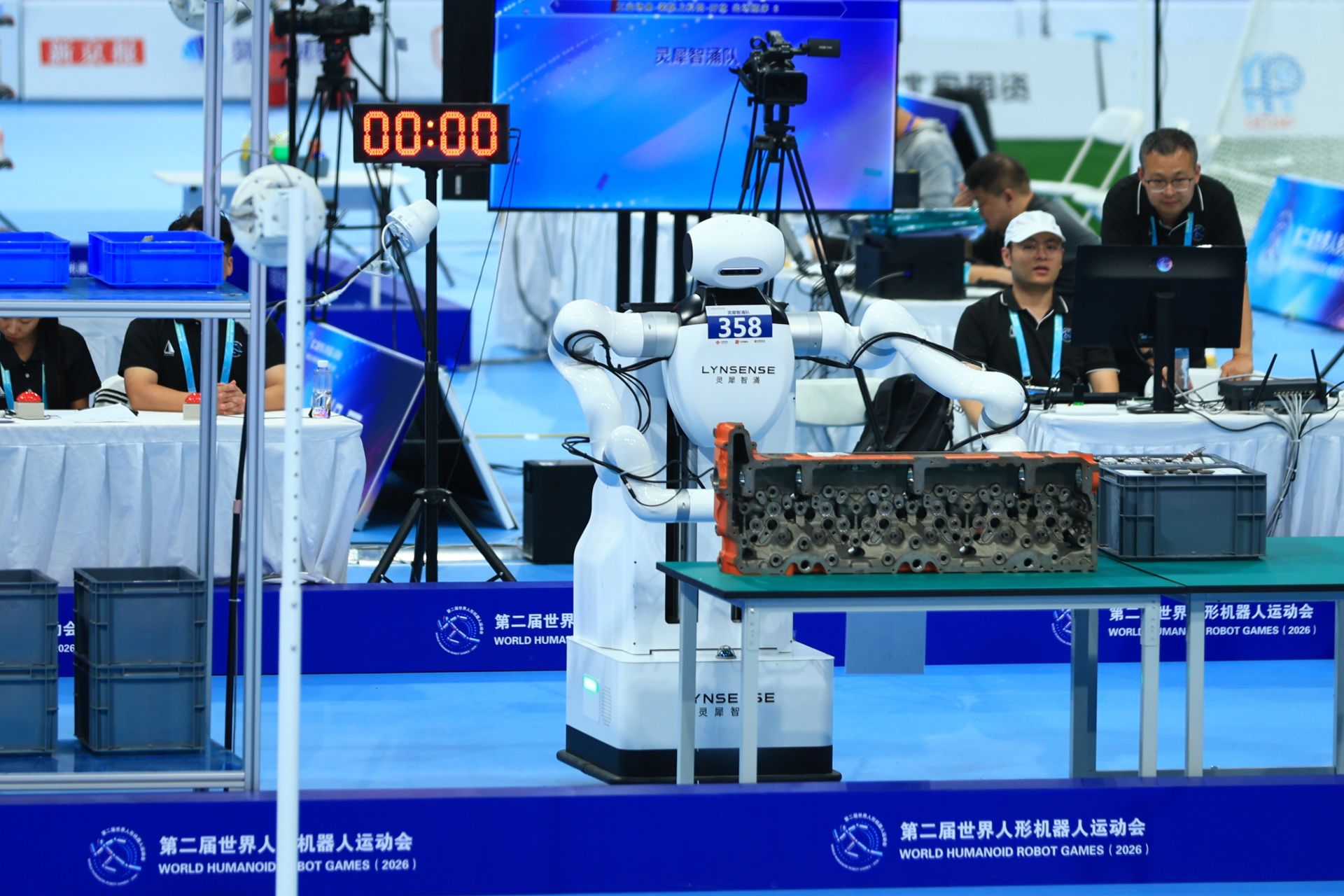
In the 2026 World Humanoid Robot Competition for Industrial Applications, a robot successfully completed three tasks: transporting a 10kg material box, selecting seven types of parts, and assembling 18 engine valves with sub-millimeter precision. The Lingxi Zhiyong robot autonomously achieved a total score of 160, ranking third among established industry leaders and marking the only startup to reach the national top three in its debut.
This competition highlights the pressing challenges in the field of embodied intelligence robotics, emphasizing the need for robots to perform reliably in real industrial environments. Unlike other competitions, this event focused on continuous, accurate task execution within industrial time constraints, showcasing the necessity for robots to deliver verifiable production results.
Lingxi Zhiyong, founded by a PhD graduate from the University of Science and Technology of China, is addressing these challenges with its unique approach combining the CONWAY industrial native model and the ROSS Harness self-evolution engine. As the industry grapples with the gap between model capabilities and real-world delivery, the focus is shifting from merely developing advanced models to effectively utilizing them in practical applications.
Editor's Note
The performance of Lingxi Zhiyong in the competition underscores the critical transition from theoretical models to practical applications in industrial robotics. As companies strive for high-quality, consistent delivery in manufacturing, the ability to integrate advanced models into operational frameworks will be essential for success. This shift may influence investment and development strategies across the robotics sector.






















Leave a comment