

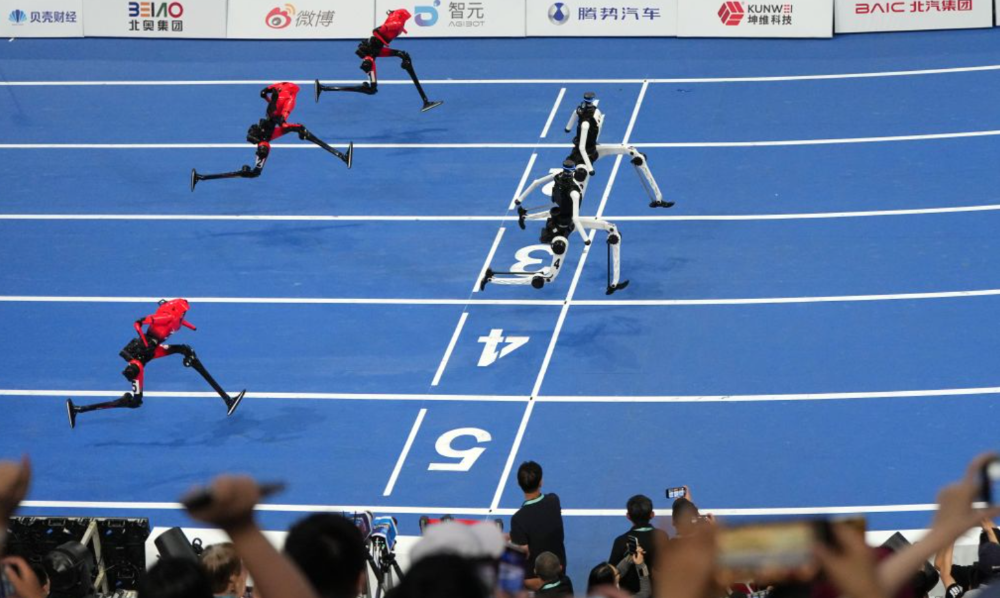
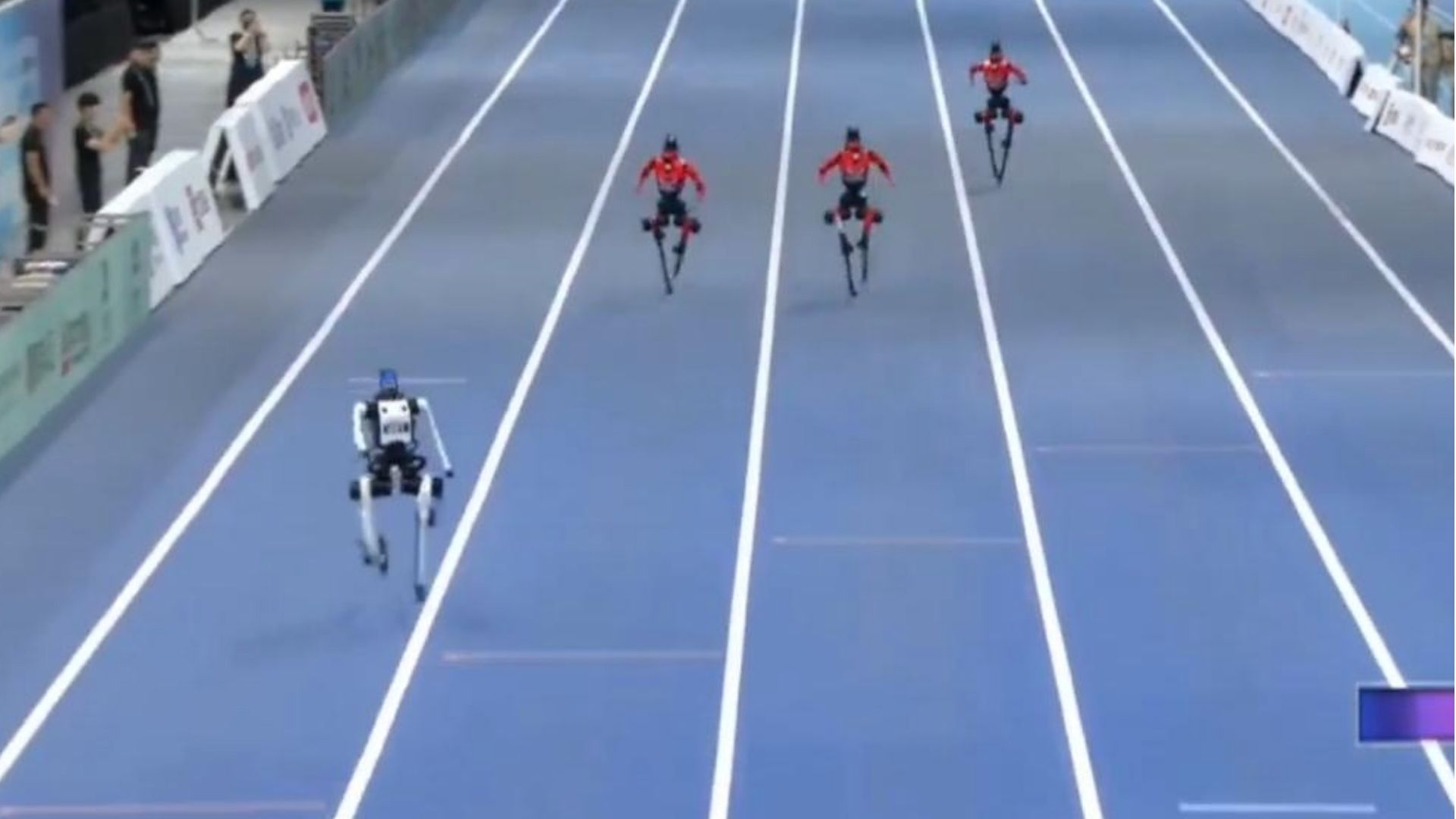
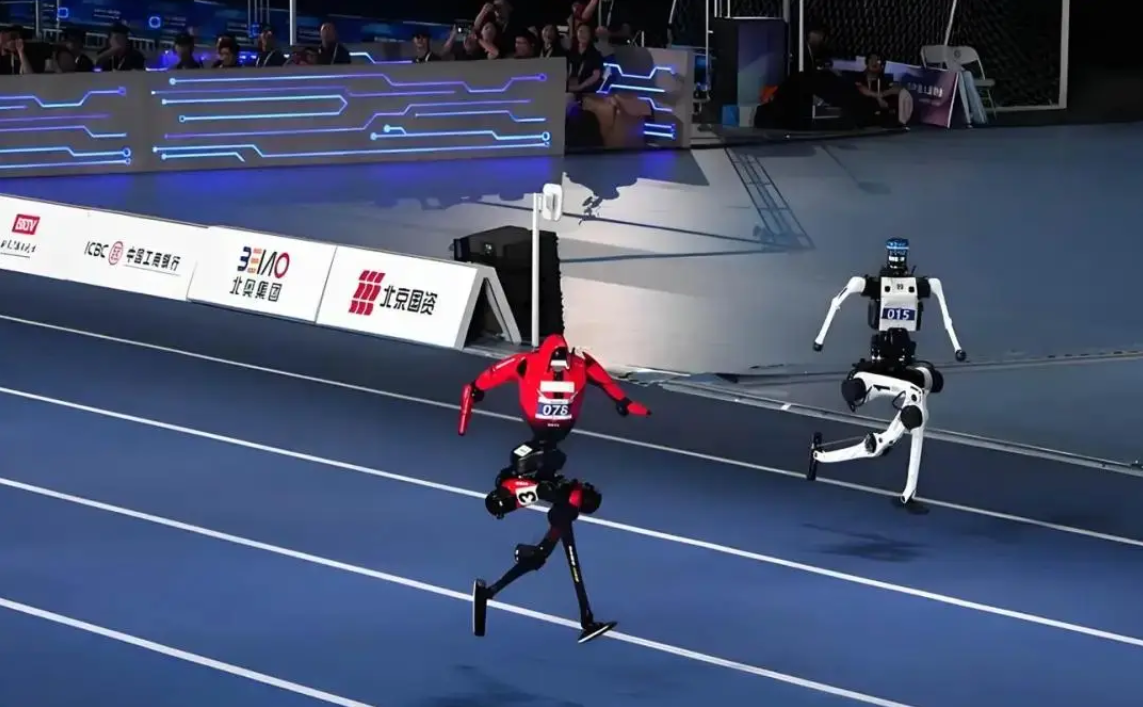
During the 100-meter final at the second World Humanoid Robot Games, a humanoid robot named Tian Gong Ultra finished in 8.64 seconds but crashed into a soft wall. This incident raised questions about the difficulties of braking for humanoid robots. Gao Dawei explained that to maximize performance, the robot's control algorithm was set to 'full acceleration,' prioritizing speed over deceleration, which complicates the braking process.
The significance of this challenge lies in the trade-off between speed and braking capability. Adding perception and braking modules would increase algorithm complexity and response time, ultimately affecting performance. The competition showcased remarkable advancements, with the 400-meter run improving from 1:28.03 to 38.15 seconds and the 1500-meter run from 6:34.40 to 2:21.64, indicating rapid progress in humanoid robot capabilities.
Looking ahead, Gao Dawei noted that the speed limits for robots will continue to rise, suggesting that future iterations may not require crashing into walls as control algorithms and braking systems mature. The dramatic improvement in the 100-meter championship time from 21 seconds last year to 8.64 seconds this year illustrates the rapid evolution of humanoid robotics, with the focus now shifting towards refining stopping mechanisms in subsequent developments.
Editor's Note
The advancements in humanoid robotics, particularly in speed and performance, highlight the ongoing challenges in control algorithms and braking systems. As these technologies evolve, the balance between maximizing speed and ensuring safe stopping will be crucial for future designs. The competitive landscape is rapidly changing, with significant improvements in performance metrics indicating a strong trajectory for innovation in this field.






















Leave a comment