

Physics-informed neural controlled differential equations for long horizon multi-agent motion forecasting
- Published
- Source
- amazon.science
Researchers are tackling the complexities of long-horizon motion forecasting for multiple autonomous robots, a task made difficult by non-linear interactions among agents and the accumulation of prediction errors over time. This initiative, which aims to enhance trajectory forecasting, is particularly relevant for applications such as travel time prediction, prediction-guided planning, and surrogate simulation. By developing efficient forecasting methods, the team seeks to improve the reliability and accuracy of autonomous systems in dynamic environments. The work is ongoing, with implications for various fields that rely on advanced robotics and automation.
Original report
Physics-informed neural controlled differential equations for long horizon multi-agent motion forecasting
amazon.science · Amazon ScienceThis briefing is an independently written summary based on publicly available reporting and is provided for industry information and news discovery. The original report and source publication are credited and linked where applicable. RobotToday does not claim ownership of third-party source material.
Rights concerns? Contact [email protected] with the relevant URL and details. We will review the matter and take appropriate action where warranted.
More related news
- 1
- 2
- 3
- 4
- 5
- 6
- 7
- 8
- 9
- 10
- 11
- 12
Related Suppliers

BioRobotics Laboratory, Korea University of Technology and Education
Korea, Republic of (South)
South Korean university research laboratory focusing on haptics, exoskeletons, rehabilitation robotics, and autonomous ground vehicles.

McMaster Manufacturing Research Institute
Canada
Hamilton, Ontario applied manufacturing research center at McMaster University; runs a 21,000 sq ft facility with seven research labs.

Robotics Education & Competition Foundation
United States
The REC Foundation is a US nonprofit that runs VEX-based robotics and drone competitions reaching 1.1 million students across 70 countries.

Drone Delivery Canada
Canada
Vaughan, Ontario drone logistics developer merged with Volatus Aerospace in August 2024; the combined company trades as FLT in Toronto.
Duckietown Robotics
United States
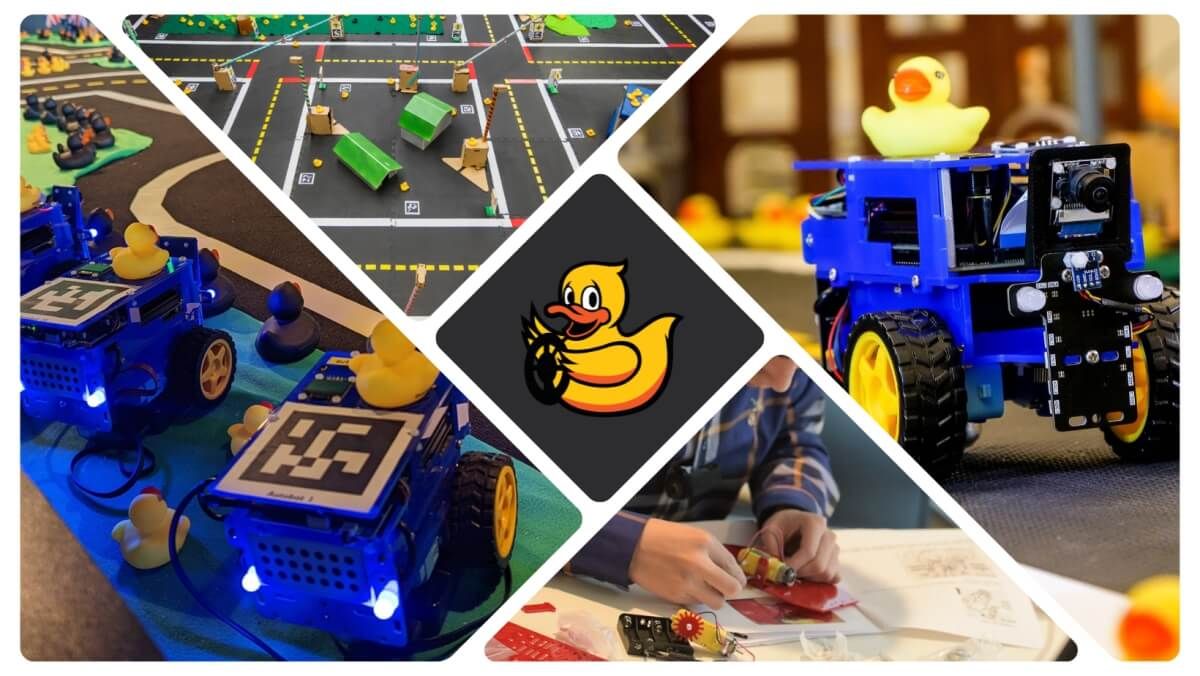
Educational robotics platform provider offering autonomous vehicle kits and AI curricula used by 250+ universities worldwide.
EasyMile
France
Toulouse, France autonomous-vehicle software company founded 2014; EZTow and EZDolly systems automate industrial tow tractors and cargo movers at airports.

Vicon Motion Systems
United Kingdom
UK motion capture technology leader; Valkyrie & Vantage camera systems for robotics, life sciences, entertainment & engineering.
Pendulum Systems
United States
Seattle AI software company delivering device-native alt-PNT navigation for GPS-denied environments across drones, defense, and supply chains.

Physik Instrumente (PI) GmbH
Germany
Karlsruhe, Germany precision motion maker founded 1970; builds piezo actuators, nanopositioning stages, and hexapod robots; being acquired by HOERBIGER in 2026.
Ortelio Ltd
United Kingdom
Ortelio Ltd is a UK cloud robotics research company founded in 2011 that develops AI platforms giving robots intelligence for service and healthcare tasks.

Parata Systems
United States
Durham, North Carolina pharmacy automation maker acquired by BD in 2022; builds robotic vial-filling and packaging systems.

Pensa Systems
United States
Austin-based AI retail shelf platform using autonomous drones and CV to detect stockouts; customers include J&J, AB InBev, and Circle K.
Robotics needs a service framework.
RSF defines a common language for robot service capability, lifecycle operations, certification pathways, and service-provider networks.
Join the RobotToday community on LinkedIn
Daily robotics news, in-depth analysis, conference highlights, and discussions with professionals worldwide.


