

NHS Expands Drone Deliveries for Medical Samples Across London
- Published
- Source
- Dronedj.com
The UK's National Health Service (NHS) is integrating drones into its logistics for healthcare, following a successful pilot that significantly reduced delivery times for urgent medical samples. This initiative could benefit approximately 1.8 million residents in southwest London, while also cutting costs, lowering emissions, and enhancing patient care.
Since February, drones have been transporting blood and diagnostic samples from Nelson Health Centre in Raynes Park to the South West London Pathology (SWLP) laboratory at St George’s Hospital in Tooting, completing the journey in just over three minutes. This is a substantial improvement over the 20-minute road travel time, especially during peak congestion or extreme weather conditions. The SWLP processes around 51 million diagnostic samples annually, and faster deliveries allow for quicker testing and treatment decisions.
With plans to extend drone services to additional hospitals and clinics, the NHS aims to make this technology a standard part of its operations. The initiative, operated by British startup Apian in collaboration with Wing, has already shown cost savings of up to 23% compared to traditional delivery methods, while also significantly reducing carbon emissions. No further timeline was disclosed at the time of publication.
Original report
Wing-powered drones speed NHS sample deliveries across London
Dronedj.com · Ishveena SinghThis briefing is an independently written summary based on publicly available reporting and is provided for industry information and news discovery. The original report and source publication are credited and linked where applicable. RobotToday does not claim ownership of third-party source material.
Rights concerns? Contact [email protected] with the relevant URL and details. We will review the matter and take appropriate action where warranted.
More related news
- 1
- 2
- 3
- 4
- 5
- 6
-
7
ACIRS 2027 – Hong Kong, Jul 23–25, 2027 RobotToday · 3 days ago
-
8
ERF 2027 – Birmingham, Mar 2–4, 2027 RobotToday · 3 days ago
-
9
automatica 2027 – Munich, Jun 22–25, 2027 RobotToday · 3 days ago
- 10
- 11
-
12
RobotToday Weekly October 5 – 9, 2026 RobotToday · 1 week ago
Related Suppliers

Apian
United Kingdom
Apian is a London startup whose software orchestrates NHS drone deliveries of blood and pathology samples across London with partner Wing.
Wing
United States
Alphabet drone delivery subsidiary and first FAA-certified US carrier, with 1M+ commercial deliveries in the US, Australia, and Europe.

Wingcopter GmbH
Germany
Weiterstadt, Germany delivery drone maker founded 2017; builds the tilt-rotor Wingcopter 198 eVTOL with 25 kg MTOW, 4.7 kg payload and 94 km range.
Wingtra AG
Switzerland
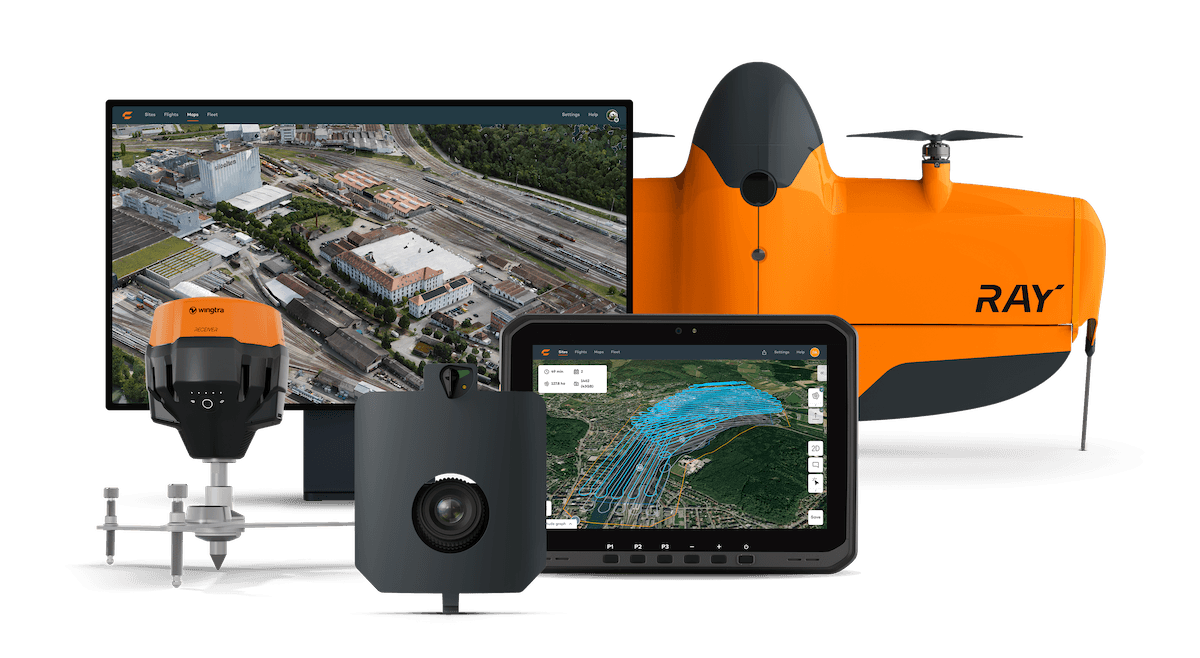
Zurich, Switzerland VTOL survey drone maker founded 2016 as an ETH Zurich spin-off; builds the WingtraRAY mapping drone with hot-swap sensor payloads.
Modovolo
United States
Modovolo is a US drone maker in Upstate New York building payload-centric, field-repairable hex/octo-rotor UAVs and its own BFP aerospace 3D printer.

Arrive AI
United States
Nasdaq-listed maker of the Arrive Point smart, AI-powered delivery box connecting people, robots and drones for autonomous last-mile delivery.
Everdrone AB
Sweden
Swedish operator of the world's first emergency-integrated autonomous drone service, delivering defibrillators and medical kits ahead of ambulances.
ASTM International ET CoE
United States
ASTM Exo Technology Center of Excellence (2019): accelerates safety standards and R2S projects for exoskeletons and wearable robotics.

KURODA JENA TEC, INC.
United States
U.S. subsidiary of Kuroda Precision supplying precision ball screws, ballscrew actuators, linear guides and motion-control components to North America.

Diodon Drone Technology
France
French manufacturer of inflatable, waterproof amphibious UAVs for maritime and defense missions.
NTT e-Drone Technology
Japan
NTT East subsidiary developing domestically produced Japanese agricultural and industrial drones for spraying, inspection, and surveying.

Scallog Scalable Logistics
France
French AMR maker delivering goods-to-person warehouse picking via mobile shelf robots; Flexypick platform serves e-commerce and 3PL.
Robotics needs a service framework.
RSF defines a common language for robot service capability, lifecycle operations, certification pathways, and service-provider networks.
Join the RobotToday community on LinkedIn
Daily robotics news, in-depth analysis, conference highlights, and discussions with professionals worldwide.


