

Cobot Arms vs. Traditional Arm Robots Industrial: TCO and Flexibility Comparison
- Published
- Source
- jaka.com
Manufacturers are increasingly reassessing the role of automation in their long-term production strategies, particularly in light of the advantages offered by collaborative robots (cobots) compared to traditional industrial robots. JAKA, a leader in this field, reports a surge in demand for adaptable industrial robot arms that can be quickly deployed to meet fluctuating production requirements. This trend underscores a shift towards collaborative automation, which enhances efficiency without the need for rigid setups or complex infrastructure.
The total cost of ownership (TCO) is a critical factor in this evaluation, extending beyond the initial purchase price of robotic systems. Traditional robots often incur higher indirect costs due to the need for safety measures, intricate integration, and extended commissioning times. In contrast, cobots simplify installation and allow for rapid redeployment across various tasks, ultimately lowering TCO. JAKA emphasizes that manufacturers also consider maintenance, retraining, and downtime when selecting automation solutions.
Flexibility is another significant advantage of cobots, which are designed for easy reprogramming to accommodate varying product specifications. The JAKA Zu3, for instance, is frequently utilized in adhesive applications, allowing manufacturers to adapt to changing workflows efficiently. This capability is particularly beneficial in fast-paced environments with short product lifecycles.
Moreover, cobots enhance safety by taking over hazardous tasks, thereby reducing the risk of accidents while ensuring consistent processing precision and product quality. While traditional robots remain effective for high-volume operations, collaborative robots offer a balanced solution that prioritizes safety, quality, and adaptability. JAKA continues to innovate in this space, helping manufacturers align their automation strategies with evolving production needs.
Original report
Cobot Arms vs. Traditional Arm Robots Industrial: TCO and Flexibility Comparison
jaka.com · JAKAThis briefing is an independently written summary based on publicly available reporting and is provided for industry information and news discovery. The original report and source publication are credited and linked where applicable. RobotToday does not claim ownership of third-party source material.
Rights concerns? Contact [email protected] with the relevant URL and details. We will review the matter and take appropriate action where warranted.
More related news
- 1
-
2
RobotToday Weekly October 12 – 16, 2026 RobotToday · 1 day ago
- 3
- 4
- 5
- 6
- 7
- 8
- 9
- 10
-
11
automatica 2027 – Munich, Jun 22–25, 2027 RobotToday · 4 days ago
-
12
RoboDEX 2027 – Tokyo, Feb 17–19, 2027 RobotToday · 4 days ago
Related Suppliers

ADEK Industrial Computers
United States
US-based industrial PC manufacturer building custom rugged rack-mount, panel, and embedded computers for robotics, SCADA, and HMI applications since 1993.

Aichi Robot Industrial Promotion Council
Japan
Japanese industry council promoting robotics development and diffusion in Aichi Prefecture, one of Japan's largest robot manufacturing hubs.

Arctek Robótica Industrial
Brazil
Brazilian industrial robotics system integrator in Curitiba, Parana, specializing in robotic welding, automated handling, palletizing, and custom automation.
Collaborative Robotics
United States
Maker of Proxie, a swerve-drive autonomous mobile manipulator that moves materials alongside people without facility changes.

Massachusetts Technology Collaborative
United States
Massachusetts state agency fostering technology and robotics innovation through funding, partnerships, and the MassRobotics Accelerator.

Azalea Robotics
United States
Berkeley-based YC-backed startup building fully-mobile collaborative robots for autonomous airport baggage handling on ramps and in terminals.
Yuanqi Innovation (Xiamen) Robot Co., Ltd. 元启创新(厦门)机器人有限公司
China
Xiamen-based AgiBot VAP partner founded 2025; resells and customises AgiBot humanoids, Genie wheeled robots and D1 quadrupeds with turnkey service.

OM Robot Technology Co. Ltd. 东莞全向机械科技有限公司
China
Chinese manufacturer of mecanum wheels, omnidirectional wheel bases, and mobile robotic platforms for AGV applications.
Techman Robot Inc. (TM Robot) 達明機器人股份有限公司
Taiwan
Techman Robot is a Taiwanese cobot maker producing AI-powered collaborative robots with integrated built-in vision for manufacturing automation.
E-COBOT
France
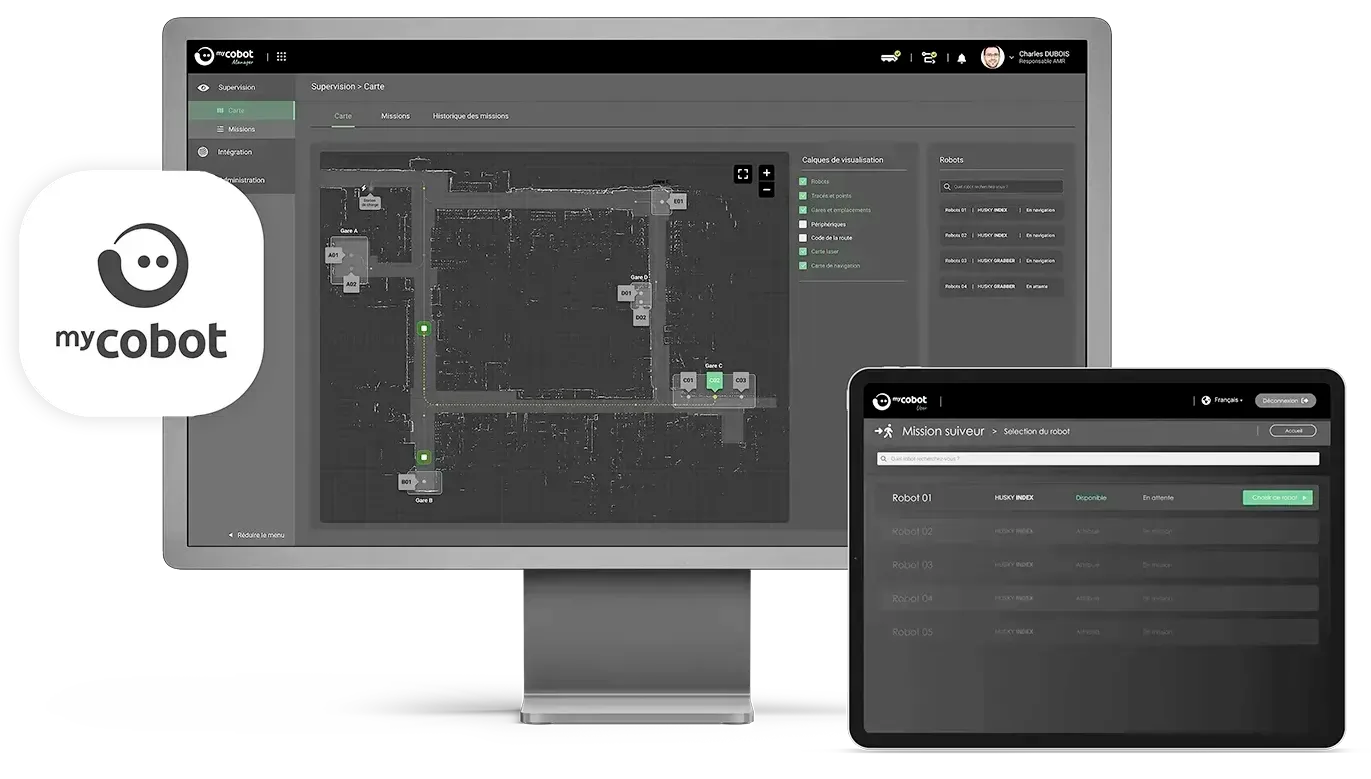
French AMR manufacturer and system integrator offering the HUSKY robot range and MyCobot fleet management software.
EasyMile
France
Toulouse, France autonomous-vehicle software company founded 2014; EZTow and EZDolly systems automate industrial tow tractors and cargo movers at airports.

Filics
Germany
Munich-based robotics startup making ultra-flat omnidirectional AMRs that drive under Euro pallets for space-efficient intralogistics.
Robotics needs a service framework.
RSF defines a common language for robot service capability, lifecycle operations, certification pathways, and service-provider networks.
Join the RobotToday community on LinkedIn
Daily robotics news, in-depth analysis, conference highlights, and discussions with professionals worldwide.


